
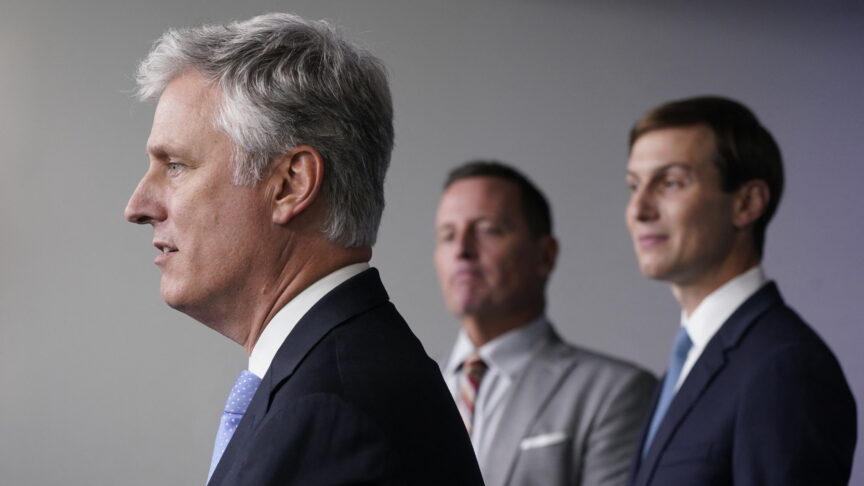
Letter from Washington: The war for Trump’s mind
As Donald Trump gets closer to a second term in the White House, Republican entreprenuers are battling it out to fill in the gaps in his foreign policy with their own ambitions


Research Director
Director, US Programme
Transatlantic relations; US foreign policy
English
Jeremy Shapiro is the research director of the European Council on Foreign Relations. His areas of focus include US foreign policy and transatlantic relations.
Shapiro was previously a fellow with the Project on International Order and Strategy and the Center on the United States and Europe at Brookings, where he edited the Foreign Policy program’s blog Order from Chaos. Prior to Brookings, he was a member of the U.S. State Department’s policy planning staff, where he advised the secretary of state on U.S. policy in North Africa and the Levant. He was also the senior advisor to Assistant Secretary of State for European and Eurasian Affairs Philip Gordon, providing strategic guidance on a wide variety of U.S.-European foreign policy issues.
As Donald Trump gets closer to a second term in the White House, Republican entreprenuers are battling it out to fill in the gaps in his foreign policy with their own ambitions
Russia’s war against Ukraine has shown how much the Europeans are still dependent on the US to ensure their security, despite all the talk of…

The potential return of Donald Trump to the White House is a matter of months away. Here are six scary policy scenarios to give Europeans sleepless nights and prepare them for what could be to come

Mark Leonard welcomes Jeremy Shapiro to discuss America’s next policy moves as it responds to Russia’s war in Ukraine
Foreign policy seldom plays much of a role in American presidential elections, but the consequences of those contests can be profound for America’s allies in…
A discussion assessing Iranian foreign policy following Hamas’s attacks of 7 October, Israel’s war on Gaza and the death of Iranian President Ebrahim Raisi
The apparent omniscience of US intelligence is a valuable strategic asset. In this third instalment of ECFR’s Letters from Washington, Jeremy Shapiro sets out what Europeans can learn from the US intelligence community to boost their diplomatic arsenal
Mark Leonard welcomes Alexander Ward and Jeremy Shapiro to discuss Biden’s foreign policy performance
Mark Leonard welcomes Hugh Lovatt, Julien Barnes-Dacey, and Jeremy Shapiro to discuss the current situation in Gaza and the possible futures of the war
The establishment hates Donald Trump and Trump voters hate the establishment. In this second instalment of ECFR’s Letters from Washington, Jeremy Shapiro explains why Europeans need to understand the dynamics that underpin this toxic relationship
The potential return of Donald Trump to the White House is a matter of months away. Here are six scary policy scenarios to give Europeans sleepless nights and prepare them for what could be to come
Fierce debates are raging among both Republicans and Democrats about America’s future foreign policy orientation. Europeans should take note and prepare
Europeans’ response to Russia’s war on Ukraine confirms their profound dependence on the US – an unwise position given the security challenge in Europe and coming geopolitical competition with China
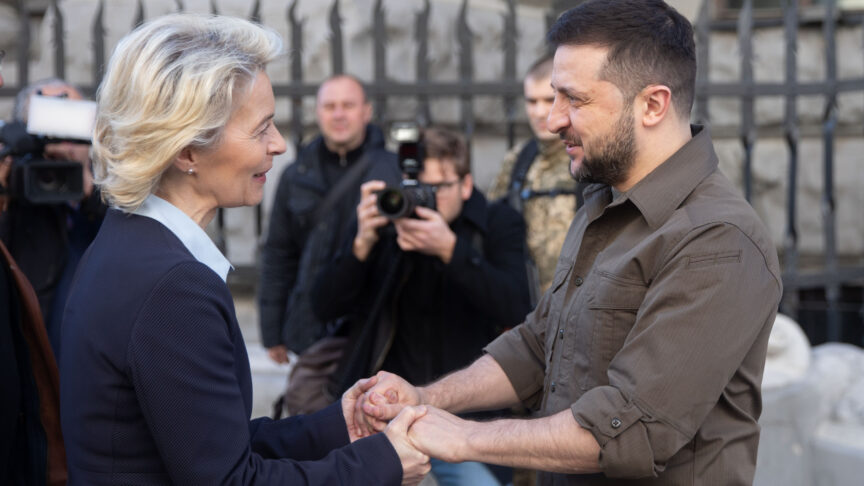
To signal their commitment to Ukraine, Europeans should agree a ‘long-war plan’ of assistance against Russian aggression. This would include a ‘security compact,’ security assurances, and economic and energy support

The UK government’s vision for Global Britain does not reflect today’s geostrategic realities. Yet the UK can forge an effective foreign policy if it focuses on British strengths, avoids military adventures in distant lands, and finds balanced, effective working relationships with the EU and the US

ECFR’s policy experts examine what the Taliban takeover means for countries and regions around the world: Europe, the US, the Middle East, Russia, China, Iran, Turkey, and the Sahel
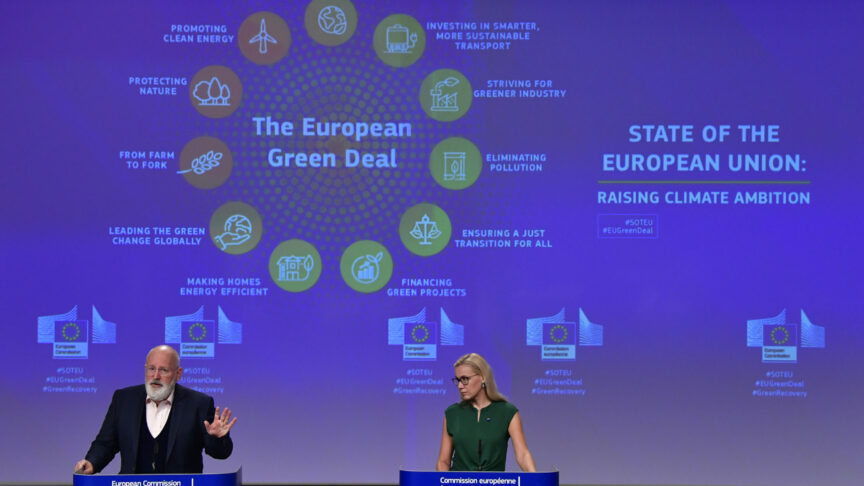
The EU should become a global standard-setter for the energy transition, and prepare to manage the profound geopolitical repercussions of the Green Deal in its relationships with its neighbourhood

To manage in this new world, the EU and its members need to embark on a broad-based effort to recover their strategic sovereignty

The EU cannot continue to rely on its regulatory power but must become a tech superpower in its own right. Referees do not win the game
Europe must improve its early warning systems, supply chain resilience, medical R&D, and cyber security and technology, to act decisively in future emergencies
As Donald Trump gets closer to a second term in the White House, Republican entreprenuers are battling it out to fill in the gaps in his foreign policy with their own ambitions
The apparent omniscience of US intelligence is a valuable strategic asset. In this third instalment of ECFR’s Letters from Washington, Jeremy Shapiro sets out what Europeans can learn from the US intelligence community to boost their diplomatic arsenal
The establishment hates Donald Trump and Trump voters hate the establishment. In this second instalment of ECFR’s Letters from Washington, Jeremy Shapiro explains why Europeans need to understand the dynamics that underpin this toxic relationship
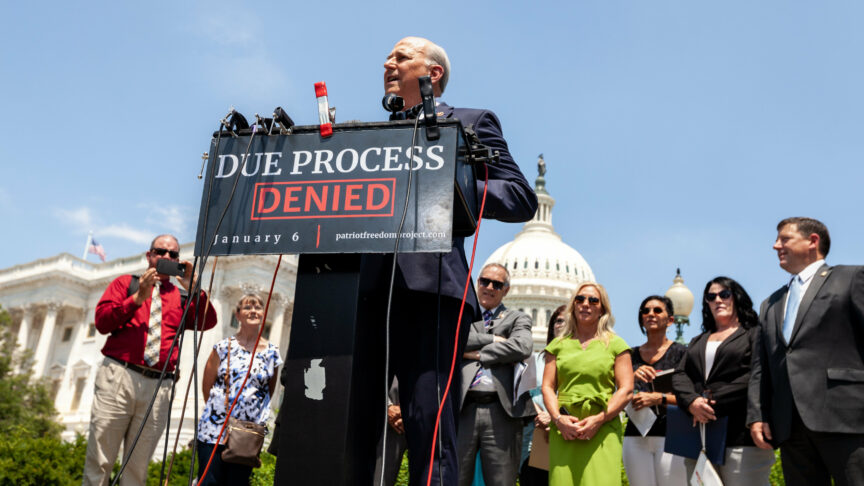
In our new series of letters from Washington, Jeremy Shapiro helps you navigate a US election year that could have profound implications for Europe. In this first instalment, he outlines how campaigns fought on an opponent’s threat to democracy could imperil that very same ideal (and not only in the US)

Ten predictions for the foreign policy trends of 2024, and a little bonus
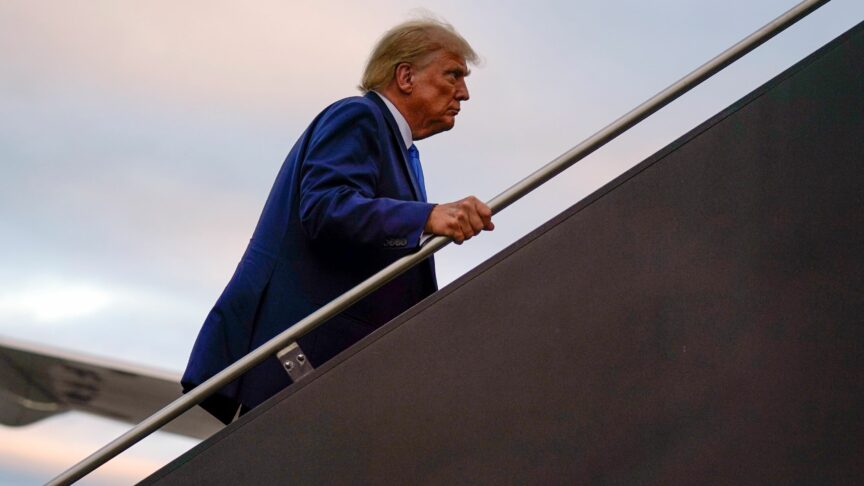
The prospect of Donald Trump’s return to the US presidency has left three Republican tribes vying it out to fill in the details of his hazy foreign policy ambitions
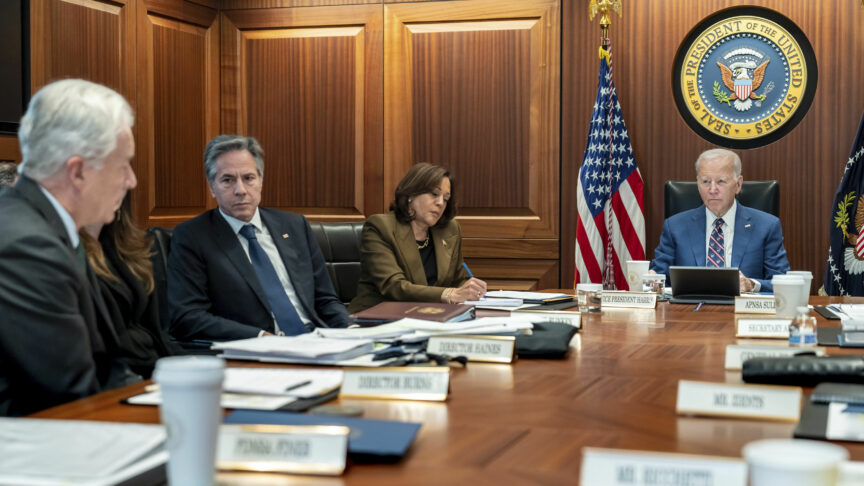
The US too often falls for its own superpower myth and fails to prioritise among its foreign policy commitments – including its present China challenge, which has not gone away

Support in the US for Ukraine will one day soften. Europeans need to formulate their own plan to continue the long war for when it does
A form of membership offer to Ukraine at NATO’s Vilnius summit will acquire an inexorable momentum of its own
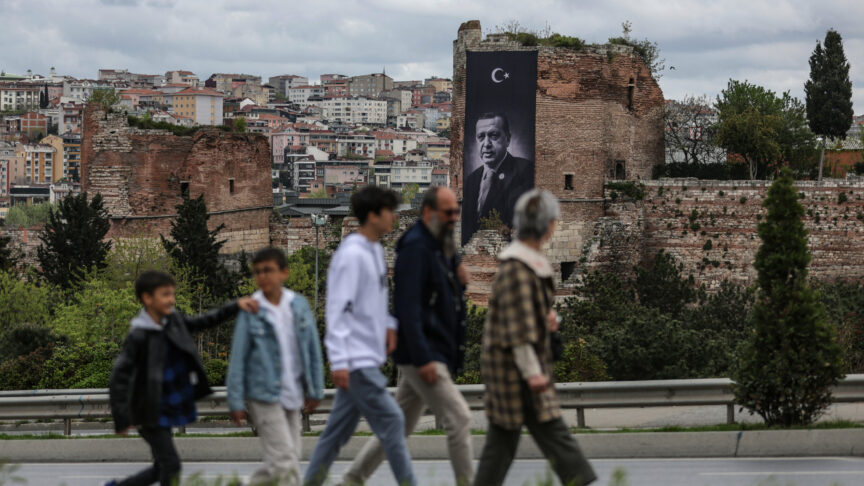
The US and the EU should refrain from making any interventions during Turkey’s election period – but they may need to respond quickly depending on the results of the vote
European leaders are underestimating the danger that Trump presents to the transatlantic alliance and assuming too much continuity in the event of a Clinton presidency
Mark Leonard welcomes Jeremy Shapiro to discuss America’s next policy moves as it responds to Russia’s war in Ukraine
Mark Leonard welcomes Alexander Ward and Jeremy Shapiro to discuss Biden’s foreign policy performance
Mark Leonard welcomes Hugh Lovatt, Julien Barnes-Dacey, and Jeremy Shapiro to discuss the current situation in Gaza and the possible futures of the war
Mark Leonard welcomes Gustav Gressel and Jeremy Shapiro to understand what factors will shape a third year of war in Ukraine
Mark Leonard and Jeremy Shapiro lay out ten foreign policy projections for 2024
Jeremy Shapiro welcomes Adebayo Olukoshi, Brian Kagoro, and Theodore Murphy to talk about Africa and the global order
In this week’s episode, Jeremy Shapiro welcomes Michael Kofman and Gustav Gressel to discuss the military situation in Ukraine
Jeremy Shapiro welcomes Cinzia Bianco and Hugh Lovatt to discuss the role of the Persian Gulf in the ongoing conflict in Gaza

Jeremy Shapiro welcomes Anu Bradford to discuss her new book “Digital Empires” and the race between China, the US, and the EU to regulate tech companies and the digital economy

Jeremy Shapiro welcomes Kadri Liik and Valerie Hopkins to discuss what Russian society really thinks about war in Ukraine
Russia’s war against Ukraine has shown how much the Europeans are still dependent on the US to ensure their security, despite all the talk of…
A discussion assessing Iranian foreign policy following Hamas’s attacks of 7 October, Israel’s war on Gaza and the death of Iranian President Ebrahim Raisi
Foreign policy seldom plays much of a role in American presidential elections, but the consequences of those contests can be profound for America’s allies in…
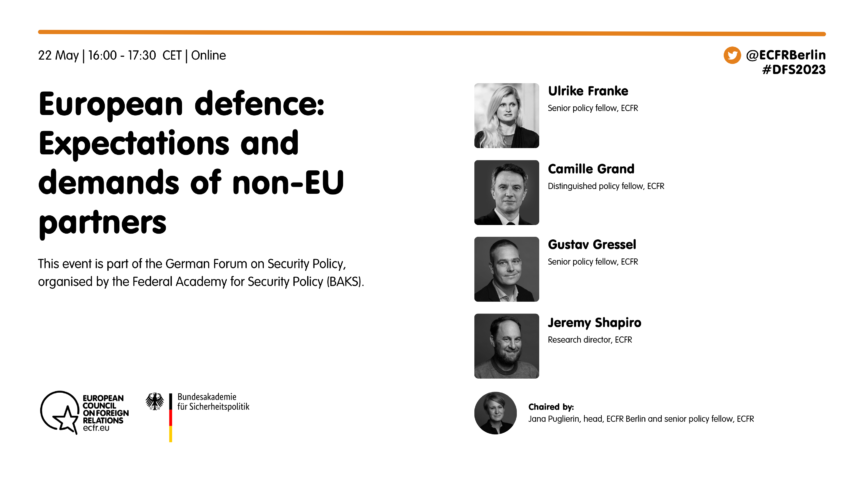
This event is part of the German Forum on Security Policy, organised by the Federal Academy for Security Policy (BAKS).
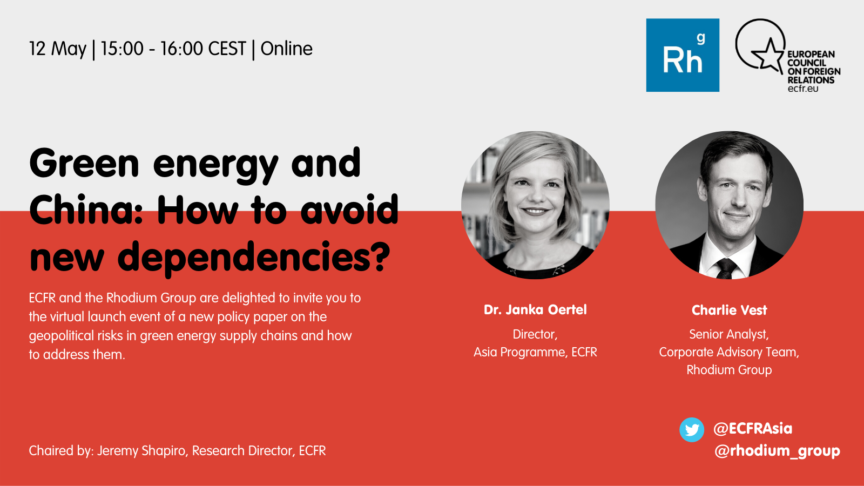
Rhodium Group are delighted to invite you to the virtual launch event of our new policy paper “Circuit Breakers: Securing the Green Energy Supply Chain”

The European Council on Foreign Relations in the context of the French Presidency of the Council of the EU is delighted to invite you to a debate on the principles that should guide Europe’s quest for economic sovereignty
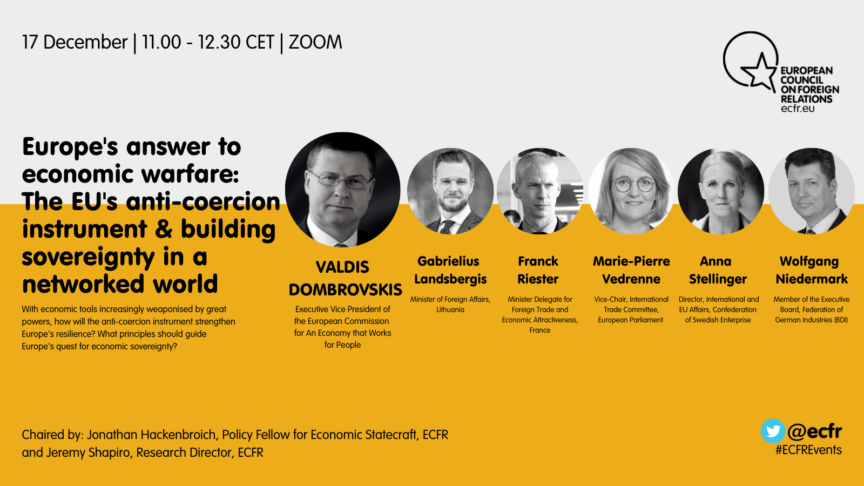
Join ECFR in this two-part event on the EU’s potentially game-changing geopolitical instrument against economic blackmail from great powers, and the principles that should guide Europe’s quest for economic sovereignty

The event will convene a high-level group of Italian decision-makers and opinion shapers across government, business, media and the expert community as well as member of ECFR Council
Jeremy Shapiro on NATO and its public relations
Jeremy Shapiro on the foreign policy of the Biden administration
It’s my prediction that [the prioritisers] will do the best in creating a foreign policy that appeals to President Trump
Jeremy Shapiro comments on the “war for Trump’s mind” currently underway in the Republican party
But no one is undermining the United States now, not even Emmanuel Macron
Jeremy Shapiro comments on the weakened leaders at upcoming summits
Jeremy Shapiro and Jana Puglierin on the US GDP being a third larger than the combined EU and UK economies