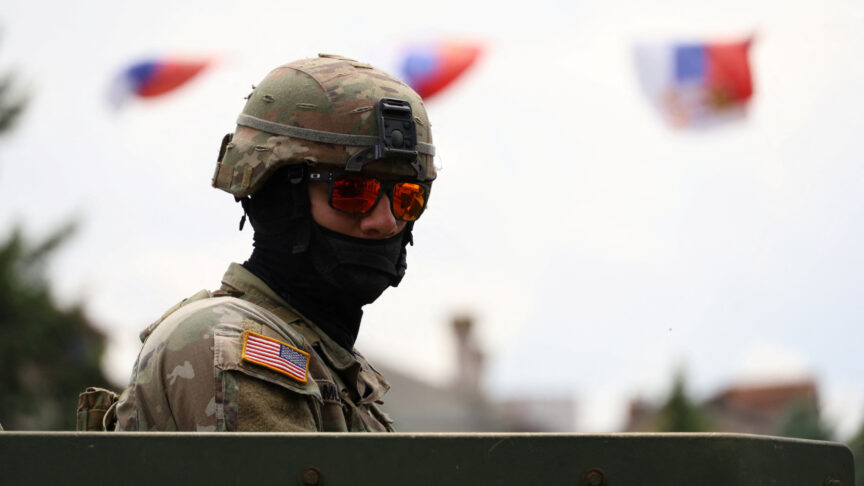
AI-powered command systems are becoming the backbone of modern warfare. NATO needs shared standards, but if those rest on American software, interoperability will come at the price of dependence
Jeremy Shapiro, with
Samuel Charap,
Bob Deen,
Hiski Haukkala,
Ivan Krastev,
Hanna Notte,
Jim O’Brien
Policy Brief
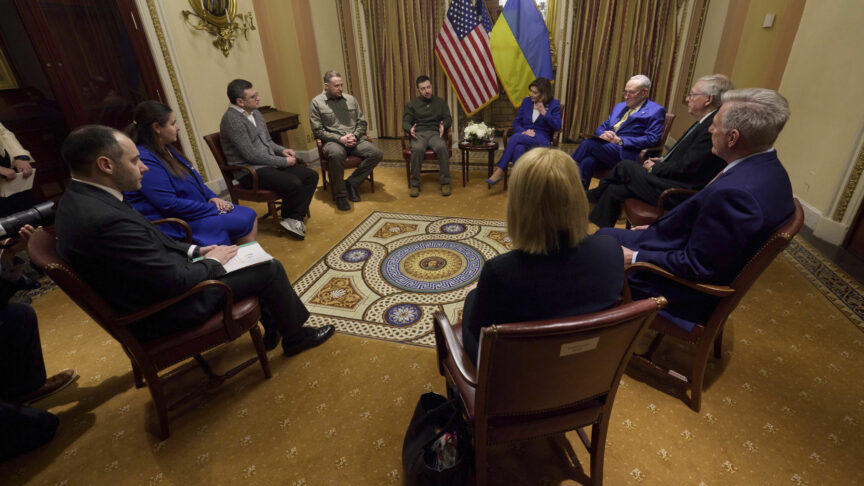
When the fighting in Ukraine stops, America and Europe will likely end up facing Russia in a low-grade rivalry for years to come. Here is how to prevent that disordered rivalry from sliding into another war
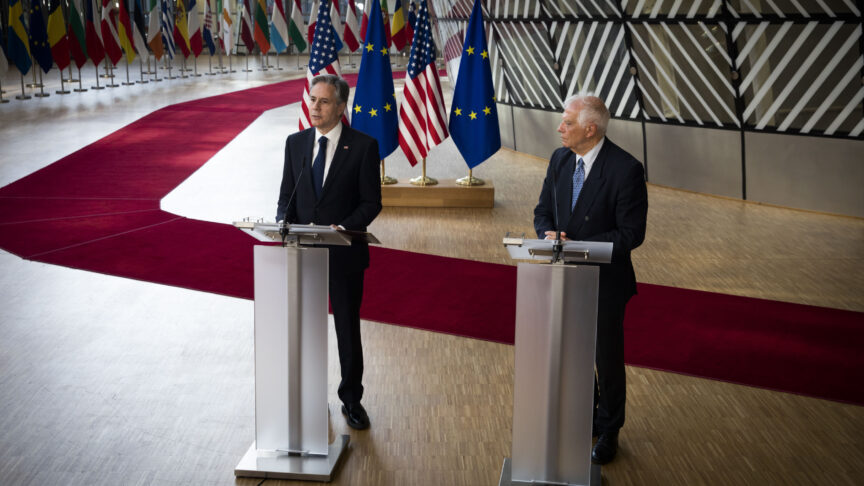
The special relationship has rarely felt so lacking in speciality. Donald Trump imposes tariffs at a whim, starts wars of choice without consultation, demands UK military participation in them, and then threatens abandonment if he doesn’t get it; some days all before lunch. All this upset has caused many in the UK and beyond to…
In Bosnia and Herzegovina, the United States is focused on doing business, at the expense of peace. There are ways for Europeans to acquire a veto over these destabilising activities; but the Trump administration may yet replicate this approach across the globe
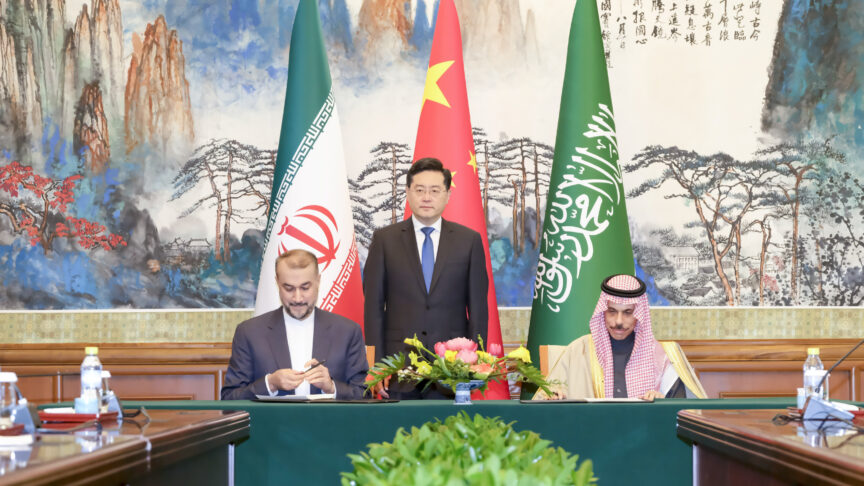
Julien Barnes-Dacey welcomes Prince Faisal bin Farhan Al Saud to discuss how the recently inked US-Iran deal could deliver a more stable regional order
The next Trump crisis will come. European governments facing American pressure will need to weigh the costs and benefits of their responses. Here are two scenarios to show what resistance costs, and why those costs are lower than they appear
A major ECFR poll finds the European public, in a time of rupture, thinking differently and questioning old assumptions. It reveals new political space available to their leaders (for now) and challenges them to use it
Rafael Loss, Marta Prochwicz Jazowska, Jana Puglierin
Policy Brief
The Russian threat is not going away any time soon. To defend themselves without America’s help, Europeans need to pursue a new, distinctly European model of defence and deterrence
Jeremy Shapiro, with
Samuel Charap,
Bob Deen,
Hiski Haukkala,
Ivan Krastev,
Hanna Notte,
Jim O’Brien
Policy Brief
When the fighting in Ukraine stops, America and Europe will likely end up facing Russia in a low-grade rivalry for years to come. Here is how to prevent that disordered rivalry from sliding into another war
The next Trump crisis will come. European governments facing American pressure will need to weigh the costs and benefits of their responses. Here are two scenarios to show what resistance costs, and why those costs are lower than they appear
A major ECFR poll finds the European public, in a time of rupture, thinking differently and questioning old assumptions. It reveals new political space available to their leaders (for now) and challenges them to use it
Rafael Loss, Marta Prochwicz Jazowska, Jana Puglierin
Policy Brief
The Russian threat is not going away any time soon. To defend themselves without America’s help, Europeans need to pursue a new, distinctly European model of defence and deterrence
As American leadership wanes, middle powers are stitching a patchwork order through new approaches to conflict mediation, connectivity and development. Although these formats are fragmented and opportunistic, Europe should engage with them pragmatically
In the second Trump era, Europe urgently needs to secure its autonomy. Leaders must therefore link together different islands of European public opinion to establish strong majorities for action
Trump’s foreign and security policy is the product of factional competition in the White House and a president fixated on short-term wins. Here’s how Europeans should come to terms with this new reality
The US president is throwing the EU lots of economic curveballs. Brussels should not be distracted by these; instead, it should double down on adopting measures that will benefit the bloc long after Donald Trump leaves the White House
AI-powered command systems are becoming the backbone of modern warfare. NATO needs shared standards, but if those rest on American software, interoperability will come at the price of dependence
In Bosnia and Herzegovina, the United States is focused on doing business, at the expense of peace. There are ways for Europeans to acquire a veto over these destabilising activities; but the Trump administration may yet replicate this approach across the globe
After threatening catastrophic escalation, Trump has agreed to a temporary ceasefire with Iran. Europeans need to use this moment to urgently push for a more lasting peace
Trump’s family and friends are trying—but failing—to broker peace in Gaza, Ukraine and beyond. The network they are building blends diplomacy with profit. Europe needs to find a way to shape the terms
The US has threatened Spain with a trade embargo for refusing it access to Spanish military bases. European leaders should use this moment to show they are capable of not bowing to Washington when it is against their interests
Donald Trump’s economic development plan for Gaza highlights the president’s preference for real estate over rights. Europeans and Arab states need to help Palestinians chart their own future
Julien Barnes-Dacey welcomes Prince Faisal bin Farhan Al Saud to discuss how the recently inked US-Iran deal could deliver a more stable regional order
Mark Leonard welcomes Jeremy Shapiro and Nacho Torreblanca to discuss what Donald Trump’s capture of Venezuelan president Nicolás Maduro means for the world
Trump’s first 100 days in office have brought chaos to US foreign and domestic policy. From imperial gestures to institutional erosion, Mark Leonard welcomes Jeremy Shapiro to unpack what this means for American democracy—and for Europe
Aslı Aydıntaşbaş and Jeremy Shapiro welcome Ken Weinstein to discuss why and how Trump’s negotiating tactics could strengthen the US foreign policy position, and help forge alliances against China
The special relationship has rarely felt so lacking in speciality. Donald Trump imposes tariffs at a whim, starts wars of choice without consultation, demands UK military participation in them, and then threatens abandonment if he doesn’t get it; some days all before lunch. All this upset has caused many in the UK and beyond to…
Over the past year, the trajectory of U.S. national security policy has raised sharp questions about strategic clarity, prioritization, and the balance between restraint and intervention. Candidate Donald Trump famously campaigned on an “America First” approach: reducing U.S. involvement overseas, withdrawing from forever wars in Ukraine and the Middle East, and emphasizing…
Russia’s hybrid warfare targeting NATO states has intensified since its full-scale invasion of Ukraine in 2022. Attacks on digital and energy infrastructure as well as drone incursions into NATO airspace occur almost daily now and put the alliance on alert about the potential of Russian aggression in the not-too-distant future. Between US president Trump…
Since the return of U.S. President Donald Trump to the White House in January, European policymakers have been struggling to sketch a sensible response to Trumponomics – an unpredictable, fast-changing and often baffling mix of U.S. trade, investment and finance policies that have a direct impact on Europe’s interests. In her latest ECFR policy brief,…
Europe today finds itself facing unprecedented global challenges and surrounded by transactional powers. Donald Trump is poised to redefine the global role of the US – revisiting alliances, challenging NATO, and treating security and trade alike as bargaining chips. China is pressing its advantage in technology, infrastructure, and diplomacy, asking Europeans to choose between principles…
Salón Embajadores, Casa de América | Plaza de la Cibeles, s/n, 28014, Madrid
·ECFR Madrid
La Unión Europea se encuentra en una coyuntura crítica. La segunda administración Trump ha intensificado la presión comercial sobre Europa con nuevos aranceles y una agenda abiertamente proteccionista. Mientras, China está aprovechando su capacidad industrial y el control sobre minerales estratégicos y tierras raras para reforzar su influencia. En este contexto de…
The NATO summit on 24-26 June 2025 is likely to be a flashpoint in the transatlantic relationship and another example of how the US, under President Trump 2.0, has changed the way it exerts power. From sweeping and volatile tariffs, a reduced military engagement in Europe, to an alliance with the most powerful US tech companies, the panel will try and decipher the long-term impact of the new US ways to conduct foreign policy
Saal des Polnischen Instituts, Europa-Haus Leipzig, Markt 10, 04109 Leipzig
·ECFR Berlin
Die transatlantischen Beziehungen, lange Zeit ein stabiles Fundament gemeinsamer Werte und Sicherheit, sind ins Wanken geraten. Spätestens seit der Münchner Sicherheitskonferenz zeigt sich: Das Bild von Freundschaft und Schulterschluss zwischen den USA und Europa bröckelt. Die Rhetorik aus Washington, die Europa teils als ideologischen Gegner betrachtet, und protektionistische Maßnahmen wie Sonderzölle belasten das…
Café Compagnon, 22-26 Rue Léopold Bellan, 75002 Paris
·ECFR Paris
Ce déjeuner a été l’occasion d’évoquer les défis économiques auxquels les entreprises européennes seront confrontées en 2025 et au-delà. La directrice du programme géoéconomie de l’ECFR, Agathe Demarais, est revenue sur les enjeux commerciaux, financiers et technologiques auxquels les Européens font face dans leurs relations avec l’administration Trump 2.0. Elle a également identifié les…
OnlineCentro Studi Americani, Via Michelangelo Caetani, 32, 00186 Roma RM
·ECFR Rome
Questa edizione del Transatlantic Forum ha visto il contributo di voci dal mondo accademico, dei think tank e del settore strategico, per discutere delle tensioni tra Stati Uniti e Cina, dalla competizione tecnologica all’evoluzione delle minacce ibride, dal cyberspazio alle infrastrutture critiche. Al centro del dibattito anche il ruolo dell’Europa tra interdipendenza e autonomia…