The climate emergency is worsening. Meanwhile, countries are less willing to cooperate on the energy transition, emission targets and aid for climate disaster—even as they become increasingly necessary. Under Donald Trump, America has drastically wound back climate legislation. Even the EU, which has some of the world’s most ambitious targets, may fall short of meeting them—especially if it can no longer rely on its traditional partners.
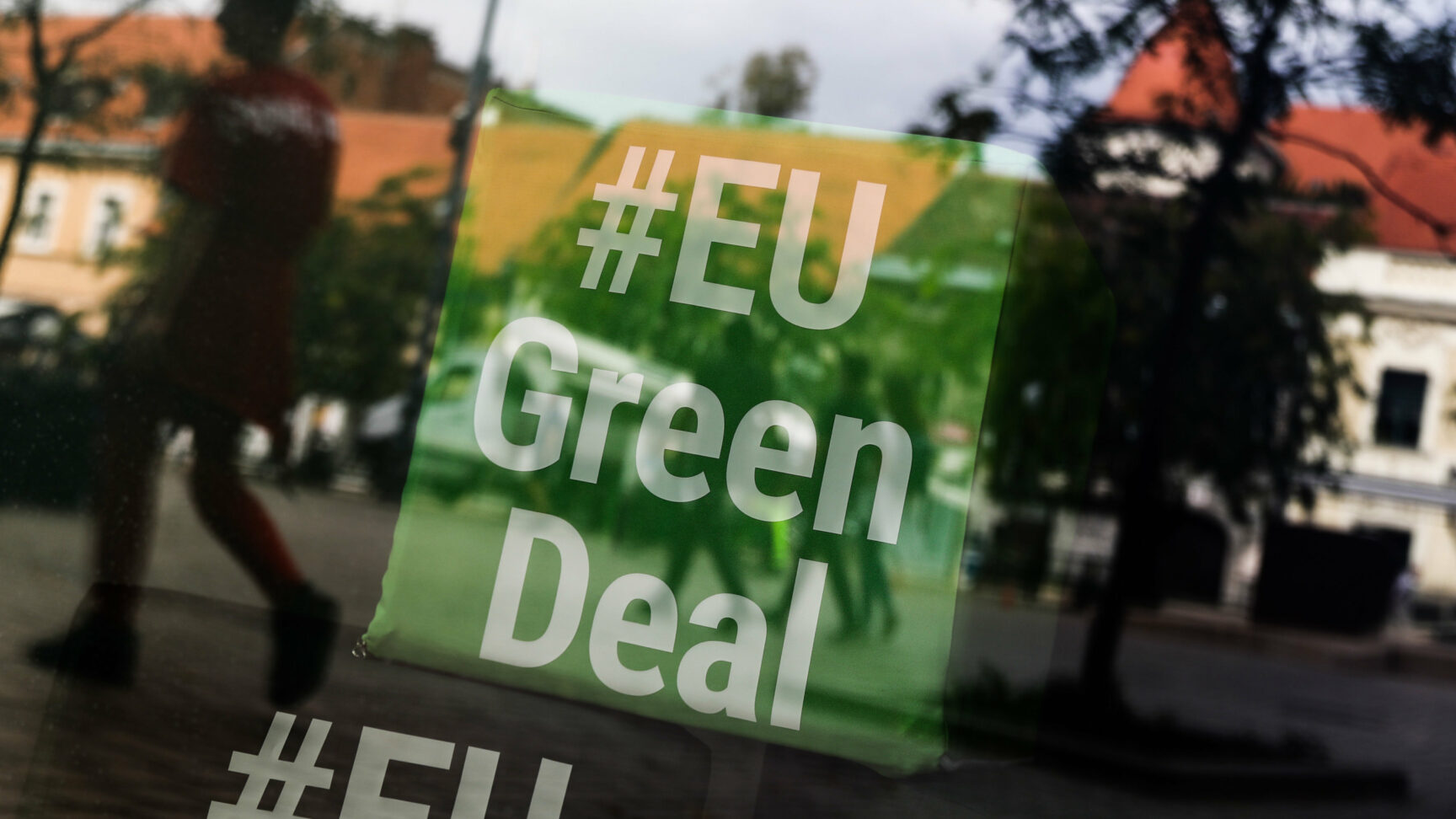
ECFR’s regular public opinion surveys show that tackling climate change at EU level enjoys strong public support across many member states. European leaders should build on this. To do so, ECFR’s work delves into how they can construct a compelling narrative for the European Green Deal. It explores how Europe can improve its economic competitiveness, secure its energy supply, build new international partnerships, and ultimately protect its future generations.
As climate policy becomes increasingly contested, Europe must adapt its Green Deal to a new political era. The first policy brief in the New Politics project outlines five new deals to make the transition more durable, popular and politically resilient
Social movements in North Africa increasingly focus on environmental concerns and the impact of climate change. Europeans must ensure their cooperation with governments in the region does not end up adding to activists’ grievances
China is already the undisputed champion of traditional manufacturing. But China’s leadership wants more: it aspires to lead in the next generation of production by 2035 – and biomanufacturing has emerged as a priority for China’s economic security, resilience and strategic autonomy. Europe has seen this movie before. As with solar panels or…
Reflecting on the findings from our previous events and drawing on Mark Leonard’s latest IPPR paper, Britain’s strategy for a decade of danger: Our nation, our continent, our world, the discussion will examine competing visions for Britain’s role in the world—from renewed reliance on the US, to a more globally diversified approach, to a strategic pivot…
As the UK pursues its ambition to become a “clean energy superpower”, it will have to navigate working with major geopolitical partners, like China and the EU, and the strategic trade-offs involved with aligning closer with one over the other. China has become an increasingly important supplier, investor, and manufacturer across key clean technologies,…
The Three Seas Initiative helped cut Europe’s dependence on Russian gas—but five of its nine flagship energy projects are still gas-related. The initiative should direct its new €2bn “fund of funds” towards building the clean-energy infrastructure that will outlast the gas era
As climate policy becomes increasingly contested, Europe must adapt its Green Deal to a new political era. The first policy brief in the New Politics project outlines five new deals to make the transition more durable, popular and politically resilient
The IMO’s Net-Zero Framework is critical for EU competitiveness and the clearest path to decarbonise shipping. African backing may prove decisive as American and Gulf pressure stalls progress
Europe’s energy, industrial and migration interests all converge in its southern neighbourhood, where rivals are eroding its influence. The new Pact for the Mediterranean can reverse this, but only if Brussels puts grand bargains on the table
As climate policy becomes increasingly contested, Europe must adapt its Green Deal to a new political era. The first policy brief in the New Politics project outlines five new deals to make the transition more durable, popular and politically resilient
The IMO’s Net-Zero Framework is critical for EU competitiveness and the clearest path to decarbonise shipping. African backing may prove decisive as American and Gulf pressure stalls progress
Europe’s energy, industrial and migration interests all converge in its southern neighbourhood, where rivals are eroding its influence. The new Pact for the Mediterranean can reverse this, but only if Brussels puts grand bargains on the table
The geoeconomic power of the future will be shaped by climate policy. Countries that play the right moves in regulation, clean-tech production and climate finance today will win in the electrified world of tomorrow
China’s manufacturing surge and trade tactics are dampening Europe’s clean-tech goals. Europeans need to forge coalitions across wary member states to secure their energy independence
The ethos of the EU’s “Pact for the Mediterranean” could help revitalise cooperation on clean energy with Tunisia—but only if Europeans learn how to better factor in the country’s politics
Social movements in North Africa increasingly focus on environmental concerns and the impact of climate change. Europeans must ensure their cooperation with governments in the region does not end up adding to activists’ grievances
The Three Seas Initiative helped cut Europe’s dependence on Russian gas—but five of its nine flagship energy projects are still gas-related. The initiative should direct its new €2bn “fund of funds” towards building the clean-energy infrastructure that will outlast the gas era
Europe’s climate goals, industrial plans and geopolitical ambitions are outpacing its electricity infrastructure. If upgrades do not speed up, the grid will become the main barrier to Europe’s success
European carmakers are falling behind Chinese makers of electric vehicles. Yet watered-down climate targets will not help European cars compete with China; a different approach is needed
Beijing is turning its rare earth monopoly into a weapon. The EU needs to treat this as the emergency that it is and unleash its anti-coercion shield to bring China to the negotiating table
The EU’s new 2040 climate target will only be credible if it works more closely with partners worldwide—sharing technology, financing green transitions, and reducing strategic dependencies
European investment in Africa should focus on climate-smart business. This will develop the continent’s resilient infrastructure, secure job creation and support sustainable food systems—while strengthening Europe’s hand amid geopolitical turbulence
Susi Dennison, Szymon Kardaś, Gosia Piaskowska, Paweł Zerka
Special
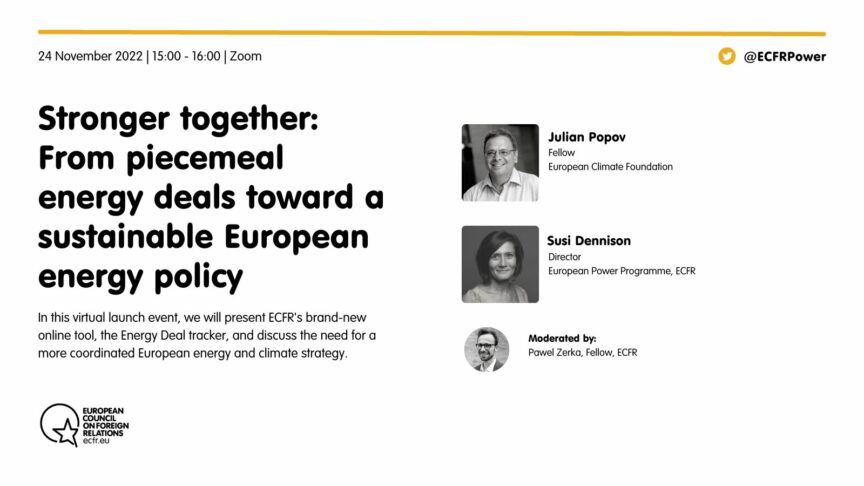
The energy deals the EU and its member states are now making with third countries will shape Europeans’ ability to protect their energy security in the long term. The EU Energy Deals Tracker provides a comprehensive overview of these agreements, including their implications for the sustainable transition
To achieve the ambitions of the European Green Deal, the European Commission insists that healthy oceans and a sustainable maritime economy are crucial. With…
Beyond the UN formats, countries around the world are forging hundreds of bilateral and multilateral agreements to advance the clean energy transition. India has…
Action on climate financing is long overdue. Inadequate mitigation and adaptation have already led to substantial loss and damage in the most vulnerable countries
On location at the Doha Forum 2022, Mark Leonard and his guests discuss Western energy sanctions on Russia and why is there a reluctance in the Gulf states and the West to cooperate on energy supplies
China is already the undisputed champion of traditional manufacturing. But China’s leadership wants more: it aspires to lead in the next generation of production by 2035 – and biomanufacturing has emerged as a priority for China’s economic security, resilience and strategic autonomy. Europe has seen this movie before. As with solar panels or…
Reflecting on the findings from our previous events and drawing on Mark Leonard’s latest IPPR paper, Britain’s strategy for a decade of danger: Our nation, our continent, our world, the discussion will examine competing visions for Britain’s role in the world—from renewed reliance on the US, to a more globally diversified approach, to a strategic pivot…
As the UK pursues its ambition to become a “clean energy superpower”, it will have to navigate working with major geopolitical partners, like China and the EU, and the strategic trade-offs involved with aligning closer with one over the other. China has become an increasingly important supplier, investor, and manufacturer across key clean technologies,…
A growing transatlantic narrative claims that climate action is a gift to China and pressure is mounting on European policymakers to delay and water down the continent’s energy transition to safeguard its competitiveness. Yet such a dilemma between fighting climate change and remaining competitive is largely fallacious: the energy transition is already reshaping the global balance of…
Quest’anno lo European Council on Foreign Relations (ECFR) e l’Institute of Sustainable Development and International Relations (IDDRI) co-presiedono il Think7 (T7), il gruppo di consultazione ufficiale del G7 per i think tank e i centri di ricerca a livello mondiale, con l’obiettivo di elaborare nuove proposte politiche per i paesi del G7. In questo contesto, ECFR ha preparato 4 solution…
Center for American Studies, Via Michelangelo Caetani 32, Rome, Italy
·ECFR Rome
As Africa becomes an increasingly central arena for Russia’s interests, the role of the United States and China is undergoing significant transformation. With Trump’s return to the White House, a broader US economic-military repositioning in Africa to contain external influences seems to occur, while Beijing continues to deepen its structural economic presence across the…
The EU lacks cohesive governance to deploy economic statecraft tools, such as sanctions and export controls, undermining their impact and the bloc’s global credibility. In this webinar, Agathe Demarais and Abraham Newman will discuss their recent policy brief, outlining how the creation of an EU network focused on the design and implementation of…
Polityka Insight and ECFR invite you to join us for the livestream of this year’s Warsaw European Conversation. At Polityka Insight and ECFR, we believe there is an urgent need to engage in a critical conversation about the risks and trends shaping the European project. For this reason, we invite you to join forces, and participate…
As European leaders navigate the EU’s strategic future amid rising geopolitical tensions, a critical mass of middle powers, from India and Turkey to the Gulf monarchies, is increasingly affecting Europe’s engagement across Africa. The United Arab Emirates has emerged as an exceptionally active player in Africa over the last few years, focusing particularly…
OnlineVia del Quirinale 26, 00186 Roma & online
·ECFR Rome
La sfida tecnologica posta dalla transizione energetica è un fattore dirimente di competizione tra gli
attori internazionali, con implicazioni critiche sul futuro assetto geoeconomico globale, come reso
evidente dalle tensioni nelle relazioni commerciali tra Stati Uniti, Cina e Unione Europea. Allo stesso
tempo, la proiezione esterna degli attori internazionali e lo sforzo di costruzione di nuove partnership
e collaborazioni sono meccanismi essenziali per lo sviluppo di catene del valore resilienti