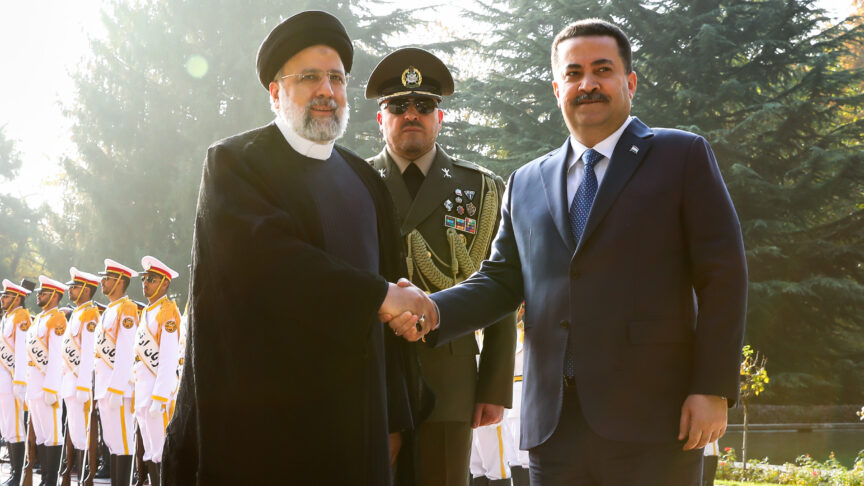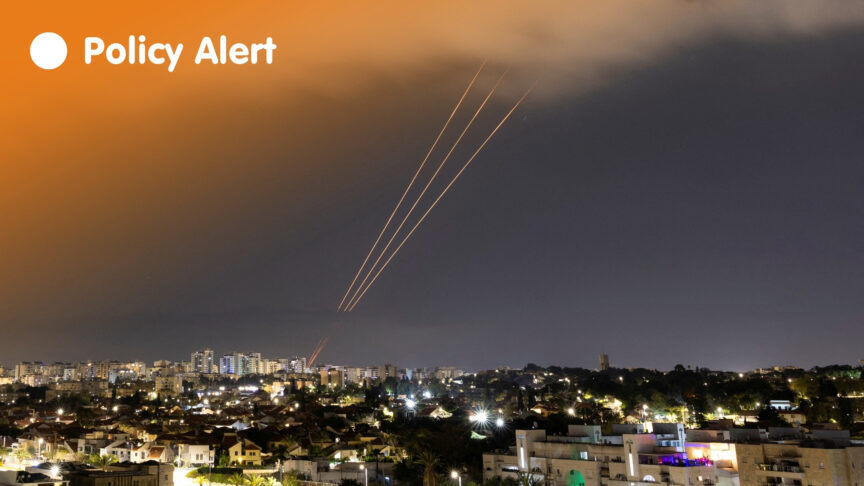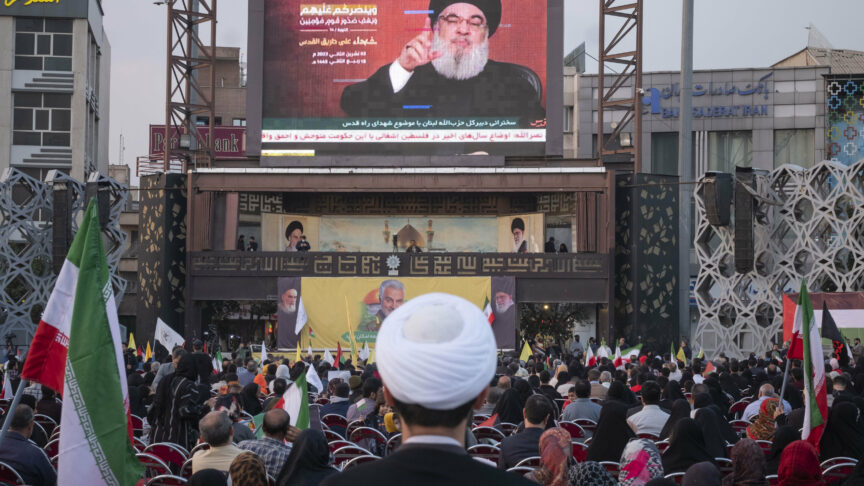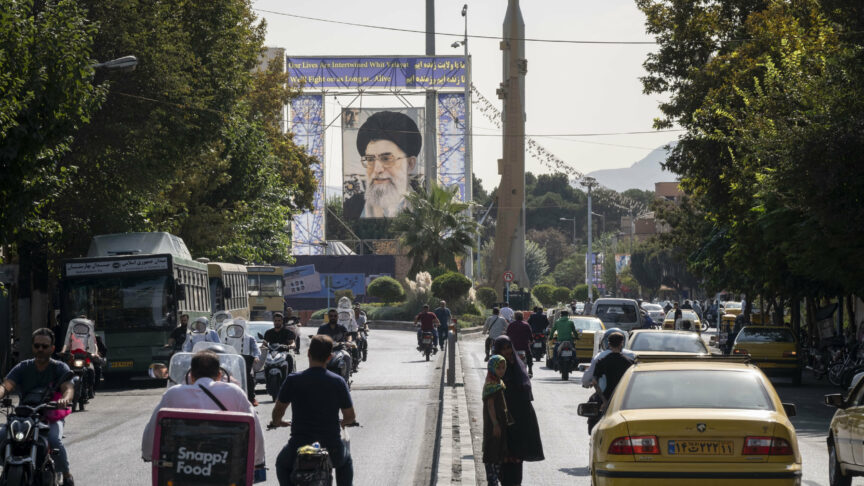
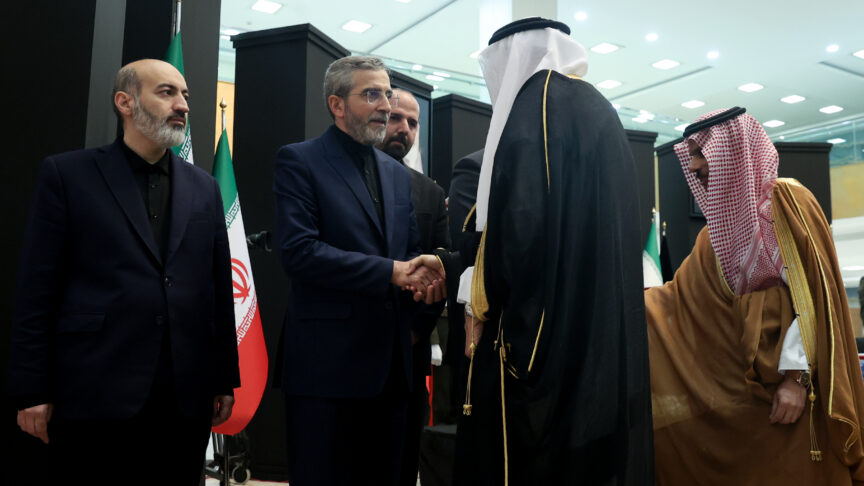
For two decades the United Arab Emirates has built its influence on connectivity: ports, air links, finance and data centres that made Abu Dhabi and Dubai difficult to bypass. The 2026 war with Iran has tested that model harder than anything before it. By the ceasefire in April, Emirati air defences had engaged more…
Mark Leonard welcomes Ellie Geranmayeh to discuss the latest phase of the US-Iran conflict, the escalating economic pressure campaign against Tehran and the risks of a prolonged war without a clear exit strategy
As the Houthis attack Saudi ships and infrastructure, Riyadh faces an increasingly difficult choice: absorb the blows to stay out of the Iran war or retaliate and risk a dangerous escalation
While the war with Iran continues to escalate, Donald Trump is still set to visit China with which the stakes extend from tariffs and intensifying geopolitical rivalry. Under its latest 5-year plan, Beijing is doubling down on a centralised, export-dominated system that will intensify competition with both the US and Europe. Trump and Xi…
Julien Barnes-Dacey welcomes Prince Faisal bin Farhan Al Saud to discuss how the recently inked US-Iran deal could deliver a more stable regional order
The Iran war has exposed the limits of an economic corridor built for peacetime. Europeans should rethink the India-Middle East-Europe Economic Corridor for a region where trade routes are now strategic targets
Mark Leonard, Kelsey Davenport and Ellie Geranmayeh introduce ECFR’s Iran nuclear monitor, and discuss the key risks and scenarios associated with Iran’s current nuclear capacity
America and Israel have bombed Iran since 2025 to block Tehran’s path to nuclear weapons. ECFR’s interactive dashboard, updated monthly, assesses current evidence about Iran’s nuclear activities to determine which of six possible scenarios is most likely
Iran’s attacks on the Gulf have convinced Abu Dhabi that accommodation with Tehran has failed. Leaving OPEC reflects the UAE’s turn towards strategic autonomy, harder security alliances and a regional order less constrained by old consensuses
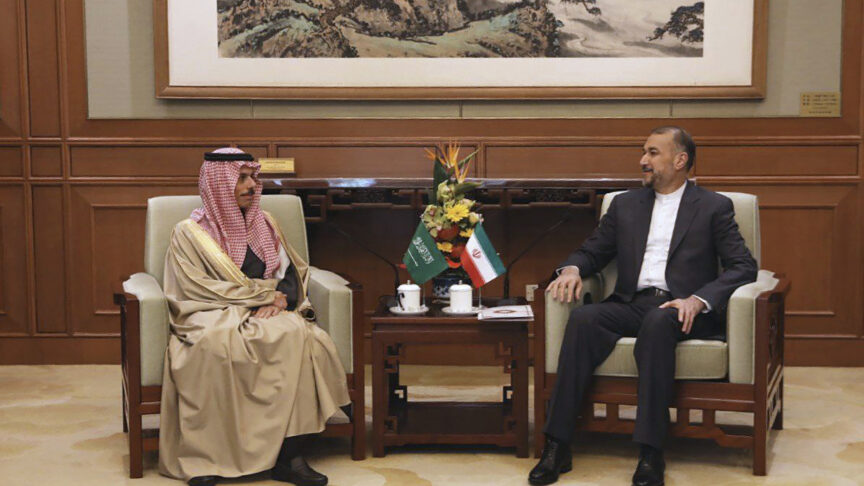
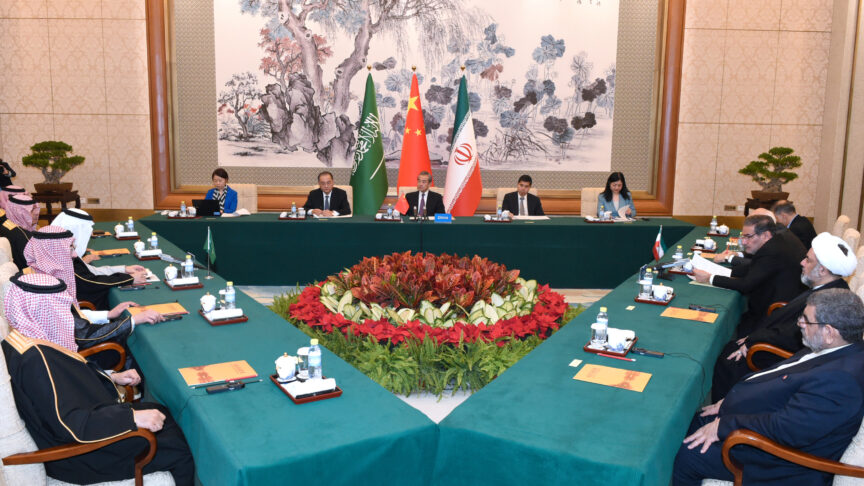
Saudi-Iran diplomacy offers a rare path to prevent deepening conflict in the Middle East and support regional stability. Europeans should see this diplomacy as a chance to address their core interests, and not just as Iran’s attempt to bypass Western pressure
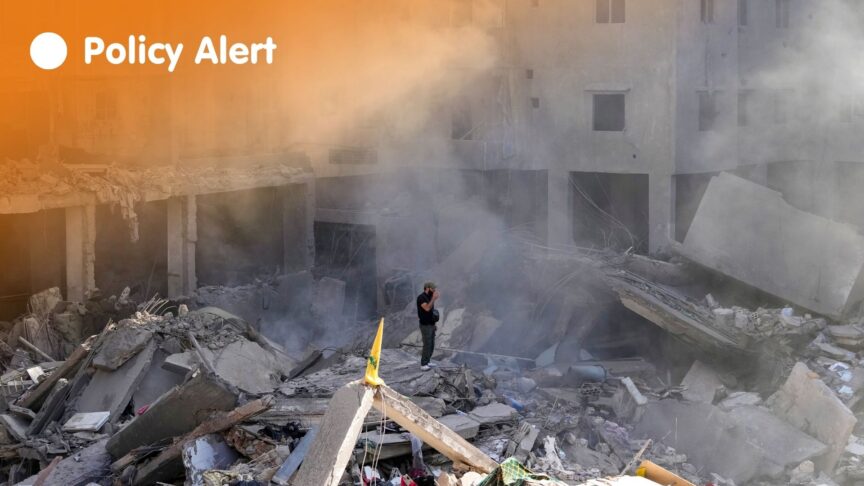
Iran has spent decades building up its influence in the Levant as part of its deterrence posture against Israel (and the US). The war in Gaza is now pushing the longstanding Israeli-Iranian conflict out into the open – and Lebanon and Syria are potential flashpoints for further escalation
The cycle of escalation in the Middle East since 7 October means Iraq has once again found itself a staging ground for Iranian-US conflict. But the relationship between Iraq and Iran is complex and multifaceted – and Europeans can help Iraq build its autonomy
As the Houthis attack Saudi ships and infrastructure, Riyadh faces an increasingly difficult choice: absorb the blows to stay out of the Iran war or retaliate and risk a dangerous escalation
The Iran war has exposed the limits of an economic corridor built for peacetime. Europeans should rethink the India-Middle East-Europe Economic Corridor for a region where trade routes are now strategic targets
Iran’s attacks on the Gulf have convinced Abu Dhabi that accommodation with Tehran has failed. Leaving OPEC reflects the UAE’s turn towards strategic autonomy, harder security alliances and a regional order less constrained by old consensuses
Russia is reaping the rewards from Trump’s war in Iran, but the benefits will likely not extend beyond the short term. Here’s how Europeans can make the long term arrive more quickly
Tensions in the Strait of Hormuz are disrupting global energy flows. Europe must overhaul its energy strategy to focus on renewables, LNG, nuclear power and reducing oil dependency—and finally commit to safeguarding its long-term security
After threatening catastrophic escalation, Trump has agreed to a temporary ceasefire with Iran. Europeans need to use this moment to urgently push for a more lasting peace
If Trump follows through on his threat to bomb Iran’s energy infrastructure, the Strait of Hormuz is likely to shut down entirely and the catastrophic energy crisis will deepen. Europeans need to push for an urgent and sustainable ceasefire
Some European leaders’ comments are going even further than overlooking the unlawful nature of the war—and could open the door to a further weakening of the non-aggression principle
America and Israel have bombed Iran since 2025 to block Tehran’s path to nuclear weapons. ECFR’s interactive dashboard, updated monthly, assesses current evidence about Iran’s nuclear activities to determine which of six possible scenarios is most likely
European states face accusations of neglecting the matter of human rights in their southern neighbourhood, and even of being complicit. Yet they are failing to maximise the influence they could bring to bear
Mark Leonard welcomes Ellie Geranmayeh to discuss the latest phase of the US-Iran conflict, the escalating economic pressure campaign against Tehran and the risks of a prolonged war without a clear exit strategy
Julien Barnes-Dacey welcomes Prince Faisal bin Farhan Al Saud to discuss how the recently inked US-Iran deal could deliver a more stable regional order
Mark Leonard, Kelsey Davenport and Ellie Geranmayeh introduce ECFR’s Iran nuclear monitor, and discuss the key risks and scenarios associated with Iran’s current nuclear capacity
Mark Leonard welcomes Piotr Buras, Carla Hobbs, Camille Lons, Jana Puglierin and Arturo Varvelli to discuss how Europe is responding to the war in Iran
Mark Leonard welcomes Aziz Alghashian, Eran Etzion and Ellie Geranmayeh to discuss the implications of a prolonged war in the Middle East and possible ceasefire scenarios
Mark Leonard welcomes Ellie Geranmayeh and Hugh Lovatt, fresh from the Doha Forum, to unravel the geopolitical changes and diplomatic efforts shaping Middle Eastern politics
For two decades the United Arab Emirates has built its influence on connectivity: ports, air links, finance and data centres that made Abu Dhabi and Dubai difficult to bypass. The 2026 war with Iran has tested that model harder than anything before it. By the ceasefire in April, Emirati air defences had engaged more…
While the war with Iran continues to escalate, Donald Trump is still set to visit China with which the stakes extend from tariffs and intensifying geopolitical rivalry. Under its latest 5-year plan, Beijing is doubling down on a centralised, export-dominated system that will intensify competition with both the US and Europe. Trump and Xi…
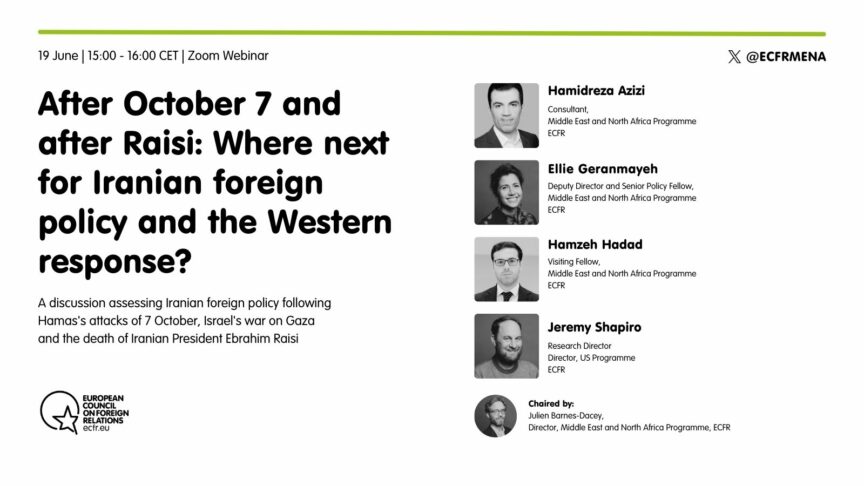
A discussion assessing Iranian foreign policy following Hamas’s attacks of 7 October, Israel’s war on Gaza and the death of Iranian President Ebrahim Raisi
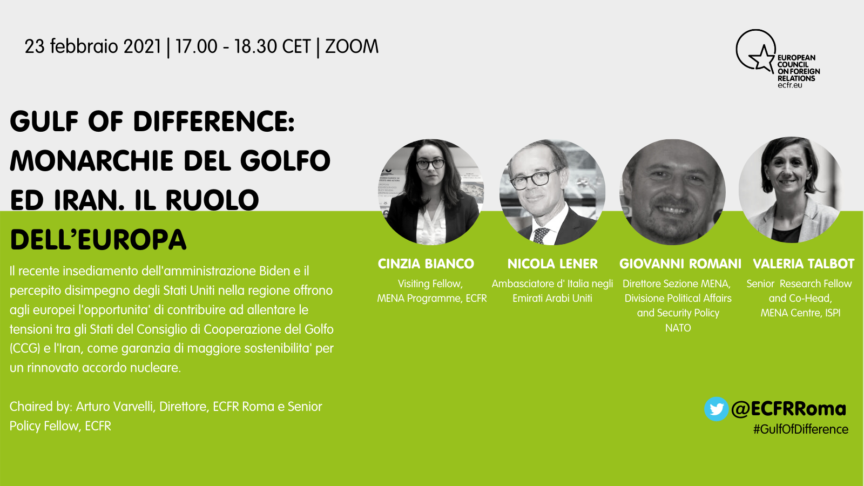
Il recente insediamento dell’amministrazione Biden a Washington e il percepito disimpegno degli Stati Uniti nella regione offrono agli europei l’opportunità di contribuire ad allentare le tensioni tra gli Stati del Consiglio di Cooperazione del Golfo (CCG) e l’Iran
The Israeli and US war on Iran is destabilising the entire Gulf region and severely disrupting energy and trade flows. It has far-reaching implications for Europe’s security and prosperity. ECFR experts are analysing the war as it unfolds—and exploring what it means for European interests.