Belarus domestic and foreign policy issues, relations with Russia and the European Union
Languages
Belarusian, Russian, English, Spanish. Swedish and Polish (both basic level)
Biography
Pavel Slunkin is a visiting fellow at the European Council on Foreign Relations, based in ECFR’s Warsaw office. He works on Belarus-related issues: its domestic and foreign policy, relations with Russia, the European Union, and the United States.
Prior to joining ECFR he worked for the foreign ministry of Belarus. Slunkin participated in Minsk talks on Ukraine preparation and worked as political analyst at the embassy of Belarus in Lithuania.
Slunkin holds a BA (Hons) in International Relations from the Belarusian State University and is an alumnus of several programmes by Clingendael Institute of International Relations (the Netherlands), Wake Forest University (US), Friedrich Ebert Stiftung (Germany).
Before the January 2022 riots, Kazakhstan was a model for managing transitions of power in the post-Soviet world. The leaders of Russia and Belarus will be furiously taking notes on how to avoid a similar fate
The EU should show the Lukashenka regime that it will no longer tolerate the weaponisation of migration. As with any form of blackmail, it would be senseless and dangerous to make concessions – because the aggressor will only demand more
A year on from the falsified presidential election, two Belaruses now occupy the international arena. Neither the West nor Russia will be able to change this reality, but each will have to learn to live with both
The arrest of Raman Pratasevich changed the calculus for EU capitals, which agreed new sanctions with real bite. The EU could finally be succeeding in its search for strategic sovereignty
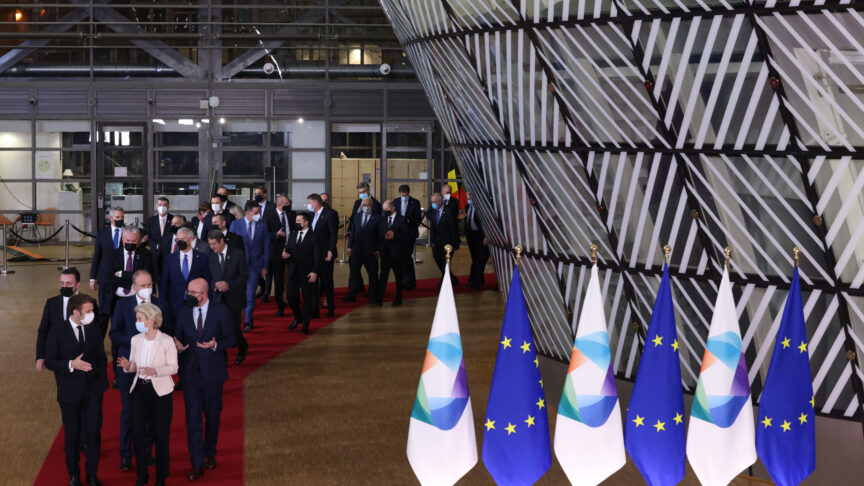
The EU’s success is mixed in generating reform among Eastern Partnership countries. But patience and self-confidence remain its best bet for the future
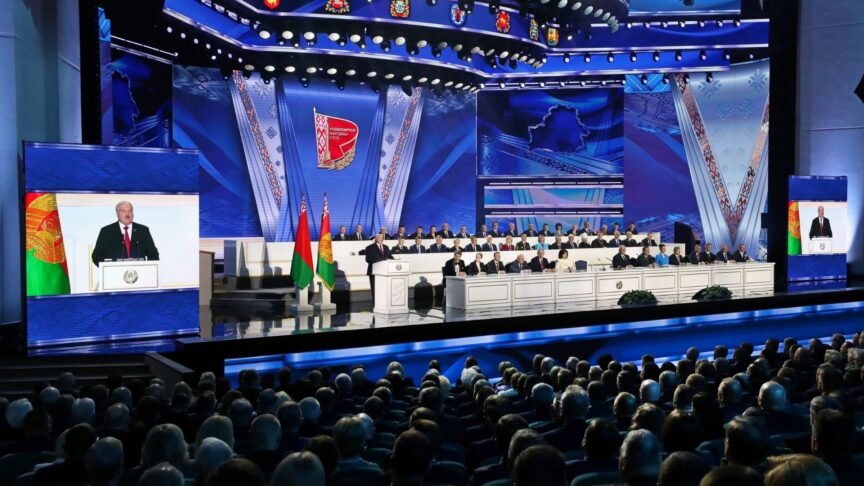
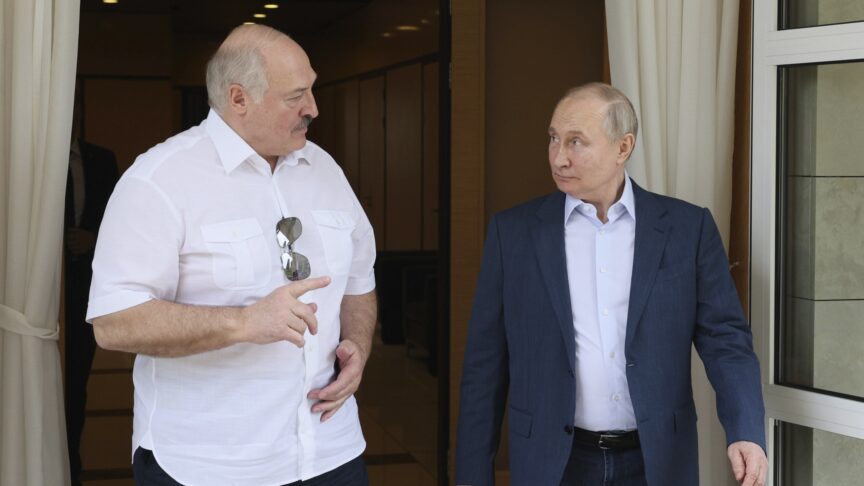
Belarusian leader, Aliaksandr Lukashenka, has created a new and constitutionally powerful assembly that could secure him a smooth transition of power to his loyalists after his rule. But for now, he will control it himself
The upcoming Belarusian parliamentary election on 25 February will be, as usual, a one-man show. The EU should not be deceived by the special effects, but instead take note of the stage directions
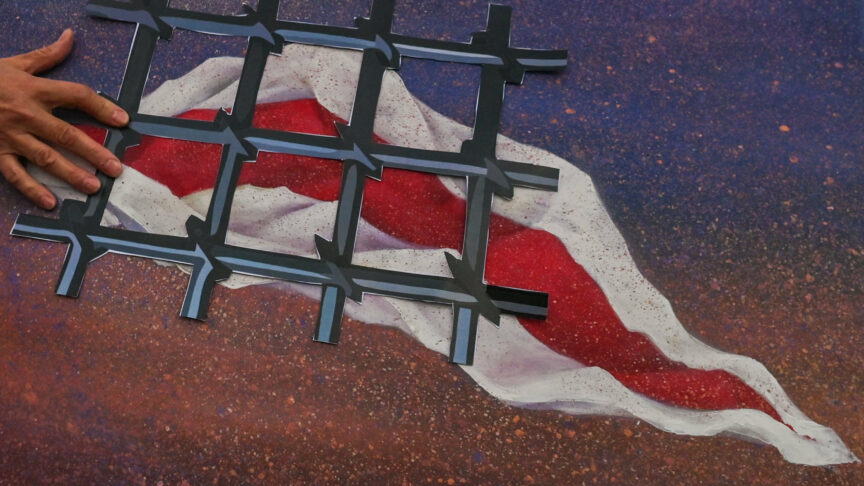
Just beyond the borders of the EU, the prisons of Belarus hold thousands of hostages of the Lukashenko regime. There is no magic formula for their release, but the EU can draw on international examples to save the lives of at least some of them
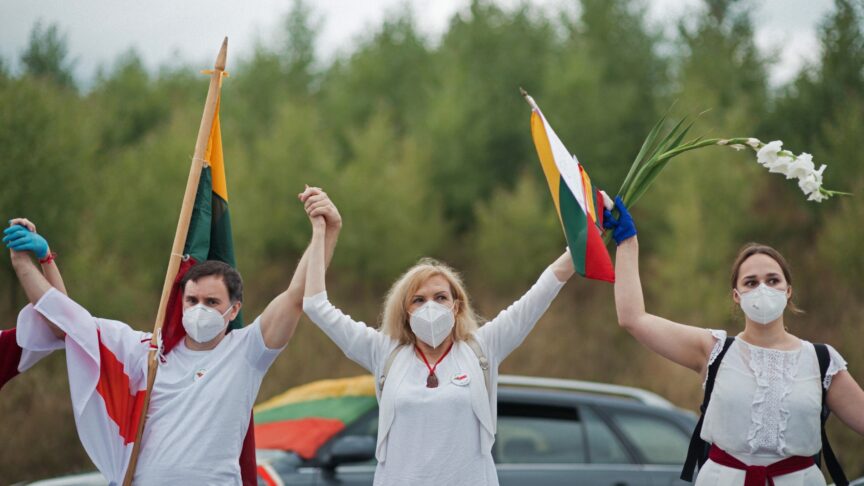
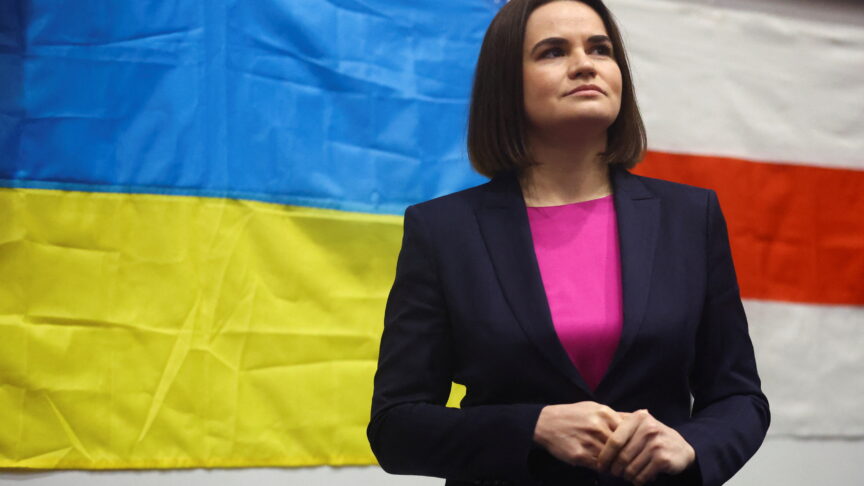
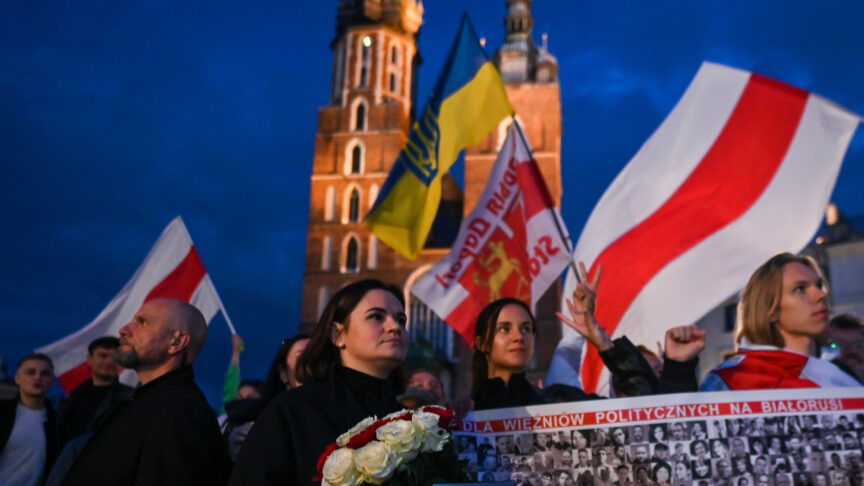
Three years after Belarus’s democratic uprising, Belarusians in Europe are met with increasing suspicion, but now more than ever, European leaders should guarantee enduring support to Belarusian exiles
Margaryta Khvostova, Dmytro Kryvosheiev, Pavel Slunkin
Commentary
Despite their common goals, the Ukrainian authorities have shown little interest in cooperating with the Belarusian opposition. As an ally to both, the EU can facilitate their understanding and engagement
Putin may be bluffing about the deployment of tactical nuclear weapons in Belarus. But if he follows through, the chance of a democratic transition for Belarus could all but vanish
Mark Leonard welcomes Theo Murphy, Pavel Slunkin, Kadri Liik, and Kirill Shamiev to shed light on the possible consequences of Yevgeny Prigozhin’s death
Mark Leonard welcomes Marie Dumoulin, Kadri Liik, Pavel Slunkin and Kiril Shamiev to shed light on the weekend’s events and discuss the new reality that has opened up in Russia
Lithuanian Embassy in Paris, 22 Boulevard de Courcelles, 75017 Paris
·ECFR Paris
This event will discuss Belarus’ role in Russia’s war against Ukraine and the repressions and threats faced by the democratic opposition in Belarus and in exile. It will also explore possible actions by Western countries in this context
How to effectively separate the Belarusian society from the regime when taking sanctions measures? Will the independence of Belarus survive international isolation left alone with an expansionist Russia?
Pavel Slunkin and Gabriele Valodskaitė argue why Europe should support emigrants from Belarus
You are currently viewing a placeholder content from Facebook. To access the actual content, click the button below. Please note that doing so will share data with third-party providers.
You are currently viewing a placeholder content from Instagram. To access the actual content, click the button below. Please note that doing so will share data with third-party providers.
You are currently viewing a placeholder content from OpenStreetMap. To access the actual content, click the button below. Please note that doing so will share data with third-party providers.