ECFR’s World in 30 Minutes: The future of Syria
ECFR's director Mark Leonard speaks to Alexandra Saieh, Policy Officer for Oxfam's Syria crisis response in Jordan, Fyodor Lukyanov, Editor-in-Chief of Russia in Global…


Director, Middle East and North Africa programme
Middle East and North Africa
English, French, Arabic
Julien Barnes-Dacey is the director of the Middle East & North Africa programme at the European Council on Foreign Relations. He works on European policy towards the wider region, with a particular focus on Syria and regional geopolitics.
Barnes-Dacey’s recent publications include “Principled pragmatism: Europe’s place in a multipolar Middle East,” “Society max: How Europe can help Syrians survive Assad and coronavirus,” and “Guns and governance: How Europe should talk with non-state armed groups in the Middle East.” His work has been published in the likes of Foreign Policy, Politico, the Financial Times, and the New York Times.
Immediately prior to joining ECFR Barnes-Dacey headed the MENA practice at Control Risks, a private sector consultancy. Before this he worked as a journalist across the Middle East. Based in Syria from 2007 to 2010, he reported for publications including the Financial Times, the Wall Street Journal and the Christian Science Monitor. He worked across Iraq as editor of Niqash and was also based in Egypt. Barnes-Dacey was an assistant foreign editor for UK television’s Channel 4 News, and a field producer for Al Jazeera International.
Barnes-Dacey holds a BA in history from the London School of Economics, an MA in Middle Eastern Studies from the School of Oriental and African Studies, and studied Arabic at the Institut Français du Proche-Orient.
ECFR's director Mark Leonard speaks to Alexandra Saieh, Policy Officer for Oxfam's Syria crisis response in Jordan, Fyodor Lukyanov, Editor-in-Chief of Russia in Global…
Le directeur de l'ECFR Mark Leonard discute avec Alexandra Saieh, Policy Officer pour “Oxfam's Syria crisis response in Jordan”, Fyodor Lukyanov, éditeur en chef…
The sixth ECFR Foreign Policy Scorecard highlights the EU’s diminishing ability to influence its neighbours, and the neighbourhood’s growing impact on the EU
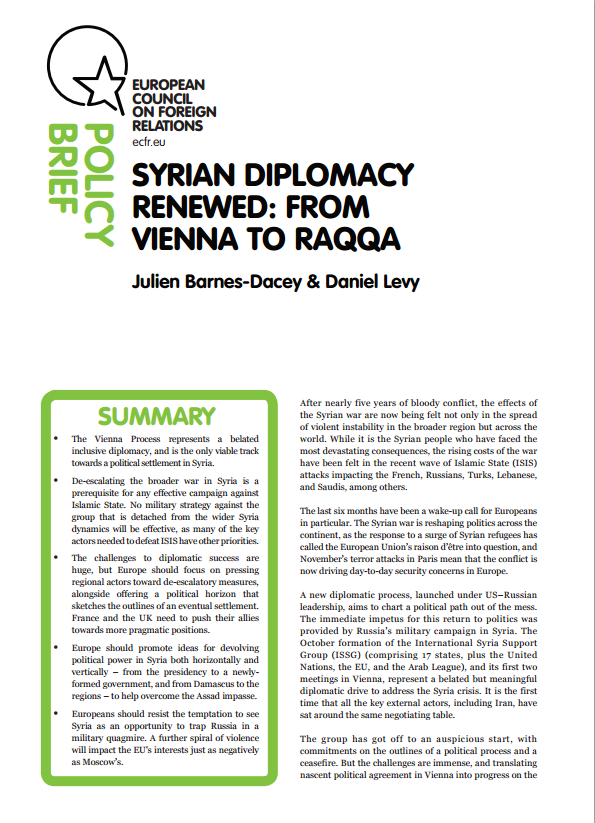
An “Islamic State first” strategy, that neglects the urgent need to secure political progress and de-escalation in Syria will fail
Domestic questions overwhelm the debate in the UK
Julien Barnes-Dacey and Kadri Liik, Senior Policy Fellows at ECFR, Jeremy Shapiro, Fellow at Brookings, and Dr Rim Turkmani, co-founder of the Syrian Civil…
ECFR's director Mark Leonard speaks to Nikolay Kozhanov, scholar at the Carnegie Moscow Centre, Jeremy Shapiro, Policy Fellow at Brookings, and ECFR Senior Policy Fellow…
Snap analysis on the nature of Russia's involvement from an ECFR Syria expert
Julien Barnes-Dacey explores to what extent the regional powers are responsible for the state of the conflict in Syria today
ECFR's director Mark Leonard speaks to Daniel Levy, director of the MENA programme, and to policy fellows Julien Barnes-Dacey and Ellie Geranmayeh, about the…
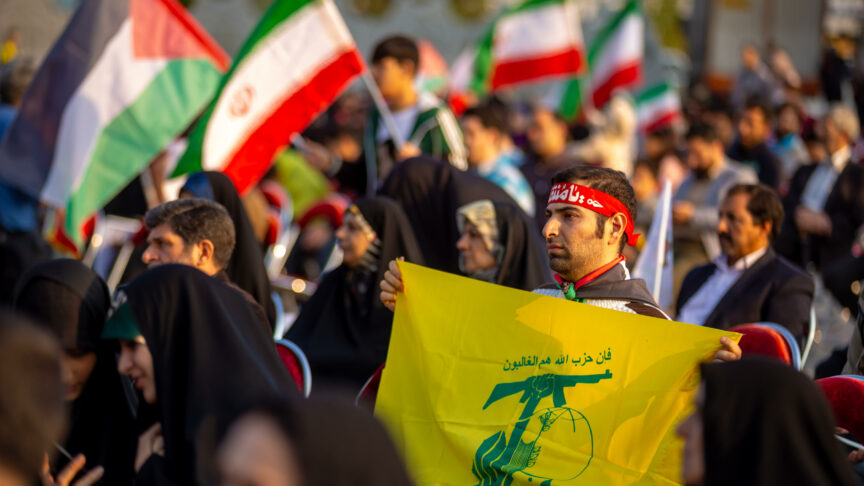
Iran has spent decades building up its influence in the Levant as part of its deterrence posture against Israel (and the US). The war in Gaza is now pushing the longstanding Israeli-Iranian conflict out into the open – and Lebanon and Syria are potential flashpoints for further escalation
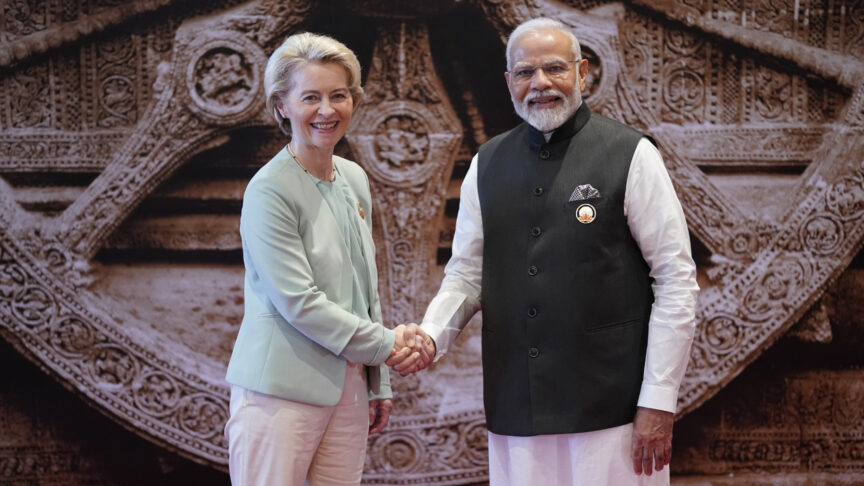
Middle powers are shaping a fragmented world for which Europe is ill prepared. To protect its interests and values, the EU needs a foreign policy strategy that emphasises its wide range of interdependencies
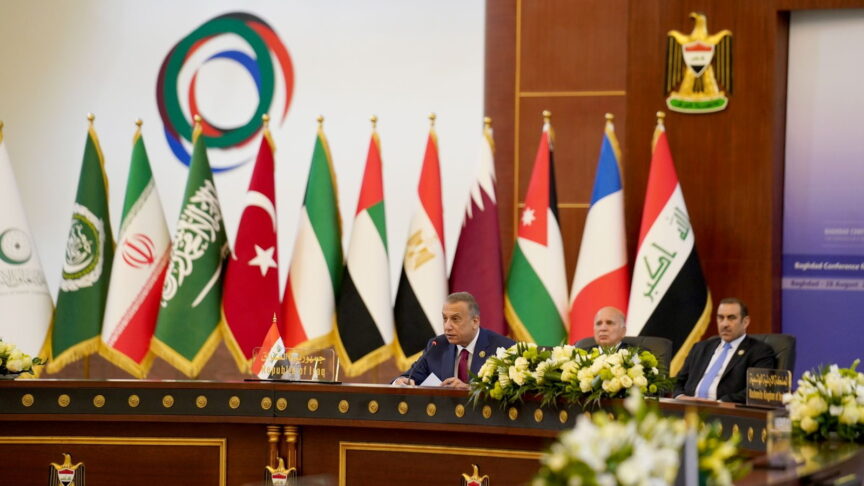
Europeans need to deal with the Middle East as it is rather than as they want it to be, while staying focused on the principles needed to secure longer-term stability
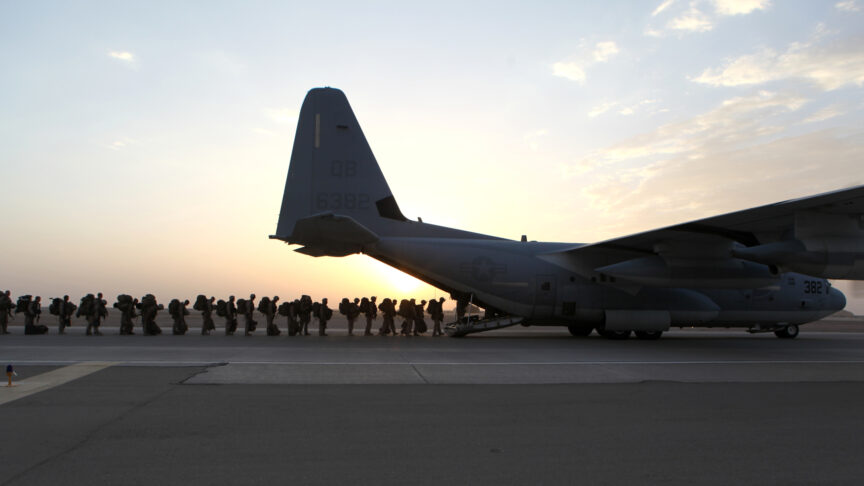
ECFR’s policy experts examine what the Taliban takeover means for countries and regions around the world: Europe, the US, the Middle East, Russia, China, Iran, Turkey, and the Sahel
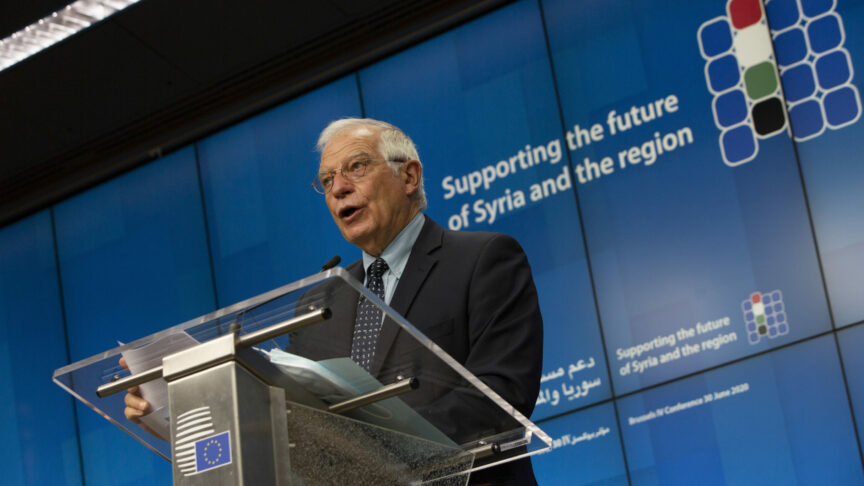
To achieve greater sovereignty, Europe needs to push back against rival powers, build leverage in armed conflicts, and be more effective in supporting reform
The Trump years galvanised Europeans’ efforts to strengthen their own sovereignty; they now need to agree concrete offers they can make to the new administration
European governments should pivot to a strategy focused on protecting those societal forces that are still standing and that can help salvage a better future
National politics need to be front and centre in de-escalation efforts
Lebanon, Jordan and Turkey have so far been resilient to the spillover from Syria’s civil war, but now the region’s stability is hanging by a thread
The sixth ECFR Foreign Policy Scorecard highlights the EU’s diminishing ability to influence its neighbours, and the neighbourhood’s growing impact on the EU
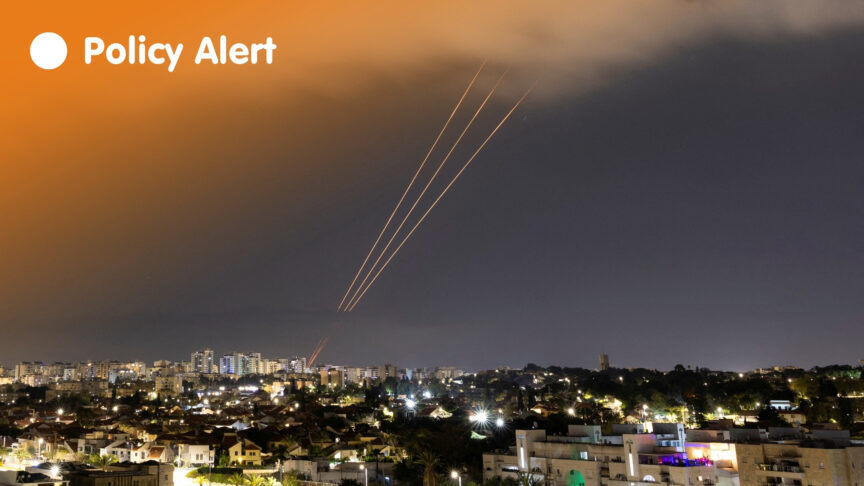
Iran’s unprecedented direct attack on Israel risks further escalation in the Middle East. European leaders should join the US in pressing Israel not to retaliate with strikes on Iran – or the region could end up embroiled in an all-consuming war
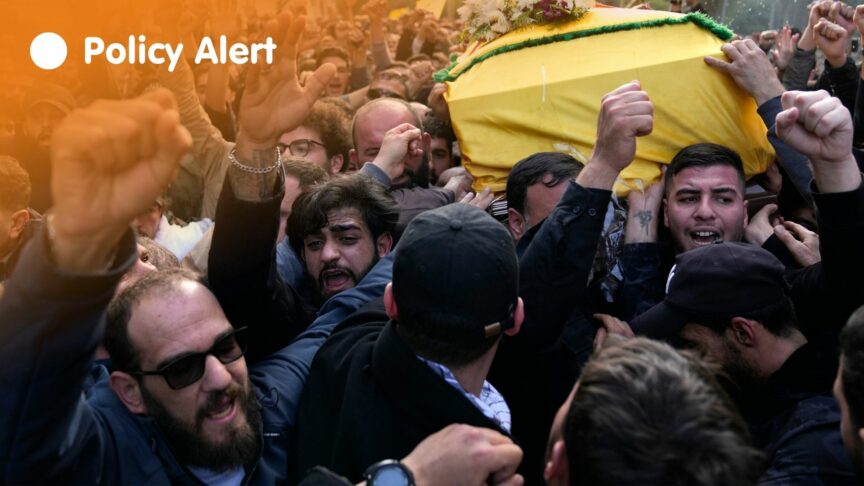
Europeans can act now to help prevent an escalatory cycle in the Middle East and protect key European interests
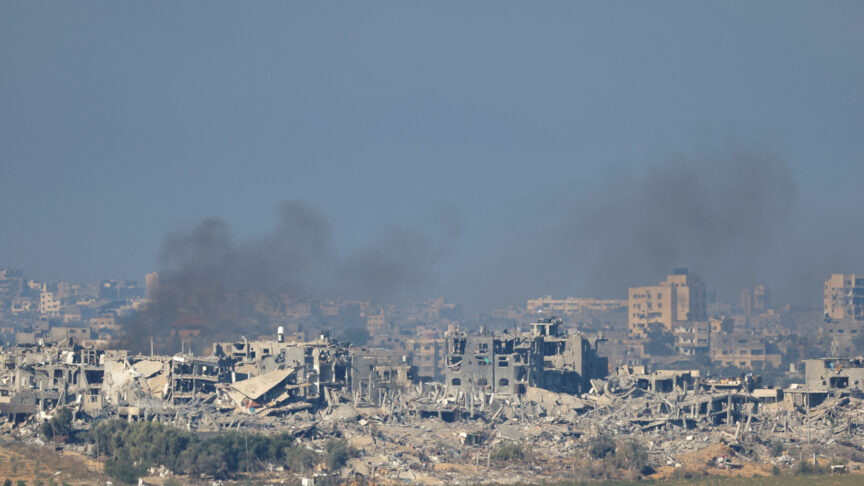
As the devastation mounts in Gaza, European leaders need to call for a ceasefire and a broader diplomatic track to secure urgent humanitarian objectives, before turning to a realistic post-conflict plan that can address security needs for Israelis and Palestinians
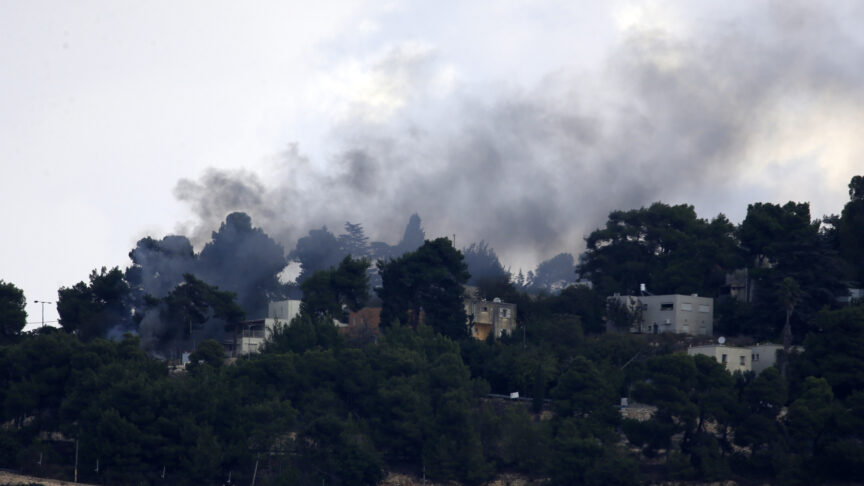
The unfolding war in Gaza between Israel and Hamas is at the precipice of a broader regional conflict. Europeans must urgently join regional efforts to support preventive diplomacy and avoid escalation
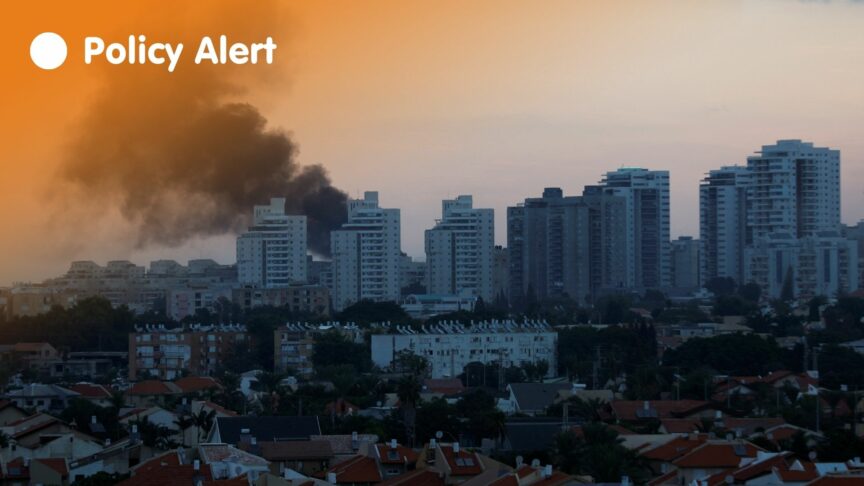
In the aftermath of the brutal assault by Hamas, Europeans need to focus on ensuring the war does not spiral out of control
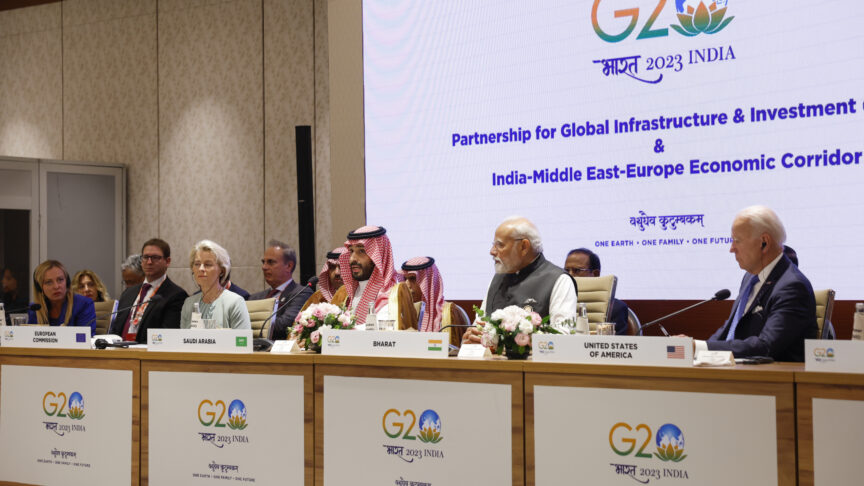
A new trade corridor linking India to Europe via the Middle East can offer opportunities for Europeans to strengthen their geo-economic influence with the Gulf. It can also be an opportunity for de-risking, but Europe should not expect to dislodge Chinese influence
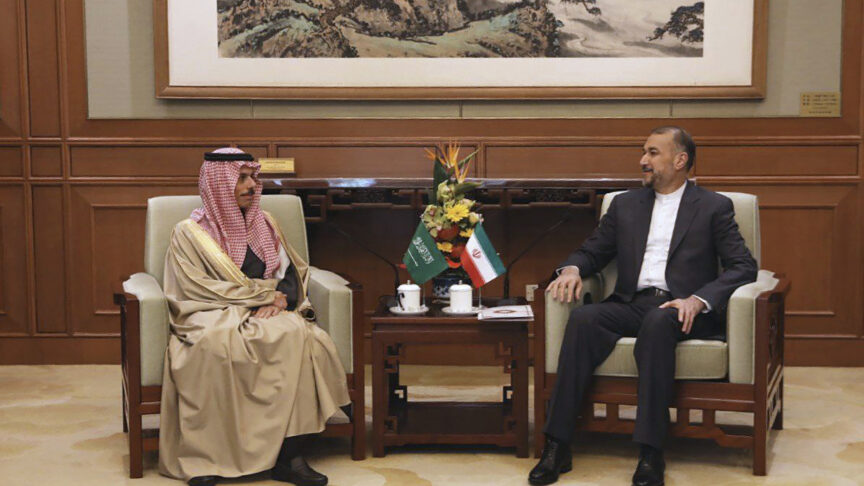
The normalisation of relations between Saudi Arabia and Iran has provided welcome impetus towards peace in Yemen. But resolving the regional dimension of the conflict should not come at the expense of inclusive, intra-Yemeni negotiations under UN auspices
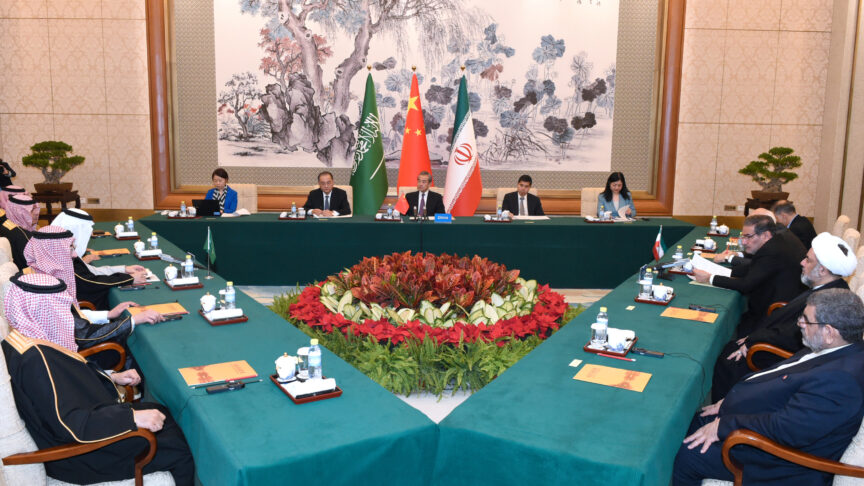
Saudi Arabia and Iran have agreed to begin the process of normalising their relations. Europeans should consider how to help entrench the stabilising gains of the agreement – even as they navigate difficulties with Iran
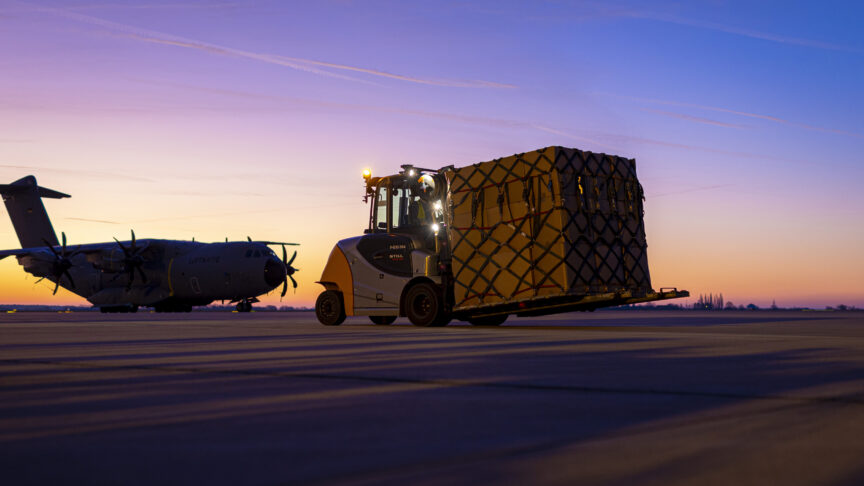
In the aftermath of the earthquake, minimal aid is reaching north-west Syria, the most affected region in the country. European governments need to put humanitarian imperatives first, even if this means temporarily abandoning longstanding political positions
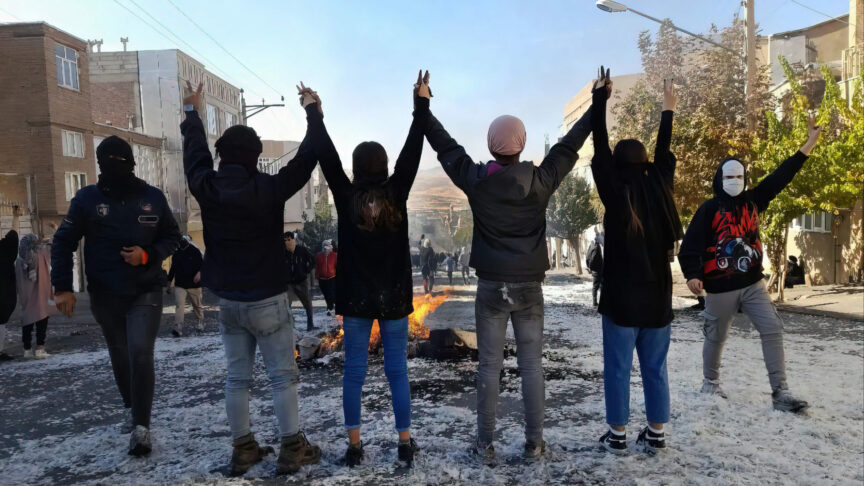
The protest movement sweeping Iran is an Iranian-led struggle. But European governments can play their part by focusing on measures that help protect protesters
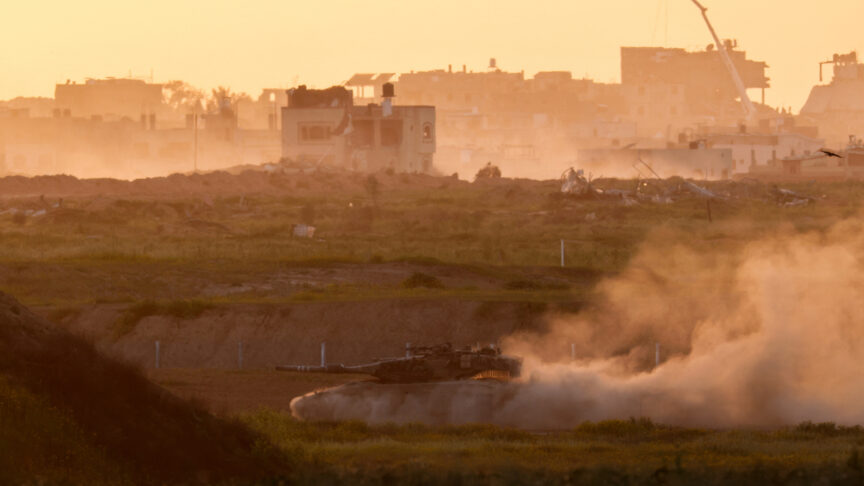
This new ECFR mapping project identifies the spillover effects of the Gaza war in countries across the Middle East
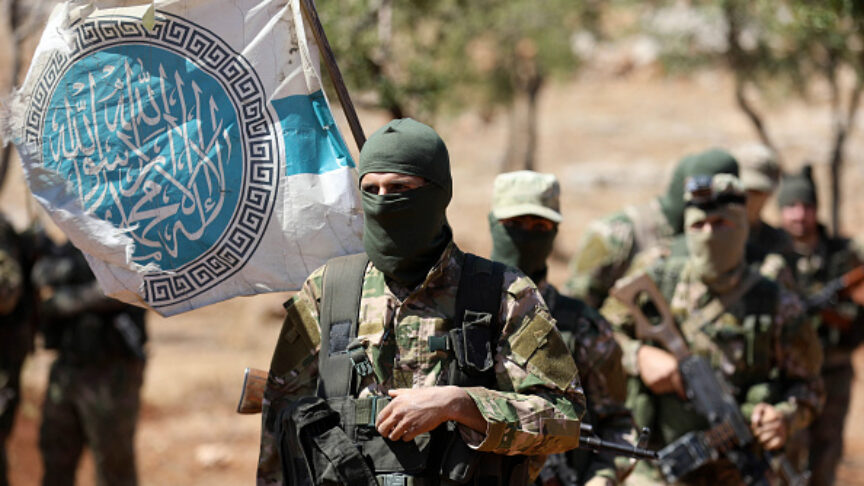
European governments need a deeper engagement strategy to draw these powerful actors into inclusive political processes and power-sharing structures that can help stabilise the region
The eastern Mediterranean is becoming ever more perilous as geopolitical fault lines steadily enmesh the region. These rifts emerge from the Cyprus ‘frozen conflict’, competition for valuable gas fields, and the increasingly entangled wars in Libya and Syria
Turmoil in the Middle East and north Africa directly affects Europeans. Yet their influence in the region has never been weaker. This project maps Europe’s role across the Middle East and north Africa, making the case that Europeans can do more to leverage their influence in pursuit of core interests
An ECFR guide to the key disputes threatening to spark a wider Middle Eastern war
On Saturday evening, Iran launched a major attack on Israeli territory, with a combination of 300 drones and missiles. Israel’s air defense seems to have…
Mark Leonard welcomes Hugh Lovatt, Julien Barnes-Dacey, and Jeremy Shapiro to discuss the current situation in Gaza and the possible futures of the war
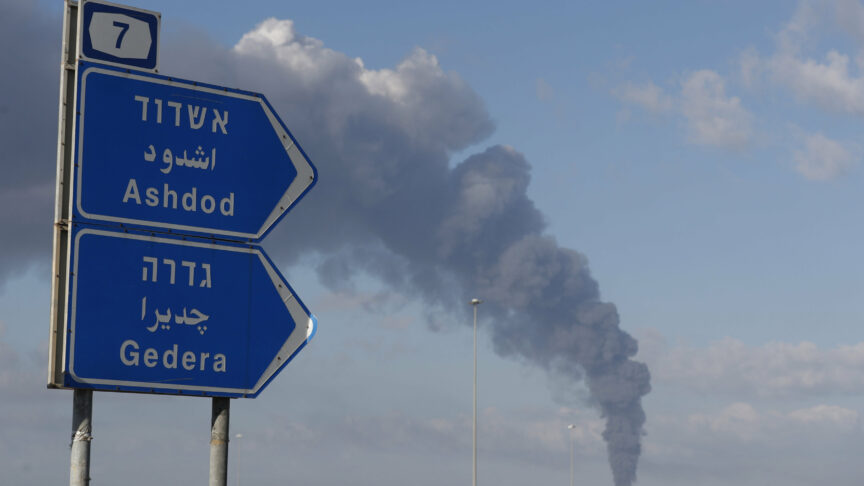
Mark Leonard welcomes Eran Etzion, Julien Barnes-Dacey, and Hugh Lovatt to discuss Hamas’s offensive against Israel and its effects on the Israeli-Palestinian conflict and the wider Middle East
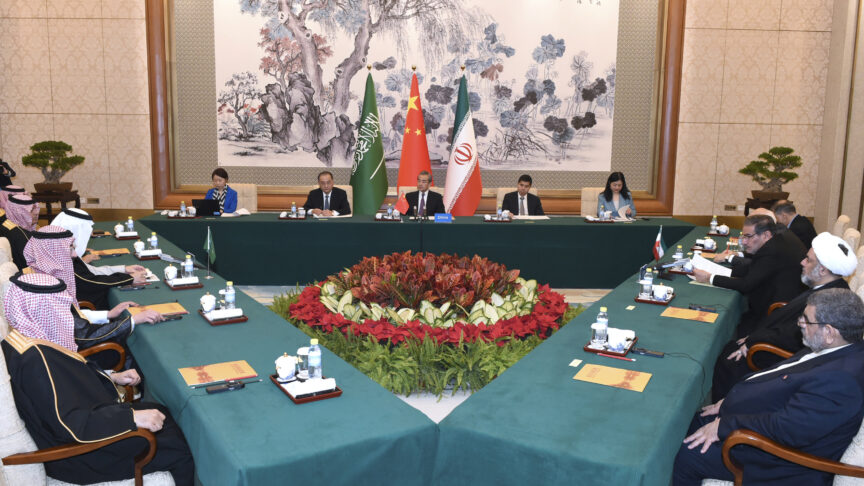
Mark Leonard welcomes Julien Barnes-Dacey, Cinzia Bianco and Andrew Small, to talk about the new Saudi – Iran deal
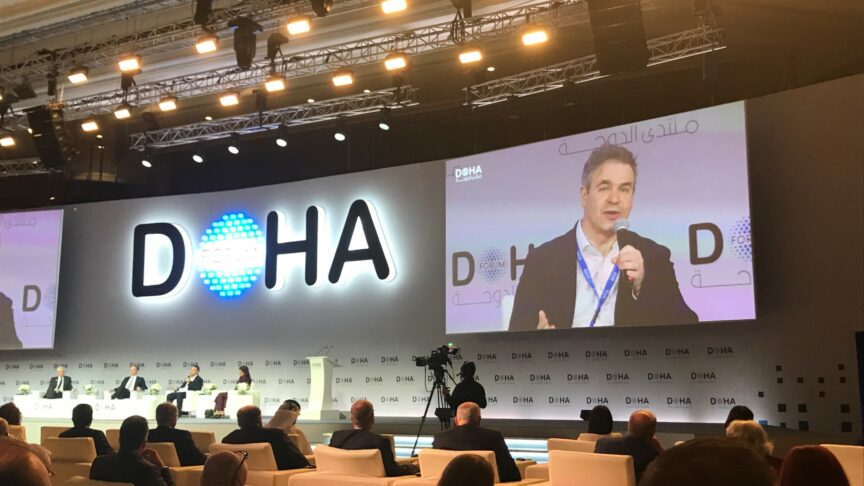
On location at the Doha Forum 2022, Mark Leonard and his guests discuss Western energy sanctions on Russia and why is there a reluctance in the Gulf states and the West to cooperate on energy supplies
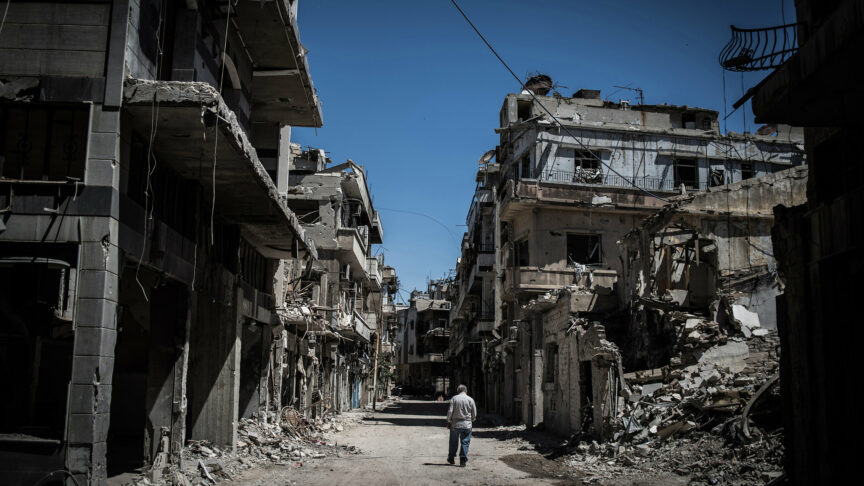
What does the re-engagement of regional actors mean for the future of Syria? And what role can Europe play to create breathing space in the country?
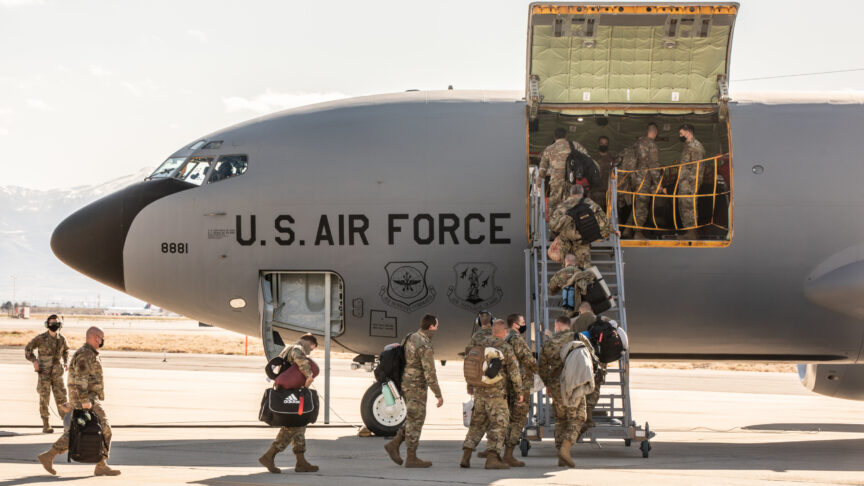
Who is filling the vacuum which the US is increasingly leaving behind in the MENA region? How are regional actors reacting to US disengagement?
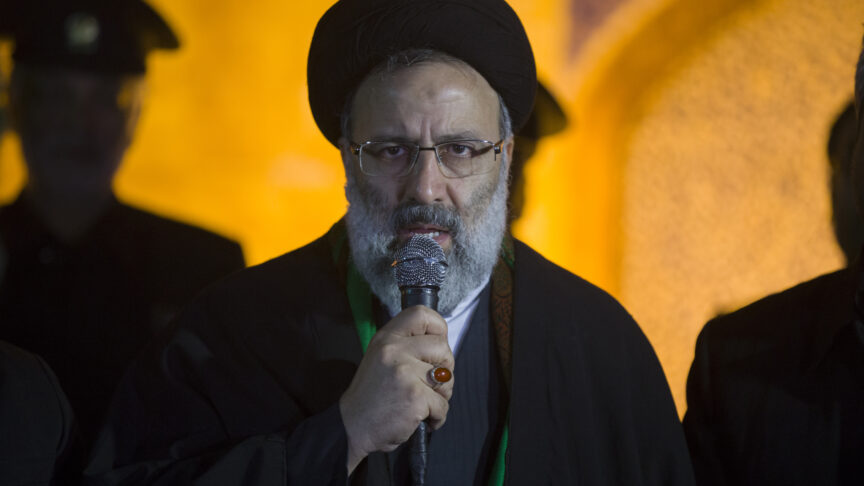
Does the election of Raisi represent a significant change of direction following the term of President Rouhani?
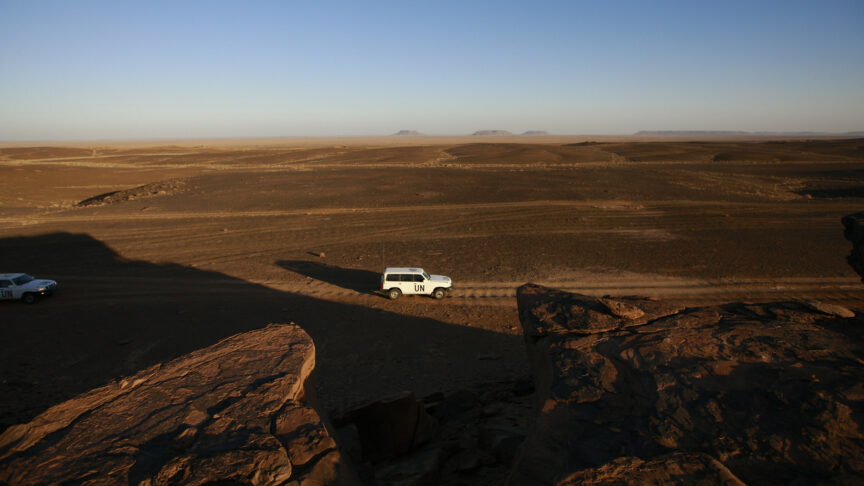
What is the Western Sahara conflict is all about, and how will the most recent developments between Morocco and Spain influence this conflict?
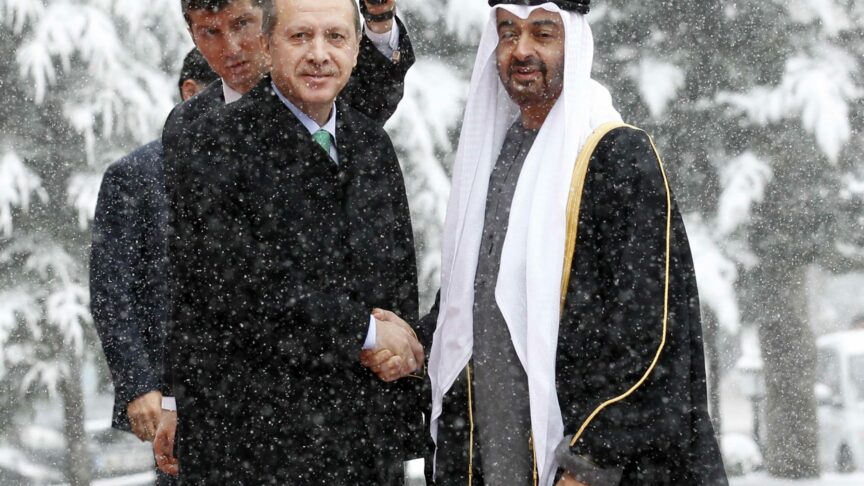
How can the EU prevent the Turkey-UAE rivalry from destabilising European security and foreign policy?
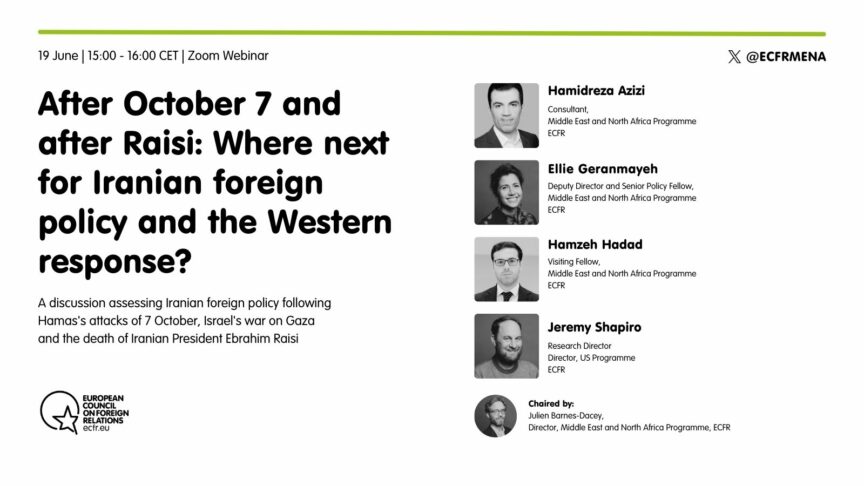
A discussion assessing Iranian foreign policy following Hamas’s attacks of 7 October, Israel’s war on Gaza and the death of Iranian President Ebrahim Raisi
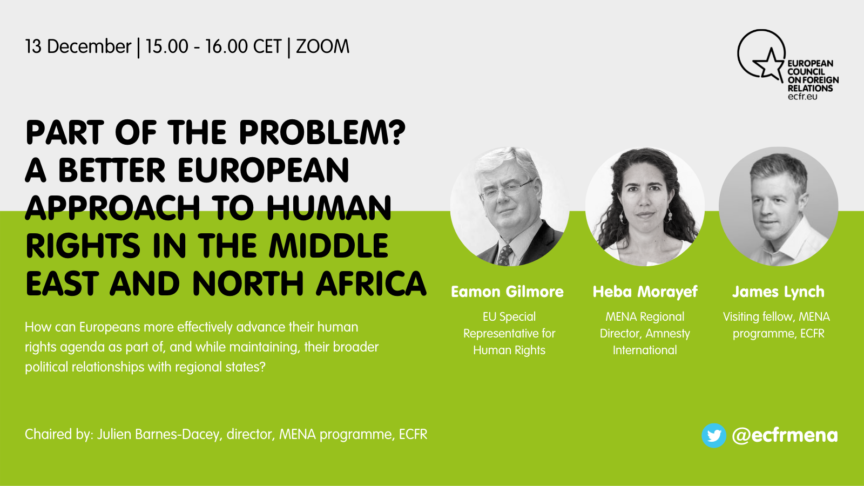
How can Europeans more effectively advance their human rights agenda as part of, and while maintaining, their broader relationships with regional states?
“Beyond Proxies” cited in the Guardian
Julien Barnes-Dacey on Israel jeopardising its rapprochement with Saudi-Arabia
Julien Barnes-Dacey on what the increasing recognition of Palestinian statehood means
Saudi Arabia will not be willing to make peace with Israel as long as Netanyahu continues the attack on the Gaza Strip
Julien Barnes-Dacey on the possibilities of Saudi Arabia making peace with Israel
The manner in which the Iranian attack may have been repelled could lead Israel to assume that the Iranians are weak and lack the will or capability for a deeper strike
Julien Barnes-Dacey analyses recent events between Iran and Israel