
Germany’s election result and what it means for Europe
How are the German election results being perceived throughout Europe? And what do they mean for the future of our continent?
Co-chair of ECFR’s Council
Director of the Danish Think Tank Europa
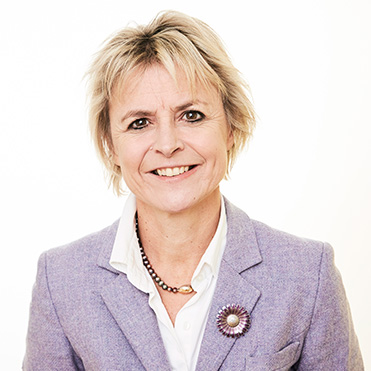
Lykke Friis is director of Denmark’s Think Tank Europa. Previously, she served as prorector at the University of Copenhagen; Danish minister of climate, energy, and gender equality; and the Danish liberal party’s spokesperson for European affairs. In 2007, she was appointed as a member of the EU reflection group on the future of Europe. She also covered Germany as a correspondent for the Danish newspaper Berlingske Tidende. Besides ECFR, she chairs the board of directors of Denmark’s House of Energy, is a board member of Team Denmark, and is president of the Danish Cancer Society.
How are the German election results being perceived throughout Europe? And what do they mean for the future of our continent?
One should not expect members of Europe’s political families to automatically cheer for one another. Copenhagen may find that implementing its European policy will become more difficult if the Social Democratic Party’s Olaf Scholz becomes German chancellor
How central is the EU to the US and its interests in Europe? And how does the public in European countries view Biden’s America?
As covid-19 raged, speculation grew that the crisis would re– strengthen public support for the state; faith in…
The recent Franco-German proposal for an EU recovery fund sparked a lively debate on possible changes in EU’s nature, suggesting that the plan to raise…
As part of the ’Reinventing Europe' project, ECFR is publishing a series of papers on the national debates within EU member states over the crisis and the future direction of Europe. In the tenth of the series Lykke Friis and Jonas Parello-Plesner analyse the situation in Denmark.
The EU is due to decide on Monday whether to lift sanctions against Burma. Instead of lifting all sanctions the EU should follow a gradual approach and focus on targeted assistance and an ambitious social-responsibility framework for European companies.
The EU and its member states need to make an urgent commitment to Ukraine’s security and long-term commitment to its European future. If they do not, they risk alienating the very Ukrainians they seek to support
On 1st July, Poland hands over its EU Council presidency to Denmark. The latter’s focus on EU enlargement and support for Ukraine underscores its bid to reach Europe’s geopolitical heart—and secure Denmark against threats from east and west
Denmark’s decision to end its opt-out from EU defence shows that it is still possible to win referendums on closer European integration. Yet it does not signal a broader shift in the country’s EU policy
One should not expect members of Europe’s political families to automatically cheer for one another. Copenhagen may find that implementing its European policy will become more difficult if the Social Democratic Party’s Olaf Scholz becomes German chancellor
As part of the ’Reinventing Europe' project, ECFR is publishing a series of papers on the national debates within EU member states over the crisis and the future direction of Europe. In the tenth of the series Lykke Friis and Jonas Parello-Plesner analyse the situation in Denmark.
The EU is due to decide on Monday whether to lift sanctions against Burma. Instead of lifting all sanctions the EU should follow a gradual approach and focus on targeted assistance and an ambitious social-responsibility framework for European companies.
Mark Leonard launches ECFR’s new RE-ENGAGE podcast series with Lykke Friis to explore the future of EU enlargement and Denmark’s role in shaping it
Mark Leonard welcomes Lykke Friis, Sylvie Kauffmann, and Arturo Varvelli to discuss Italy’s role on the global stage, and how it fits into Europe’s future
Mark Leonard is joined by Alex Stubb, Lykke Friis, and Camille Grand, to discuss the outcomes of the NATO summit in Vilnius.
Is the EU in a position to deliver a green grand bargain, or is its role as peripheral now as it was at COP15?
How are the German election results being perceived throughout Europe? And what do they mean for the future of our continent?
As covid-19 raged, speculation grew that the crisis would re– strengthen public support for the state; faith in…
The recent Franco-German proposal for an EU recovery fund sparked a lively debate on possible changes in EU’s nature, suggesting that the plan to raise…
The EU lacks cohesive governance to deploy economic statecraft tools, such as sanctions and export controls, undermining their impact and the bloc’s global credibility. In…
Polityka Insight and ECFR invite you to join us for the livestream of this year’s Warsaw European Conversation. At Polityka Insight and ECFR, we believe there is…
To brace for a “Long War”, Europe needs to be ready to take its lessons learned from more than half a year of the war to heart and deliver enduring support to Ukraine
How central is the EU to the US and its interests in Europe? And how does the public in European countries view Biden’s America?
You are currently viewing a placeholder content from Facebook. To access the actual content, click the button below. Please note that doing so will share data with third-party providers.
More InformationYou are currently viewing a placeholder content from Instagram. To access the actual content, click the button below. Please note that doing so will share data with third-party providers.
More InformationYou are currently viewing a placeholder content from OpenStreetMap. To access the actual content, click the button below. Please note that doing so will share data with third-party providers.
More Information