Middle East geoeconomics; China – Gulf relations; Gulf region; Red Sea geopolitics
Languages
French, English, Spanish, Arabic, Mandarin Chinese
Biography
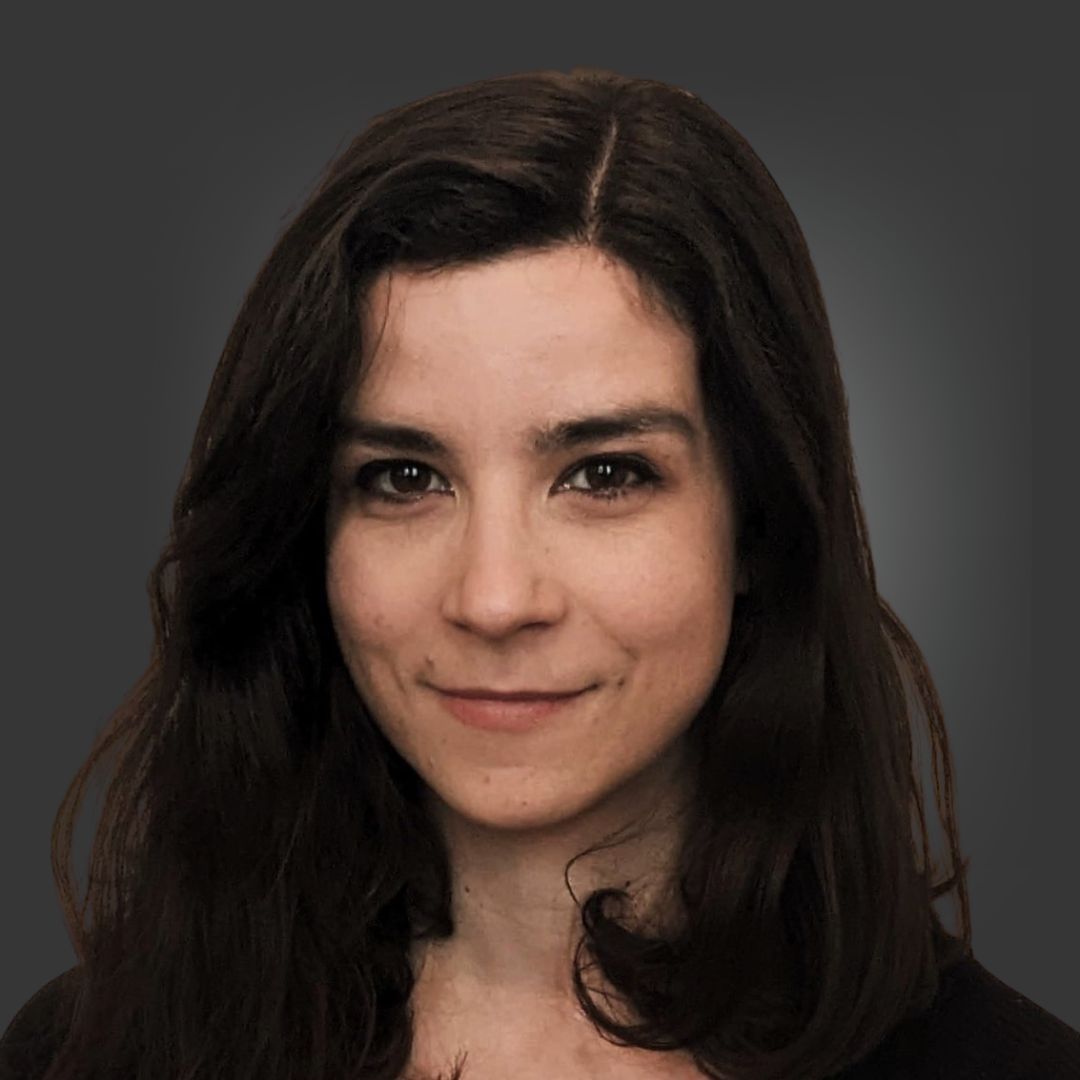
Camille Lons is a policy fellow and deputy head of the Paris office at the European Council on Foreign Relations, where she works on geoeconomics and relations between China and the Gulf countries. Prior to joining ECFR, Lons was a research associate at the International Institute for Strategic Studies (IISS), based in Bahrain and Taiwan, where she worked on Gulf-Asia relations and co-authored the report “Gulf Bailout Diplomacy: Aid as Economic Statecraft in a Turbulent Region” (2023). Before that, she was the coordinator of the Middle East and North Africa programme at ECFR and project editor of the policy paper “China’s great game in the Middle East” (2019). She was also a Schuman Fellow at the European Parliament, focusing on Middle East policy.
Lons holds an MSc in population and development from the London School of Economics, an MA in international relations from Sciences Po Aix, and an MA in middle eastern studies from Aix-Marseille University.
Chinese electric vehicle brands are adapting to Western trade barriers by increasing their presence in the Middle East and North Africa. Europe’s response must go beyond merely closing the loopholes
Mark Leonard welcomes Piotr Buras, Carla Hobbs, Camille Lons, Jana Puglierin and Arturo Varvelli to discuss how Europe is responding to the war in Iran
The Saudi-UAE clash is reshaping dynamics across Yemen and the Horn of Africa. Europe needs to pay attention as new alignments crystallise against what is increasingly framed as a UAE-Israel-Ethiopia axis
Once fierce advocates of military action against Tehran, Gulf countries now call for restraint and diplomacy. No longer viewing Trump as a partner; they now fear the US may be more liability than protection
Jeremy Cliffe, Teresa Coratella, Camille Lons, Arturo Varvelli
Policy Brief
An array of populist parties are challenging Europe’s foreign policy mainstream. To secure European sovereignty, its politicians need to adapt—which means preparing for a variety of future diplomatic scenarios
This ECFR project maps the Red Sea region as a nexus of conflict, regional rivalries and global power plays. To address the risks of this instability, Europeans need to develop a more comprehensive approach
The sentencing of far-right politician Marine Le Pen for embezzling EU funds will not only change the 2027 race for the French presidency. It also risks emboldening anti-establishment narratives across Europe and the US
Mark Leonard welcomes Camille Lons, Marta Prochwicz Jazowska, Jana Puglierin, José Ignacio Torreblanca and Arturo Varvelli to discuss how European capitals are responding to Trump’s dramatic return to the White House
French prime minister Michel Barnier has been ousted following a vote of no confidence. European governments need to demonstrate that, despite France’s internal political turmoil, they maintain a united front in foreign and security policy
Chinese electric vehicle brands are adapting to Western trade barriers by increasing their presence in the Middle East and North Africa. Europe’s response must go beyond merely closing the loopholes
Jeremy Cliffe, Teresa Coratella, Camille Lons, Arturo Varvelli
Policy Brief
An array of populist parties are challenging Europe’s foreign policy mainstream. To secure European sovereignty, its politicians need to adapt—which means preparing for a variety of future diplomatic scenarios
China is strengthening its ties to the Gulf in areas well beyond the energy sector. The EU clearly has stakes in the region, but it should not try to directly counter China’s influence. It should instead build its own Gulf partnerships
Camille Lons (project editor), Jonathan Fulton, Degang Sun, Naser Al-Tamimi
Policy Brief
Europeans should monitor China’s influence on regional stability and political dynamics, especially in relation to surveillance technology and arms sales
The Saudi-UAE clash is reshaping dynamics across Yemen and the Horn of Africa. Europe needs to pay attention as new alignments crystallise against what is increasingly framed as a UAE-Israel-Ethiopia axis
Once fierce advocates of military action against Tehran, Gulf countries now call for restraint and diplomacy. No longer viewing Trump as a partner; they now fear the US may be more liability than protection
The sentencing of far-right politician Marine Le Pen for embezzling EU funds will not only change the 2027 race for the French presidency. It also risks emboldening anti-establishment narratives across Europe and the US
French prime minister Michel Barnier has been ousted following a vote of no confidence. European governments need to demonstrate that, despite France’s internal political turmoil, they maintain a united front in foreign and security policy
To form a workable government after the snap election, French parties will need to make coalitions and concessions. But such cooperation runs contrary to French political culture, and the likely divisions risk weakening France’s voice on the international and European stage
The far-right National Rally is leading the polls ahead of the second round of the French election. Its success would have inevitable consequences for French foreign policy
The Gulf states have loudly condemned Israel’s offensive in Gaza. But beneath the rhetoric – and amid unfolding regional escalation – many Gulf capitals are hesitant to put their national interests at risk
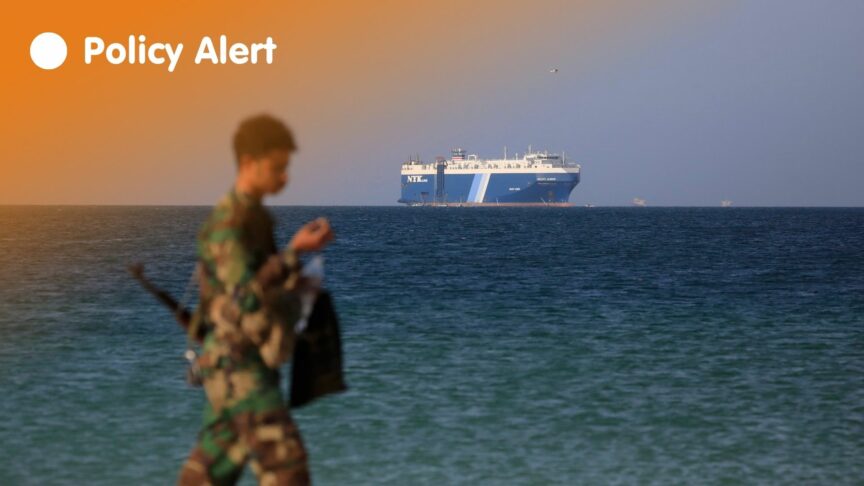
After weeks of attacks on ships in the Red Sea, the Iran-backed Houthi militia has now threatened to target all Israel-bound vessels in retaliation for Israel’s war in Gaza, threatening freedom of navigation and regional security
Amidst the Israel-Hamas war, Beijing sees an opportunity to differentiate itself from the West’s unconditional support for Israel and gain favour in the global south. But the conflict has revealed China’s lack of political weight in the region – and an opportunity for European engagement
This ECFR project maps the Red Sea region as a nexus of conflict, regional rivalries and global power plays. To address the risks of this instability, Europeans need to develop a more comprehensive approach
Mark Leonard welcomes Piotr Buras, Carla Hobbs, Camille Lons, Jana Puglierin and Arturo Varvelli to discuss how Europe is responding to the war in Iran
Mark Leonard welcomes Camille Lons, Marta Prochwicz Jazowska, Jana Puglierin, José Ignacio Torreblanca and Arturo Varvelli to discuss how European capitals are responding to Trump’s dramatic return to the White House
Vessela Tcherneva welcomes Camille Grand, Camille Lons, Marta Prochwicz Jazowska, and Jana Puglierin to discuss the 75th NATO summit, and how Europe can defend itself with less America
Le podcast de notre discussion du mardi 9 juillet « Vers un nouvel hyper-nationalisme saoudien ? », en présence de Eman Al-Hussein, chercheuse associée à…
ECFR Berlin Office, Unter den Linden 17, 10117 Berlin
·ECFR Berlin
In 2020, the covid-19 pandemic laid bare the vulnerability of global sea trade to external shocks. A year later, the Suez Canal blockage sounded the alarm on the Red Sea’s role as a crucial chokepoint for that trade. Now, Houthi attacks on the Red Sea chokepoint show how a new form of security threat can wield an outsize…
Jeremy Cliffe, Teresa Coratella, Camille Lons, and Arturo Varvelli on the rightward shift of European politics and the prospect of Meloni being the newly appointed president of the European Commission
Jeremy Cliffe, Teresa Coratella, Camille Lons, and Arturo Varvell on the accusation on the EU for prioritising militaristic spending above investments in education and health