

Adam Balcer is programme director at the College of Eastern Europe in Wrocław and lectures at the Centre for East European Studies at the University of Warsaw. He has published several books, and many reports and articles on central-eastern Europe and the Black Sea region in various languages.
Concluding that Russia poses a threat and that the EU let its dependencies grow too deep, the bloc so far attempted to decouple from Moscow. How should Europeans navigate the adversarial relationship in the future?
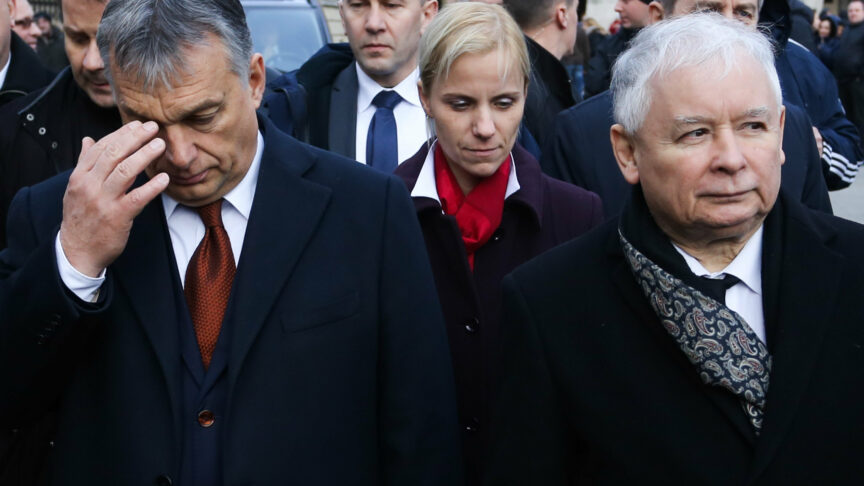
The war in Ukraine has driven a wedge between Hungary’s Fidesz and Poland’s Law and Justice parties. But they could still mount a powerful challenge to the EU if – or, rather, when – they reunite in their opposition to rule of law demands
National populism in central Europe is a serious threat to the European Union, deepening longstanding divides and harming the support citizens of the region give to the EU.
Law and Justice's strongly sovereignist, and occasional nationalistic, leanings may lead the party from the centrist foreign policy course that it has pledged
The war in Ukraine has driven a wedge between Hungary’s Fidesz and Poland’s Law and Justice parties. But they could still mount a powerful challenge to the EU if – or, rather, when – they reunite in their opposition to rule of law demands
National populism in central Europe is a serious threat to the European Union, deepening longstanding divides and harming the support citizens of the region give to the EU.
Law and Justice's strongly sovereignist, and occasional nationalistic, leanings may lead the party from the centrist foreign policy course that it has pledged
Concluding that Russia poses a threat and that the EU let its dependencies grow too deep, the bloc so far attempted to decouple from Moscow. How should Europeans navigate the adversarial relationship in the future?