The changing global order has created an enabling environment for the recent spike of takeovers in Africa’s ‘coup belt’ – with Russia and newly assertive middle powers offering themselves as partners to putschists
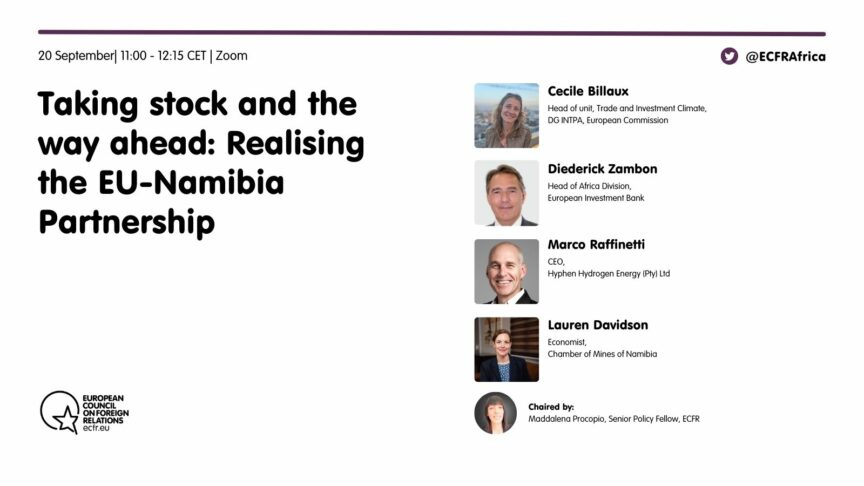
In November 2022 at COP 27 the European Union and Namibia signed a Memorandum of Understanding (MoU) establishing a strategic partnership to develop raw materials…
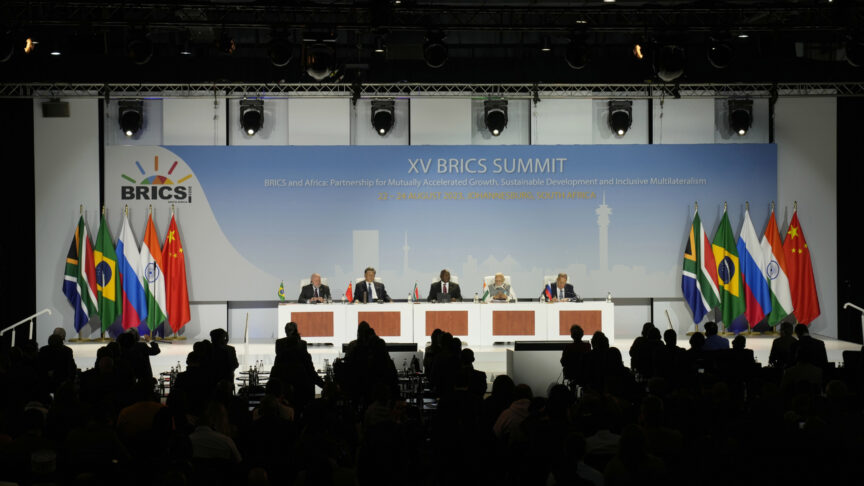
The EU and its member states should explore opportunities for trilateral energy and climate cooperation with the BRICS and African states, focusing on converging interests to mitigate the risks associated with growing south-south cooperation and a north-south divide
L’incontro, organizzato dal mensile Africa e Affari, da Confindustria Assafrica e Mediterraneo e da ECFR con il sostegno di Lufthansa Group e di Assolombarda, ha l’obiettivo di analizzare le ragioni politiche dietro il Global Gateway
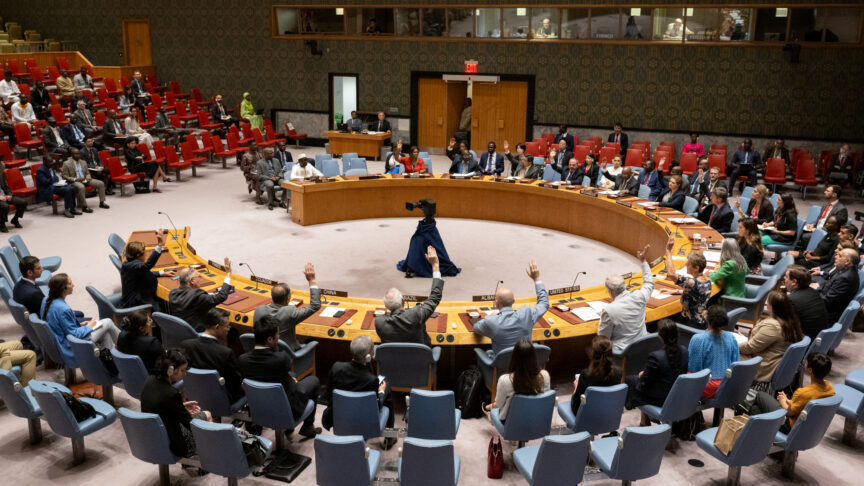
As African countries look to redefine their role in the shifting global landscape, they should pursue non-alignment and aim to help shape the rules of the future world order
French Embassy in Berlin, Wilhelmstraße 69, 10117 Berlin
ECFR Berlin
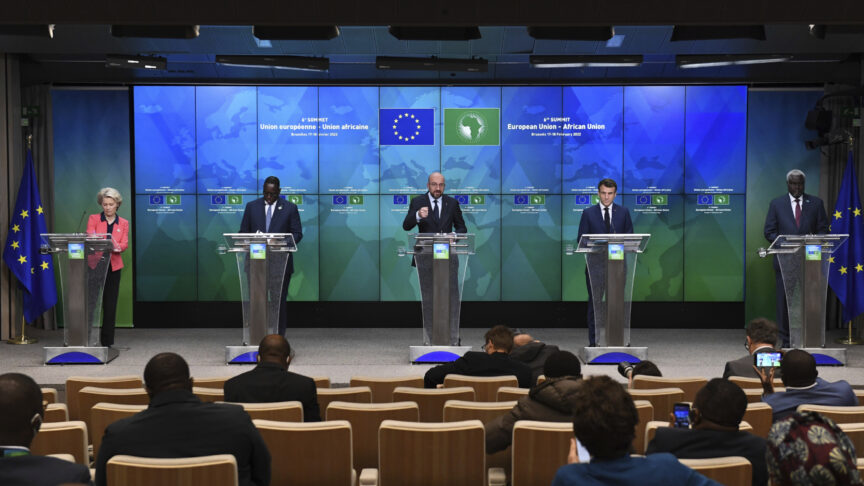
In February 2022, the European Union (EU) and the African Union (AU) agreed on a common vision to consolidate a renewed partnership around three pillars:…
European leaders could unlock hundreds of billions of dollars in development finance to support vulnerable countries grappling with debt distress and climate change. But an obscure ruling by the European Central Bank is stopping them
Privacy Preference
We use cookies on our website. Some of them are essential, while others help us to improve this website and your experience.If you are under 16 and wish to give consent to optional services, you must ask your legal guardians for permission.We use cookies and other technologies on our website. Some of them are essential, while others help us to improve this website and your experience.Personal data may be processed (e.g. IP addresses), for example for personalized ads and content or ad and content measurement.You can find more information about the use of your data in our privacy policy.You can revoke or adjust your selection at any time under Settings.
If you are under 16 and wish to give consent to optional services, you must ask your legal guardians for permission.We use cookies and other technologies on our website. Some of them are essential, while others help us to improve this website and your experience.Personal data may be processed (e.g. IP addresses), for example for personalized ads and content or ad and content measurement.You can find more information about the use of your data in our privacy policy.Here you will find an overview of all cookies used. You can give your consent to whole categories or display further information and select certain cookies.