
African climate and energy policy, the Gulf states, the Middle East, fragile states
Languages
English, Italian, conversational French, and basic Arabic
Biography
Corrado Čok is a visiting fellow at the European Council on Foreign Relations. In his research, Čok explores the role of the Gulf states in Africa, with a focus on climate and energy sectors. Prior to joining ECFR, Čok conducted research as an independent consultant on political, energy, economic and security matters in the Gulf and the Horn of Africa, where he also specialised in the role of great and middle powers in the Red Sea. He gained further experience in the humanitarian-development sector working on projects in Djibouti, Kenya and Somalia.
Čok holds an MA in conflict resolution from King’s College London, where he specialised in the political economy of fragile states in Africa and the Middle East.
Gulf powers are rapidly expanding their investments across Africa while Europe remains slow and risk averse. To remain competitive, the EU should focus on achieving what the Gulf cannot: industrial development in Africa that serves both African and European interests
Al-Shabab is regaining strength in Somalia amid obstacles with the latest peacekeeping mission—just as external partners seek to move away from costly interventions. But there is a path forward
Relations between Ethiopia and Eritrea have soured since the war in Tigray ended in 2022. The region is now a tinderbox for conflict: Europeans need to intervene and pull the various opposing factions back from the brink
The UAE, Saudi Arabia and Qatar are making geoeconomic inroads into sub-Saharan Africa, particularly in energy and climate. This could affect Europe’s African interests
An unstable Horn of Africa spells major trouble for Europe. The EU should take the reins in the Western response to counter the fallout from the aid withdrawal
Africa’s growing prominence in global geopolitics and geoeconomics presents a landscape of both exciting opportunities and critical challenges for the continent and its international partners
Somalia’s new defence pact with Egypt has angered Ethiopia, undermining coalition efforts to contain al-Shabaab, a Jihadist group. European diplomats can help revert this dangerous path
Policy and research circles are increasingly interested in Gulf monarchies’ expanding footprint in Africa, though the challenges and opportunities of the deepening Gulf-Africa relations for…
Al-Shabab is regaining strength in Somalia amid obstacles with the latest peacekeeping mission—just as external partners seek to move away from costly interventions. But there is a path forward
The UAE, Saudi Arabia and Qatar are making geoeconomic inroads into sub-Saharan Africa, particularly in energy and climate. This could affect Europe’s African interests
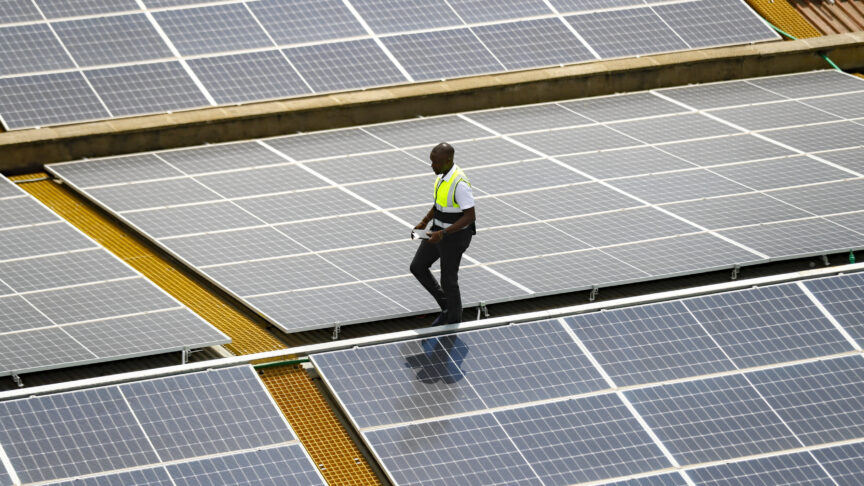
The UAE has invested heavily in Africa’s energy sectors in recent years, expanding its stakes in oil and gas, and renewables. Rather than viewing the UAE as solely a rival, Europeans should pursue a strategy of “co-opetition”, balancing competition with cooperation in areas of mutual interest, to fast-track green initiatives
Gulf powers are rapidly expanding their investments across Africa while Europe remains slow and risk averse. To remain competitive, the EU should focus on achieving what the Gulf cannot: industrial development in Africa that serves both African and European interests
Relations between Ethiopia and Eritrea have soured since the war in Tigray ended in 2022. The region is now a tinderbox for conflict: Europeans need to intervene and pull the various opposing factions back from the brink
An unstable Horn of Africa spells major trouble for Europe. The EU should take the reins in the Western response to counter the fallout from the aid withdrawal
Somalia’s new defence pact with Egypt has angered Ethiopia, undermining coalition efforts to contain al-Shabaab, a Jihadist group. European diplomats can help revert this dangerous path
The UAE’s expanding role in Africa’s energy spaces could present a challenge to Europe’s energy security and decarbonisation ambitions – but opportunities for cooperation also exist that could accelerate the global energy transition
Africa’s growing prominence in global geopolitics and geoeconomics presents a landscape of both exciting opportunities and critical challenges for the continent and its international partners
Policy and research circles are increasingly interested in Gulf monarchies’ expanding footprint in Africa, though the challenges and opportunities of the deepening Gulf-Africa relations for…
In the media
Looking forward, the opportunity is to creep even further into the cracks of the trade war through an unconfrontational identity and a pragmatic approach
Maddalena Procopio and Corrado Čok on the deepening role of the Gulf Monarchies in Africa
Italy and the EU can look to the Gulf – increasingly engaged with Africa – as a partner in shaping a multilayered framework of cooperation with institutions like the African Development Bank
Maddalena Procopio and Corrado Čok on multi-level cooperation between Italy, the Gulf and Africa
There is a convergence of needs that makes the Gulf monarchies the center of gravity for world economic and geopolitical policies, especially for the U.S
You are currently viewing a placeholder content from Facebook. To access the actual content, click the button below. Please note that doing so will share data with third-party providers.
You are currently viewing a placeholder content from Instagram. To access the actual content, click the button below. Please note that doing so will share data with third-party providers.
You are currently viewing a placeholder content from OpenStreetMap. To access the actual content, click the button below. Please note that doing so will share data with third-party providers.