Alexander Lipke is the Asia programme coordinator at the European Council on Foreign Relations, based in the Berlin office.
Prior to joining ECFR in 2022, Lipke worked as a research associate at Friedrich-Ebert-Stiftung’s regional Asia office in Singapore. Previously, he gained work experience with the Mercator European Dialogue project at the German Marshall Fund and in Bundestag member Michael Roth’s office in Berlin as well as the Konrad-Adenauer Foundation in Seoul, South Korea.
Lipke holds a BA in European studies from Maastricht University in the Netherlands, which included a semester abroad at Seoul National University in South Korea. He also holds an MA in international politics and east Asia from the University of Warwick and an MSc in international political economy from Nanyang Technological University, Singapore. His main research interest is east Asian international relations, with a focus on the Korean Peninsula, South Korean foreign policy, and Indo-Pacific affairs.
Europe’s battery dependence on China is clear, but closing the gap alone will be difficult. Partnering with South Korea, the world’s second-largest manufacturer, offers a faster and more realistic route
South Koreans still regard America as an ally, but frictions in their relationship could resurface at any point. The EU and South Korea should use 2026 to deepen their own defence and economic security ties, thereby strengthening their collective resilience
At first glance, South Korea’s next president will be less Western aligned than the last, emphasising pragmatism over value-alignment. To maintain strong ties with Seoul, Europeans will need to reframe their diplomatic approach
South Koreans and Europeans agree that Russia is a threat, Ukraine needs support and that the new US administration is trouble. As Trump shakes the global security order, their shared concerns could solidify a stronger EU-South Korea partnership
The attempted imposition of martial law by President Yoon Suk-Yeol has plunged South Korea into political uncertainty. As Seoul’s immediate focus turns inward, its ability and willingness to tackle shared challenges with Europe may decline, from the war in Ukraine to Chinese economic coercion
North Korea’s troop deployment to the Russian front represents a fundamental shift in Europe’s security relations with east Asia. To confront the Moscow-Pyongyang axis, the EU should deepen its partnership with South Korea
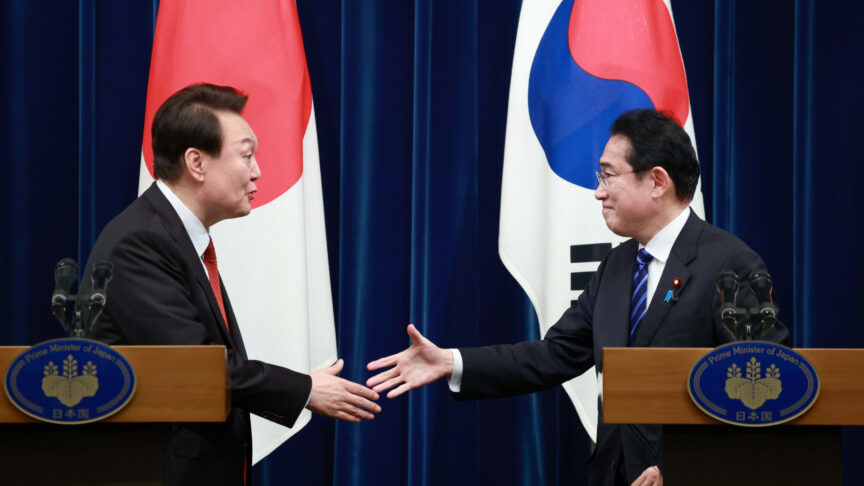
New Japanese prime minister Ishiba Shigeru has signaled a commitment to continuing his predecessor’s outreach to South Korea. Europe should seize the moment to tackle shared challenges with both countries
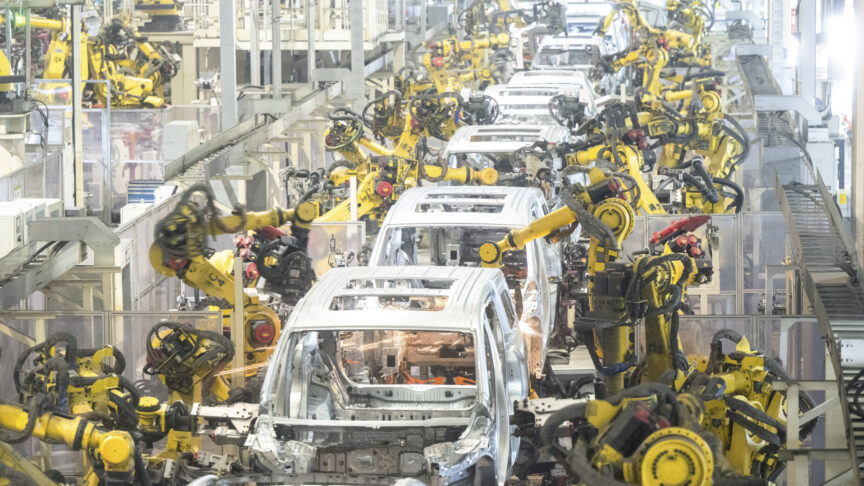
European policymakers need to answer the ‘trust question’ of how far they want Chinese companies involved in green industries such as solar energy, batteries, and electric vehicles
Europe’s battery dependence on China is clear, but closing the gap alone will be difficult. Partnering with South Korea, the world’s second-largest manufacturer, offers a faster and more realistic route
South Koreans still regard America as an ally, but frictions in their relationship could resurface at any point. The EU and South Korea should use 2026 to deepen their own defence and economic security ties, thereby strengthening their collective resilience
At first glance, South Korea’s next president will be less Western aligned than the last, emphasising pragmatism over value-alignment. To maintain strong ties with Seoul, Europeans will need to reframe their diplomatic approach
South Koreans and Europeans agree that Russia is a threat, Ukraine needs support and that the new US administration is trouble. As Trump shakes the global security order, their shared concerns could solidify a stronger EU-South Korea partnership
The attempted imposition of martial law by President Yoon Suk-Yeol has plunged South Korea into political uncertainty. As Seoul’s immediate focus turns inward, its ability and willingness to tackle shared challenges with Europe may decline, from the war in Ukraine to Chinese economic coercion
North Korea’s troop deployment to the Russian front represents a fundamental shift in Europe’s security relations with east Asia. To confront the Moscow-Pyongyang axis, the EU should deepen its partnership with South Korea
New Japanese prime minister Ishiba Shigeru has signaled a commitment to continuing his predecessor’s outreach to South Korea. Europe should seize the moment to tackle shared challenges with both countries
Voters in Europe and the G7 still lack a clear idea of what Chinese action against Taiwan could mean for their own lives. Political leaders should start to remedy this