Zapad against the West: How Europe should read the Russian-Belarusian military drills
Zapad 2025 is not only a show of force; it is Lukashenko’s bid to play a role in the emergent European security order as it bargains with Washington over sanctions and prisoners


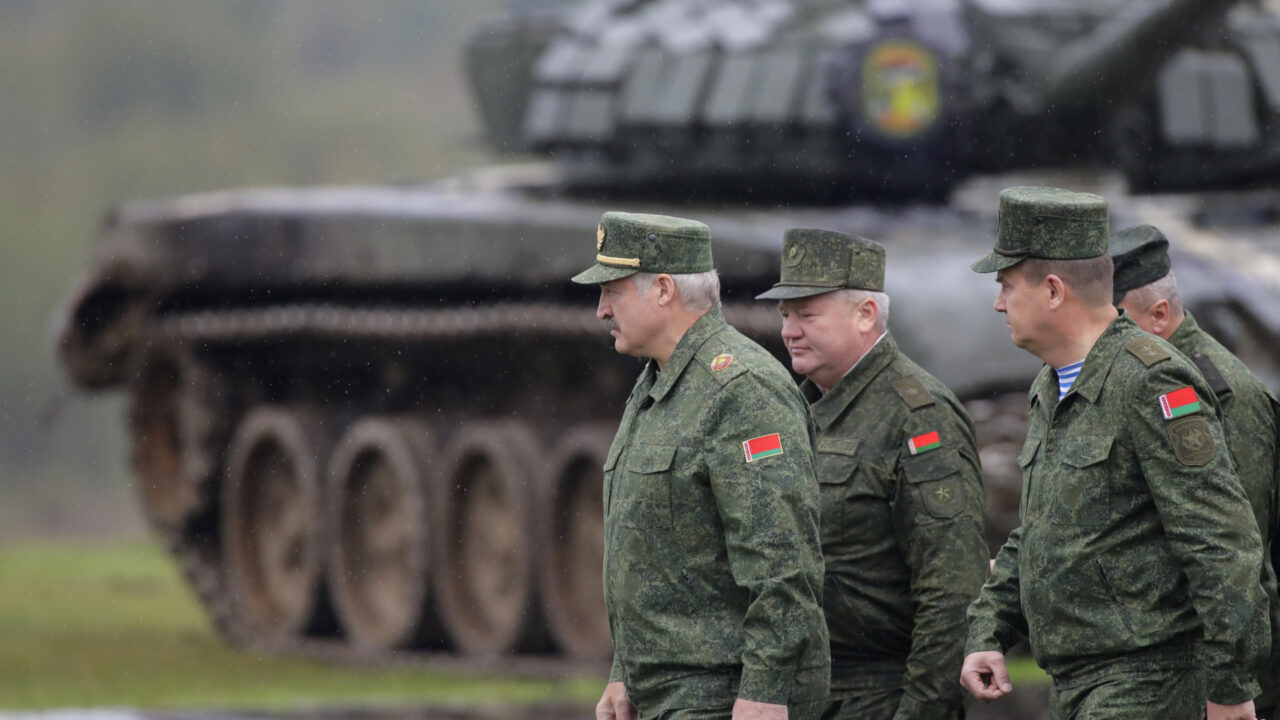
The announcement of Zapad 2025, a joint Russian–Belarusian exercise scheduled in Belarus between September 12th and 16th, has revived an unpleasant European memory—the 2021 drills simulated offensive operations and pre-positioned equipment deployed in Ukraine the following year. This week’s Zapad, which means “west” in Russian, will be the first exercise since the full-scale invasion.
Europeans should not overreact. Zapad drills present scripted, “best-case” scenarios of Russian and Belarusian capabilities that have rarely translated into actual combat performance. In 2021, Moscow and Minsk showcased unmanned ground vehicles, reconnaissance-strike drones linked to the Strelets system and remotely-operated Platform-M robots—yet most of those underperformed in Ukraine, with only reconnaissance drones seeing routine use. The gap between Zapad displays and battlefield viability remains wide.
Instead, European governments should treat Zapad 2025 primarily as political theatre. For leaders Alexander Lukashenko and Vladimir Putin, it is a form of “iron diplomacy”, a staged escalation to ratchet up the security climate in eastern Europe and influence talks between Moscow, Minsk and Washington—not least as Lukashenko pushes for US recognition. Zapad is as much military rehearsal as it is a political signal about Belarus’s place in Ukraine negotiations and Russia’s escalation potential.
Exercise plan
Historically, the Zapad drills have shown Russian and Belarusian (Union State) military posture in the European operational direction, assessed force readiness, and demonstrated technological and doctrinal developments in both armies.
This year, the Belarusian component will test the Regional Forces Group (RFG) command, with additional activities by the Russian Baltic and Northern fleets. The RFG comprises the whole Belarusian army plus some Russian units—about 2,000 personnel permanently stationed along the Brest–Vitebsk line in Belarus—positioned to facilitate rapid integration of additional Russian forces.
The Union State forces are also expected to highlight advances in unmanned systems. Over the past two years, Belarus has created dedicated Unmanned Aerial Systems troops within its special forces and expanded drone units across every mechanised and artillery brigade, adding informal detachments to most formations. Russia is following suit: it established new drone regiments at the military-district level in late 2024 to centralise unmanned aerial vehicle command, and at the 2025 Victory Day parade, a column from the 7th Separate Drone Systems Regiment displayed Orlan, ZALA, Lancet, Harpia and Geran drones. An Unmanned Systems Forces is expected to be formalised within two to three months after the exercise. Alongside these demonstrations, Russia is likely to simulate Oreshnik strikes on NATO infrastructure in Poland and the Baltics and rehearse responses to potential US missile deployments in Europe.
Importantly, Zapad 2025 is a central element of a wider set of exercises held in Belarus and Russia in 2025. Between March and April, Belarus conducted large-scale mobilisation drills and combat-readiness inspections, assigning reservists to active units. Minsk also held air-defence training with freshly supplied S-400 and Tor-M2K systems and tested newly developed electronic-warfare capabilities. In May, the Russian Baltic Sea Fleet conducted exercises with 20 ships, and in August the Russian Northern Fleet launched its own drills, subsequently deploying three nuclear-powered submarines off the coast of Norway. Earlier this month, the Collective Security Treaty Organization, a military alliance of six post-Soviet states, staged Interaction 2025 drills in Belarus, Tajikistan, Kyrgyzstan and Kazakhstan, while the Russian military prepared tests of the nuclear-powered, low-flying Burevestnik missile.
Iron diplomacy
Should US–Russia negotiations collapse, Lukashenko’s role would evaporate overnight, his concessions wasted and his standing with Putin damaged
Just hours before the Trump-Putin summit in Alaska on August 15th, Trump phoned Lukashenko, highlighting how the Belarusian leader has attempted to position himself as a channel of communication between Washington and Moscow. On the same day, Trump thanked him on social media for the release of 16 political prisoners—including US citizens and key opposition figure Siarhei Tsikhanouski—and called him “highly respected president,” breaking with five years of Western non-recognition.
Prisoner diplomacy is Lukashenko’s main currency. These symbolic gestures persuaded Washington that dialogue with Minsk can deliver visible results at minimal cost, which is important for the current US administration. But Lukashenko knows his limits. US relief so far has been rather symbolic, and experts note that a blanket amnesty is unlikely. Should US–Russia negotiations collapse, Lukashenko’s role would evaporate overnight, his concessions wasted and his standing with Putin damaged. If talks advance, Belarus could become more useful—but Minsk would then be expected to deliver more than prisoners and platitudes. Lukashenko seeks more than social media posts and handshakes: he wants the rollback of sanctions and eventually the restoration of normal diplomatic relations.
This is why Belarus’s role in the full-scale invasion of Ukraine cannot be overlooked. Although Lukashenko insists he was not involved in the decision to attack Ukraine, he still allowed Russian forces to attack unexpectedly via Belarus. Now, Minsk wants to play a role in the conflict settlement and the emergent European security order, seeking responsibilities that could include regulating exercises, weapon deployments, and oversight of bases and staging areas. The Zapad exercise is therefore designed in part to show Belarus’s value within that possible framework.
European governments should closely monitor both Belarus’s military build-up and its role in US–Russian diplomacy. Since Belarus suffers more from EU than US sanctions, Europe has a lot of leverage. A nuanced understanding of how Minsk and Moscow blend military drills with diplomatic signalling will help clarify Putin’s and Lukashenko’s intentions and enable a more coherent Western response.
This document has been produced with the financial assistance of the European Union. The contents of this document are the sole responsibility of the European Council on Foreign Relations (ECFR) and can under no circumstances be regarded as reflecting the position of the European Union.

The European Council on Foreign Relations does not take collective positions. ECFR publications only represent the views of their individual authors.