Arctic hold‘em: Ten European cards in Greenland
Europeans have real leverage in the face of Donald Trump’s threats towards Greenland—and time on their side. They must use it to raise the prospective costs of annexation
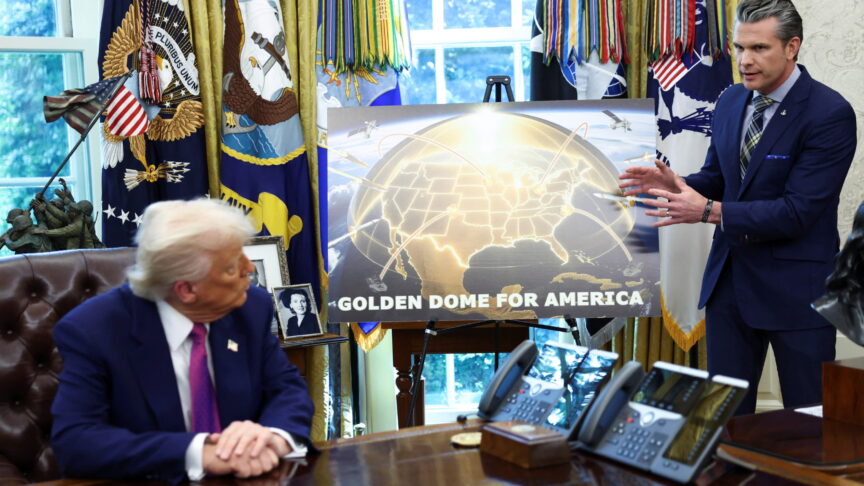
Donald Trump is serious about wanting to take over Greenland. Especially following the operation seizing Venezuela’s Nicolás Maduro, the US president has made his intention abundantly clear. “The United States needs Greenland for the purpose of national security”, he posted on January 14th in just the latest in a series of unequivocal signals.
How should Europeans respond? Trump thrives on empty space, ambiguity and fear of US power. Europe’s task is to fill the space calmly, collectively and pre-emptively. The joint statement on January 6th by European leaders was a good start and a strong statement of resolve. So too is the ongoing deployment of troops to Greenland by some governments. But more is needed.
By acting fast, Europeans can outflank the US administration.
The good news is that Europeans have leverage. In Trump’s language, they have cards. Time is the major factor. Trump wants to move soon. He already faces bipartisan criticism in Congress for his coercive diplomacy, midterm elections in November and the end of his presidential term in three years. Political shifts within Greenland and any commercial benefits of US annexation would take much longer to materialise (if they materialise at all). By acting fast, European leaders can outflank the administration. They are right to be cautious in what they say—but must be clear-eyed about the challenge and decisive in curbing the chances of escalation.
The ten proposed measures outlined below are meant to raise the political, economic and alliance costs of unilateral action so early and so visibly that Trump’s administration thinks twice—and considers settling for something like the investment and security arrangements already on offer from Greenland and Denmark.
Europe’s ten Greenland cards
- Build an explicit European Arctic coalition
- Europeanise the security presence in Greenland
- Anchor support for Denmark and Greenland politically
- Pre-commit to sanctions on occupation profiteers
- Signal conditionality on Arctic cooperation
- Use NATO ambiguity strategically
- Flood Greenland with European investment
- Talk to Americans, not just the administration
- Treat this as a rehearsal, not an exception
- Normalise contingency planning
Why this time is different
Greenland’s strategic importance to the US dates back to the 19th century, and successive US administrations have explored acquiring the island. Since the second world war Washington has enjoyed extensive access to it under the 1951 Greenland Defence Agreement. But US Arctic engagement declined after the cold war. Where Washington once operated 17 bases and stationed over 10,000 troops in Greenland, today it maintains a single base with a small number of troops. Icebreaking capacity remains limited, and American policymakers and analysts increasingly speak of “losing the race in the Arctic” as Russia and China expand their presence in the region. Climate change, melting permafrost and the prospect of new shipping routes and resource extraction have amplified this US rhetoric.
Trump’s fixation on Greenland emerged during his first term, when he publicly proposed purchasing the island. European leaders largely treated the episode as a curiosity rather than a warning. Yet Trump’s interest persisted. He reopened a US consulate in Nuuk in 2020 and officials who worked with him described his focus on acquiring Greenland as unusually intense and enduring. Upon returning to office in 2025, Trump framed it as a national security necessity and accused Denmark of failing to defend the territory adequately.
European attempts at accommodation followed. Denmark offered the US further cooperation: expanded basing and infrastructure access, deeper Arctic security coordination and openness to alignment on mineral investments. These offers aimed to remove any plausible security rationale for territorial acquisition. Trump rejected them. That refusal strongly suggested that access, minerals and cooperation were not his objective. In parallel, Denmark and the EU have increased their engagement and investments in Greenland. In mid-December, Denmark’s Defence Intelligence Service quietly classified the US as a potential national security threat—a profound shift for a country that fought alongside American forces in Iraq and Afghanistan and suffered among the highest per-capita casualties of any ally.
Days later, Trump reignited the issue decisively. He appointed Louisiana governor Jeff Landry as US special envoy to Greenland, a role explicitly connected to his claims to it. He also appointed Texas venture capitalist Thomas Dans as head of the US Arctic Research Commission, reinforcing the administration’s focus on Greenland as the heart of its Arctic strategy. After the US military operation in Venezuela, figures within or close to the administration linked it to Greenland and Trump’s designs on the territory. Trump himself has been frank about these: “Anything less than [annexation] is unacceptable,” he posted on January 14th.
These developments clarified the nature of the challenge facing Europe. This is not a misunderstanding to be resolved through dialogue, nor a bargaining problem awaiting a better offer. Trump has already rejected both European offers of cooperation and Danish concessions on access. His language consistently frames Greenland not as a security partnership but as a matter of ownership, permanence and control. The worldview on display resembles real estate acquisition more than strategic defence planning. The implications of these developments are severe and could test European unity and coherence.
A European strategy
1. Build an explicit European Arctic coalition
Europe should replicate the Ukraine contact-group model for the Arctic: a standing coalition of willing states (perhaps Canada, France, Germany, the Netherlands and the UK, as well as the Baltics and Nordics) coordinating Arctic security, investment and political signalling. A representative from the NATO International Staff could be invited when appropriate, in keeping with recommendation six below. This grouping should be visible, formal and persistent—not an ad-hoc diplomatic protest.
2. Europeanise the security presence in Greenland
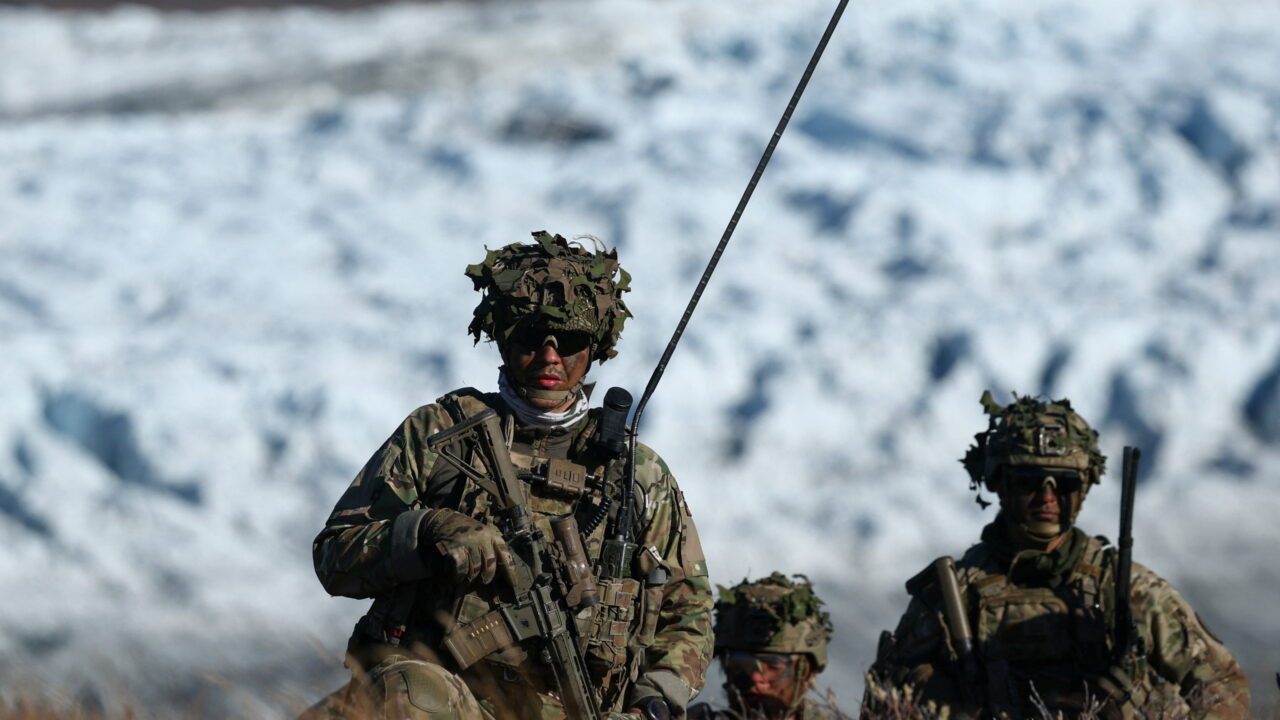
A continuous European security presence in Greenland, framed as Arctic infrastructure protection, climate monitoring and search-and-rescue, would materially change the context. At the time of writing, France, Germany, the Netherlands, Norway and Sweden have deployed small numbers of troops to Greenland in support of the Danes. The more substantial this presence, the stronger the signal to Washington.
The goal is not to match US power, but to demonstrate that Europeans are addressing current security threats with a proportional response that can grow as needed. They can present this as meeting the Trump administration’s demand that they take primary responsibility for Europe’s security; for example, by intensifying maritime surveillance (using both Greenland-based planes and ones deployed to Keflavik in Iceland) in the waters around the island.
Timing matters here. Landry has talked of wooing Greenland’s people. This would take time, even if the administration acts to stir up discontent on the island to accelerate events. The European security presence will provide transparency about actual threats to Greenland and reduce the risk of minor disturbances to public order becoming a pretext for a larger, harder-edged US military intervention.
3. Anchor support for Denmark and Greenland politically
European states—including those beyond the contact group proposed in point one—should think of Denmark as a front-line state, not just as a legal stakeholder. That means:
- Joint EU-Danish-Greenlandic statements on the Greenland issue
- Continued regular European leaders’ visits to both Copenhagen and Nuuk
- Explicit rhetorical links drawn between Danish Greenlandic and European territorial integrity
- A commitment to biannual summits with the Copenhagen and Nuuk governments
- Openness to a closer relationship between Greenland and the EU, with accession as an option if Greenlanders opt for that path
- Prominent and frank European statements of opposition to US annexation in front of American audiences, such as at the upcoming Munich Security Conference
The objective must be to make the matter a European sovereignty issue, not a bilateral spat between Copenhagen and Nuuk on the one side and Washington on the other.
4. Pre-commit to sanctions on occupation profiteers
The European Commission (or a coalition of European states including Britain) should prepare and then leak a proposed sanctions regime targeting US actions in Greenland including:
- Firms exploiting Greenlandic resources under US annexation
- Financial intermediaries of the same, with due attention to potential costs to Europeans
- US or third-country individuals benefiting from an occupation
- Quick transfers of economic interests, especially if they involve opaque sources of funding or links to third countries like Russia and China
This blueprint should make it clear that politically connected persons, and concessions granted by individuals like the US president, would face particularly strict scrutiny.
Here, too, the timeline can help. The projects discussed by Trump will take years, even decades, to come to fruition. His administration is scheduled to end in January 2029. Those who benefit from his actions may want to exit quickly or receive upfront returns, especially if there is a prospect of investigation in the US. This opens up the possibility of loans from or sales to organisations that would not necessarily pass muster under foreign investment reviews.
The goal is not to impose immediate sanctions, but to imply a commitment to economic punishment that will give US private-sector actors pause before assuming they will make money from Trump’s actions. If they do not actively support Trump’s Greenland actions, he will have much less enthusiasm for the project.
5. Signal conditionality on Arctic cooperation
Europe should make it clear that Arctic governance, scientific cooperation and infrastructure access require respect for sovereignty. European Arctic actors (and Canada) should emphasise that their cooperation in the Arctic Council, the leading international forum in the region, is entirely dependent on this respect.
This reframes the issue away from “anti-Americanism” and toward a rules-based Arctic order, within which the US would be isolating itself it moved to take Greenland.
6. Use NATO ambiguity strategically
European leaders should neither invoke nor renounce NATO automatically. Instead, they should:
- Emphasise that NATO assumes consensual territorial arrangements
- Raise questions about alliance obligations under unilateral territorial coercion
- Provoke a debate on the structural geopolitical implications of one ally unilaterally invading the territory of another ally in a military alliance
Strategic ambiguity over NATO forces US elites to debate the alliance consequences internally, rather than letting Trump frame the issue as a test of loyalty.
7. Flood Greenland with European investment
Greenlanders already enjoy close ties with the EU and its single market; they are themselves EU citizens by dint of their Danish citizenship. Europe should capitalise on existing agreements and structures to deepen economic links, including through:
- Infrastructure finance, especially for hydro-electric power and data centres; transport for tourism and trade; communications infrastructure; and the industrial development of the mining sector
- Education and research partnerships to support the continued development of the Greenlandic labour force
- Climate and environmental projects, including green energy investments linked to rare-earth deposits on the island
Emphasis should be placed on projects with immediate economic impact, for which there is a market now (think hydro-electric dams powering data centres). Europeans should then contrast these with the more dubious longer-term riches described by Trump. They can show Greenlanders that the glister of a speculative boom would wear off quickly: the territory’s resources already belong to its people, but rights and ownership titles could face legal risks in the event of a US takeover. This does two things: it strengthens Greenlandic agency and makes any attempt by the Trump administration at coercive “protection” look transparently imperial rather than developmental. Furthermore, solidifying Greenland’s ties to Europe through this investment will ensure sustained cooperation to better deter against US influence operations to undermine Danish and European positions on the island.
8. Talk to Americans, not just the administration
Europe should speak to Americans, not just to their government. This should include:
- Quiet engagement with Congress, provoking discussions about the limits of blunt assertions of power. Denmark has done this well already and should be joined consistently by other traditional American partners and allies. Comprehensive involvement in the US media and think-tank debate over Greenland—including spreading knowledge about actual Greenlandic public opinion—can expose administration misrepresentations to the disinfectant of sunlight.
- Engagement with factions within the administration, including military officials, that favour restraint in Greenland, strong relations with Europe or both
Greenland and Denmark could make clear that they understand this gambit belongs to Trump and his aides and has not (yet) been endorsed by Americans. They should signal that, in the event of a future US administration that disavowed and revoked coercive steps taken by this president, they would roll back the retaliatory measures and embrace renewed cooperation for long-term security and investment in Greenland.
Europeans should avoid attacking Trump personally and instead focus their attacks on the substance of his plan for Greenland. They should point out that US administrations of both stripes have for decades reduced the US military presence in Greenland; that the current administration’s claims about Russian and Chinese ships in Greenlandic waters are overblown; that all of the US requests can be accommodated within the 1951 agreement; and that the logic of countries only defending what they own is inconsistent with security guarantees in NATO (as well as those Trump has promised to Gulf states, Asian allies and Ukraine).
This European engagement will matter over time, as the costs of imperial distractions are already growing visible in US domestic politics. Current outreach to bipartisan American delegations, as well as influence campaigns in the media and on social media platforms, are steps in the right direction.
9. Treat this as a rehearsal, not an exception
European leaders should say the quiet part out loud: if the US can steal Greenland today, it can coerce others in all manner of ways tomorrow. They should be willing to state plainly that any such aggression against Greenlandic and Danish sovereignty would then form the basis of a broader European strategy for dealing with an America that no longer treats allied sovereignty as inviolable. Behind closed doors, they should spell out to American officials what this would mean for US influence and standing in the wider world.
10. Normalise contingency planning
There is a limit to how much Europeans can prepare for an event that would divide their continent over how to respond, but contingency planning is possible. Policymakers should be willing to openly conduct tabletop exercises, legal reviews and crisis simulations involving Greenland, under the diplomatic cover of this being a normal precaution. If the US does indeed seize Greenland, Europe will require an escalation going beyond what is detailed here. The conversation about how to respond to that eventuality needs to begin now.
America’s gambit, Europe’s test
The Greenland crisis has become a measure of whether Europe can still defend sovereignty in practice, not only in principle, when legal norms and alliance habits no longer suffice. Any US attempt to seize the island would shatter NATO’s foundational assumption that alliance members do not threaten one another’s territorial integrity. It would also test the EU’s unity. For years, Europeans assumed such a test would come from Russia. That it may now come from the US has forced a reckoning over how Europe defends itself not only with less America, but potentially against America.
How precisely Europeans should apply and develop the options described here depends on how what Trump does next; whether he pursues an outright military takeover or something more subtle. In other words: to play the cards right, they must correctly identify the game. This list of ten steps does not set out detailed retaliatory action for consideration should the US move militarily or coercively. Such measures seem premature at the moment. Deployed now, they would not stop the current US campaign on their own and could undercut Europe’s successful efforts to keep the US (somewhat) supportive of Ukraine. Better to undertake contingency planning and prepare to tailor options to Trump’s coercive actions as and if they proceed.
The agenda above, however, meets purported US concerns in Greenland while making clear that there will be enormous cost and complexity from trying to annex the island under Trump. It is time to act.
The European Council on Foreign Relations does not take collective positions. ECFR publications only represent the views of their individual authors.