Harmattan hazards: How coastal west Africa can escape the Sahel’s fate

Summary
- Benin, Ghana, Ivory Coast and Togo are under pressure from two threats: jihadists and putschists. In these west African coastal states, armed Islamist groups increasingly cross northern borders, wreaking havoc. Civilian governments are struggling to counter them, increasing the risk of political upheaval and coups.
- Their northern neighbours in the Sahel faced the same threat a few years earlier. Then, European support proved both ineffective—since it failed to stem the violence and those governments were ultimately overthrown—and counterproductive, associating Europeans with weak and unpopular regimes, damaging their image and opening the door to Russia.
- Failures in the Sahel could be repeated on the coast. Anti-Western sentiment is rising across west Africa, and hostile actors like Russia are poised to expand influence further among Europe’s allies.
- European leaders can help stabilise coastal west Africa while avoiding the mistakes made in the Sahel. They can do so by replacing fragmented, reactive policies with a coordinated European strategy that streamlines aid, empowers regional solutions, builds trust through joint civilian-led initiatives and counters disinformation.
Violence and failures breed dictatorships
Benin, a narrow coastal country next to Nigeria, suffered its worst terrorist attack ever this year. Officials revealed on April 24th that al-Qaeda-linked militants had killed 54 soldiers in the country’s north the previous week—shattering earlier reports of just 8 fatalities and marking a grim new chapter in west Africa’s escalating violence.
Jihadist groups are spreading from their heartlands in the Sahel, a vast semi-arid region just south of the Sahara Desert, into countries on the Gulf of Guinea on the Atlantic coast, in particular Benin, Ghana, Ivory Coast and Togo.
The threat they pose, however, goes beyond their attacks. They tap into criminal activities along the coast—drugs, gold mining, smuggling—to fund their operations. They fuel intercommunal tensions to get recruits. And they stoke anti-government sentiment, ultimately destabilising political systems. These dynamics resulted in the overthrow of governments in three countries in the Sahel—Mali, Niger and Burkina Faso—all of which became military dictatorships in the span of four years (2020-2023). The putschists leaned on domestic anti-Western sentiment (and specifically anti-French sentiment), which partly arose from European support that backfired: military training came without weapons, frustrating local forces and blunting effectiveness; development aid was siphoned off by elites, making Europeans look complicit in corruption; and calls for democracy and transparency rang hollow as European leaders propped up military regimes elsewhere, fuelling charges of double standards and hypocrisy.
Moscow capitalised on European missteps in the Sahel to entrench itself militarily and politically. It established about 1,000-2,000 men in Mali and deployed instructors in Burkina Faso and Niger as part of its Africa Corps. It used sharp influence tactics that fuelled anti-French and anti-Western sentiment and led to the expulsion of nearly all Western forces from the Sahel, driving a wedge deep into Sahelian-European relations. It is starting to do the same along the coast.
The stability of west Africa’s coastal states is not just a regional concern; it is a core European interest. The Gulf of Guinea is a vital trade artery and a key economic partner. Its ports handle European imports and exports and are gateways to landlocked countries in the region. As container traffic diverts from the Red Sea to avoid Houthi attacks, the Gulf of Guinea has become more significant to global supply chains. The region also plays a growing role in Europe’s energy diversification: in the first quarter of 2025, Nigerian oil accounted for 6.3% of the EU’s petroleum oil imports, while Ivory Coast and Ghana hold significant hydrocarbon reserves. On top of that, the agri-food sector is booming: the region imports much of its wheat from Europe and supplies 70% of the EU’s cocoa.
Moreover, these countries are longstanding partners with deep political and cultural ties to Europe, shaped by a shared colonial history. Instability in the coastal states could cause European influence to wane further in a region where competitors like Russia and China are increasingly present and assertive.
This paper argues that European leaders can stem the tide of growing instability, but they face a delicate balancing act: scaling up much-needed support to states in the Gulf of Guinea while trying to avoid the pitfalls of their engagement in the Sahel. Two risks stand out. First, over-saturating partner countries with uncoordinated, inadequate or competing initiatives. Second, misreading local social and political dynamics, which can amplify discontent and opposition from civil societies and reinforce perceptions of post-colonial interference.
But there are ways to do it. European leaders should move from fragmented, reactive approaches to a coordinated European strategy to protect shared interests. They should frame this renewed engagement under a common European banner and strengthen the mandate of the EU’s special representative for the Sahel. The EU should also streamline aid and military support through coordination and synchronised delivery, while building trust through joint initiatives and civilian-led counter-terrorism efforts. Supporting African-led regional solutions and dialogue, without dominating the process, will also improve political stability. Above all, European leaders should fight back disinformation through credible local media and targeted messaging, reinforcing the practical benefits of European engagement.
The jihadist threat
Jihadist groups first took root in the Sahel amid the chaos following Libya’s collapse in 2011. They thrived on weak borders and fragile states in Mali, Niger and Burkina Faso. These Sahelian countries now account for over half of violent extremism-related deaths globally. Burkina Faso, in particular, ranks in first place in the Global Terrorism Index, which assesses the impacts of violent extremism in 163 countries. The two main jihadist organisations operating in the region—the Group for the Support of Islam and Muslims (JNIM) and its rival, the Islamic State Sahel Province (ISSP)—have expanded their control of central Sahel by building on networks of local armed affiliates.
The groups expanded their footholds in the Sahel by opportunistically exploiting deep-seated state weaknesses, filling vacuums left by absent or ineffective central governments. This is particularly the case in rural areas plagued by corruption, chronic neglect and a lack of basic public services. They embedded themselves within communities through shadow governance structures, providing these essential services, administering local justice, securing loyalties and forging local alliances.
Until recently, they stuck to rural areas and supply routes, steering clear of major cities. As one analyst put it: “It’s a fight between two weaknesses: jihadist groups are either unable or unwilling to seize and hold large cities, while state forces remain incapable of fully reclaiming rural areas”.[1]
That may be changing. In May, JNIM fighters stormed the cities of Djibo and Diapaga in Burkina Faso, briefly seizing control, attacking military, police and gendarmerie bases and torching markets. The violence left dozens dead and signalled a bold new strategy: jihadists are now testing urban takeovers.
They have an example to follow in Syria. When the jihadist group Hayat Tahrir al-Sham (HTS) entered the capital, Damascus, in December 2024, its leader—still labelled a terrorist—was suddenly welcomed by Western diplomats. As one interviewed senior negotiator in the region argued: “It became acceptable for a jihadist group to take over a state. In a way, this moment marked the end of the global ‘war on terror’”.[2] Shortly after, both the EU and the US announced the lifting of sanctions imposed on Syria. HTS’s success is likely echoing across conflict zones and may have a profound influence on the thinking of Sahelian jihadist leadership. In Mali, for instance, Tuareg groups and JNIM are reportedly in talks about power-sharing, hinting at a move from hardline ideology to pragmatic local governance.
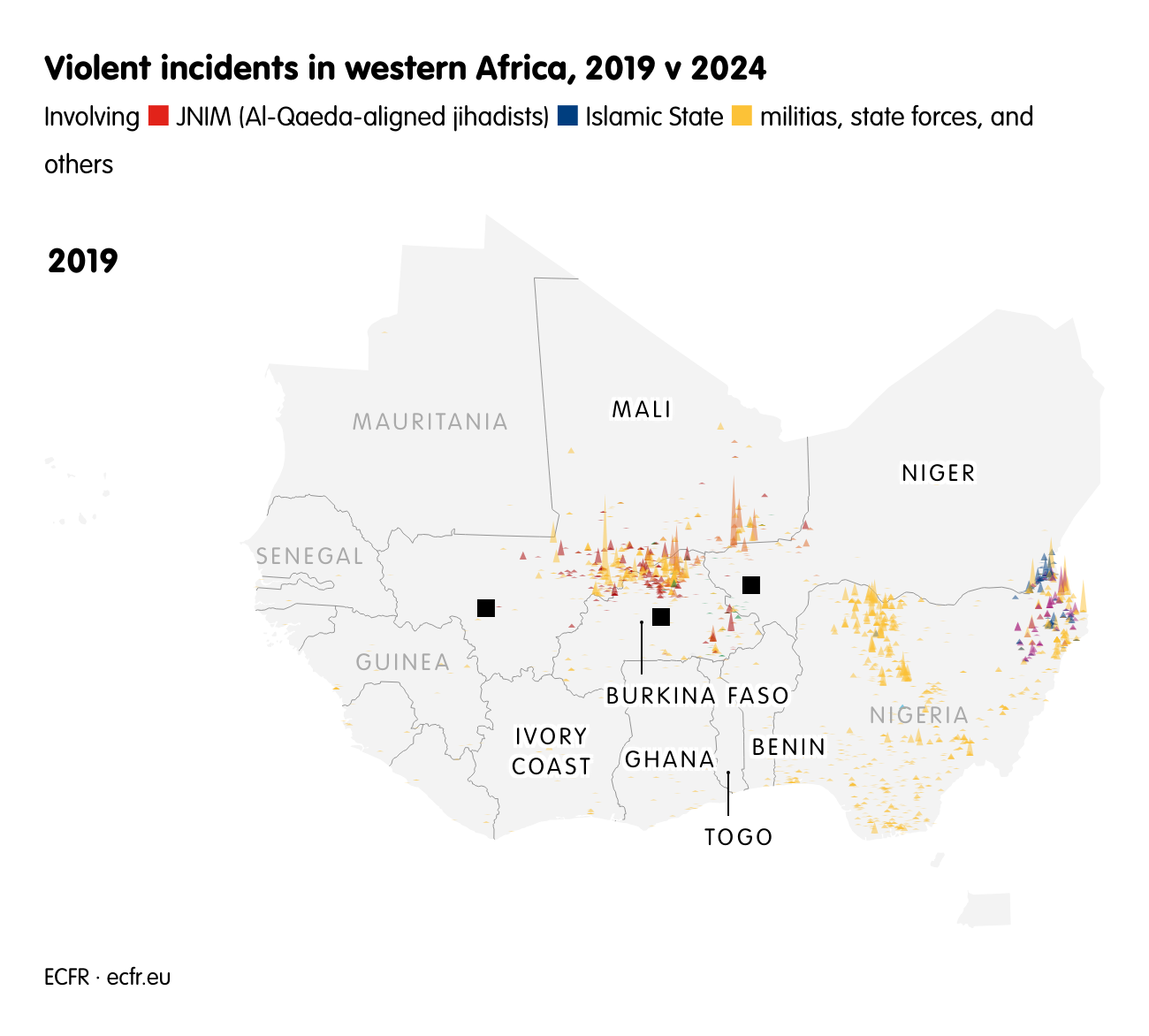
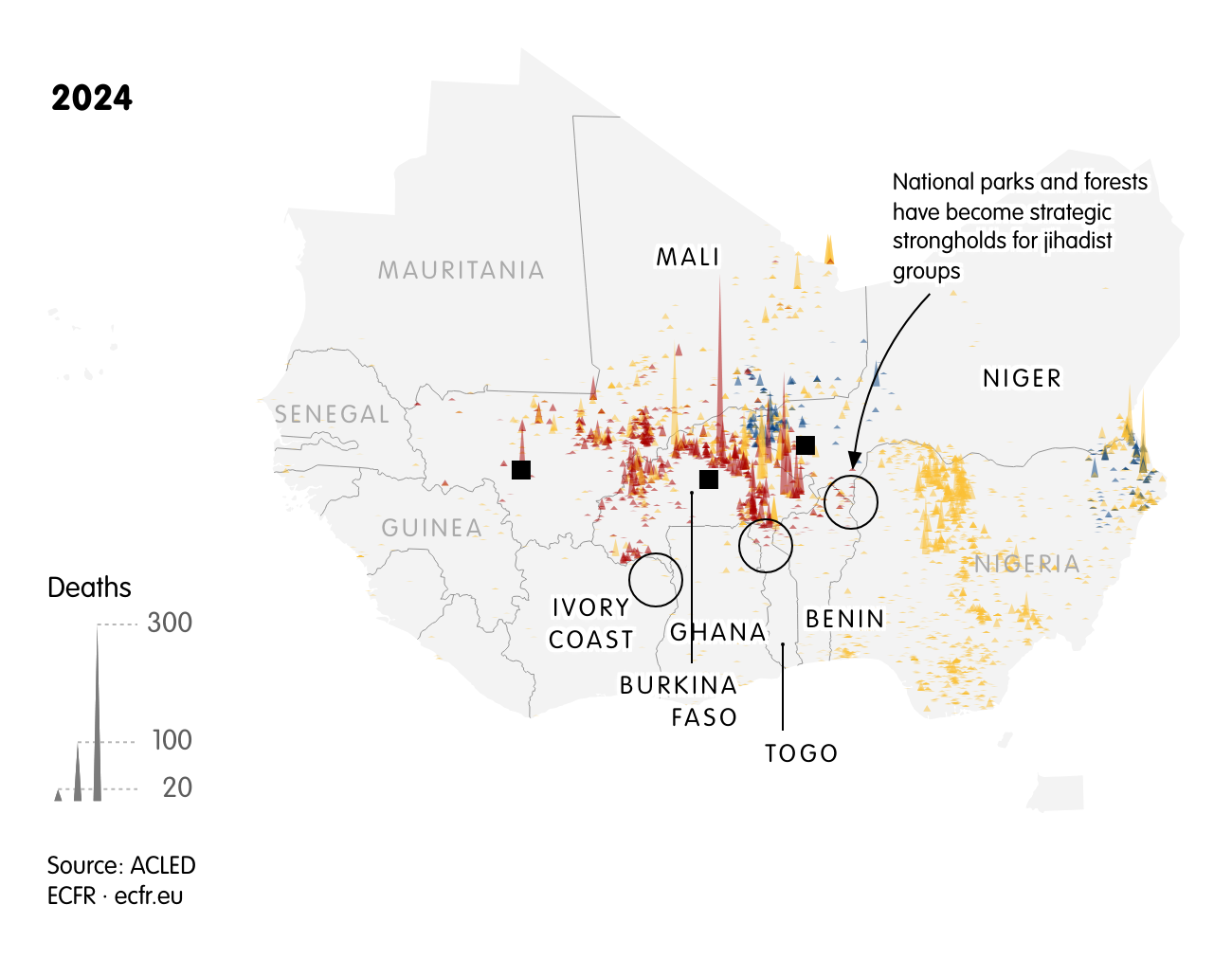
Analysts are divided as to whether Sahelian armed groups can actually take over a country or even control a major city in west Africa. Analysis suggests that they do not have the heavy weapons, troop numbers or tactics that the Syrian groups had, so they probably lack the resources and capacity to establish control across vast swathes of territory. This would also limit the risk of further progress towards the coasts. Coastal populations are predominantly Christian or follow indigenous beliefs, making jihadist narratives less appealing and further blocking expansion.
Nonetheless, the possibility of jihadists capturing a city cannot be dismissed outright. Such a scenario would fundamentally alter the conflict dynamics in west Africa, with far-reaching political and security implications. It is a plausible—if unlikely—contingency that means authorities need to stay nimble and agile in their responses, ready to adapt quickly should the situation escalate.
Jihadists are already bolder. They have been slipping across porous borders to the south into coastal west African states. Numbers confirm a sharp increase in attacks and cross-border incursions on coastal states by armed groups since 2021. In Benin, attacks rose from 5 in 2021 to 155 in 2024. National parks and forests—the W-Arly-Pendjari (WAP) complex straddling Benin, Burkina Faso and Niger; the Oti-Kéran-Mandouri complex in northern Togo; and the Comoé National Park in northeast Ivory Coast— have become strategic strongholds for these groups. Militants now use these wild expanses as safe havens, field hospitals and logistical hubs. Since these groups moved in, indiscriminate bomb attacks have surged, particularly in the northern regions of Benin and Togo, endangering local populations and state forces alike.
Overspill to the south
“The rationality of terrorist actors is inherently fluid. These groups’ aim is to strike where they are not expected, and in a context of political, economic and social frustration, anything becomes possible,” analyst interviewed in Benin.[3]
There are some early signs that jihadists are using similar fluid, opportunistic tactics in northern coastal states as they did in their Sahelian strongholds. In the Sahelian side of the national parks in southern Niger and Burkina Faso, JNIM has driven out state security forces and allowed communities access to grazing areas, small-scale mines and hunting grounds. The group has also taken steps to prevent livestock theft, local kidnappings and unauthorised poaching. In return for providing these economic opportunities and security measures, JNIM imposes a tax on cattle herders, gold miners and anyone using the roads or natural resources within its sphere of influence. On the coastal side of the parks, JNIM has so far avoided imposing taxes on smuggled goods coming into the WAP complex in Benin, for example, but it does impose a religious tax or a protection fee for livestock grazing. Its primary aim is for the local population to accept it as “a governing force”.
Coastal west African states face internal dynamics that make them similarly vulnerable to the development of local jihadist cells. Their northern regions are sparsely populated and underdeveloped, partly because of harsher climatic conditions (savannah vegetation and poor soils curb agricultural productivity), historic colonial neglect and political marginalisation. The lack of infrastructure reinforces a cycle of underdevelopment and exclusion. The contrast between rapidly developing southern coastal regions and poorer northern areas is stark. This breeds frustration among populations who feel abandoned by the state while confronted with rising levels of insecurity and violence.
Another dynamic that jihadists can exploit in northern coastal states is intercommunal tensions. Jihadist groups are actively recruiting among Fulani communities, a traditionally nomadic pastoralist group numbering in the millions across west Africa—with hundreds of thousands present in northern Benin, Ghana, Ivory Coast and Togo. The traditional pastoralist, nomadic way of life of the Fulani sets them apart from sedentary farming communities, who often view them as outsiders or “foreigners”. Their seasonal migrations for grazing often lead to land disputes and tensions with local farmers. As a result, they are marginalised and stigmatised, a situation that armed groups exploit to recruit heavily amongst them—and which further contributes to their stigmatisation. Poorly trained state-affiliated forces contribute to this by using collective punishments and atrocities. For instance, in March this year, the Burkina Faso army and pro-government voluntary militias massacred at least 130 ethnic Fulani civilians during a counter-terrorism operation in the north of the country. Many Fulanis join jihadist groups for protection. Recurring suspicion of these communities, including from state forces, following attacks in coastal states, similarly risks reinforcing a vicious cycle of exclusion and radicalisation.
Flows upstream
Jihadist groups are adept at exploiting political and social divisions and could use that to push into coastal states to secure economic lifelines and broaden illicit activities, with instability spilling over as they go. But it also works the other way round: criminal networks rooted in coastal states—trafficking fuel, medicine, livestock, arms and drugs as well as rustling cattle and engaging in maritime piracy—have helped finance Sahelian insurgencies over the last decade.
For example, jihadists use fuel smugglers from Nigeria transiting Benin towards the central Sahel to obtain fuel and income by charging smugglers for protection. “They approach young Beninese involved in traffic[king] fuel from Nigeria and turn them into logisticians to supply their networks in Burkina Faso. To do this, they are prepared to pay 8,000 CFA francs for a canister of petrol worth 400” explained a local source, numbers that the author was not able to verify.[4] Another area jihadists are specifically targeting is illegal artisanal gold mining. The practice has multiplied in northern regions of Ivory Coast and Ghana in recent years, making it attractive to Sahelian insurgents seeking lucrative sources of revenue.
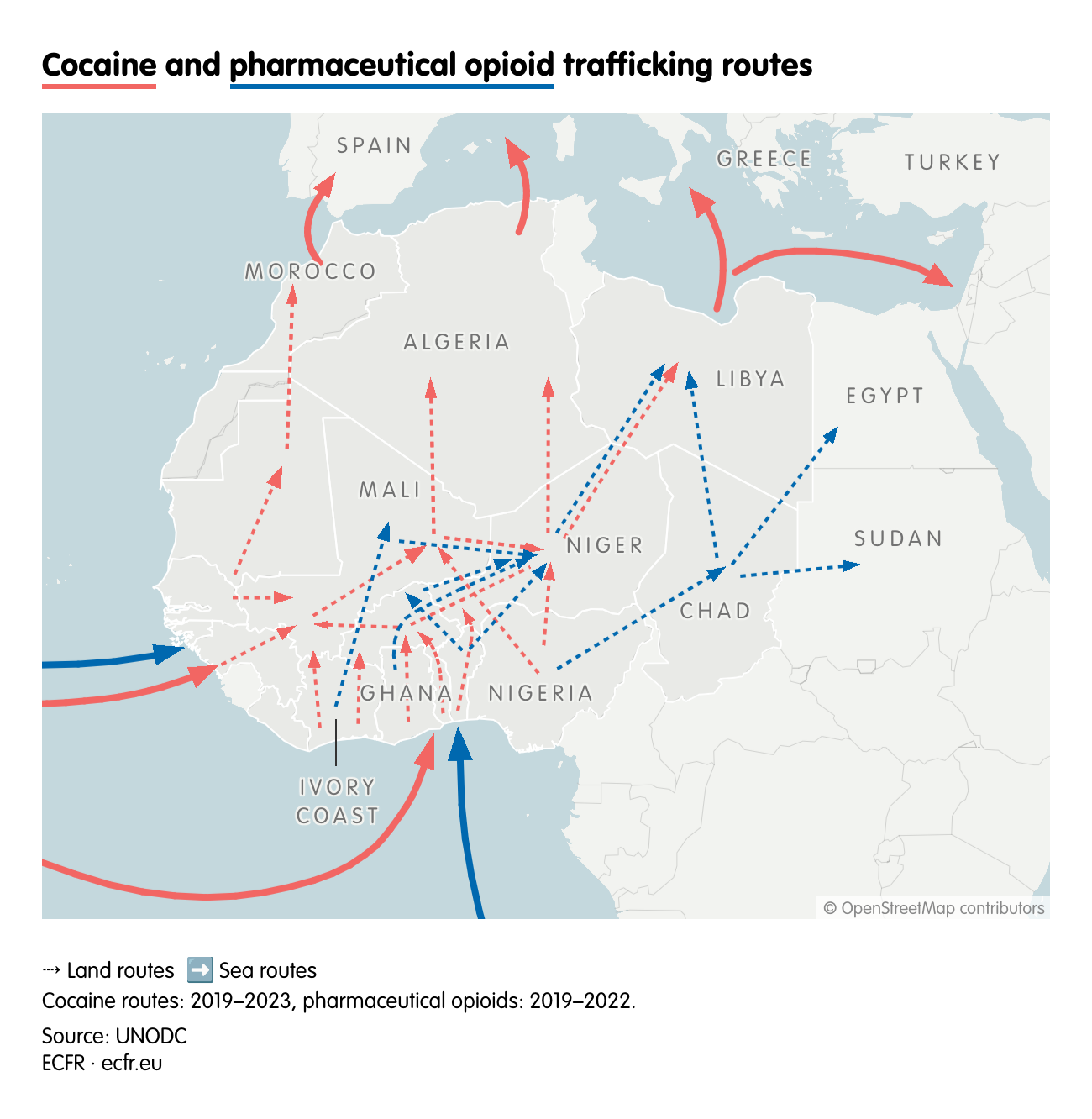
West Africa is also rapidly emerging as a major transit hub in international drug trafficking networks, particularly for cocaine and pharmaceutical opioids. The amount of cocaine seized in the Sahel soared from an average of 13kg per year in the period 2015–2020 to a staggering 1,466kg in 2022. Most is found in Burkina Faso, Mali and Niger. Ships from Latin America and Asia transport narcotics in part destined for European markets through Gulf of Guinea ports, particularly Togo and Benin, before moving north through the Sahel. Armed groups operating in the region exploit these routes by imposing payments and taxes for passage through territories they control, significantly boosting their revenues and fuelling a vicious cycle of destabilisation.
Destabilising the coastal states
Over the past decade, coastal west African countries have projected an image of relative stability and economic dynamism, especially compared to neighbouring Sahelian states. With steady GDP growth, these states have actively diversified their international partnerships, attracting investment from not only traditional Western partners but also China, Gulf states, India and Turkey, and positioned themselves as emerging markets open for business. Ivory Coast, for instance, ranks among the fastest-growing economies in Africa. Subsequently, regional governments strongly reject narratives that frame their countries through the lens of insecurity or terrorism, arguing that such portrayals distort the economic development picture, undermine investor confidence, and constrain foreign direct investments.[5] However, the regional political and security dynamics, combined with local structural challenges, could derail these positive trajectories.
Regional instability is exacerbating economic hardship across coastal west Africa, as their economies are closely tied to their Sahelian neighbours. Ivory Coast alone accounts for 25% of Mali’s total imports and 14% of Burkina Faso’s. The violence and political tensions have already disrupted economic flows. In particular, the border shutdown between Niger and Benin following the 2023 coup in Niamey has choked trade. Rerouting through Togo drains revenue from Benin’s port of Cotonou and ramps up risks and prices, especially for goods transiting through insecure southern Burkina Faso. At the same time, a surge in violence in northern Benin and Togo is crippling local agriculture and animal husbandry, threatening livelihoods and dragging down national output.
The humanitarian consequences are equally acute. Sustained violence in the Sahel is driving unprecedented population movements towards coastal states. The violence is forcing millions to flee within the country and to neighbouring states. By early 2025, northern regions of Benin, Ivory Coast, Ghana, and Togo had received over 160,000 asylum seekers—89% from Burkina Faso and predominantly women and children.[6] Internal displacement is also rising in Benin and Togo as cross-border attacks multiply. These movements are placing considerable strain on local infrastructure and services, increasing social tensions in already fragile border regions. As the humanitarian crisis deepens in the region, European and international donors are under growing pressure to step up support, yet across Europe, aid budgets are shrinking and debates over migration policies are politically charged.
These interconnected challenges are testing the resilience of civilian governments in the sub-region. Inability to mitigate economic challenges and contain the spread of violence could deepen public frustration and erode state legitimacy, increasing the risk of political upheaval and potential coups. The Sahelian governments were overthrown in part because they failed to deliver basic services and halt the relentless surge of jihadist forces.
Some are more vulnerable than others
Although Benin, Ghana, Ivory Coast and Togo face the same jihadist threat, their national responses and level of resilience vary significantly.
Benin: the “soft underbelly”
Benin is the most exposed coastal state to jihadist violence, described by several experts as the region’s “soft underbelly” (ventre mou). The threat first became apparent in 2019, when two tourists were kidnapped and their local guide killed in Pendjari National Park. Since 2021, attacks have intensified, with ACLED recording 155 in 2024, targeting not only state forces, but also park rangers and civilians.
The country’s geographic location makes it a key corridor for JNIM and other non-state armed groups’ trafficking networks, especially those operating out of neighbouring Nigeria. Poor infrastructure—WAP has only few main roads and tracks, and spans remote, rugged terrain—gives insurgents free rein to move undetected through the terrain. This can severely hamper military responses, particularly for troops untrained in forest warfare.
Beninese security forces have been left underprepared after decades of chronic underinvestment and a misplaced sense of stability. Two recent mass attacks near the borders with Niger and Burkina Faso—including the deadliest in the country’s history in April and another that left 28 soldiers dead in January—have sent shockwaves nationwide. These devastating losses have forced a rethink in military strategy, prompting the withdrawal of troops from exposed forward bases and the replacement of light vehicles with armoured ones to better protect and transport troops.
Furthermore, Benin is entering a period of political uncertainty ahead of the 2026 general elections. President Patrice Talon has confirmed he will step down after completing the constitutional two-term limit, but he has not designated a successor, triggering tensions and internal manoeuvring within the ruling coalition. This already fraught atmosphere was further inflamed by a revision of the electoral code in 2024, which raised the minimum thresholds—such as the percentage of votes or the level of support a party or candidate needs—to be allowed to participate in elections or to win seats. This means it is now harder for smaller parties or less established candidates to take part in the elections or to get elected. The main opposition party, the Democrats, has denounced the reform as an exclusionary tactic aimed at curbing political competition ahead of the elections.
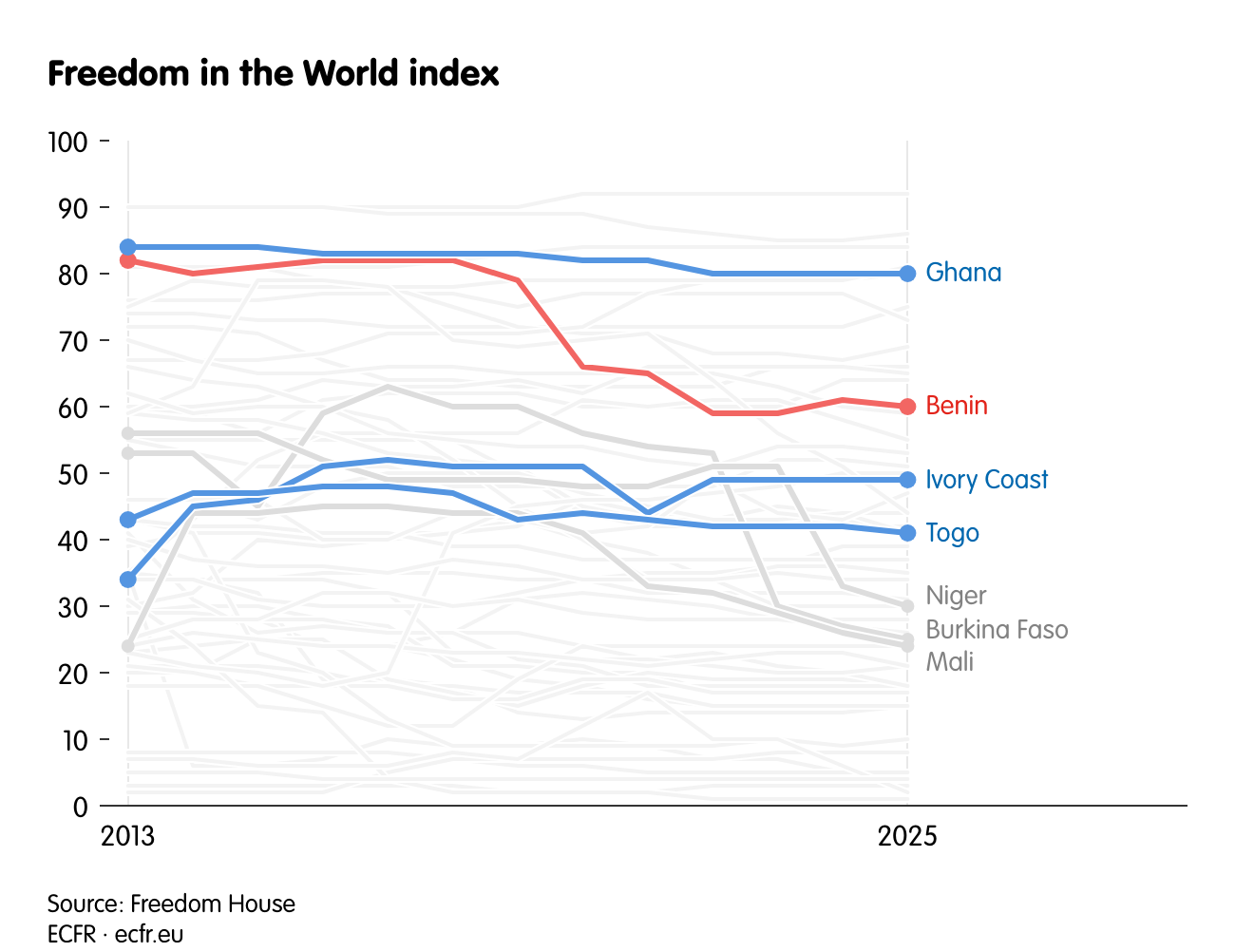
These developments are part of a broader trend of democratic backsliding and shrinking civic space. The 2019 parliamentary elections ignited a political crisis and violent unrest, while the run-up to the 2021 presidential vote saw the imprisonment of several prominent opposition figures. This mounting instability reached a new peak with a foiled coup attempt in 2024. Together, these events underscore the fragility of Benin’s democratic institutions and the urgent need for genuine political reform.[7]
Togo: the fraying barricade
Togo, the second most affected country in the sub-region, has seen a sharp rise in attacks against both its armed forces and civilian population since the first recorded incident in May 2022. Within two years, the number of incidents had risen to 23, according to ACLED. Despite the escalation, the number of violent incidents remains relatively low, which may be partially attributed to its narrow 126km border with Burkina Faso and a long-standing militarised state structure.[8]
However, recent attacks suggest an escalation in both scale and sophistication. In July 2024, for instance, jihadist insurgents launched a major assault on a military base in the northern town of Kpinkankandi, which included a hundred JNIM jihadists. Footage shared online shows bullet-riddled armoured vehicles, the bodies of fallen soldiers and insurgents seizing heavy weaponry. The frequent absence of official communications following such incidents makes it difficult to assess the true extent of losses and damage, but the reporting suggests jihadists are getting bolder.
Politically, a constitutional revision in 2024 introduced a parliamentary system and eliminated universal suffrage for the presidency, raising barriers to candidacy and participation. This reform paved the way for President Faure Gnassingbé to be appointed chairman of the newly created Council of Ministers in April this year, in effect granting him an indefinite hold on power. The move, widely seen as a consolidation of executive authority, marks another step in the dynastic governance of the Gnassingbé family, which has ruled the country since 1967. The reform has elicited strong backlash from opposition parties—two former ministers have publicly condemned the shift—and sparked a wave of demonstrations, reflecting growing frustration within civil society.
Ivory Coast: the proactive bastion
Ivory Coast has adopted a comparatively proactive approach to regional security threats since the 2016 attack at the Grand-Bassam seaside resort. In response to subsequent incidents in the north—including the 2020 assault on an army camp in Kafolo—the government launched a special programme for northern regions, blending an expanded security presence with socio-economic investment. Together, these efforts have bolstered deterrence, which likely explains the absence of attacks on Ivorian soil since 2021.[9]
However, significant structural vulnerabilities remain. Illicit activities continue to fuel cross-border trafficking, while longstanding tensions with Burkina Faso over border demarcation and the frequent incursions of VDP militias undermine bilateral relations. The influx of Burkinabè asylum seekers and the risk of jihadist infiltration around the Comoé National Park further complicate the security landscape.
Political tensions are also on the rise ahead of the presidential election in October this year. President Alassane Ouattara might seek a controversial fourth term, and the authorities have barred several major opposition leaders—including the candidate of the main opposition party Tidjane Thiam, former president Laurent Gbagbo and former premier Guillaume Soro—from running in the election, raising concerns about fairness and democracy. These political developments threaten to destabilise a country still haunted by past electoral crises. While Ivory Coast has built a robust defence against regional instability, such structural and political challenges could test its resilience.
Ghana: the quiet theatre
Ghana has so far avoided any jihadist attacks on its territory, despite several incidents reported along its 600km border with Burkina Faso. This relative security can be attributed in part to the strength of its security forces, among the most structured, well-equipped and operationally prepared in the region. However, some observers suggest that this stability may also be the result of tactical restraint by jihadist groups. Reports in 2024, pointing to a de facto non-aggression pact with jihadist groups, which allows them to use parts of northern Ghana for rest and recuperation while avoiding direct confrontation with Ghanaian forces, allegations that the authorities in Accra firmly denied.
Still, the absence of attacks should not be mistaken for long-term resilience. The country is exposed to many of the same local drivers jihadist groups exploit in neighbouring countries: intercommunal tensions, growing public dissatisfaction with the state and widespread illicit activities, particularly illegal artisanal gold mining.
Politically, the December 2024 presidential election was a positive sign of democratic vitality in the region, with the return of former president John Dramani Mahama. The new government has maintained close ties with Western partners, while adopting a more flexible posture towards Russia and the Sahelian juntas. This strategic flexibility has positioned Ghana as a potential mediator in the region’s ongoing political crises. Notably, Accra has worked to ease tensions with Burkina Faso’s regime, including through cooperation agreements on energy—an area where Ghana holds significant leverage as a key oil supplier to the landlocked Sahelian neighbour.
The region’s security responses
The coastal countries have tried to respond to the security challenge. Benin launched Operation Mirador in 2022 and adopted a multi-year defence investment plan, recruiting 5,000 new soldiers—many from the north—and expanding its police force by 8,000 officers while strengthening its network of police stations.[10] Togo initiated Operation Koundjoaré in 2018, ramped up investment in 2020, and declared a state of emergency in the Savanes Region in 2022. Ghana has maintained Operation Conquered Fist since 2020 to bolster border security and counter infiltration, while Ivory Coast has established a dedicated Northern Operational Zone (ZON) in 2020 and overhauled its intelligence structure through the creation of the Counterterrorism Operational Intelligence Centre (CROAT).
These security efforts have been complemented by targeted socio-economic investments in affected regions. Togo introduced an Emergency Programme for the Savanes Region (PURS) in 2022 to address structural underinvestment. Ivory Coast has rolled out a series of initiatives under the government’s social plans (PSGouv 1 and 2), focusing on infrastructure and youth opportunities in the north. Benin launched a €600m investment plan in 2024, backed by the IMF and World Bank, aimed in part at supporting the northern regions. Ghana, for its part, has implemented a social development plan for its northern region.
In parallel, regional authorities have taken measures to strengthen trust between state forces and local communities, which is instrumental for improving intelligence gathering. Authorities have also launched awareness campaigns encouraging civilians to report suspicious activities and cooperate with security forces. For instance, Ghana introduced a “See Something, Say Something” initiative aimed at encouraging citizens to take an active role in safeguarding national security.
The limits of national efforts
However, significant limitations undermine the effectiveness of national responses. Coastal states, particularly Benin and Togo, face critical capacity gaps in equipment, command structures, intelligence systems and operational experience. Rapid recruitment of young, often undertrained soldiers has left new units ill-prepared for asymmetric warfare. As one Beninese military official put it, “One of our main [areas of] focus is pre-deployment battle-hardening. The terrorists have it, but not the armed forces. We’re playing against time”.[11] Ivory Coast’s ability to prevent further attacks since 2021 underscores the importance of addressing these gaps to build more effective deterrence capacities and contain jihadist advances.
Slow implementation and limited community involvement have reduced the effectiveness of socio-economic interventions. In Benin, the major development plans adopted in 2024 will take time to yield tangible results. In Ivory Coast, where such investments were rolled out earlier, many young people trained through government initiatives still face unemployment, leaving them vulnerable to illicit networks and jihadist recruitment. The effectiveness of these initiatives is also undermined by corruption and limited local buy-in, due to insufficient engagement with local stakeholders, such as mayors, prefectures, religious and traditional leaders, and civil society organisations.
A lack of understanding about local armed groups operating in northern borderlands further hampers efforts. The experts interviewed, particularly those in Benin, argue that dialogue could help reveal fighters’ motivations and help break the cycles of violence. The prospect of initiating talks with actors such as JNIM remains highly sensitive and divisive, however. “Buying peace with the jihadists does not prevent them from gaining a foothold, and these agreements are extremely fragile given the unstable governance of these armed groups”, warned one senior Beninese official.[12]
More broadly, national counter-terrorism strategies remain heavily securitised, with little input or participation from civilians or non-military sectors. This means there is not enough attention paid to the underlying social, political and economic issues—such as relative deprivation, community grievances or lack of government services—that often drive people towards violent extremism in the first place.[13] Relying too much on force or aggressive tactics can actually make things worse. If security forces act harshly or ignore the concerns of local communities, it can increase resentment and distrust among the population. This, in turn, can push more people to support or join extremist groups, making the problem even harder to solve. A narrow, security-only approach risks backfiring and inadvertently fuelling the very threats it seeks to contain, unless it is balanced with efforts to address the root causes of radicalisation and build trust with communities.
High-level obstacles
Regional cooperation is another missing piece in counter-terrorism efforts across the wider region. The wave of coups that swept through the region since 2020 fractured relations among countries once united under the Economic Community of West African States (ECOWAS). Long regarded as Africa’s most influential regional bloc—focused on economic cooperation, development, and stability—ECOWAS has struggled to deliver a coherent and decisive institutional response to the ongoing political and security crisis. The coups in Mali, Burkina Faso, and most notably Niger marked a critical turning point for ECOWAS. The organisation suspended them, imposed sanctions, and in Niger’s case, considered military intervention in response to the junta’s refusal to reinstate President Mohamed Bazoum. That led the three countries to accuse ECOWAS of subordination to Western interests and to officially withdraw in January 2025, further weakening the organisation. They have since established their own confederation, the Alliance of Sahel States (AES), ostensibly seeking full national sovereignty, free from external influence, particularly that of France.
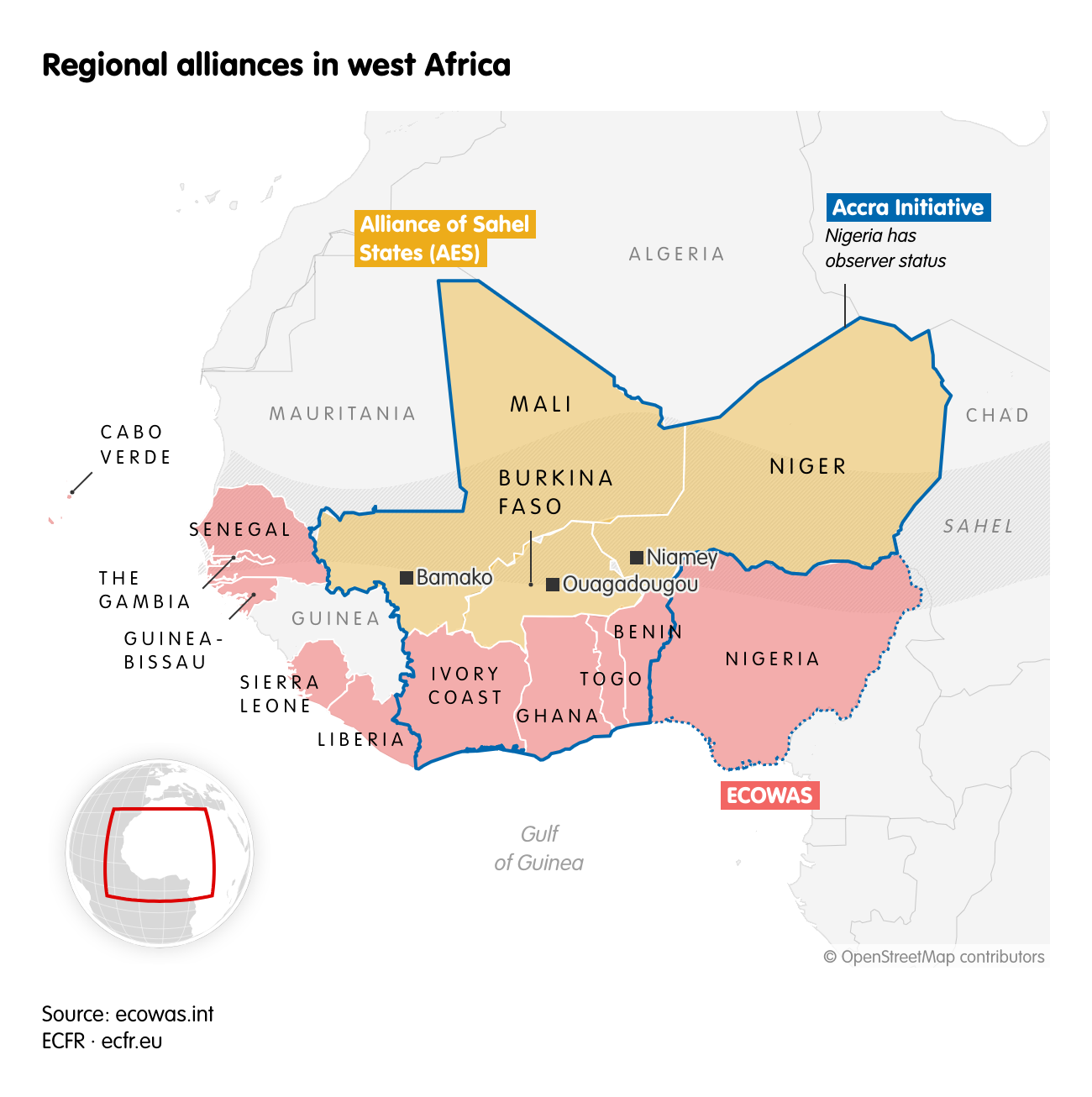
Yet regional organisations are not the only ones that have suffered from political tensions. Bilateral ties are also at all-time lows, hampering coordination on security responses. Benin faces strained relations with its northern neighbours, Niger and Burkina Faso, as well as with Togo. Ivory Coast has a long-standing dispute with Burkina Faso and experienced a diplomatic crisis with Mali in 2022. Togo, for its part, holds an ambiguous position, flirting with AES membership while remaining in ECOWAS.
Amid these tensions, Ghana, Senegal and Nigeria have positioned themselves as mediators, aiming to de-escalate tensions and restore regional dialogue. These efforts could lead to the normalisation of relations through a potential cooperation agreement between the AES and ECOWAS after the two blocs held a first meeting in May this year.
To address the cross-border security threats, governments in the region urgently need to boost their cooperation. Their divisions are readily exploited by jihadist groups. This is all the more pressing given the limited impact of the Accra Initiative, which was launched in 2017 as a regional cooperative security mechanism aimed at coordinating military action and boosting intelligence sharing between states.
The initiative once held promise for joint operations and intelligence sharing. For example, between May 2018 and November 2021, Burkina Faso, Ghana, Ivory Coast and Togo conducted a series of joint cross-border security exercises, known as Operations Koudanlgou. However, the coups in the Sahel and rising political tensions have disrupted cooperation even here. Key mechanisms, including “hot pursuit” agreements allowing cross-border counter-insurgency operations, have been suspended between Benin and both Niger and Burkina Faso. Divisions over the future of regional security cooperation also persist: Ghana pushes for revitalising the Accra Initiative, while Senegal and Nigeria favour maintaining ECOWAS as the region’s primary security architecture.
ECOWAS has tried to fill the gap. It announced the activation of a stand-by force of 5,000 soldiers to counter jihadist expansion in March this year. While the political divisions and lack of a robust regional security framework cast doubt on its overall effectiveness, the real challenge lies at the political level. Operationally, contacts between intelligence services and military commanders continue to be maintained to some degree despite strained diplomatic ties.[14] If countries could overcome political obstacles and agree to work together more constructively, this operational foundation could significantly strengthen the fight against jihadist groups.
The European responses
With the coup in Niger in 2023, nearly all Western forces were expelled from the Sahel, with the exception of Italy. Relations were at an all-time low. Amid various and often confused stances over how to engage with the military juntas in Mali, Burkina Faso and Niger, Europeans have shifted towards boosting support to their neighbouring west African states in an effort to prevent instability from spreading southward. The EU promotes an “integrated approach”, combining military assistance with socio-economic resilience, stabilisation and development. Under the Neighbourhood, Development and International Cooperation Instrument, €1.3bn has been allocated over five years for national and regional programmes targeting the northern regions of Benin, Ghana, Ivory Coast and Togo.[15] An additional €150m has been committed through the European Peace Facility (EPF) to provide support to national defence forces, largely reallocating funds originally earmarked for the central Sahelian countries.
Several European states have also increased bilateral support. Germany, the largest bilateral contributor, backs a wide range of initiatives, including the Coastal States Stability Mechanism and the Integrated Border Stability Mechanism. Other key contributors include Belgium, Britain, Denmark, France, Italy, the Netherlands, Spain and Sweden, which are investing in dozens of programmes aimed at strengthening resilience, good governance and security.[16]
The EU has also learnt some lessons from its engagement with the Sahel. Its Common Security and Defence Policy (CSDP) missions were cumbersome as they could involve large deployments of personnel as well as training and capacity building. In any case, their high profile ended up becoming politically weaponised. For the Gulf of Guinea, the EU launched a new type of engagement, the Security and Defence Initiative (EU SDI), in December 2023. This approach is intentionally agile and responsive: rather than relying on large, static deployments, the EU SDI is coordinated from Brussels but implemented through a network of civilian and military advisors embedded within EU delegations. Mobile training teams are dispatched only at the request of partner governments, ensuring support is tailored, flexible and closely aligned with local needs. The goal is to forge deeper, more effective partnerships with national authorities while sidestepping the pitfalls of heavy, politically fraught interventions.
Despite efforts to adapt, many of the structural flaws that undermined European engagement in the Sahel persist. The integrated approach remains largely theoretical: designed in European capitals, fragmented in delivery and frequently mismatched with local realities. As an EU official noted, “the project-based approach, following a limited timeframe and requiring short-term results, is ill-suited in this context”.[17]
Funding mechanisms are still too rigid and complex, lacking the flexibility needed for volatile environments while inter-institutional silos across the humanitarian–development–security nexus dilute their impact. There is still no comprehensive overview or coordination of the hundreds of EU and bilateral projects underway, leading to a proliferation of uncoordinated initiatives that risk overwhelming strained local institutions rather than empowering them.
At the same time, European policymakers are reluctant to provide lethal equipment, fearing that it could contribute to heavy-handed responses against civilians or fall into jihadist hands. This caution is also driven by both national legislative constraints and political sensitivities, but it ultimately damages Europe’s credibility as a security partner. For example, the €5m EPF assistance measure intended for Benin, the first lethal military support approved for a west African country since such deliveries became possible in 2021, includes ammunition restricted to training purposes only. This reluctance to give weapons has led to a perceived double standard, which is a frequent source of frustration for regional partners, who contrast it with the robust military support provided to Ukraine.
European security and defence initiatives are also widely criticised as slow, bureaucratic and intrusive—especially when security audits, framed as “needs assessments”, are perceived as challenges to national sovereignty rather than genuine offers of support.
The new CSDP mission model, which combines civilian and military components and embeds initiatives within EU delegations, offers a promising foundation. However, deeper adaptation is needed. Key structural obstacles remain, especially in translating military support from paper to practice, and the continued reliance on a traditional “train and equip” model has already shown its limitations in the Sahel.
Strained political environments
In addition to these security challenges, European policymakers face the complex task of navigating increasingly polarised and politically charged environments in the Gulf of Guinea. Across the region, public frustration is mounting with their leaders who fail to tackle socio-economic problems and worsening insecurity, and cling to power through authoritarian means. For Europeans, supporting such governments and institutions risks making their engagement appear complicit, inadvertently fuelling sovereigntist narratives that portray local elites as corrupt and excessively aligned with Western interests.
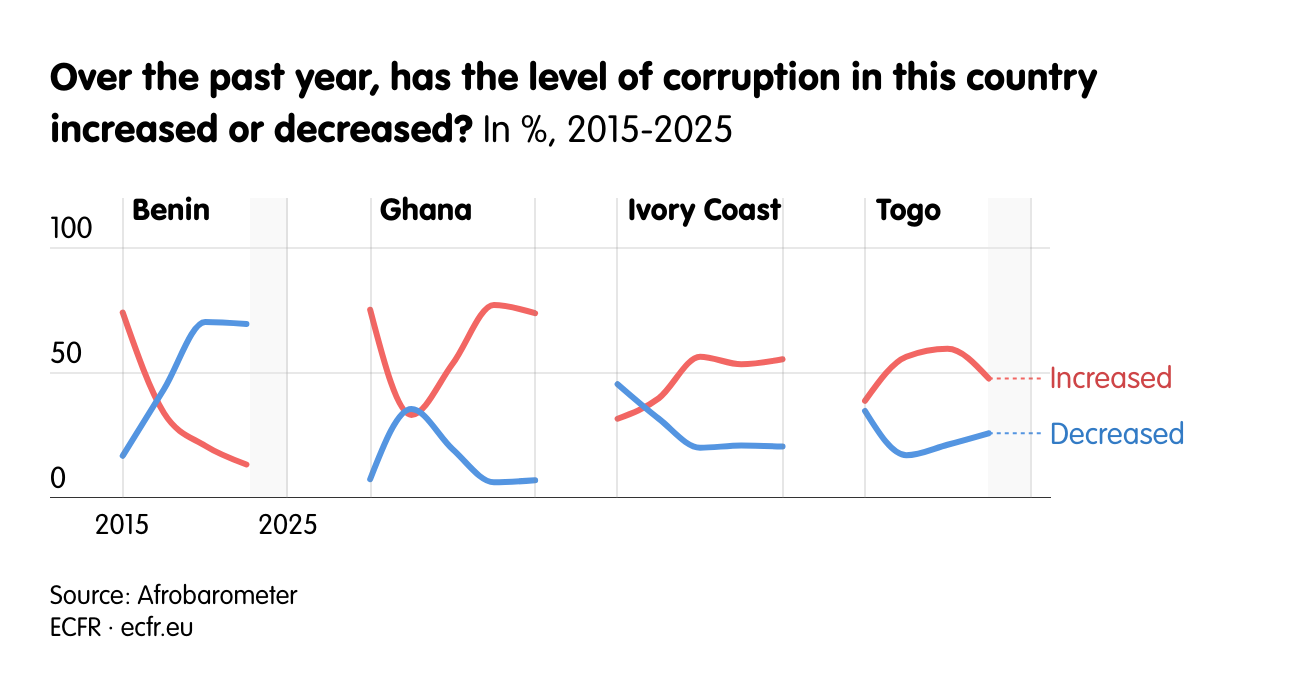
Conversely, when European actors advocate for the protection of civic freedoms, democratic standards and transparent electoral processes, they often encounter resistance. Such efforts can be branded as external meddling, with accusations of interference in domestic affairs quickly surfacing. This delicate balancing act leaves Europe vulnerable to criticism from both sides—seen as either propping up unpopular regimes or overreaching in its promotion of democratic norms.
France’s role adds another layer of complexity. As the former colonial power, France maintains deep diplomatic, economic and cultural ties, as well as significant intelligence and military capabilities—it is a central actor of European engagement in the region. But rising anti-French sentiment is making its presence highly sensitive, if not outright toxic. In response to these shifting dynamics, France has begun recalibrating its approach, notably by scaling down its military footprint. The last permanent French military base in the region, located in Port-Bouët, Ivory Coast, was handed over to national authorities in early 2025, leaving only a minimal presence of French soldiers. Paris is now pivoting to a quieter model of cooperation, centred on capacity-building initiatives aimed at fostering greater local ownership rather than direct intervention.
Still, as one French official noted, “there is a certain French blindness to the state of relations with West African countries”.[18] This means that French policymakers fail to fully grasp the divide between the region’s Francophile political and military elites, many of whom were educated in France, and mid-level officers, administrators and the general public, who tend to be much more sceptical of French motives and influence. As a result, France often overlooks the mounting frustration in civil society, stoked by hostile online narratives, and risks misreading the region’s shifting political climate.
Geopolitical rivalries and disinformation
It is this anti-French and anti-Western sentiment that geopolitical rivals, like Russia, can easily exploit in disinformation campaigns to fuel narratives that misrepresent or distort the objectives of European engagement. These manipulative efforts not only deepen mistrust but also undermine the legitimacy of both local governments and their international partners. Such dynamics are likely to intensify as Ivory Coast and Benin enter sensitive electoral periods.
America’s changing policies towards the region are also intensifying the geopolitical shifts away from traditional Western partners towards new players. The Trump administration’s sudden termination of most USAID programmes earlier this year—combined with shifts in tariff and visa policies—has created a vacuum, disrupting not only implementation but also data collection, which is critical for tracking and understanding local dynamics. While American military cooperation has been maintained thus far, confidence in the reliability of Western partnerships is eroding.
Russia is positioning itself to fill this gap, seeking to expand its influence as Western engagement becomes more fragmented and uncertain. It wants to deepen its military and political presence in Africa, including by offering itself as an alternative security partner to west coast countries. This approach is an extension of Russia’s broader, aggressive tactics deployed in the Sahel to undermine European and Western influence across the region.
The Kremlin has already ramped up its disinformation in the coastal states. A battle of narratives between pro-Western voices (largely fact-checkers and journalists) and those aligned with Russia or the AES is shaping online spaces. Moscow is pursuing a deliberate strategy of disruption and destabilisation, capitalising on rising anti-French sentiment and amplifying sovereigntist narratives to erode trust in traditional Western partners and complicate European engagement.
Disinformation campaigns, often spearheaded by accounts suspected of links to Russian networks, aim to shape narratives about regional insecurity: they deflect responsibility from Burkina Faso’s military government—a Russian ally— and shift blame onto Benin and Ivory Coast. These narratives are actively disseminated by cyber-activists from coastal states with documented connections to their counterparts in AES countries, according to a report shared with the author from Bloom Social Analytics. The report also shows examples of other disinformation campaigns since January: a damaging TikTok rumour falsely claiming Ivory Coast released captured terrorists and a campaign accusing Benin of funding terrorism and arming JNIM with French support—the posts peddling this narrative attracted four times more engagement than those connecting insecurity to conflict dynamics in Burkina Faso.
This interaction map of X (formerly Twitter), based on data collected by Bloom Social Analytics between January 5th and June 5th, illustrates the growing fragmentation of the information sphere in the Gulf of Guinea countries. Each node on the map represents a social media account, with links indicating interactions (likes, retweets, shares). The map reveals two polarised clusters. At the top sits a pro-AES, pro-Kremlin ecosystem, comprising organic local accounts, junta-aligned media, influencers suspected of receiving Kremlin backing, and accounts likely operated by Russian psyops teams. Below, the pro-Western cluster brings together European media and diplomatic channels, along with local opinion leaders who support Western engagement. In between lie the local audiences over which both spheres compete.
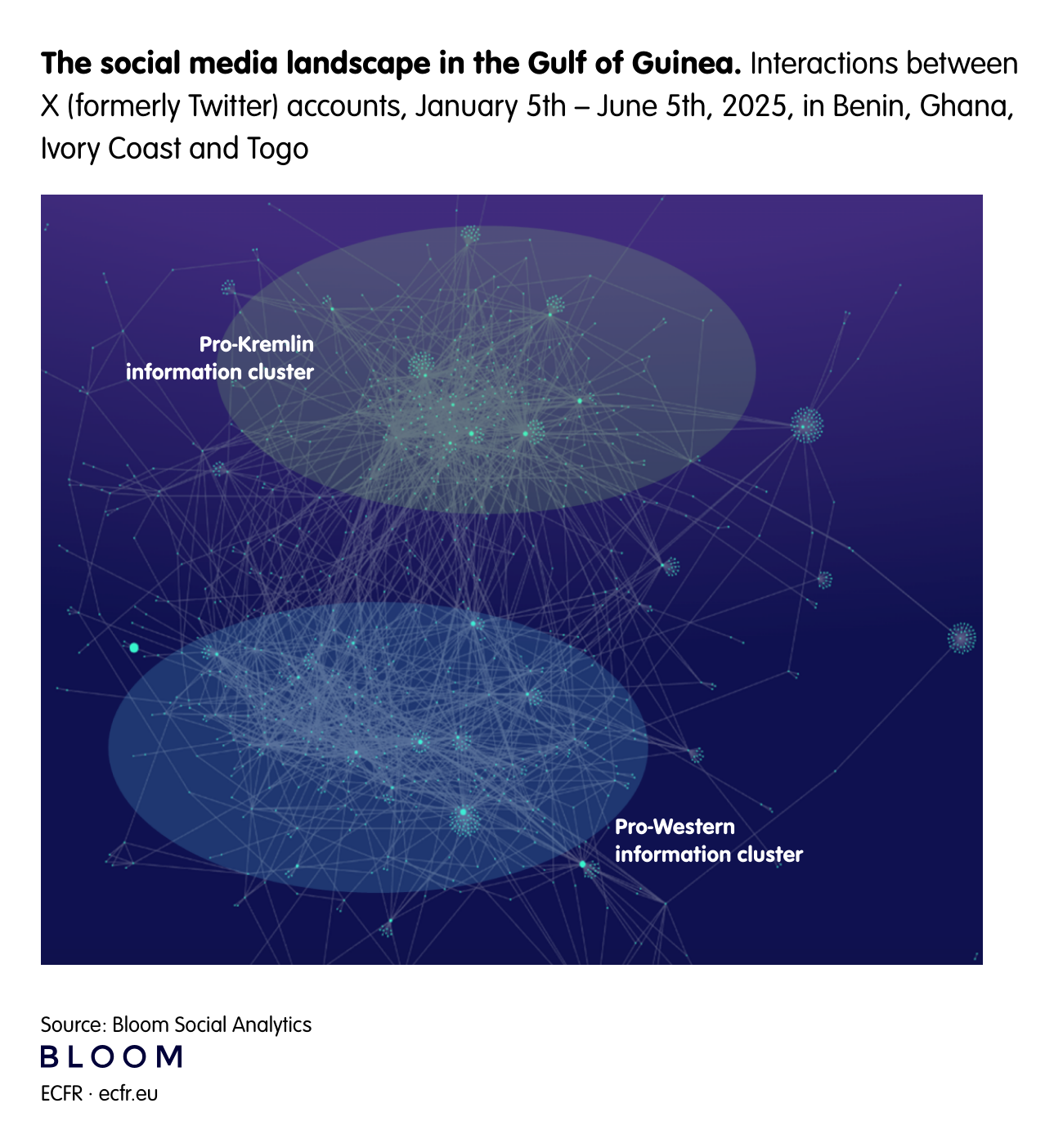
The interaction map indicates that Russian disinformation rivals pro-Western channels. This represents a marked shift from just a few years ago, when the digital landscape in the region was less divided and pro-Russian accounts were far less prominent. This evolution closely mirrors the pattern observed in the Sahel, where pro-Kremlin narratives gradually dominated the information space. Coastal west Africa has not yet reached a point of no return; the two narratives are still head-to-head. By countering hostile stories, building trust locally and supporting credible information sources now, policymakers can prevent the region’s information space from slipping into the same pattern of manipulation and division seen in the Sahel.
Togo is the first coastal state that stands out as most open to deepening ties with Russia, especially in the security sector. In 2022, for instance, the Togolese government received several combat and transport helicopters. Russian advisors have since reportedly supported the Togolese army in establishing a military camp in the north of the country and are in discussions around a formal partnership with the Africa Corps. Togo’s neighbours have diplomatic, economic or exploratory relations with Russia, but not deep security partnerships yet.
Other players are also on the scene. China is expanding its engagement through major infrastructure investments and defence cooperation. It has significantly increased donations of military equipment and arms sales, recently overtaking Russia as the continent’s leading arms supplier. This expanding role as security provider was highlighted in 2024 when China was featured as the guest of honour at the Ivory Coast’s Independence Day military parade.
Similarly, Turkey has expanded its presence through economic investments and defence cooperation, particularly via the provision of drones and military training. Ankara is also investing in soft power tools, such as Turkish international schools. Gulf states, especially the United Arab Emirates, are asserting themselves through substantial financial investments and by financing the construction of cultural centres, mosques and religious infrastructure. India is actively ramping up defence cooperation with countries in the Gulf of Guinea, particularly with Ivory Coast, and Israel is also exploring new security partnerships in the region. Together, these actors contribute to shrinking the regional partnership landscape for European actors, offering alternative sources of funding and security assistance, often with fewer conditions than those attached to Western engagement.
How Europeans can maintain strategic relevance in the region
European foreign policy is stretched thin by the war in Ukraine, strained ties with Washington and escalating tensions in the Middle East, causing attention on west Africa to slip. As one EU official deplored, “Europe has moved from (over)enthusiasm to disappointment and disengagement”.[19] This has already left a dangerous blind spot on Europe’s southern flank, easily exploited by hostile powers like Russia. Recalibrating a coordinated European engagement in the Sahel, while helping to prevent further destabilisation in coastal west Africa, is a strategic necessity. This engagement, however, should not be about preserving influence for its own sake through a short-sighted, reactive approach. Instead, it must reflect a forward-looking strategy to help stabilise the region and safeguard core European interests.
After months—if not years—of divisions over engagement with the Sahel, the EU and its member states are finally working toward a renewed approach as part of the mandate of Kaja Kallas, who became the EU’s foreign policy chief in December 2024. This new way forward is meant to move beyond the outdated 2021 Sahel Strategy and better address the multiple challenges facing the region. This presents an opportunity to broaden the EU’s focus and factor in the shifting dynamics of west Africa’s coast. In such a complex and volatile context, there is no easy way forward and Europeans need to approach the region with pragmatism and humility about the scope and limits of their actions.
A shared European engagement in name…
European engagement in west Africa would benefit from being more clearly framed under a shared European banner, particularly in contexts where bilateral action, notably from France, is easily politicised and weaponised. A more collective posture would help reduce perceptions of foreign interference and enhance the credibility of European efforts. The EU special representative for the Sahel, whose mandate now includes Gulf of Guinea countries affected by jihadist expansion, plays a central role in shaping this approach. Member states should give full and sustained political backing to his team to ensure coherent coordination across institutions and capitals. This should go hand in hand with preserving strong diplomatic ties, engaging constructively with regional governments, and aligning support more closely with national priorities on security and governance.
…and in practice
This way of engaging with the region would be enhanced if the EU recalibrated its fragmented, siloed and sometimes redundant aid efforts toward a more targeted and coherent engagement that effectively supports and amplifies national and regional policies to curb the spread of jihadist violence across the sub-region.
On financial aid, the EU should establish a unified coordination mechanism to oversee EU funding across all financial instruments and effectively streamline implementation. This will only be efficient if it remains light, and does not result in a cumbersome, bureaucratic structure. Current negotiations around the next Multiannual Financial Framework 2028-2034 offer an opportunity to design and adopt it. EU heads of delegation should also play a stronger role in coordinating European engagements at the national level and ensuring they are adapted to each specific local context.
On military aid, the EU should improve synchronisation between European and bilateral equipment deliveries and the EU SDI in the Gulf of Guinea to enhance effectiveness. For example, deploying instructors to provide timely follow-up support following equipment deliveries could increase the value-added of European support. In the long term, the creation of a Directorate General for Defence within the European Commission and recent increases in European defence investments also provide an opportunity to build new assets and capabilities.
Build trust with coastal states
To be seen as effective, credible partners and build trust with countries open to collaboration, such as Benin, Ghana and Ivory Coast, Europeans should demonstrate a stronger capacity to respond to their defence needs, helping them identify capacity gaps and providing adequate assistance.
Joint initiatives can strengthen trust, build local capacity and foster shared ownership of security challenges. The International Academy for Counter-Terrorism (AILCT), based in Ivory Coast, exemplifies this approach. Established through a French-Ivorian partnership and supported by a range of international contributors, AILCT brings together African, European and international trainers, sharing best practices and tailoring courses to regional realities. In this way, it helps develop skilled security personnel who are better equipped to address terrorism threats. This model of partnership ensures that solutions are not imposed from outside but co-created, leading to greater effectiveness, mutual understanding and long-term sustainability in counter-terrorism efforts.
Europeans should also be more assertive in using the EU’s European Peace Facility to facilitate the delivery of lethal military equipment when appropriate. This would demonstrate to local partners that the EU is responsive to their needs and would also help address accusations of a double standard vis-à-vis other geographical contexts, reducing openings for hostile competitors like Russia or China, which do not hesitate to meet local demands.
European leaders can avoid reinforcing local heavy-handed security responses by encouraging coastal west African governments to invest in the civilian dimension of their counter-terrorism strategies. This includes greater financial support to research institutions and think tanks to bridge the gap between governments and societies, deepening authorities’ understanding of the structural drivers of violent extremism to better calibrate national policies.
Support regional initiatives
Given the scale of the crisis, only a comprehensive regional answer can effectively counter jihadist advances. European partners should support regional cooperation efforts as well as ad hoc initiatives led by west African countries such as Ghana, Senegal and Nigeria, aimed at resolving the current political, economic and security crisis through diplomatic channels. Key areas for engagement include supporting a potential cooperation agreement between the AES and ECOWAS, as well as backing collaborative mechanisms that could emerge from ongoing negotiations between the blocs, particularly to address cross-border security threats. But Europeans should not be front and centre of any of these initiatives because it could inadvertently delegitimise them.
Bring allies to the geopolitical competition
Europeans still hold significant financial resources, capacities and expertise compared to other geopolitical players. To stay relevant, European policymakers should broaden partnerships beyond traditional allies and coordinate more closely with key third parties that are not openly adversarial, such as Turkey or India. For example, rather than overlapping with Turkish drone initiatives, Europeans should collaborate with Ankara on delivering drones to west Africa and free up resources to support other initiatives instead. Such engagement would both improve support to west African countries and help counter narratives of post-colonial interference. Aligning diverging interests and engagement strategies would require considerable effort, but it could streamline European initiatives and ensure partner countries are not overwhelmed by fragmented or inadequate support.
Double down on the narrative battle
Europe should also actively counter hostile information manipulation and regain control of its narrative in the region. Europeans need to rebuild a powerful and audible narrative regarding their foreign policy that resonates with local concerns over national sovereignty. To do this, they must work on two parallel narratives. The first is a negative narrative exposing the destabilising role of hostile states and non-state actors through discreet, decentralised channels. The second is a positive narrative focused on the practical impact of European engagement and the shared benefits of cooperation, without moralising or invoking Western values.
Community radio networks, namely FeRCAB in Bénin, Re.R,Togo in Togo, GCRN in Ghana, and URPCI in Ivory Coast—which operate in dozens of local languages—influencers, independent journalists and exiled media outlets should be key partners in this effort. Europeans should also invest in training for local journalists, alongside greater access and funding to credible European news sources like the BBC World Service or Radio France Internationale to counter the proliferation of cheap Russian and Chinese services.
Stopping the spread of instability
Coastal states need not follow the Sahel’s fate. Fundamentally, this depends on west African decision-makers, but European leaders also need to avoid self-sabotage, act with greater agility and coherence, and be prepared to assert Europe’s position when necessary. As long as European engagement in west Africa avoids short-sighted objectives focused on preserving influence or reacting defensively to shifting geopolitics, it will also avoid fuelling destabilising power struggles that undermine both African partners and European interests. Instead, shifting from fragmented support to a more coordinated strategy—built under a shared European banner and broader collaboration with regional and international allies—would better equip coastal countries to contain jihadist violence and avoid a wider belt of instability and the tragedies this entails.
Acknowledgments
The author is grateful to all the west African and European officials, diplomats, civil society representatives and experts who generously shared their time and insights, greatly informing this paper. Particular thanks go to Will Brown and Julien Barnes-Dacey for their thoughtful feedback and guidance in shaping the analysis; to Jeremy Cliffe and Kat Fytatzi for their precious support in structuring and sharpening the paper’s narrative and clarity; and to Nastassia Zenovich for bringing the brief to life visually. The author also thanks Berke Alikasifoglu of Bloom Social Analytics for his collaboration in decoding online information spaces.
About the author
Suzanne Tisserand is a policy fellow with the Africa programme at the European Council on Foreign Relations. Prior to joining ECFR, Tisserand worked at the French Ministry for Europe and Foreign Affairs, at the United Nations Department of Political and Peacebuilding Affairs, and for the Dakar International Forum on Peace and Security in Africa.
[1] ECFR roundtable with EU officials and experts on the Sahel and west Africa, Brussels, March 2025
[2] ECFR roundtable with EU officials and experts on the Sahel and west Africa, Brussels, March 2025
[3] In-person interview with a Beninese analyst, April 2025
[4] In-person interview with a local source in Benin, April 2025
[5] In-person interview with a European diplomat, Abidjan, February 2025
[6] In-person interview with an Ivorian analyst, February 2025
[7] In-person interview with a Beninese analyst, Cotonou, April 2025
[8] In-person interview with a west Africa analyst, February 2025
[9] In-person interview with an Ivorian analyst, Abidjan, February 2025
[10] In-person interview with a Beninese analyst, April 2025
[11] In-person interview with a senior Beninese official, Cotonou, April 2025
[12] In-person interview with a senior Beninese official, Cotonou, April 2025
[13] In-person interview with a west Africa analyst, February 2025
[14] Information shared during several interviews, February-April 2025
[15] In-person interview with an EU official, Brussels, March 2025
[16] In-person interviews with European diplomats, January-May 2025
[17] In-person interview with an EU official, Brussels, March 2025
[18] In-person interview with a French official, February 2025
[19] Phone interview with an EU official, April 2025
The European Council on Foreign Relations does not take collective positions. ECFR publications only represent the views of their individual authors.