The risks of the draw: Europe’s post-snapback move on Iran
European leaders have reimposed UN sanctions on Iran. Now they must steer clear of America’s maximum pressure campaign and instead keep the diplomatic door open

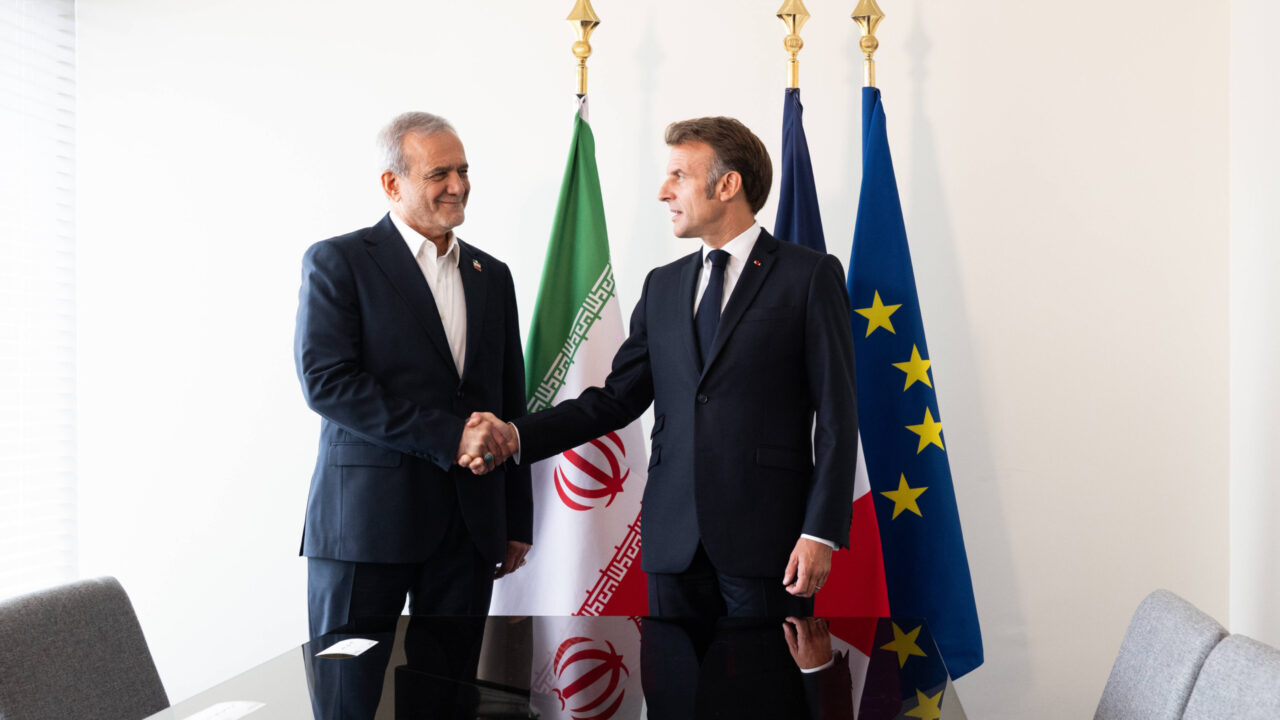
There is a bitter irony that after a decade of trying to preserve the 2015 nuclear deal, it was Europe—not Iran or America—that dealt the final blow. The “snapback” mechanism, triggered by European powers, has come into force. With it, UN sanctions on Iran return, marking the end of a deal European capitals once hailed as historic. Having wiped the slate, European leaders must now decide their next move.
Upping the ante
Britain, France and Germany (the E3) had for some time been considering how to best leverage snapback. The mechanism—which allows any existing party to the deal to reimpose UN sanctions on Iran—was set to expire in October. The E3 warned Iran that unless a deal was reached with the US to roll back its nuclear programme, which had reached near-weapons grade, they would use it.
After the 12-day war between Iran and Israel severely damaged Iran’s nuclear programme, the E3 tried to get new concessions from Tehran by threatening snapback. They offered a six-month extension in return for resuming nuclear talks, full access for inspectors, and verification of enriched uranium stockpiles. Tehran declined, in part because the extension offer was detached from the political reality in Iran.
While the E3 offer was reasonable in principle and in line with Iran’s obligations under the Non-Proliferation Treaty, the trio demanded Iran give up its few remaining bargaining chips for future US sanctions relief talks right after it had been bombed. In return, the E3 offered to keep pointing the snapback gun at Iran’s head.
Iran had just emerged from an unprecedent war with Israel and the US, which jointly struck its nuclear facilities. Worse, this occurred amid US-Iran negotiations championed by moderates in President Masoud Pezeshkian’s administration, the faction behind the 2015 deal. Burned twice by President Donald Trump, they had little room to press Iran’s Supreme Leader for major concessions tied to the snapback extension.
After major internal debate, the Iranian government did agree to a new deal with the International Atomic Energy Agency in early September which was welcomed by the agency’s chief as a step in the right direction. At the recent UN General Assembly, Iran and the E3 continued negotiations. Tehran reportedly offered to resume nuclear talks with the US in a multilateral setting, and to allow the agency to visit one of its bombed nuclear sites. Iran also appears to have offered to provide the agency with a report on its stockpiles within 45 days if snapback was lifted permanently. The E3 however claimed that all these offers fell short of addressing the non-proliferation threat and did not garner tangible commitments from Tehran.
Misreading the table
So why, after years of buying time and increasing their tolerance for an accelerating Iranian nuclear programme, did the E3 refuse to budge on snapback precisely when Iran’s nuclear programme had been set back? One assessment is they gambled that the pressure of time, and the looming threat of resumed Israeli strikes, would force Iran to blink in its moment of weakness. It did not. Iranian authorities are likely to have concluded that even if they accepted the E3’s demands, the West would move the goalposts to include missiles, or that Israel would resume its military campaign in spite of diplomatic efforts as it did in June.
It is also possible the E3 were partially open to the last-minute Iranian offers but could not bring Trump on board. Following the June strikes, Trump seems to have washed his hands of the Iran problem, repeatedly declaring its nuclear programme “obliterated”. While the US chief negotiator Steve Witkoff said he remains in contact with Iran, Trump’s lengthy UN General Assembly speech betrayed no desire to strike a deal.
Alternatively, the E3 may have decided to endorse a new maximum-pressure campaign. If so, snapback was a means to both punish Iran (for its drone supplies to Russia) and to curry favour with hawkish figures in the Trump administration (like Marco Rubio) given Europeans need US support for Ukraine. Whatever motivated the snapback move, in the end, Iran and Europe both suffered a diplomatic loss.
All in or fold
Having used up their most powerful leverage against Iran, European diplomats are now at a fork in the road. They can either create a soft landing after snapback aimed at forging new diplomatic space for a new nuclear deal, or they can join team Rubio in doubling down on the pressure. Choosing the latter would be a grave mistake.
Europeans can either create a soft landing after snapback aimed at forging new diplomatic space for a new nuclear deal, or they can join team Rubio in doubling down on the pressure. Choosing the latter would be a grave mistake
Washington’s maximum pressure policy on Iran, including Trump’s 2018 withdrawal from the nuclear deal and his goal of throttling Iran’s oil exports, has produced an Iran with a near weapons-grade nuclear programme and entailed costly military confrontation. Even bombing Iran may have only set back its programme between one and two years. The nuclear deal, in contrast, delayed it 12 months without a shot fired. Increased Western pressure could now embolden Israel to adopt a “mow the grass” strategy towards Iran with periodic military attacks. If Israel resumes its war with Iran, it could well drag in neighbouring countries and European partners.
Cornering Iran is also pushing it closer to China and Russia. As the West pressed ahead with snapback, Moscow and Tehran reached a deal to build nuclear power plants in Iran. Tehran may also lean towards China and Pakistan to reconstitute its air defences and missiles after the war. As the E3 increase the pressure, Tehran will likely react—including by bolstering Russia’s war machine against NATO.
Playing the right hand
There is still an alternative. Following snapback, a broad coalition of European countries beyond the E3 should now pivot to damage limitation. Indeed, senior Iranian officials met with a large number of Western officials at this year’s UN General Assembly despite the looming snapback, suggesting diplomacy is still an option with Tehran. European leaders should offer this pathway to Trump as a means of managing the Iran nuclear problem without resorting to new strikes that would reopen MAGA rifts.
The immediate goal should be a series of small deals with Tehran to cap further nuclear escalation and build some degree of confidence between the West and Iran. This can initially start with restraint: for example, Tehran agreeing not to resume nuclear enrichment in return for the West not restricting oil exports. It should then move onto Iran allowing international inspections of some bombed nuclear sites (and expand from there), in return for assurances from the US that it would not support future Israeli strikes.
This could give the US and Iran breathing room to quietly reduce tensions and advance more meaningful talks, especially if Saudi Arabia can also use its rapprochement with Tehran in support. Europeans, similar to the Gulf countries, should use engagement as a tool for de-escalation; notably in reducing potential clashes over Ukraine, but also to negotiate the release of European detainees held in Iran.
In the end, bridging the gap between Tehran and Washington over a new nuclear deal could prove impossible. Europeans may have to assume a holding pattern until politics shifts on either side. European capitals have traditionally tried to prevent war over Iran’s nuclear programme. That is the role they need to reclaim. They must not allow snapback to cut out European diplomats or push them towards an aggressive US-led approach that risks further conflict.
The European Council on Foreign Relations does not take collective positions. ECFR publications only represent the views of their individual authors.