Showstoppers: How to fix Europe’s military immobility and improve deterrence
Europeans are focused on improving their military readiness—but deterrence also depends on moving forces fast. EU infrastructure plans must prepare Europe’s land, sea and air routes for commerce and conflict

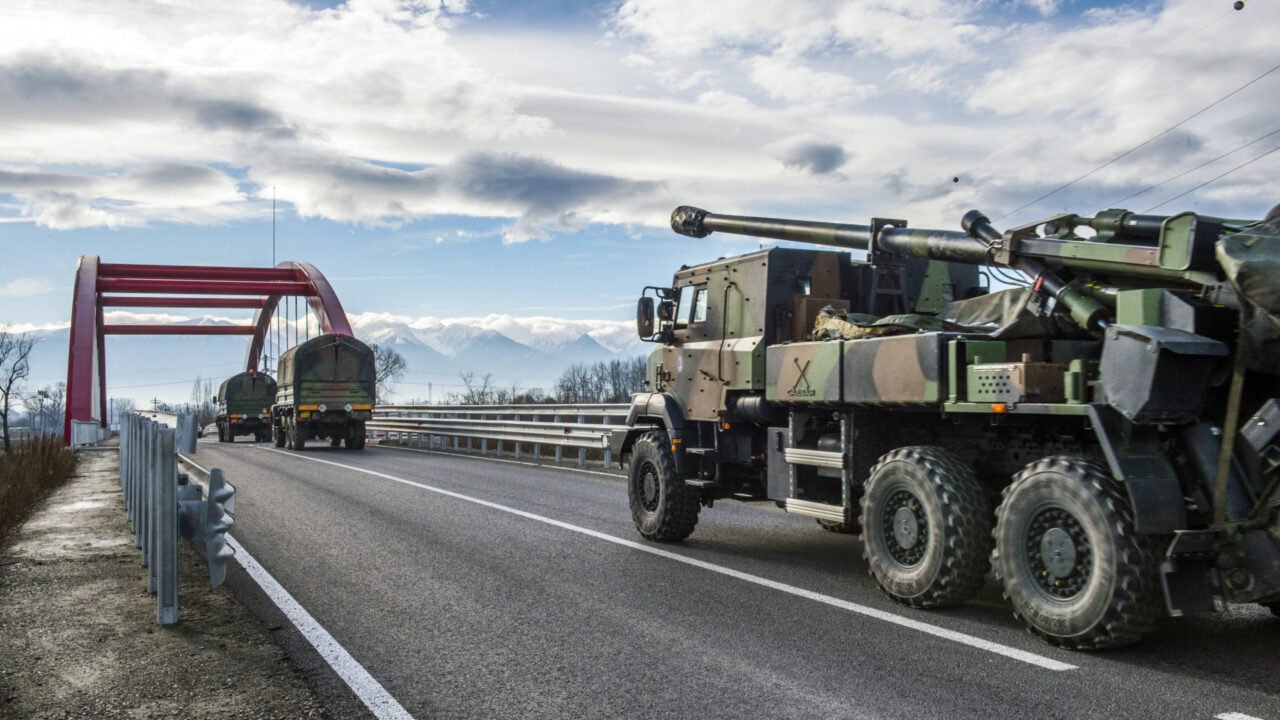
Military mobility in Europe remains thoroughly deficient. This is despite nearly a decade’s worth of work by Europeans to improve the movement of military personnel, materiel and assets—by land, sea and air—through the EU’s Permanent Structured Cooperation, EU-NATO cooperation and initiatives by member states.
However, the European Court of Auditors concluded in early 2025 that EU military mobility is plagued by showstoppers. Now the EU’s plan for a Military Schengen in Europe—a reference to the Schengen area of quasi-borderless travel for civilians—is supposed to finally follow through on the realisation of European leaders a decade ago: Europe’s military mobility is essential to its deterrence and defence.
Battling the bottlenecks
The crux: to affect deterrence, military formations would have to move to and arrive in their designated areas of operations before potential attackers initiate hostilities. This means following peacetime transport procedures rather than wartime exemptions, including month-long notice periods for cross-border transit of military equipment.
Several hundred infrastructure bottlenecks, such as bridges, junctions and tunnels, remain in strategic locations along Europe’s four priority military mobility corridors (northern, central northern, central southern and eastern). Without urgent improvements, these bottlenecks would hinder the timely movement of large and heavy formations and their supplies.
European Commission leaders referred to such examples when they unveiled the latest military mobility package in November 2025, as previewed by the White Paper for European Defence in March this year. Their proposal includes new regulatory measures, governance fixes, infrastructure upgrades, and new means to pool and share transport assets. Now, the EU member states need to drive military mobility forward and boost European deterrence in the process.
Clearly this requires massive investment. The commission expects to require €100bn just to address the infrastructure bottlenecks (500 have been identified already). EU member states can draw on the Security Action for Europe (SAFE) loan scheme and cohesion funds to finance military mobility projects and capabilities, but they are yet to agree on what a European Competitiveness Fund would look like. And while the commission proposes that the next multiannual financial framework include €17bn for military mobility through the Connecting Europe Facility, the last round of EU budget negotiations in 2021 saw member states slash the commission’s proposal from €6.5bn to just €1.7bn.
Activate emergency action
The heightened Russian threat and NATO’s new 1.5% target for investments in defence-related infrastructure should focus EU budget negotiators’ minds. Turning funds into new and improved infrastructure will take years, however
The heightened Russian threat and NATO’s new 1.5% target for investments in defence-related infrastructure should focus EU budget negotiators’ minds. Turning funds into new and improved infrastructure will take years, however.
The package therefore proposes more rapid regulatory action, including setting up an emergency framework for military transport operations. If activated by the European Council, this European Military Mobility Enhanced Response System (EMERS) would apply to all member states. It would temporarily override normal transport rules and procedures—including requirements like the aforementioned lengthy notice periods—to facilitate swift and large-scale military movement in response to external threats, natural disasters and other crises.
Adopting EMERS would be a major step for military mobility in Europe. However, much hinges on the details of its activation process. Since emergency measures would apply to all member states, must they all vote “yes” on activation? Requiring unanimity in the European Council would contradict the main purpose of EMERS—to accelerate military movement.
The EU and its members should also be more consistent and persistent in their engagement of private logistics providers. These would have to handle any sudden surge in demand for heavy-duty trucks, rolling stock and ferries, should EMERS be activated. Otherwise, slow decision-making and information sharing could see military reinforcements arrive too late to keep the lid on an escalating crisis.
The land, the sea, the sky
NATO’s Steadfast Defender exercise is Europe’s largest-scale opportunity to test its enhancements to military mobility assets, infrastructure and procedures. The most recent event in the Steadfast Defender series occurred in 2024 and involved more than 90,000 troops—and their jets, ships and tanks—from all 32 allies. Its fictitious Article 5 scenario saw reinforcements cross the Atlantic and move across Europe to exercise NATO’s multi-domain defence plans over a period of several months. Altogether, this made it NATO’s largest exercise since the end of the cold war
Allied and national military headquarters are now preparing for the 2027 edition. This will stress-test the new Central Northern European Military Mobility Area, an initiative which builds on the Dutch-German-Polish military mobility model corridor launched in 2024 to involve Belgium, the Czech Republic, Lithuania, Luxembourg and Slovakia. The new mobility area aims to synchronise procedures and information flows for military movement ahead of the exercise; it will preview some of the commission’s EU-wide regulatory adaptations of the Military Schengen proposal at the sub-regional level.
In creating the scenario, allies should prioritise exercising mobility under fire. As displayed in Russia’s war against Ukraine, the former’s large-scale use of drones and other long-range strike assets has evolved considerably since NATO planners first began crafting Steadfast Defender 2024. The development presents a direct threat to allied reinforcements on the move and in staging areas. The sudden “disappearance” of a bridge or port infrastructure would force military logisticians to adapt on the spot. Mobile bridging equipment, though, remains a rare capability among NATO armies. It should be a priority for new capability investments.
*
Europe’s goal to achieve defence readiness by 2030 rests on its ability to move forces swiftly across the continent. The failure to clear border crossings for military transportation in less than a month provides ammunition to American critics of US involvement in NATO, who point to the dissonance between European words on the Russian threat and their actions to stand up to the Kremlin. The Military Schengen proposal would turbocharge the movement of military formations in peacetime, crisis and conflict, and help deter—and if necessary, defeat—attacks on Europe.
The European Council on Foreign Relations does not take collective positions. ECFR publications only represent the views of their individual authors.