Hold the line: NATO cannot allow airspace violations to go unchallenged
The NATO response to Russia’s latest violation of Poland airspace shows what collective defence can achieve and is the kind of resolute action the new threat environment demands

Problem
Russia’s violation of Polish, NATO and EU airspace in the early hours of September 10th—described as “not an accident” and “unprecedented” by Polish and European officials—signals a dangerous new escalation. While Moscow has violated the airspace of Poland and other non-combatant neighbouring countries before, the scale, duration and trajectory of last night’s drone incursion suggest a deliberate provocation. It also coincides with the upcoming Russian and Belarussian Zapad 2025 military exercises near Poland’s border, scheduled to begin later this week.
The drones were downed, marking the first time a NATO member fired shots during the Ukraine war. It is clear that the alliance’s previous weak responses have only emboldened Russia. After ignoring US president Donald Trump’s peace overtures, Vladimir Putin is now testing NATO’s resolve by intensifying sub-warfare activities against Poland and other allies. Inconsistency between words and deeds seem to have eroded Europe’s credibility in Russia’s eyes.
Solution
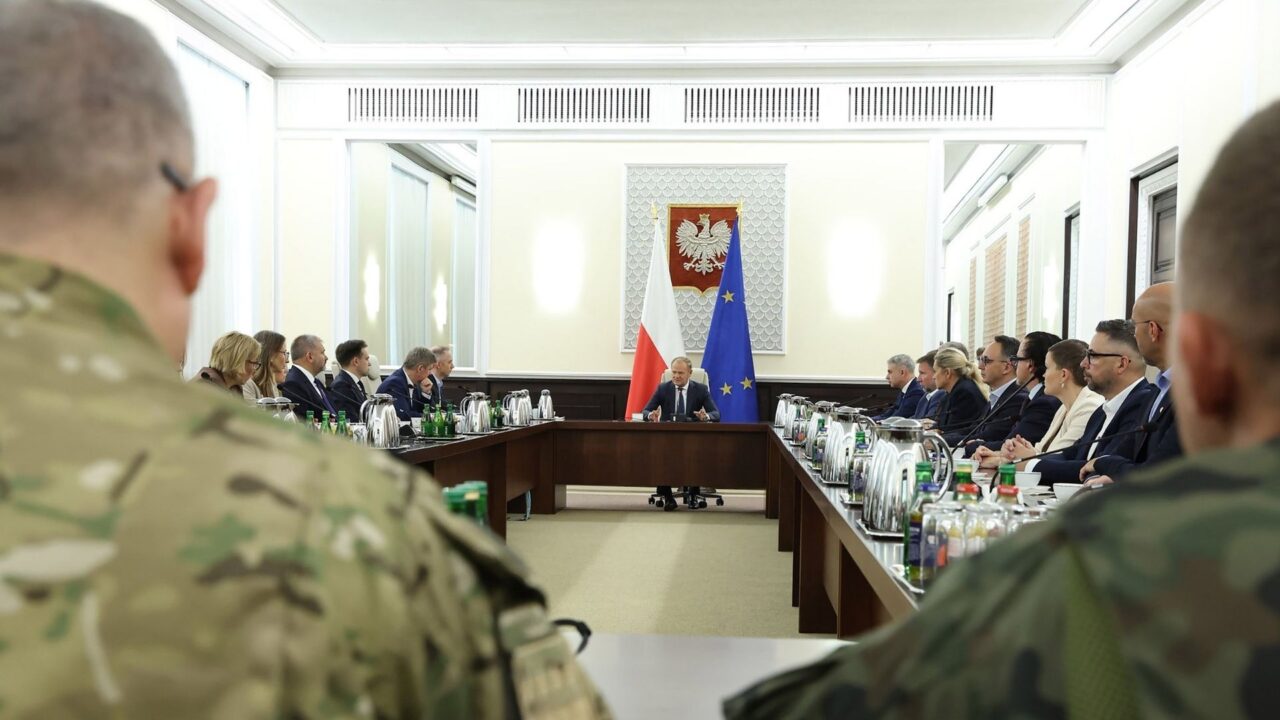
Poland’s response—shooting down the drones and invoking NATO’s Article 4, which activates consultations inside the alliance—is the kind of resolute action that the new threat environment demands. Previous hesitation was linked to fear of derailing the peace process. With Russia choosing to escalate, Trump’s peace efforts have all but collapsed.
New escalations require new measures. Within the framework of ReArm Europe/Readiness 2030 and SAFE, the EU needs to boost investment in projects to defend external borders—such as Poland’s Eastern Shield—along with developing air, missile defence and ground combat capabilities, as well as drones and anti-drone systems. If airspace violations keep occurring, NATO should also consider air defence coverage in western Ukraine to intercept threats before they reach alliance territory.
While Ukraine endures attacks daily, NATO members cannot normalise airspace violations as acceptable collateral damage. What happens in Poland matters for Lithuania, Romania and every alliance member. Putin’s strategy relies on incremental boundary-testing to fracture unity and erode collective defence. The choice is clear: respond decisively now or face more provocations later when the costs to address them will be higher.
Context
On September 10th, 19 Shahed drones crossed into Polish airspace during a Russian raid in Ukraine. Polish, Dutch and Italian fighter jets shot down at least three drones, while the others crashed—some of which in central and northern Poland, hundreds of kilometres from the Ukrainian border. There were no casualties.
This was the first time NATO forces directly engaged Russia during the war in Ukraine. Poland’s prime minister Donald Tusk said the incident marked “the closest we have been to open conflict since World War II.” Kaja Kallas, the EU chief’s diplomat, said “indications suggest that [the incursion] was intentional, not accidental.”
The European Council on Foreign Relations does not take collective positions. ECFR publications only represent the views of their individual authors.