From climate to defence, inertia could be the EU’s undoing
Europe’s strategic reports are filled with urgent calls for speed and agility. But amid fierce global competition, Europe is still lecturing while other major players deliver results

Distinguished Policy Fellow
In the past two years, five major EU strategic documents have sounded the same alarm: Europe must accelerate. Without speed, simplification and decisiveness, Europe risks fading into irrelevance. Yet, so far, the EU has put a fraction of its agenda into action.
Only 10% of the tech recommendations of Mario Draghi’s 2024 report on European competitiveness have been implemented. Enrico Letta’s report on the single market and Sauli Niinisto’s report on Europe’s civil and military preparedness have been relatively slow to take off. The EU has laid out plans for their implementation, but with little sense of urgency.
In October 2025, the European Commission presented the Defence Readiness Roadmap 2030, which followed June 2025’s Defence Readiness Omnibus—both outline steps to cut red tape and boost investment in the defence sector. The rhetoric of these documents perfectly captures Europe’s defence ambition: every page highlights urgency, speed and agility. However, words alone do not deliver results. Europe continues to trail behind other global players.
Russia, for example, is rapidly upgrading its defence production capacity. Whether Moscow and Kyiv reach a ceasefire or not, the former appears poised to emerge from the Ukraine war with an emboldened and efficient force. Russia is producing more weapons than it is currently using in Ukraine; it is resupplying stock and integrating lessons learned from the frontline to become even deadlier in its use of missiles and drones. And, in Kyiv, one of Ukraine’s biggest drone production companies is producing a drone every eight seconds—equal to 1.7 million per year.
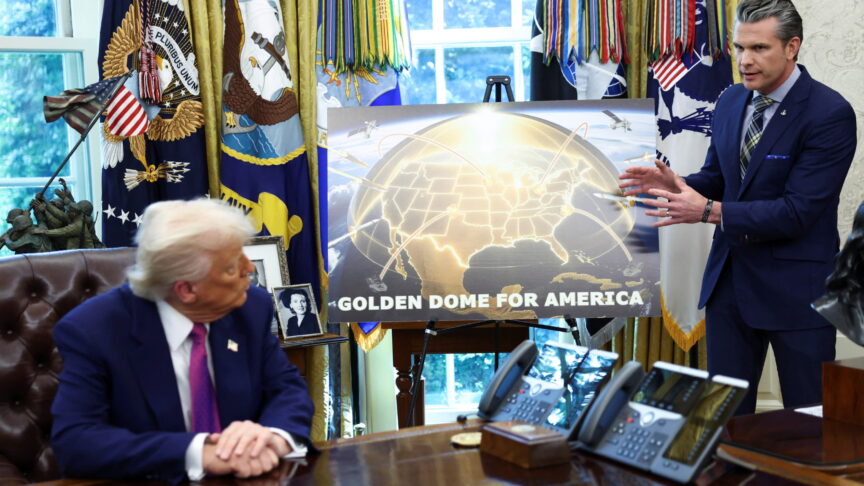
The US, often readier than Europe in crises, is also pushing to act even faster. For decades, America has relied on the Defense Production Act (DPA), a law enacted in 1950 that empowers the executive to intervene in domestic industry. Over the years, the US has used the DPA across a wide range of circumstances, not just for war efforts: it helped boost production of medical supplies during covid-19 and is being used to accelerate the production of hoses to fight America’s increasingly pervasive wildfires. More recently, former US president Joe Biden invoked the DPA to accelerate research and development into hypersonic missiles.
For America, however, this was not enough. In June 2025, the US Senate Armed Services Committee tabled the SPEED Act to further simplify defence processes. Even though the US is already more prepared than Europe, its government wants to move even faster to keep pace in today’s age of great power competition.
It is China, however, which is taking the lead—especially in the green energy transition, supposedly Europe’s moment of historic leadership. Indeed, the contrast is striking. In the first quarter of 2025, European carbon emissions rose by 3.4%, while China’s fell by 1.4%. This is because Beijing has been quicker at building renewable capacity and scaling electric vehicles, driving the transition forward. Some assessments estimate that 10% of European green energy production is wasted due to delays in building electricity interconnectors, mainly because of red tape. As a result, in sectors such as electric vehicle production or battery storage, Europe is lecturing while China delivers.
Europe’s public is among the most climate-conscious globally. However, regulation, inflexibility and bureaucratic hurdles are shackling progress and diminishing support for the green agenda. The window of opportunity for a green transition in Europe is starting to close. If Europe continues on this pace, then a year from now the EU will further entrench its economic and geopolitical decline by pure choice and its inability to act.
Lethargy has become Europe’s strategic flaw
Lethargy has become Europe’s strategic flaw. In a world moving at breakneck speed—where adversaries upgrade weapons lines in months, parliaments rewrite procurement laws in weeks, and energy revolutions happen in years rather than decades—Europe cannot afford the comfortable slowness of the previous peacetime era. Survival today is not just about strength but agility. The cost of slow adaptation to a fast-paced and hostile world could be devastating.
The European Council on Foreign Relations does not take collective positions. ECFR publications only represent the views of their individual authors.