Caught in the Corridor: Angola, Europe and America
The EU must recalibrate to the new strategic environment driving the Lobito Corridor project specifically, and relations in southern Africa more generally

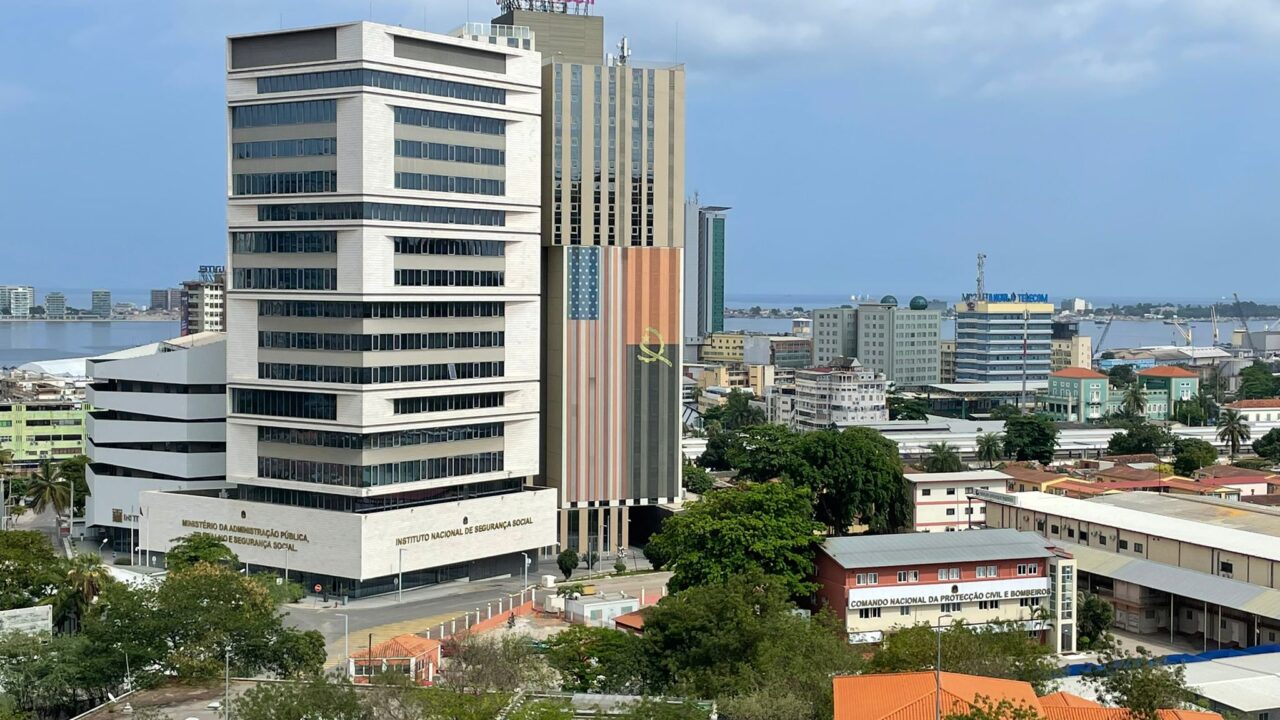
After years of strategic signalling, the US has signed at a Washington ceremony the final loan documents for the release of a substantial capital commitment for the Lobito Corridor railway upgrade, one of central and southern Africa’s most geopolitically significant infrastructure projects. It signed the agreement together with a consortium of companies, and the funds come in the form of a $753m joint loan agreed in partnership with the Development Bank of Southern Africa. While the deal builds on groundwork laid under the Biden administration, its significance has sharpened under President Donald Trump. It reflects a move away from climate-focused diplomacy towards a harder geoeconomic approach centred on critical mineral supply chains, regional trade integration and great power competition.
From climate partnership to strategic leverage
Angola’s rising importance to America became unmistakable in December 2024, when President Joe Biden made a historic state visit to Luanda—the first by a sitting US president. The visit symbolised Angola’s elevation as a strategic anchor for Western influence in southern Africa. Under Biden, the relationship was framed through the language of the energy transition: solar power, rural electrification, governance reform and infrastructure designed to support green industrialisation.
That framing was reinforced when Angola hosted the US-Africa Business Summit in May 2024, which many participants privately judged more commercially effective than the AU-EU Business Forum that followed in November alongside the AU-EU summit. This was an early indication that American engagement was becoming more operational than European ambition.
This month, Angolan president João Lourenço visited Washington to officially witness the signing of the peace deal between the Democratic Republic of the Congo (DRC) and Rwanda. That deal has since fallen apart, but Lourenço also used the visit to discuss defence, finance and infrastructure cooperation. The trip confirmed the strategic momentum on both sides of the Angola-America relationship, but it also highlighted the constraints Angola faces. Its tentative commitment to purchase US defence equipment has faced resistance from pro-Moscow elements within Angola’s security establishment. Washington is pressing Luanda to adopt US digital infrastructure, notably Elon Musk’s Starlink network. Meanwhile, Angola has avoided public confrontation over US tariffs on its diamond exports and the sensitive issue of US deportations of informal migrants designated as Angolan.
More prosaic elements of the US–Angola relationship endure. The United States’ single largest export to Angola remains frozen chicken leg quarters—a reminder that even geopolitically charged partnerships rest on everyday trade flows. Financially, J.P. Morgan returned to dollar clearing in Angola after a 10-year hiatus, demonstrating renewed Wall Street confidence. Meanwhile, Angola hopes to exit the Financial Action Task Force grey list by early 2027.
The deeper shift lies in Washington itself. The Trump administration has retained many of Biden’s core interests in Angola while discarding the climate narrative that once justified them. Geopolitical competition, industrial security, and control over critical mineral supply chains now dominate US thinking. To take another example, the U.S. International Development Finance Corporation has supported Angola’s Longonjo rare earth project with a $3.4m development grant to Pensana Plc to advance rare earth processing critical to electric vehicles and renewable energy.
Lobito Corridor: Same tracks, new meaning
No project better illustrates this transformation than the Lobito Corridor. Under Biden—and aligned with the EU’s Global Gateway— the Lobito Corridor was framed as a flagship climate-transition project: a logistics artery linking Angola’s Atlantic ports to the resource-rich copper belt of the DRC. Its value lay in enabling the transport of copper and cobalt essential to electric vehicles, batteries and renewable technologies.
Under Trump, the Lobito Corridor has been reimagined as a geoeconomic instrument
Under Trump, the corridor has been reimagined as a geoeconomic instrument, designed to dilute China’s dominance over African logistics, diversify global mineral supply chains and strengthen US leverage over critical materials. This reframing is evident in the US International Development Finance Corporation’s recent Letters of Interest, backing both a Gécamines-Mercuria joint venture and the rehabilitation of the Dilolo-Sakania railway linking the DRC to Angola’s Lobito Atlantic Railway. Together, these initiatives embed Angola at the centre of a US-led effort to reshape regional logistics and mineral flows.
The Development Bank of Southern Africa’s commitment of up to $200m to upgrade the Angolan railway reinforces Lobito’s strategic weight. With South African rolling stock and local content requirements, the project is emerging as a hybrid model powered by partners from different parts of the world. This contrasts with China’s Belt and Road Initiative, which tends to solely promote Chinese equipment and know-how. Indeed, the response of China—long a dominant player within Angola— to these developments remains uncertain. This could change if Washington seeks to restrict Chinese access to the corridor. Such a move would force uncomfortable choices on both Luanda and Kinshasa.
The EU’s engagement with the Lobito Corridor is anchored in the Global Gateway framework, where sustainable infrastructure, regional integration and access to critical raw materials are central objectives. Official EU messaging consistently highlights decarbonisation and the energy transition, particularly the role of lower-emissions transport and secure supply chains for copper and cobalt. At the same time, this framing sits alongside broader economic and strategic aims—trade facilitation, development finance and supply-chain diversification—suggesting a multifaceted, if climate-forward, European approach rather than a singular focus on decarbonisation.
Energy realism and Angola’s comfort zone
Trump’s approach aligns closely with Angola’s domestic political economy, which remains heavily dependent on hydrocarbons despite diversification efforts. Washington’s renewed openness to oil and gas investment supports Luanda’s development model and positions US firms like Chevron and ExxonMobil to expand their long-standing presence in the country.
The EU’s vision of a green transition—centred on renewables deployment and low-carbon value chains—remains more aspirational than material. While firms such as Italy’s ENI have invested in agribusiness and early-stage carbon capture, the scale and pace of European clean-energy financing continue to frustrate Luanda. Angola has welcomed Europe’s climate agenda, but its immediate priorities remain firmly revenue-driven, with hydrocarbons still underpinning state finances.
These dynamics would have framed discussions at the 7th EU-Angola “Joint Way Forward” ministerial meeting scheduled for 15 December. This was postponed at the last minute due to the uptick in fighting in the eastern DRC and Lourenço’s mediation efforts as chair of the African Union. These ministerial talks are rescheduled for 2026.
What Europe should do
For Europe, Angola is becoming a test of credibility. Transatlantic cooperation will persist, but without a shared climate narrative. If the EU wants to be taken seriously beyond hydrocarbons, it must move from strategy to delivery—deploying capital faster, accepting greater risk and recognising Angola’s determination to maximise leverage in a multipolar environment.
The Lobito Corridor will be the proving ground. Whether it becomes a model of pragmatic cooperation—or a symbol of fragmented Western strategy in Africa—will depend on Europe’s ability to adapt to a world in which geopolitical competition and climate ambition run on the same tracks.
The European Council on Foreign Relations does not take collective positions. ECFR publications only represent the views of their individual authors.