Morsi goes to Tehran, and Egypt gets its mojo back
Cairo and Tehran are talking to each other: Iran because it is increasingly isolated, Egypt because it is attempting to reclaim the mantle of regional leadership. Is this an example of Egypt's new foreign policy under Mr Morsi?

Egyptian President Mohammed Morsi has had a good month. He has asserted his presidential powers, appeared decisive as commander-in-chief on the Sinai crisis, and stayed largely aloof from the humdrum of his government's policies (and the attacks on them). Opposition protests against him have appeared small and divided.
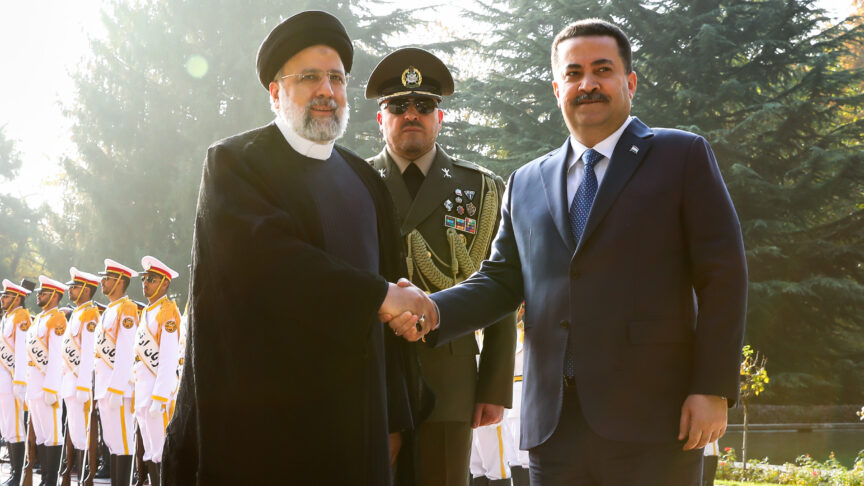
Moreover, after looking convincingly in charge, he then engaged on his first major foreign tour, lining up big potential contracts in China and concluding with a thunderous, much-lauded speech in Tehran.
All of this activity has sparked a flurry of commentary about Egypt's new foreign policy under Mr Morsi, and perhaps under the wider Muslim Brotherhood-dominated regime.
Some commentators – particularly in the US and the Gulf – worried that a trip to Iran signalled a rapprochement between two regional powers estranged since 1979. But these fears proved wrong. Mr Morsi did not go to Iran to forge a new friendship. He went there to signal that, when it comes to regional matters, Egypt is back.
He topped it off with an impassioned call on Arab League leaders, during a meeting in Cairo on Wednesday, to do more to end the crisis in Syria.
So to whom was he signalling in all this? Partly the usual suspects: Saudi Arabia, Qatar, the UAE, Turkey, Iran, the United States and all the other regional players. But first and foremost he was sending a signal to Egyptians.
Consider that, for the past four years at least, there has been a steady lament in the Egyptian press – and on the street – that Cairo had lost its regional mojo.
The Mubarak regime appeared cowed by a Bush administration bent on remaking the Middle East, and could do little more than grumble or sometimes, as in the blockade of Gaza or the hyperactivity of the US military in the region, collaborate quietly.
Reverse after reverse highlighted Egypt's impotence: the peace process floundered and Hamas rose as Egyptian officials pretended to be able to contain it; Sudan's multiple conflicts festered and Egypt did nothing, ultimately accepting the southern secession it had long opposed; other riparian countries challenged Egypt's claim to the lion's share of the Nile's waters and all Cairo did was throw a fit; pirates threatened Suez Canal traffic and the Egyptian navy could not be bothered to dispatch a frigate.
An elderly, ailing president and his fragmented regime showed no resolve: things happened and Egypt coped as well as it could. The military council that replaced the Mubarak regime fared little better: consider that as hundreds of thousands of Egyptians were fleeing the fighting in Libya in 2011, the Egyptian navy could not send ships to rescue any of them – an Italian vessel took in some instead, and most in the east fled to Tunisia.
No wonder the contents of Mr Morsi's speech, as well as his landmark visit to Tehran, seemed so exciting. Egypt and Iran have danced around each other for over a decade. The possibility of resuming of diplomatic relations was raised under Mr Mubarak, but without any progress. Now, an Egyptian president visited the country (albeit as a delegate to the Non-Aligned Movement conference, not on a state visit). And he used the occasion to embarrass his hosts by calling for regime change in Syria – a demand he repeated this week.
This suggests that Tehran and Cairo are not about to warmly embrace. But they are, pragmatically, talking to each other: Iran because it is increasingly isolated, Egypt because it is attempting to reclaim the mantle of regional leadership.
Mr Morsi's zinger in his speech in Tehran – “Our solidarity with the struggle of the Syrian people against an oppressive regime that has lost its legitimacy is an ethical duty, as it is a political and strategic necessity” – is a position he has expressed before. But it was also the most forthright such statement by an Egyptian president in years. Mr Morsi wants his country's foreign policy to regain a moral dimension.
In itself, though, this position – like his proposal for a Saudi-Turkish-Egyptian engagement with Iran on the Syrian situation – will achieve nothing. The reality is that Egypt is in no position to exercise the military, economic or diplomatic pressure necessary for a breakthrough. At best, it can work with others to defuse tensions, or act as a mediator when direct negotiations by more central actors are not possible.
There were also some less savoury aspects to Mr Morsi's speech. In the Arabic media, his praise for the first four rightly-guided caliphs – the first three of whom are not recognised by Shias but are revered by Sunnis – was largely interpreted as a jab at the Iranian regime. Over this part of the speech, (Sunni) Islamists displayed a startlingly distasteful sectarian jubilation, replete with comparisons to historic battles against Persia, for example.
One might give the Egyptian president the benefit of the doubt, that he was stressing commonalities among Islam's major sects – but he was also probably well aware of how his political base would interpret it: as a political and a religious poke in the Iranian eye.
Indeed, if anything is different about Egyptian foreign policy under Mr Morsi thus far, it might simply be that Egypt itself is different. In his initial foray into the world, it has been less important that Egypt's new president is an Islamist and more important that he is democratically elected.
In the new Egypt, much more so than the old one where presidential authority was unassailable, foreign policy is domestic politics.
The European Council on Foreign Relations does not take collective positions. ECFR publications only represent the views of their individual authors.