The European Council on Foreign Relations

The EU needs a new China strategy

By John Fox & Francois Godement - 17 Apr 09


This commentary piece is based on ECFR's latest policy report, A Power Audit of EU-China Relations.

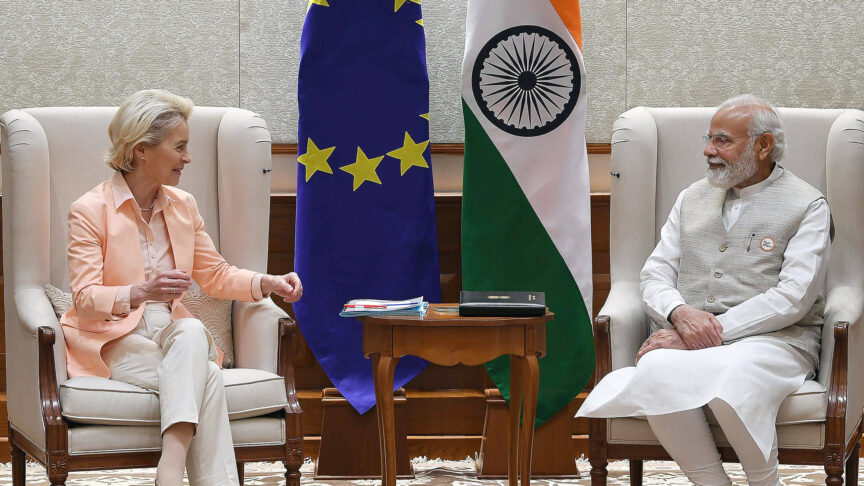
Europe's approach to China is stuck in the past. China is now a global power: decisions taken in Beijing are central to virtually all the EU's pressing global concerns, whether climate change, nuclear proliferation, or rebuilding economic stability. China's tightly controlled economic and industrial policies strongly affect the EU's economic wellbeing, and its policies in Africa are transforming parts of a neighbouring continent whose development is important to Europe. Yet the EU continues to treat China as the emerging power it used to be, rather than the global force it has become.

The EU's China strategy is based on an anachronistic belief that China, under the influence of European engagement, will liberalise its economy, improve the rule of law and democratise its politics. The EU therefore engages in a policy that can be described as "unconditional engagement" towards China: a policy that gives China access to all the economic and other benefits of cooperation with Europe while asking for little in return.

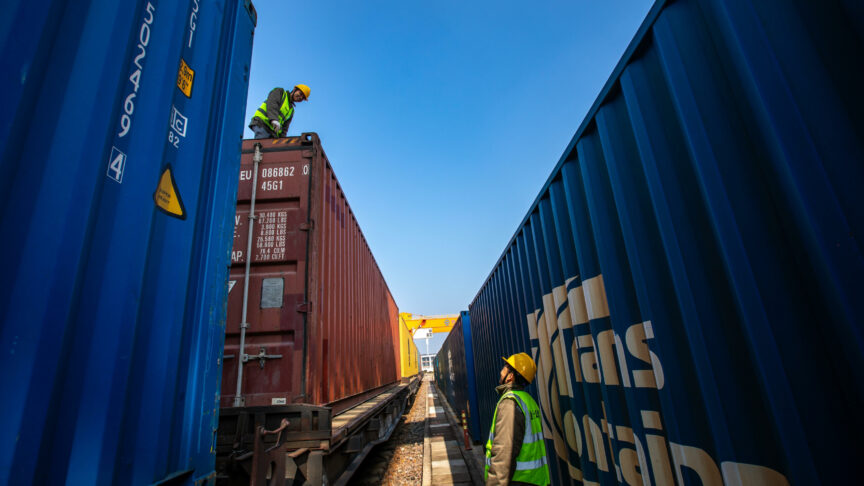
The results speak for themselves. The EU allows China to throw many more obstacles in the way of European companies wanting to enter the Chinese market, than any Chinese company faces in the EU - this one reason why the EU's trade deficit with China has swollen to a staggering €169 billion, even as the EU has replaced the US as China's largest trading partner. Efforts to get Beijing to live up to its responsibility as a key stakeholder in the global economy by agreeing to more international coordination have been largely unsuccessful. The G20 summit in London in early April 2009 demonstrated Beijing's ability to avoid shouldering any real responsibility; its relatively modest contribution of $40 billion to the IMF was effectively payment of a "tax" to avoid being perceived as a global deal-breaker.

The 27 EU Member States split over how to both manage China's impact on the European economy and to engage China politically. In doing so, Member States fall into one of four broad groups: Assertive Industrialists, Ideological Free-Traders, Accommodating Mercantilists, and European Followers (for more details, see A Power Audit of EU-China Relations). This ideological squabbling prevents Europe from having a meaningful, bi-lateral dialogue with China.

France, Germany and the UK carry particular responsibility for Europe's divided approach to China. Time and time again, each has lobbied to become China's European partner of choice - even though Beijing only grants preferred status for a limited duration, offering its favours to the highest or most pliant bidder.

China for its part is a skilful and pragmatic power that knows how to manage the EU. China wants wide access to EU markets and investment, it seeks technology transfers, and it wants the EU and other partners to take the lion's share of the costs of the fight against climate change. Importantly, though, it also wants the EU to refrain from rocking the boat on Taiwan and Tibet. To secure these goals, China has developed three basic tactics in its approach to the EU. First, it takes advantage of the mismatch between its own centrally controlled systems and the EU's open market and government to exploit opportunities in Europe while protecting its own economy with industrial policies, restricted access and opaque procedures. Second, China channels EU pressure on specific issues by accepting formal dialogues and then turning them into inconclusive talking shops. Third, China exploits the divisions between Member States.

China now treats its relationship with the EU as a game of chess, with 27 opponents crowding the other side of the board and squabbling about which piece to move. As a neo-authoritarian Chinese academic, Pan Wei, puts it, "the EU is weak, politically divided and militarily non-influential. Economically, it's a giant, but we no longer fear it because we know that the EU needs China more than China needs the EU."  China's new readiness to treat the EU with something akin to diplomatic contempt became apparent last December with the short-term cancellation of the EU-China summit in Lyon, a harsh reaction to French president Nicolas Sarkozy's plans to meet the Dalai Lama.

Any attempt to strengthen the European position must start with an acknowledgment that no Member State is big enough to sway China on its own. Whenever China has shifted its position as a result of European pressure, as it has on nuclear proliferation or to a lesser extent on Darfur, it has reacted to a coordinated effort, strongly backed by the EU as a whole as well as the most influential Member States. Collectively as well as individually, EU Member States will fail to get more from China unless they find ways to overcome their divisions and leverage their combined weight into a strengthened bargaining position.

The EU should therefore drop its attempt to remake China through unconditional engagement and turn to a strategy that offers a realistic chance of achieving its most pressing goals. Unconditional engagement should make way for "reciprocal engagement", a new interest-based approach in which the EU focuses on a reduced number of policy areas, and uses incentives and leverage to ensure that China will reciprocate. The EU has no choice but to engage China as a global partner and to accept its historic rise. But the EU must make it in China's best interests to deliver what Europeans are asking for.

The EU should trade awarding China Market Economy Status (which would allay China's fear of European protectionism) for the removal by China of its own barriers to trade and investment. It should also trade lifting the EU Arms Embargo on China for Chinese support for stronger sanctions against Iran's development of nuclear weapons.  And the EU must be prepared to take more direct action in Africa to support welcome Chinese investments where they meet international financial aid norms, but be prepared to prevent debtor countries from accepting Chinese loans where they undermine governance, stability or sustainable development.

The inauguration of Barack Obama as US president has signaled the start of a new chapter in US-China relations. To avoid being sidelined by the dialogue between the world's old and new powers, the EU will have to offer more than a cacophonous chorus of competing voices.


Tags: Asia

4 Comments

#1

Excellent and long overdue argument for Europe’s more effective foreign policy towards undemocractic imperialism.

The recommended reciprocal actions how ever were shockingly lacking of moral standing and only concentrated on bilateral EU-China trade and other foreign relations issues like Africa and Iran.

Lift EU arms embargo against totalitarian state like China?

The root problems of one-party China, namely the party’s clinging onto power at any cost, its deceitful internal propaganda, lack of rule of law, uncensored media, democracy and human rights and its genocidal occupation of Tibet and the Central Asian turkic-speaking East Turkestan do not warrant being key issues and part of Europe’s civil foreign policy?

As long as China remains as described above, European values will carry diminishing weight in the world and indeed even within Europe.

The final summary of this paper would suggest that 19th century European mercantilism will still be fine in the 21st century if only China is given equal mercantilistic rights and opportunities regardless of their behaviour domestically and in their occupied imperial territories.

Bhoe Rangtsen | 19 Apr 09, 19 Apr 09 EST | www
#2

I am not sure if I agree when Pan Wei says, “EU needs China more than China needs the EU.” In her book The Statecraft former British Prime Minister Margaret Thatcher says, “China needs Europe more that Europe needs China” and she also states that “Chinese claim to Tibet is dubious on historical ground”. It is important that when making trade deals with China, EU member countries give due importance to human rights and human lives, whether Tibetans or Chinese, over temporary economic gains.  If free and independent countries bow down to pressure from the authoritarian Chinese regime and allow China to dictate who their heads of government should meet and which way they should vote in the UN on human rights and other issues, then the future for whole of humanity surely does not look good and those bureaucrats and political leaders who lack the vision and courage to stand up to China will have to suffer the consequences of their timidity when they are old and powerless.

Tsering Tashi | London | 20 Apr 09, 20 Apr 09 EST
#3

Bhoe Rangtsen:

I am not sure where did you get this information:
its deceitful internal propaganda, lack of rule of law, uncensored media, democracy and human rights and its genocidal occupation of Tibet and the Central Asian turkic-speaking East Turkestan.

Do you read history and current affairs to make these comments? 

The fundamental flaw of EU’s China poliocy is that you europeans are exceptionally good at lecturing the Chinese and disagreeing with the Chinese on all fronts.

In view of China’s rise, any policy relating to China will not work unless you change your attitude of groundless accusations and lecturing. Your mentality would have worked 100 years ago when the eight western powers sent troops to the forbidden city. But that time has long passed, wake up, the Europeans.

It is not a question to ask the Europeans to bow down to the authoritarian Chinese government. In fact, it is a fact that the Chinese ask to be treated as equals. The first thing to remeber is you treat someone as equals is to respect the core interest of your partner. If any European wish to split China, no Chinese government, democratic or authoritarian would allow this to happen, yes, indeed at all costs. This is dicataed by the will of the Chinese people.

Zhu | 29 Apr 09, 29 Apr 09 EST
#4

“A government that is not responsible to its own people cannot be responsible towards the rest of the world.

Not wanting to offend China means they (foreign countries) cannot help China, cannot help China’s people attain their own rights, and cannot help the world community gain a reliable, stable, peaceful member..

This is not a good thing. If (the world) does not care, then they bear a large part of the responsibility.”

(Bao Tong, former Chinese communist leader and a moderate who was ousted for opposing the massacre in the Tiananmen square)

Bhoe Rangtsen | 16 May 09, 16 May 09 EST | www

Submit a Comment

Your message will be submitted to a moderator before appearing online. Name and email address are required, all other fields are optional. Your email will not be displayed.

Please enter the word you see in the image below:

Remember my personal information

Latest Publications

China shapes its post-crisis economic agenda

The latest issue of China Analysis looks at Beijing’s willingness to strengthen international economic governance, and its authors argue that much thinking in China seems to focus on the short term

China and India: rivals always, partners sometimes

The authors of the latest issue of China Analysis argue that Western concerns over “Chindia” - the emergence of a Sino-Indian economic power bloc or strategic alliance - may be unwarranted. 

Towards a post-American Europe: A Power Audit of EU-US Relations by Nick Witney & Jeremy Shapiro

Europe has the US president it wished for, but does Barack Obama have the strong transatlantic partner he wants?

Can the EU rebuild failing states? A review of Europe’s civilian capacities.

Have broken promises and treating Afghanistan, DR Congo and Iraq like Bosnia left the EU without the capacity to prevent fragile states from becoming failing states?

What does Russia think?

ECFR publishes a collection of views from key Russian intellectuals.

The EU and human rights at the UN: 2009 annual review

The EU’s ongoing loss of influence at the UN is putting lives at risk, argues the author of ECFR’s latest paper.

China’s response to the G2

Fears in Europe that China works to lock the US into a “G2” embrace so as to dominate the global agenda do not reflect Chinese experts’ current strategic thinking.

European and Russian power in the troubled neighbourhood

Is a complacent strategy that focuses on gradual change rather than crises losing the EU its battle with Russia for influence in the eastern neighbourhood?

Beyond the “War on Terror”

The EU has an opportunity to influence President Obama’s efforts to reform US counterterrorism policy

A Power Audit of EU-China Relations

China is exploiting the EU’s divisions and treating the 27-state bloc with “diplomatic contempt” on issues ranging from trade to the Dalai Lama.

Shaping Europe's Afghan Surge

Will the military surge in Afghanistan fail without a civilian surge?

Re-wiring the US-EU relationship

With the pivotal change of leadership in Washington, the US and the EU may have an ideal moment to strengthen the US-EU institutional bond.

Beyond dependence: How to deal with Russian gas

Could building a single European market in natural gas be the most effective strategy for the European Union in countering Russia’s divisive energy diplomacy?

Promoting democracy abroad - the EU's record

In a joint research project with FRIDE, ECFR looks at the EU’s record in Azerbaijan, Belarus, Ukraine, Jordan, Lebanon and Morocco.

Is the EU a global force for human rights?

The EU’s leverage to promote human rights through the UN has dramatically declined over the last decade, our exclusive report reveals.

Can the EU win the peace in Georgia?

This authors analyse the background and developments in the Russia-Georgia conflict and outline recommendations on how to prevent wider political fallout.

Re-energising Europe's Security and Defence Policy

European governments cannot afford to move at the speed of the slowest, argues Nick Witney, and should push for a ‘multi-speed’ Europe on ESDP

In the Press

The Kyiv Post - 11 Mar 10

A piece on the EU and Ukraine, quoting Wilson and Popescu’s recent report.

The Prague Post - 10 Mar 10

Korski: “The Anglo-American strategy in Afghanistan has hit an absolute low mark.”

Reuters - 08 Mar 10

Daniel Korski on what lies ahead for Baroness Ashton.

Read more press >

Click here for ECFR's Youtube channel.