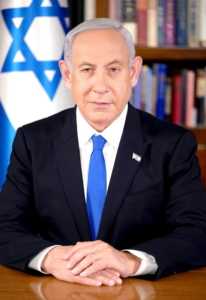
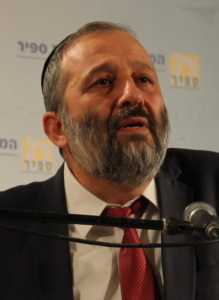
Israel’s illiberal and ethno-nationalist forces are reshaping the country in their image. This is a structural transformation that runs deeper than October’s election, and will outlast Netanyahu. ECFR’s web special maps the battle of ideas for the country’s future and what a new Israel could mean for Europe
Since before Israel was founded, competing ideological forces have battled over the state’s identity. In Israel’s early decades, its political elites broadly accepted the model of its Labour Zionist founders: a Jewish state with secular institutions and liberal-democratic aspirations, closely aligned with the West and secured through military power and diplomacy. That model was always deeply flawed.
Israel’s liberal ideals coexisted uneasily with the dispossession and exclusion of Palestinians, military rule over Palestinian citizens and, after 1967, occupation and settlement of the West Bank and Gaza. Alongside this, Jewish immigrants from the Middle East and North Africa (or, Mizrahim) were systematically discriminated against. Nevertheless, this model remained the dominant way Israel understood itself and presented itself to the world.
In recent years, however, the illiberal ideas once confined to Israel’s political and religious margins have become mainstream. A hardline religious nationalist leadership is pushing for a greater role for Jewish law in the state, as well as Jewish sovereignty over a “Greater Israel”—stretching across Palestine and beyond. These ideas have influenced the mainstream right, which has increasingly embraced an ethno-nationalist and majoritarian conception of democracy, in which the electoral majority should face fewer institutional constraints. Support for Palestinian statehood has collapsed across most of the Jewish political spectrum, while permanent Israeli control over the Palestinians has become normalised. And after the shock and trauma of the Hamas massacre on October 7th 2023, many Israelis are convinced that the country must defend its existence through overwhelming military force alone.
The Liberal Zionists who inherited the state’s founding political tradition have struggled to articulate an alternative vision. Their agenda is largely defensive and technocratic: preserving democratic institutions, restoring competent government and removing Binyamin Netanyahu from power, while accepting much of the right’s thinking on security and on Palestine.
At the heart of these developments is a struggle over what kind of state Israel should be. Who belongs and on what terms? Where does its territory begin and end? Should law and political authority derive from liberal democratic institutions, the will of the Jewish majority or religious scripture? And should Israel seek security and international legitimacy through diplomacy or unbridled military power? This project maps the competing answers of the four Jewish ideological camps of Israeli politics: Liberal Zionists, Nationalists, Ultra-Orthodox and Religious Nationalists. Three of them represent rival strands of Zionism—the movement for Jewish national self-determination—while the Ultra-Orthodox are non-Zionist.
This ECFR special deliberately focuses on the Israeli Jewish camps given their overriding influence on the country’s politics and policies, as well as their political domination over 2.1 million Palestinian citizens who live within the Green Line and their control of Palestinians in the occupied West Bank and Gaza. Despite their Israeli citizenship, politicians from Palestinian citizen parties are treated as pariahs by their Jewish counterparts and most Jewish parties refuse to sit in government with them. Israel’s political fracturing is somewhat eroding that commitment, which could give Palestinian parties a growing role as kingmakers within Israeli politics, including in this year’s pivotal general election. In an unprecedented move, Yoav Segalovitz, a Jewish former parliamentarian and senior security official, is running as the number two in Ra’am, Mansour Abbas’s Islamist Arab party. However, the electoral leverage of Palestinian parties is still far from translating into political power. Even if some parties were to support a government from the outside—as Ra’am did in 2021—they would be denied ministerial posts and membership of the security cabinet.
At first glance, the parameters of the country’s ideological debate appear to be narrowing. After 18 non-consecutive years of Netanyahu as prime minister, the election on October 27th is dominated by internal Jewish-Israeli questions: Netanyahu’s political survival, the future of the judicial overhaul and the exemption of ultra-Orthodox Israelis from military service. On foreign and security policy, meanwhile, there is striking convergence between much of the Netanyahu government and opposition. Beneath this apparent consensus lies a deeper shift: many of the ultra-nationalist right’s ideas—once considered beyond the pale—have gone mainstream, with little challenge from the right and centre. This ideological turn is remaking Israel’s character at home and abroad, including its relationship with the rest of the Middle East, the West and the international liberal order.
The election result could slow the ideological shifts already well under way, but it will not arrest or reverse them. A government led by Liberal Zionists could stem democratic backsliding, constrain the most radical Religious Nationalist ambitions and repair relations with Western allies. It might even cede some of the territorial gains Israel has made since 2023. But it would not restore an Israel of the past in any recognisable way, given that on some of the most consequential questions—Palestinian statehood, settlements and the use of military power—the ideological centre of gravity has shifted significantly to the right.
This project delves beneath the immediate electoral contest to map the battle of ideas that will shape the Israel of tomorrow. It identifies the camps competing to define the country, traces how they have evolved, and explores the rival visions they offer for Israel’s democracy, its relationship with the Palestinians, its use of military power and its place in the Middle East and the world. The central question is not simply who will govern Israel after the election, but what kind of country Israel is becoming.
Camps
Israeli electoral politics has lost its ideological coherence. Over the past decade, the country has reorganised politically around a single question: for or against Netanyahu. This has upended traditional alliances, fragmented the mainstream right and hollowed out the liberal opposition into a bloc defined mainly by its anti-Netanyahu stance. Likud, once the central pillar of the Revisionist bloc (the secular-nationalist right) is becoming indistinguishable from the far-right Religious Nationalists. Yet Avigdor Liberman and Naftali Bennett, both right-wing nationalists, now side with the Liberal Zionists on halting Netanyahu’s judicial overhaul. The old distinctions on foreign policy and Palestine, meanwhile, have blurred into shades of nationalism. Despite the fluidity of Israel’s electoral blocs, it is the strong ideological currents beneath them that are shaping the country’s trajectory—no matter what coalition forms. This is a snapshot of a political system in transformation.
Loading chart...
This project therefore organises the four Jewish political camps according to their ideas of what kind of country Israel should be. Rather than sitting on any traditional left-right axis, these camps cut across three ideological axes: economic, security and identity. We therefore use the left-right spectrum in line with the Israeli understanding that it is determined by one’s security stance, especially regarding the Palestinians. That is, “right” is synonymous with hawkish positions on the use of force, settlement expansion and opposition to Palestinian statehood, while “left” is associated with territorial compromise, including a Palestinian state.
Loading chart...
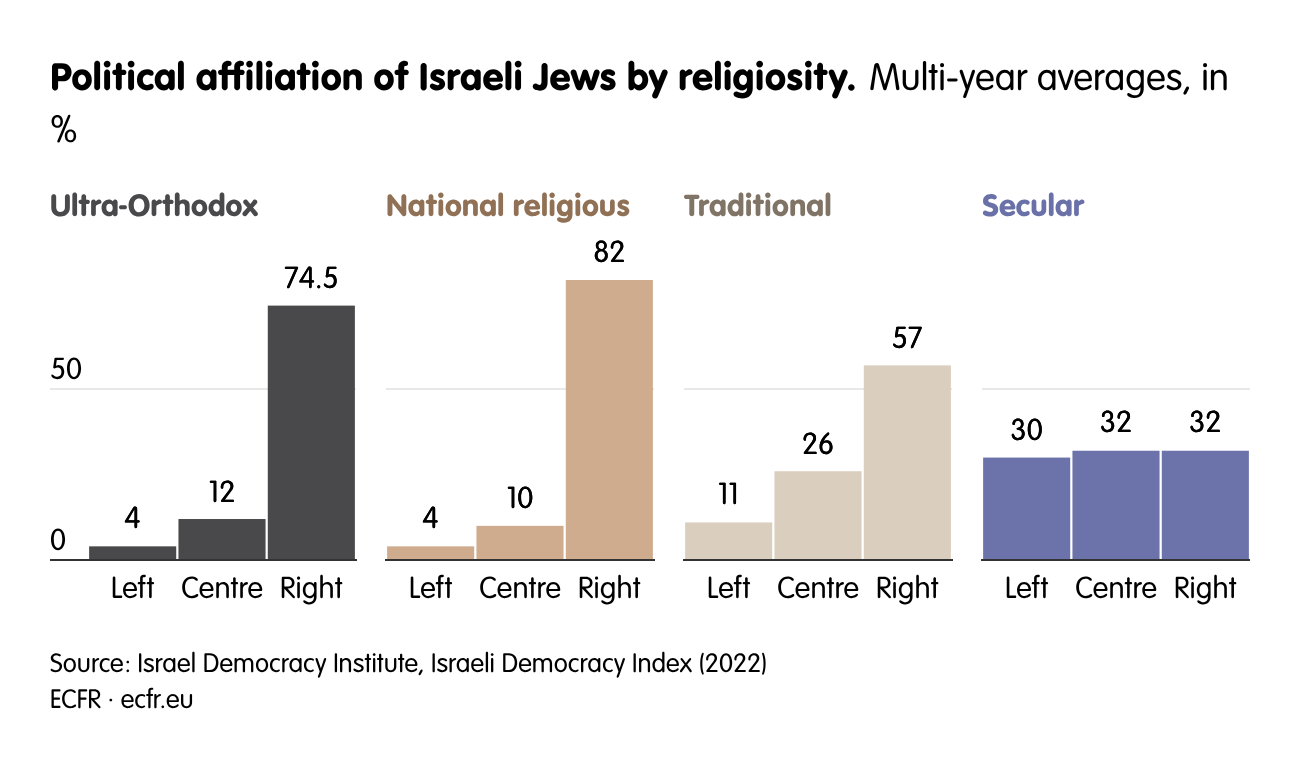
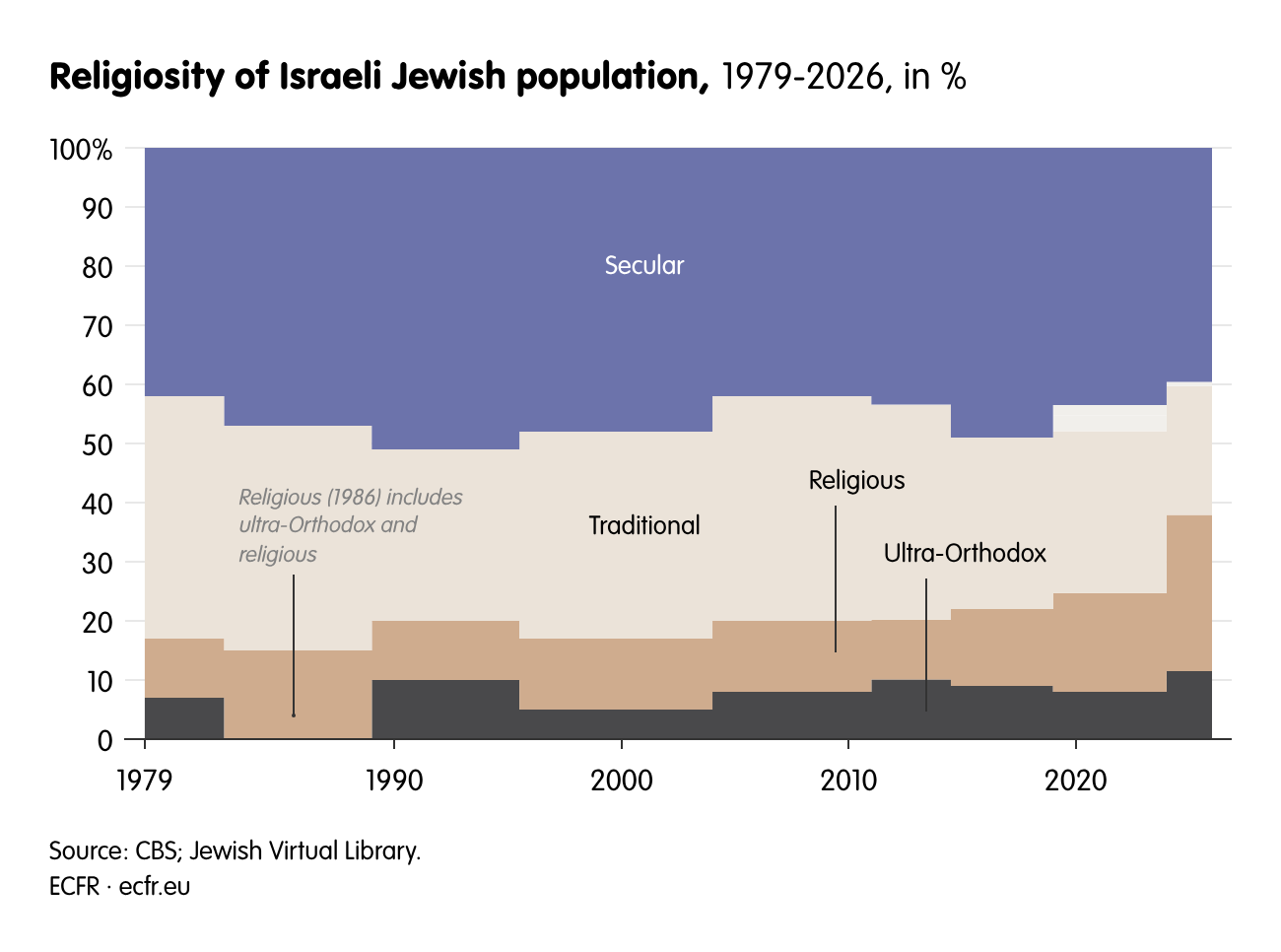
Since the 1967 war, religiosity has become a clear predictor of where Israelis sit on this spectrum and on foreign and security affairs more broadly. The more religious you are, the more likely you are to hold hawkish positions. Of the national-religious public, who combine Orthodox religious observance with a commitment to Zionism, 78% say they are right wing, as do some 75% of the ultra-Orthodox public. The camps—which only includes Jewish parties safely polling above the electoral threshold—are thus ordered from left to right as follows: Liberal Zionists, Nationalists, Ultra-Orthodox (who often do not articulate positions), and Religious Nationalists.
Click on the folders for more information on each camp
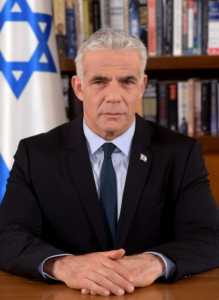
The Democratsled by Yair Golan, a centre-left party, a merger of Labour and Meretz.
Yesh Atidled by Yair Lapid, a centrist party running on a joint list, Beyachad or Together, with Nationalist Naftali Bennett.
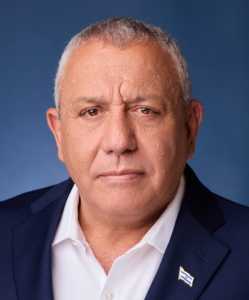
Yashar!led by Gadi Eisenkot, the former IDF chief of staff, a centre-right party.
Base
Secular Israelis (who make up around 45% of the Jewish-Israeli public). Those living in the wealthier part of the country, that is “Middle Israel” and Tel Aviv. Those in the suburbs or kibbutzim who are Ashkenazi, highly educated and middle-class. High-tech workers (an economically privileged group making up 10% of Israel’s workforce).
Origins
Labour Zionists founded Israel and led its governments until 1977, designing and dominating its institutions. Today, that liberal and socialist tradition looks increasingly anachronistic. The socialist economic model has been largely replaced by a neoliberal one and the once powerful labour union, the Histadrut, is now controlled by Likud.[1] The Democrats are their most direct successor. Yesh Atid is the heir to a more centrist tradition that arose in the 1980s to represent the secular middle class, defined by patriotism, diluted right-wing security positions, a cost-of-living agenda and hostility towards the ultra-Orthodox. On the right, Eisenkot comes from a long line of former security figures who join politics, promising heavyweight security credentials and competent governance.
Today’s Liberal Zionists emerged in 2019 in response to Netanyahu’s re-election. The camp was later energised and consolidated by the judicial overhaul in 2023, which mobilised thousands of Israelis to demonstrate week after week to safeguard liberal democratic institutions.
Summary
The Liberal Zionists are committed to Israel as a secular liberal democracy, with independent institutions, the rule of law and individual protections for its citizens, including Palestinian citizens of Israel. On Palestine, they adopt many of the Nationalist camp’s hawkish positions yet would be willing to advance a diplomatic settlement including a political process and regional normalisation. They are broadly Atlanticist and seek alliances with liberal Europe and bipartisan support in the US.
Together with Nationalists Bennett and Liberman, the Liberal Zionists are united by their fierce opposition to Netanyahu, earning them the nickname “anyone but Bibi” (rak lo Bibi). They promote a largely technocratic programme that promises to put national interests above personal interests with good governance (mamlachtiut), an end to corruption, a written constitution, term limits, a reversal of the judicial overhaul and a commission of enquiry into October 7th. The camp is vehemently secular and opposes the draft exemption for the ultra-Orthodox, while championing a political “covenant of those who serve”; that is, a government which includes neither the ultra-Orthodox nor Palestinian citizens of Israel.
Since the Nationalists cast the “left” as anti-Jewish and anti-Zionist, the Liberal Zionists have largely renounced leftism and colluded in their own delegitimisation. In practice, the Liberal Zionists trim the excesses of Nationalist and Religious Nationalist policies but do not fundamentally challenge them. They reject annexation and denounce settler violence but not the settlements themselves, distinguishing between expanding “status quo” settlements close to the Green Line and those deep inside the West Bank. Publicly, they back hawkish security policies and the use of overwhelming military force as deterrence, albeit tempered by restraint and diplomacy (see the strategy Eisenkot wrote for the Israeli military in 2015). Together with the Nationalists, they also support expanding the Abraham accords and military action against Iran.
Despite their liberal overtures, this camp is largely silent on the Israeli control of 5.6 million Palestinians in the occupied territories and has, at least publicly, abandoned the two-state project. At most, the three leaders promote “separation” from the Palestinians as a means of maintaining a Jewish demographic majority, much like their predecessors, from Ben-Gurion to Yitzhak Rabin.
To the left of the Liberal Zionist camp, a small non-Zionist and anti-Zionist Jewish minority emphasises full equality and an end to the occupation. This stream is represented by Hadash-Ta’al, a joint Jewish-Palestinian list, and has virtually no political power, winning just five seats in the 2022 election and generally declining to sit in coalitions.
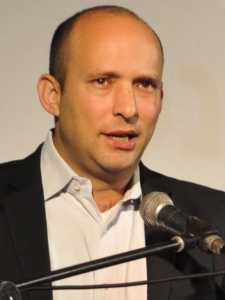
Bennett 2026led by Naftali Bennett (running as Beyachad with the Liberal Zionist party Yesh Atid).
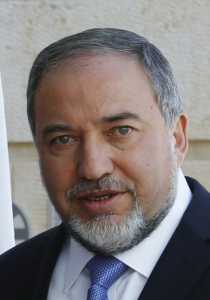
Yisrael Beitenuled by Avigdor Liberman.
The Likudled by Binyamin Netanyahu.
Base
Likud: Middle and working class. Largely Masorti (traditional, meaning a strong attachment to religious tradition but not strictly ultra-Orthodox, constituting a third of Israel’s Jewish population), national religious and a secular minority that is increasingly leaving the party. This base is mostly Mizrahi (58% in 2021) and from Middle Israel, the periferia (underdeveloped border areas) and the settlements.
Bennett: National religious, West Bank settlers and “high tech” workers.
Yisrael Beitenu: Secular and professional middle class. Historically of former-Soviet Jewish immigrants who were educated though that base has dwindled. West Bank settlers motivated by economic policies.
Origins
The Nationalists are the descendants of Ze’ev Jabotinsky’s Revisionist Zionism, which embraced liberal-democratic values alongside an ultra-nationalist vision for Israel, including a Greater Israel. Under Israel’s first Revisionist prime minister Menachem Begin, Herut (Likud’s predecessor) was committed to “equal citizenship, rule of law, Jewish unity”, secularism and free-market economics. Over the decades, Begin and his successors radicalised Jabotinsky’s ideas into a hardline ethnic nationalism while retaining a liberal democratic veneer.
Likud in particular has undergone a profound radicalisation. In the early 2000s, Moshe Feiglin, an ultra-nationalist, drew the party further from its liberal democratic origins and even closer to the Hardal and Kahanists. These religious-fundamentalist groups infiltrated the party just as Ariel Sharon took its moderate wing into his centrist Kadima party. Today, as one Likud minister, May Golan, recently said, “There aren’t a lot of ideological differences between Otzma Yehudit and Likud,” referring to Ben-Gvir’s far-right party.
Summary
The Nationalist camp is united by its populist instincts, free-market economics outlook and ultra-nationalist, hawkish foreign policy. Most of the camp supports a majoritarian Jewish democracy rather than a liberal one. When Netanyahu initiated the 2023 judicial overhaul, for example, he argued that the people’s will should not be frustrated by a “deep state” of courts, officials and journalists. Bennett’s and Liberman’s opposition to the judicial agenda derives from their enmity towards Netanyahu rather from principle. Indeed, Bennett promoted a “judicial revolution” between 2012 and 2018.
The camp’s foreign policy is increasingly transactional and unilateral. Its vision for the region is of a network of alliances based on hard military power and technological prowess. It wants to advance regional normalisation while bypassing the Palestinians and aligning with illiberal forces in America and Europe. To support this agenda, the Nationalists have long pushed for “free enterprise, privatisation, open capital markets… lower taxes”, as Netanyahu told Congress in his 1996 address, so Israel can be economically independent enough to resist pressure from interfering allies—and to attract diaspora Jews from the West.
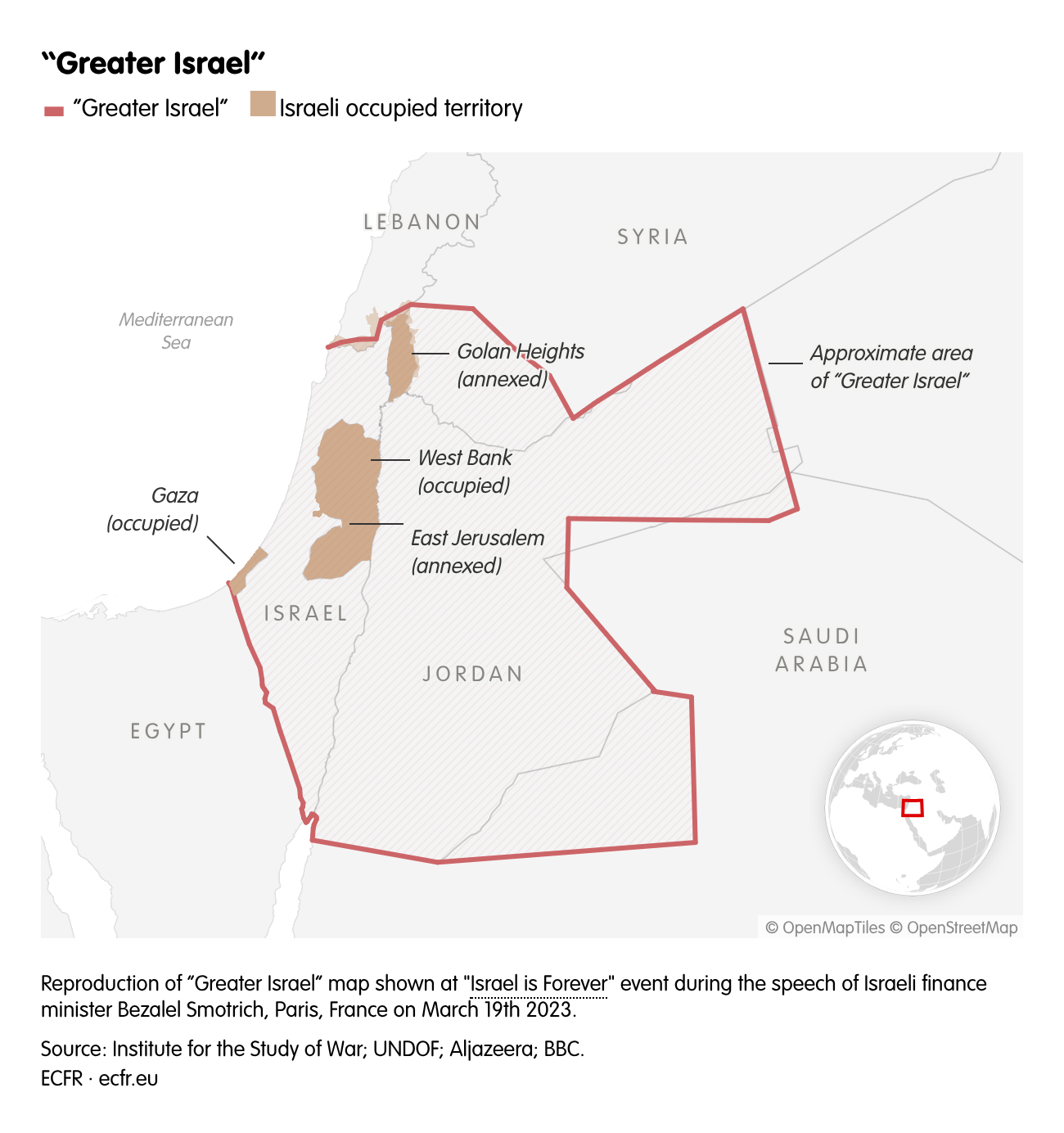
The Nationalists believe in a Greater Israel, including partial annexation—whether all or part of Area C (Bennett in 2012; Netanyahu in 2020 alongside the Trump administration)—but stop short of full annexation, which would threaten Israel’s Jewish demographic majority. Some would support limited Palestinian self-governance (“autonomy”) under Israeli security control in exchange for inducements such as Saudi normalisation. Such an outcome would fall far short of full Palestinian self-determination.
While the parties largely share a similar security and economic agenda, they are split on the balance between religion and state, and on Netanyahu. Liberman and Bennett oppose Netanyahu because of his corruption, disregard for rule of law and the speed and scale of the judicial overhaul. On matters of synagogue and state, Likud has grown ever closer to the nationalist religious-fundamentalist Hardal and Kahanists, making it a far-right party in all but name. Liberman’s Yisrael Beitenu, meanwhile, is aggressively secular with a constituency deeply resentful of the ultra-Orthodox arrangements with the state.
Bennett, on the other hand, is difficult to categorise. National-religious by background and religiously observant, he rose to prominence as a leader of the Yesha Council (settlement council). He then became leader of the Religious Nationalist Jewish Home party, before founding the New Right party in 2018 to fuse the secular and religious right. In 2021, Bennett formed a government with the Liberal Zionist party Yesh Atid and Ra’am, breaking a campaign promise not to sit with a Palestinian party. His base never forgave him for this, branding him a “liberal”. Whether out of necessity or genuine ideological change, he has since embraced that label, allying with Yesh Atid in their joint slate Beyachad (Together) and promoting liberal values of pluralism, separation of synagogue and state, LGBTQ+ rights and more. We place Bennett in the Nationalist camp because of his self-identification as right wing and because his hawkish position on the Palestinians and security is articulated more in secular-nationalist than religious terms.
Agudat Yisraelone of two Ashkenazi parties, representing the Hasidic stream, comprising 29% of the ultra-Orthodox public. Led by Yitzhak Goldknopf.
Degel Hatorahthe second Ashkenazi party, representing the Lithuanian or Litvak stream, comprising 34% of the ultra-Orthodox public. Led by Ya’akov Asher, who recently replaced Moshe Gafni.
Shasrepresenting the Sephardim who are ethnically Mizrahi and comprise 32% of the ultra-Orthodox public. Led by Aryeh Deri.
Base
The ultra-Orthodox public, comprising about 14% of all Israelis, organised into three streams: the two Ashkenazi streams—Hasidic (29% of ultra-Orthodox) and Litvak (34%)—and Sephardi (32%), each represented by a different party.
Origins
Ultra-Orthodox Judaism emerged in 19th-century central and eastern Europe, in rejection of modernity and assimilation and insisting on strict observance to halacha. Most ultra-Orthodox authorities rejected political Zionism. After Israel was established in 1948, the camp gradually shifted to a pragmatic and transactional posture, participating in the state to protect their interests (religious autonomy, Torah study and subsidies). From a small, marginalised minority, the ultra-Orthodox have grown into a powerful political force.
Summary
The ultra-Orthodox community divides into three religious streams, each represented by its own sectoral party and with their own distinct identities, creating significant intracommunal tensions. What unites the ultra-Orthodox is their strict adherence to halacha (Jewish law), separatism from secular and non-Jewish society and rejection of modernity. The camp is traditionally non-Zionist, believing that the establishment of a secular state violates Jewish law and God’s will. Only a small anti-Zionist fringe (Neturei Karta and Edah HaChareidis) rejects the state altogether.
For this camp, authority does not derive from democracy but from da’at Torah—the judgement of a handful of religious authorities who govern everyday life. As professor Benjamin Brown notes, the ultra-Orthodox “are not particularly good at expressing their ideology in a clear and organised fashion”. But he also points to several discernible pillars, including faith in the rabbinic authority of the sages and a belief that each generation is less wise than the last (yeridat hadorot), so the Torah is the source of eternal truth rather than, say, science or democracy.[3]
In practice, the ultra-Orthodox camp is pragmatic and transactional. They participate in elections, join governments and engage with state institutions to increase Israel’s orthodox Jewish character and protect their interests such as religious autonomy (especially in education), subsidies and draft exemption. Unlike the Religious Nationalists, the camp does not seek to capture the state or its institutions. On foreign and security policy, the camp is passive and has no policy platform other than an aversion to territorial expansionism, which they believe has no halachic or moral basis.
On religious affairs, the camp is much more assertive. Its main objective is to defend the 1947 religious status-quo agreement, suspend public transport on Shabbat and in some cases, expand religious control over the public sphere, for example, by segregating public events by gender. This activism contributes to many secular Israeli Jews’ intense fear and resentment, deepening polarisation between the secular and religious public. In 2025, almost three-quarters of Israeli Jews said they view the tension between the ultra-Orthodox and secular Jews as Israel’s deepest social conflict.
Today, the ultra-Orthodox are in crisis over military conscription and social integration, compounded by the weakening of the leadership after the deaths of their influential sages (Rabbis Shach, Elyashiv and Ovadia Yosef). In 2022, Netanyahu promised the ultra-Orthodox parties formal exemption, but after October 7th, public resentment towards the ultra-Orthodox grew and secular-religious tensions exploded. A small “modern Haredi” stream (about 10% of the ultra-Orthodox) seeks integration, whether via secular studies, army service or new parties like Hakahal. While still limited, integration has only moved the ultra-Orthodox further right while the National Resilience Index shows the ultra-Orthodox to be the most nationalistic group in Israel. As their publics grow increasingly confident in defying the rabbinical leadership, some—especially among Shas’ base—are voting for non-ultra-Orthodox far-right parties like Likud or Otzma Yehudit.
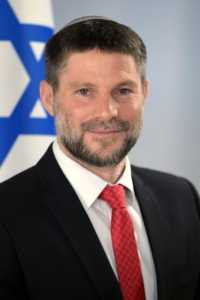
Religious Zionismled by Bezalel Smotrich, running together with Moshe Feiglin’s Zehut (Identity).
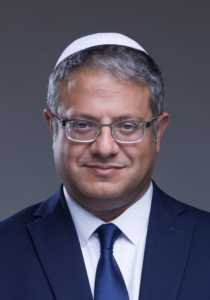
Otzma Yehudit (Jewish Power)led by Itamar Ben-Gvir.
Base
Religious Zionism Party: Hardalim (about 6% of the national-religious public), split roughly equally between Mizrahi and Ashkenazi voters.[7]
Otzma Yehudit: Periferia, Mizrahim, young men of conscription age.
Origins
Historically, this camp was dominated by a moderate mainstream that fused religious observance with full participation in the state, alongside a commitment to liberal-democratic values, embodied by Mafdal, the old National Religious Party. The 1967 war triggered a messianic radicalisation among some national-religious Israelis. By 1980, the Hardal had risen to dominate the camp’s institutions, eclipsing a moderate majority among the public. In recent years, that moderate strand has lost political representation. Bennett, the last such leader, was discredited in his voters’ eyes for sitting with the Palestinian party Ra’am in 2021. The result is “a silent and stunned” majority, in the words of scholar Yair Ettinger, “for the most part colourless and lacking political leadership”.
Summary
The Religious Nationalists fuse orthodox Judaism with nationalism. Unlike the Ultra-Orthodox, they broadly embrace the state, joining the workforce and serving in the army. They seek to increase Israel’s orthodox Jewish character and to expand the country into a Greater Israel by annexing the West Bank and expanding Jewish settlements, including in Gaza, Lebanon and Syria. Their maximalist territorial ambitions override any desire for international legitimacy or alliances: the camp aligns itself with illiberal forces in the US and Europe, including the evangelical right. Though it does not oppose normalisation, it would not “pay” for it in “concessions” to the Palestinians.[4]
In recent decades the camp has been captured by the religious fundamentalist Hardal. Smotrich and most Religious Nationalist rabbis and educators belong to this group, though in 2014 they made up just 6% of national religious. The Hardal promote a fundamentalist view of Judaism, rejecting individualism and liberal values of equality, freedom of religion and human rights, while adopting ultra-conservative views on social issues like homosexuality, abortion and marriage.[5] Their influence reaches well beyond this camp and into Likud.
Further right and also on the rise is the Kahanist stream led by Itamar Ben-Gvir. He is the ideological descendant of Meir Kahane, the ultra-nationalist rabbi whose party, Kach, was first banned from Israeli elections in 1988 for inciting racism and was designated a terrorist organisation in 1997 by the US. Ben-Gvir shares Kahane’s Jewish-supremacist worldview: his bellicose rhetoric and behaviour have struck a chord with the public since October 7th, drawing support beyond the national-religious community from Masorti and secular voters.
At the furthest right fringe, the Hilltop Youth take an anti-statist position, historically associated with US-born Rabbi Yitzhak Ginsburgh. They reject the state’s authority and are willing to confront and resist the Israeli military while violently attacking Palestinians. The state once worked to curb this group but since 2022, the government and its security agencies have increasingly enabled them.
The Religious Nationalists carry a sense of identity grievance on three counts. The first is insecurity at having been junior partners at the state’s founding, largely written out of the Labour Zionist founding mythology. The second is a narrative of repeated betrayals by the state: withdrawal from Sinai (1982), the Oslo accords (1993), and, most painful for many, the disengagement from Gaza and the northern West Bank (2005). In this telling, those decisions—often by Likud prime ministers—were influenced by “deep state” institutions unwilling to cede power to a public that has, since 1977, repeatedly voted right-wing parties into office. The third is a sense of anxiety that the ultra-Orthodox perceive them as inferior in their religious practice.
This self-perception is outdated. The national religious are well educated and largely middle class, and their ideas and representatives have penetrated the state apparatus, funnelled through pre-military academies into the military, security services, and key ministerial and administrative posts. Some 40% of infantry officer graduates are national religious. This has also meant that the community accounted for 34% of soldiers killed between October 2023 and October 2025 despite making up just 14-17% of Jewish Israelis.[6] In a highly militarised society that prizes sacrifice for the national good, the camp is growing in “moral authority” and political leverage, as tensions mount with the ultra-Orthodox who do not serve.
Evolution
The four Israeli Jewish camps identified in this project—Liberal Zionist, Nationalist, Ultra-Orthodox and Religious Nationalist—reflect Israel’s current ideological landscape. Though these are contemporary labels, the camps’ origins date back decades. What follows is an overview of how their ideas and ideological currents have evolved since the birth of the Zionist movement.
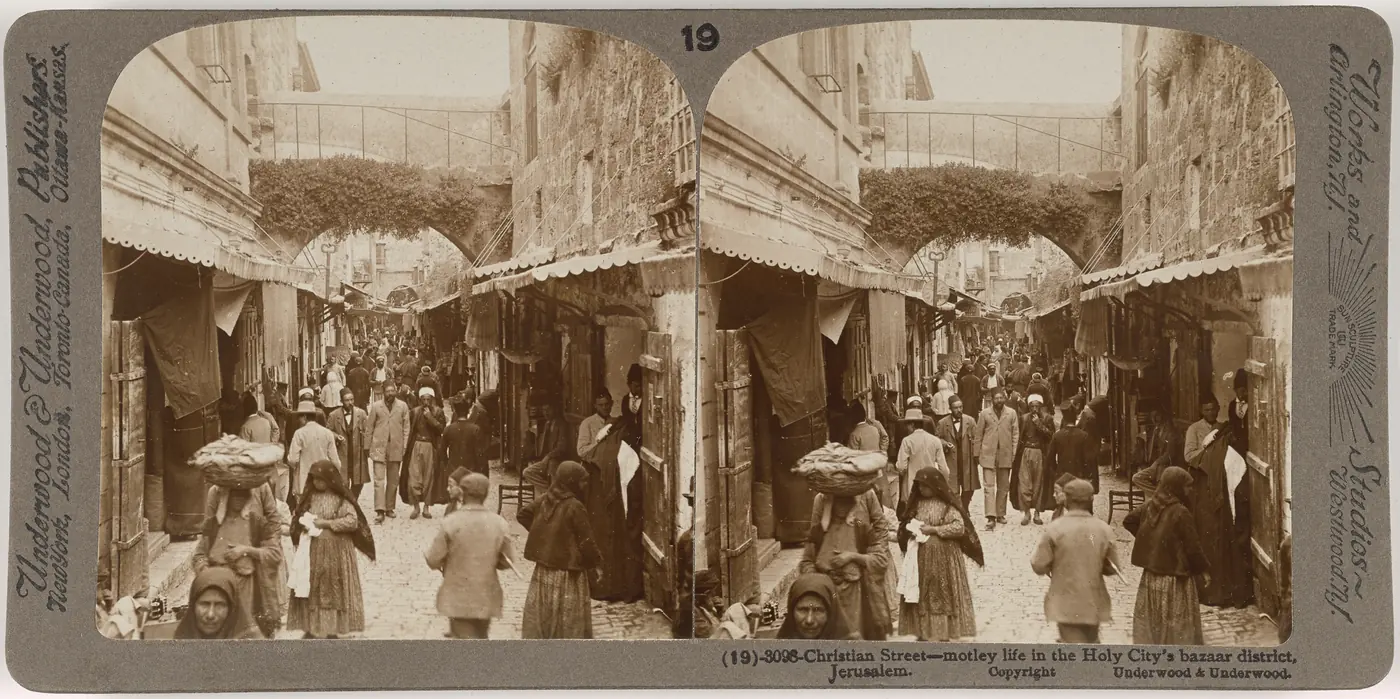
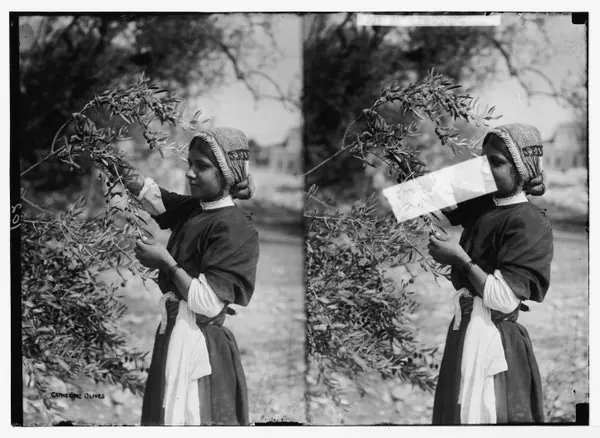
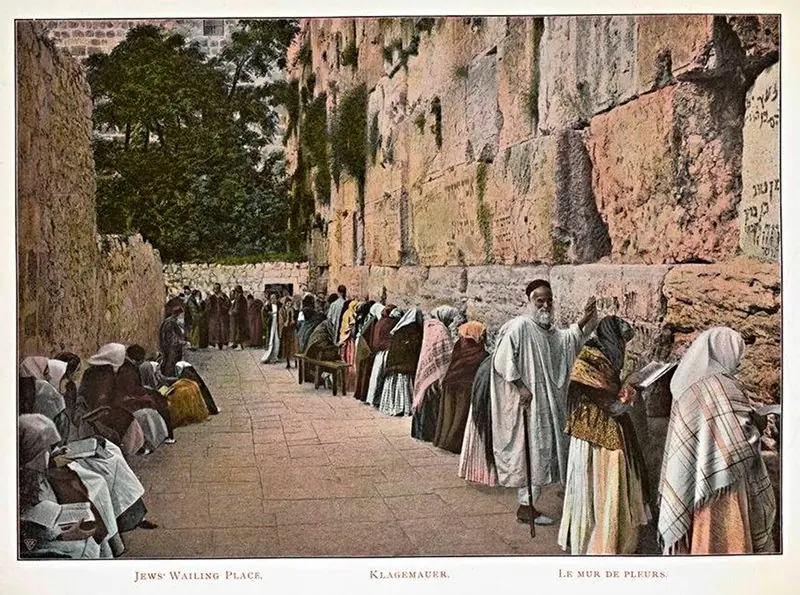
Jerusalem, ca 1900[Brown University Library via Public Domain Image Archive]Palestinian girl harvesting olives, ca 1900[Matson photograph collection via Library of Congress]The Western Wall, ca 1890[The Getty via Public Domain Review]
1896
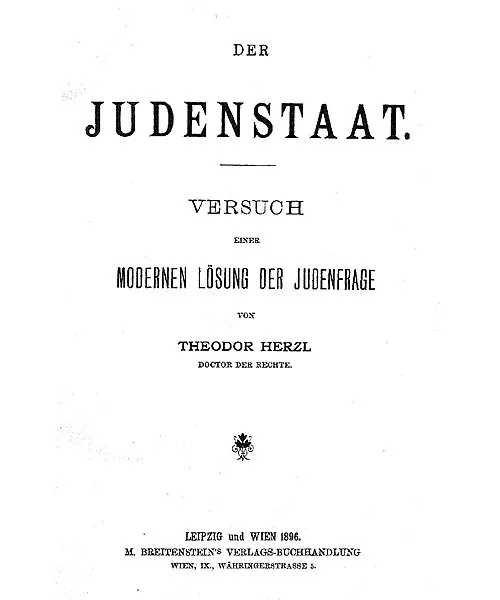
Theodor Herzl (1860-1904), the founder of political Zionism, advocates the restoration of “the Jewish State” in response to entrenched antisemitism in Europe and America. Many of the early Zionist leaders envisage a modern European-style Jewish state founded on socialist principles. They envisage a new identity, a “new” or “muscular” Jew, toiling and settling the land. These ideas form the ideological basis of the Labour Zionist movement, the historical predecessor of the Israeli Labour Party (today’s Democrats) and today’s Liberal Zionist camp. “Judenstaat” (Jewish state) by Theodor Herzl, published 1896[Wikimedia Commons, public domain]
1921
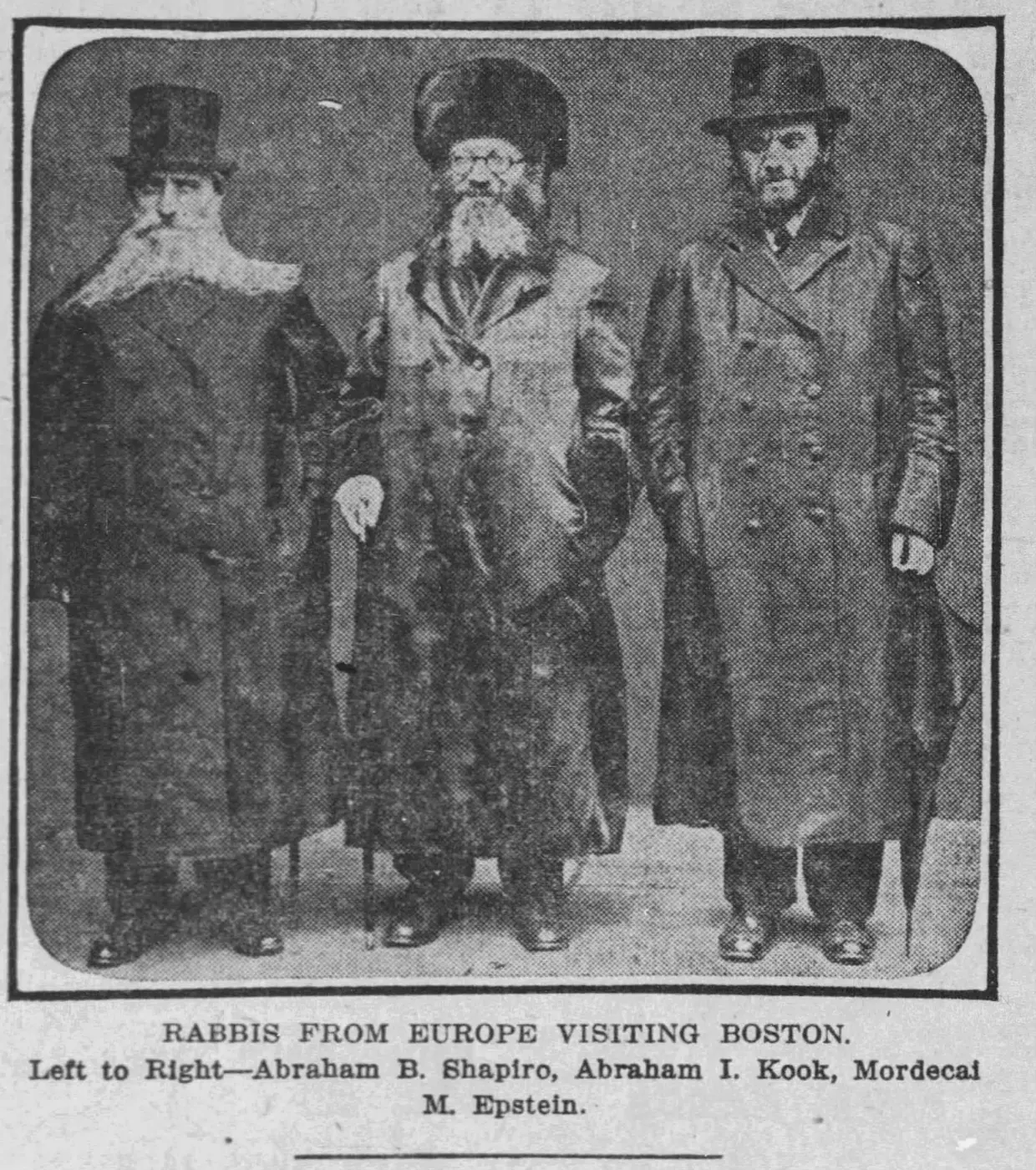
Rabbi Abraham Isaac Kook (Rav Kook, 1865-1935), the father of Religious Zionism becomes the first chief rabbi of British Mandate Palestine. While Orthodox Judaism forbids founding a Jewish state before the coming of the Messiah, Kook teaches that establishing a Jewish state and settling territory are sacred acts that will hasten the coming of the Messiah. This theology, later continued by his son Rabbi Zvi Yehuda Kook (1891-1982), moves from the fringe to the fore of the religious Zionist movement after the 1967 war. Rabbis from Europe visiting Boston, 1924[The Boston Globe via Wikimedia Commons, public domain]
1923
Ze’ev Jabotinsky (1880-1940), founder of Revisionist Zionism, argues that peace between Jews and Arabs (his terms) can only come after Arab resistance breaks against an “iron wall” of Jewish military power. His insistence on Jewish national rights across a Greater Israel, and his refusal to make territorial concessions, provide the ideological basis for today’s Nationalist camp—first embodied by the Herut and later by Likud. Jabotinsky was also an advocate of liberal democratic values: he championed equal individual civil and political rights, including for Palestinians, but not self-determination.[8] Ze’ev Jabotinsky, 1934[The Avraham Schwadron Collection – Portraits, the National Library of Israel]
1947
David Ben–Gurion, the leader of Labour Zionism and later the first prime minister, reaches a status quo understanding with the ultra-Orthodox. He obtains their acquiescence to a secular state of Israel in return for pledging to enshrine specific Jewish laws in the new state (Shabbat, Jewish marriage law, ultra-Orthodox educational autonomy). The following year, he provides a waiver for ultra-Orthodox military conscription, sowing the seeds for today’s bitter dispute over the draft exemption.
1947
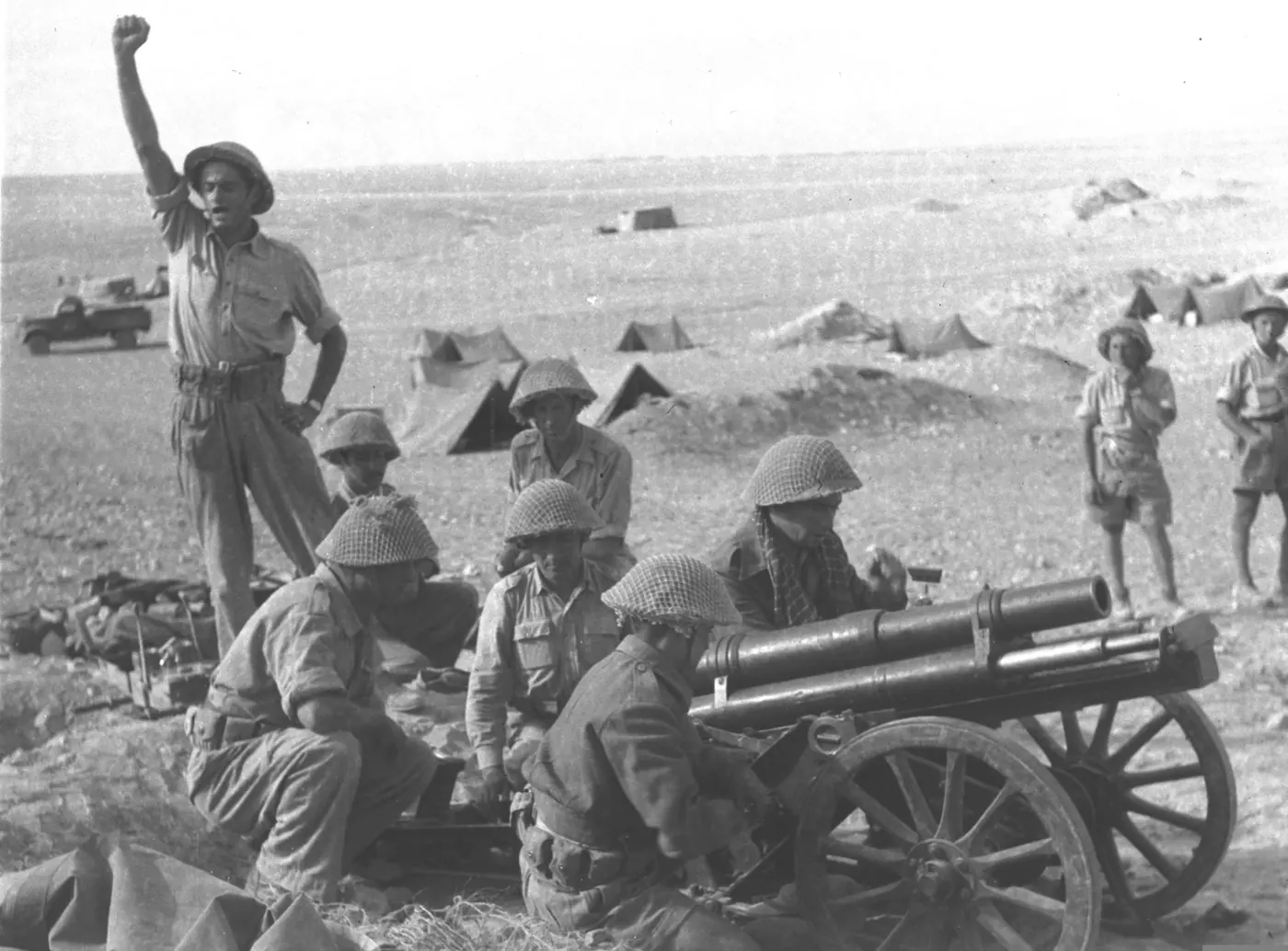
The UN General Assembly adopts the partition plan which proposes to divide British Mandate Palestine into two states, one Jewish and one Palestinian. The Labour Zionist leadership under David Ben Gurion accepts it as a necessary step towards statehood. Menachem Begin, leading the Revisionist opposition, rejects the UN decision and argues for the exclusive, God-granted right of Jews to the land in its “historical integrity”, spanning modern-day Israel, the West Bank and Jordan. The vote ignites the Jewish-Arab civil war and begins the displacement of Palestinians. Israeli Soldiers of the Negev Battalion in the 1948 Arab-Israeli war[Wikimedia Commons, public domain]
1948
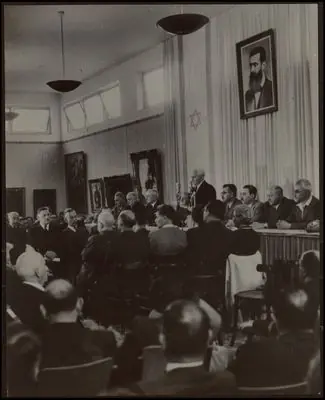
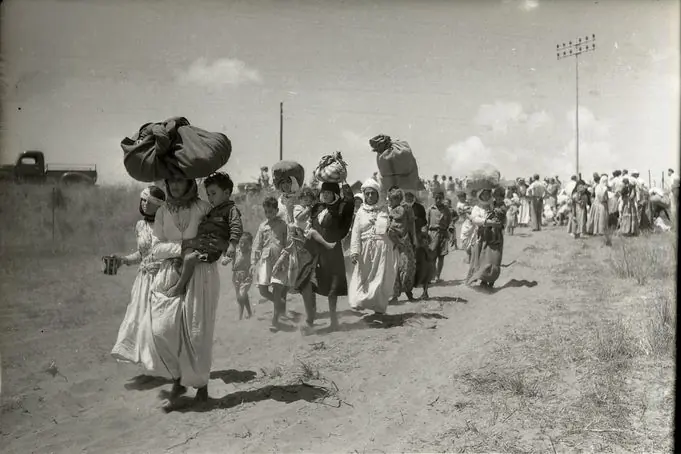
Israel declares its independence following the withdrawal of British troops. The neighbouring Arab states invade, beginning “the War of Independence” in the Israeli telling and the Nakba (catastrophe) in the Palestinian. Seven hundred thousand Palestinians are forcibly and permanently displaced from their homes, and several massacres of Palestinian civilians are carried out by Zionist militias affiliated with both the Labour Zionist and Revisionist camps.
Declaration of the state of Israel, 1948[The Pritzker Family National Photography Collection, the National Library of Israel]Women from the Palestinian village of Tantura flee to Jordan, 1948[Israel State Archives, Meitar Collection, the Pritzker Family National Photography Collection, the National Library of Israel]
Labour Zionist rule over Israel begins. The state is born in the shadow of the Holocaust, in which six million European Jews—one third of the world’s Jewish population—were killed. This strengthens the conviction among the early Zionist leadership that only a sovereign Jewish state can protect the Jewish people. Israel’s founding figures are mostly secular Ashkenazi Jews, many of them refugees who fled antisemitism and persecution in Europe. Drawing upon the European liberal democratic tradition, the Declaration of Independence pledges a “Jewish state” and “complete equality of social and political rights to all its citizens irrespective of religion, race or sex”.
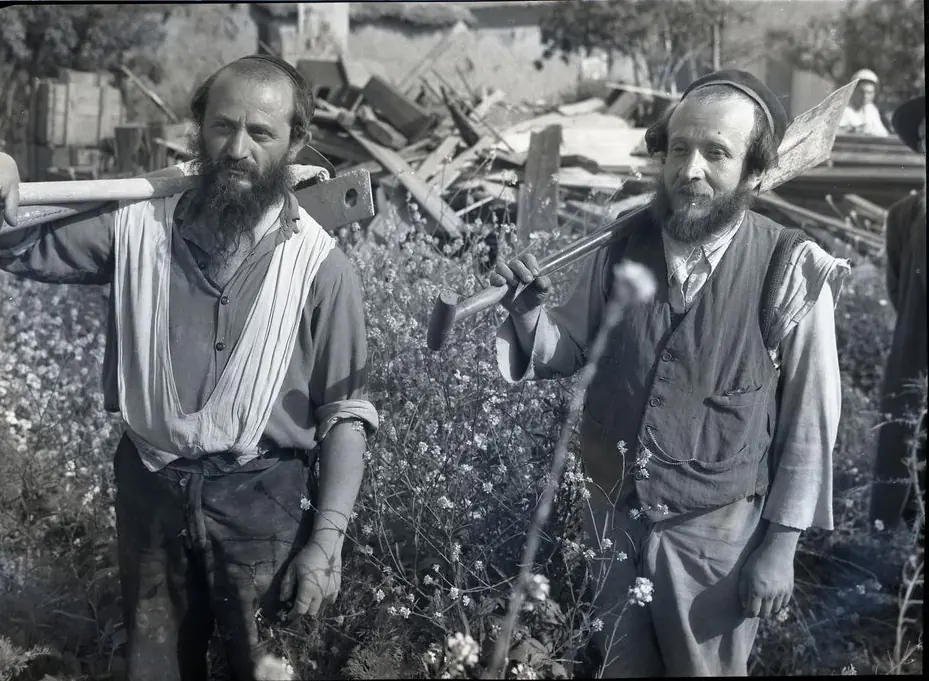
Israeli settlers from the Poalei Agudat Yisrael movement establishing an agricultural settlement after the Palestinian village of Masmiyya al-Kabira was destroyed in the nakba, 1949[Israel State Archives, Meitar Collection, the Pritzker Family National Photography Collection, the National Library of Israel]
1950s
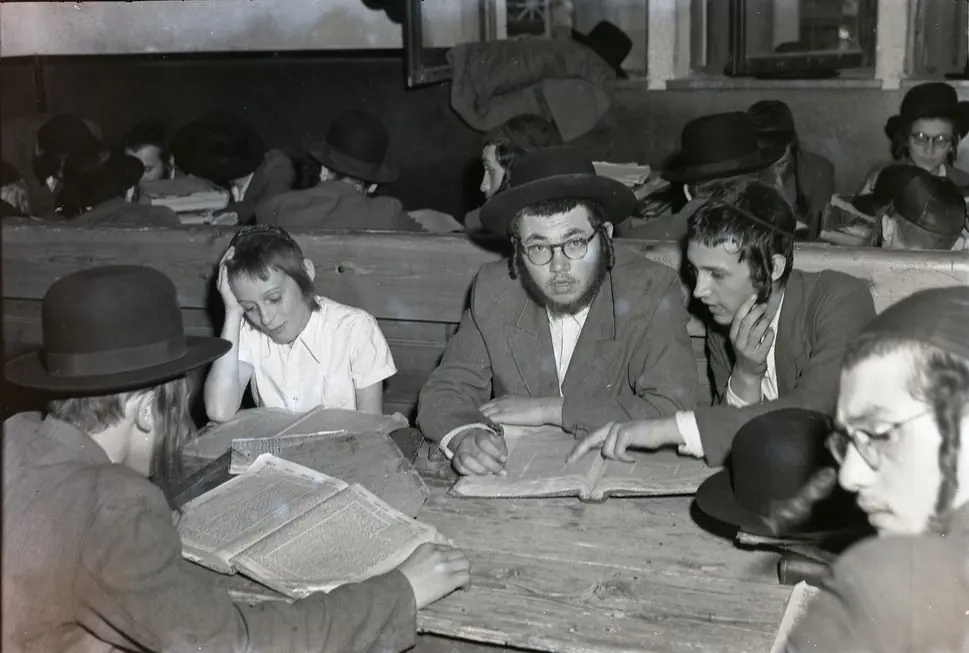
Israel’s first prime minister David Ben–Gurion forges Israel’s security doctrine around three key pillars: deterrence through the threat of overwhelming retaliation, early warning through intelligence and decisive victory. It echoes Jabotinsky’s iron wall, though Ben-Gurion emphasised the need to couple force with diplomacy and alliances. Teaching of the Torah, 1950[Meitar Collection, the Pritzker Family National Photography Collection, the National Library of Israel]
1950s
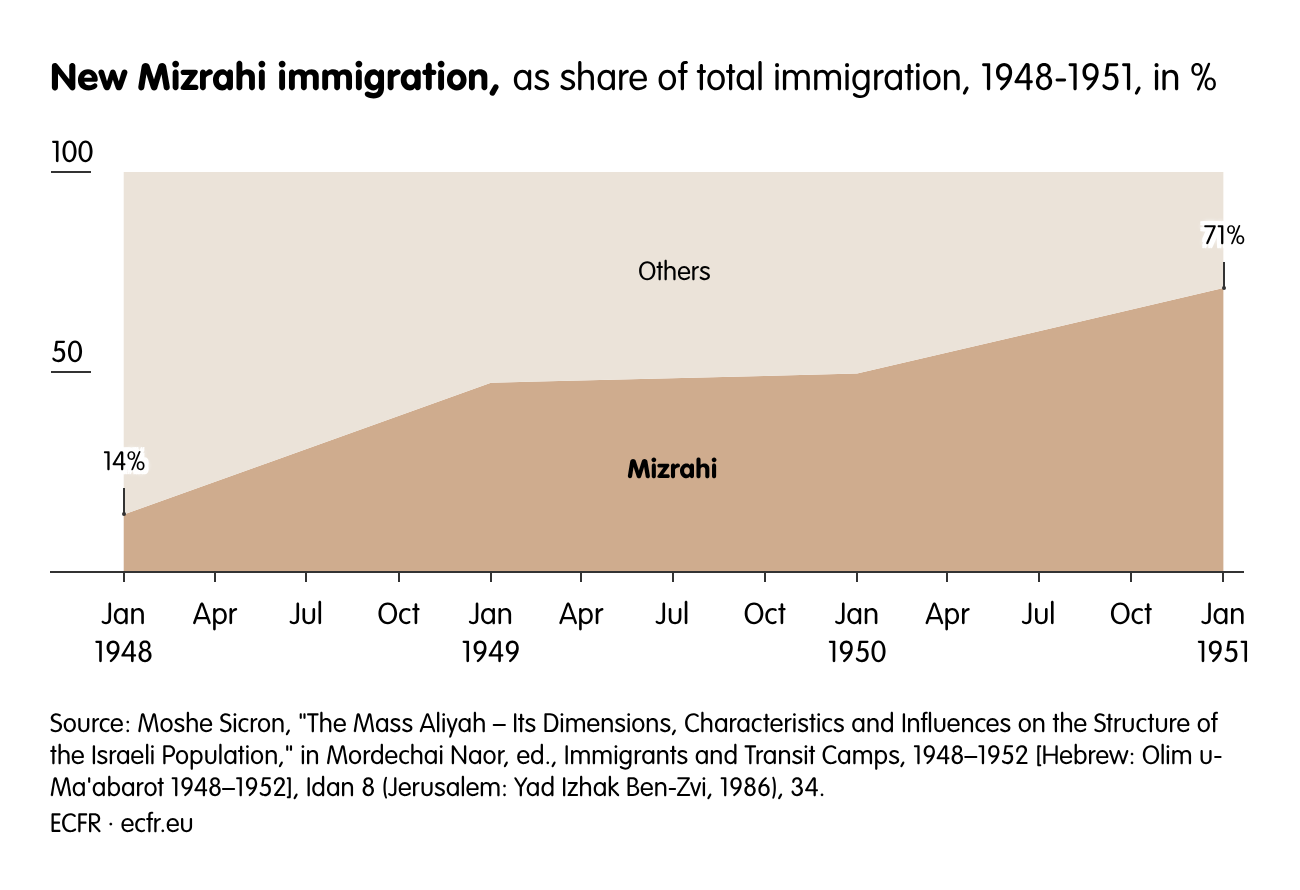
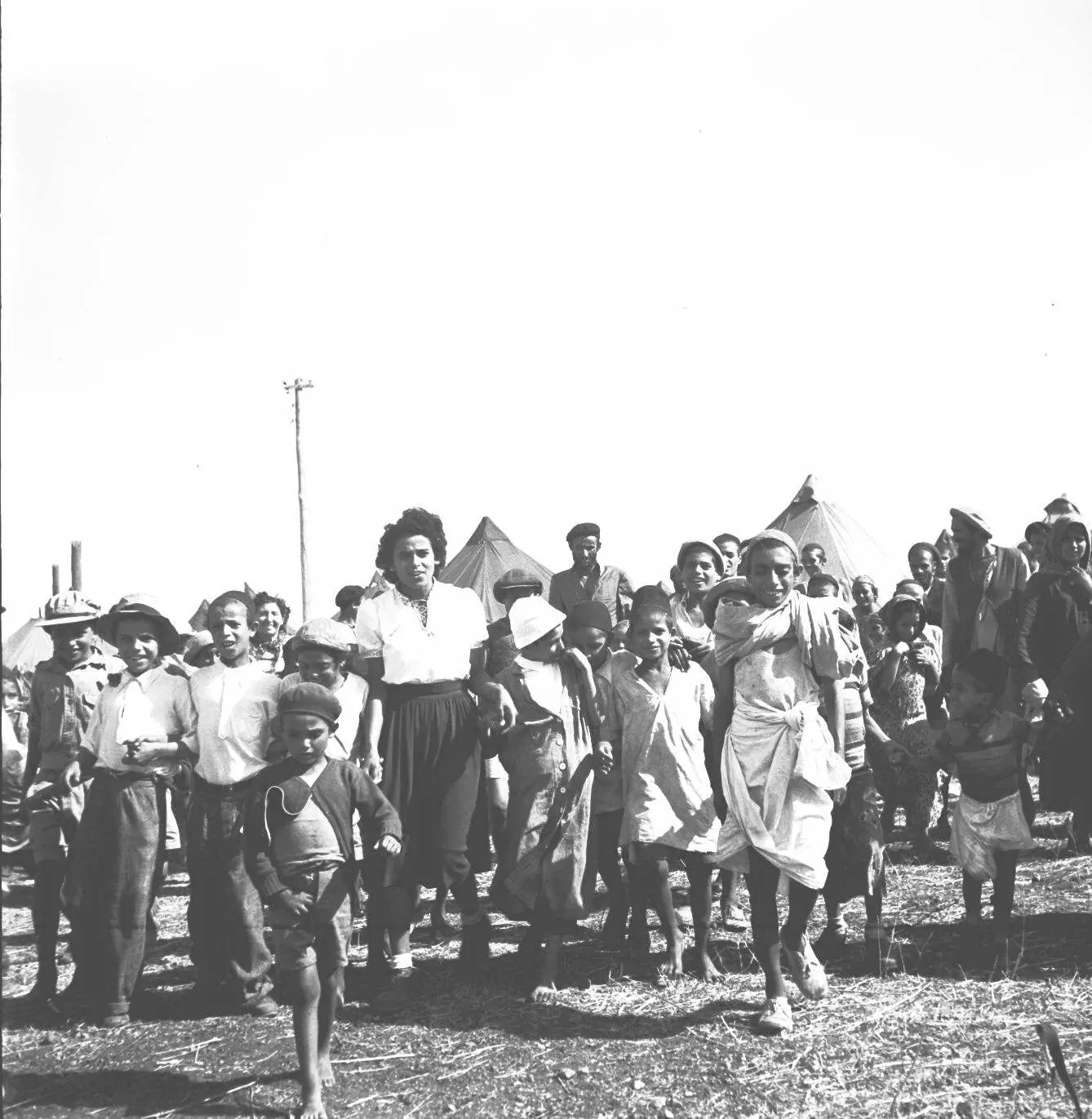
While the first Jewish immigrants after Israel’s founding were Holocaust survivors from Europe, in the 1950s there is mass immigration of Mizrahi Jews from the Middle East and North Africa. The Ashkenazi-led state imposes discriminatory policies on this group by keeping them in displaced persons camps before dispersing many to the periferia, undeveloped border areas. These actions sowed grievances among Mizrahim who today make up about 35-36% of the Israeli population, compared with 25-26% Ashkenazi Jews.
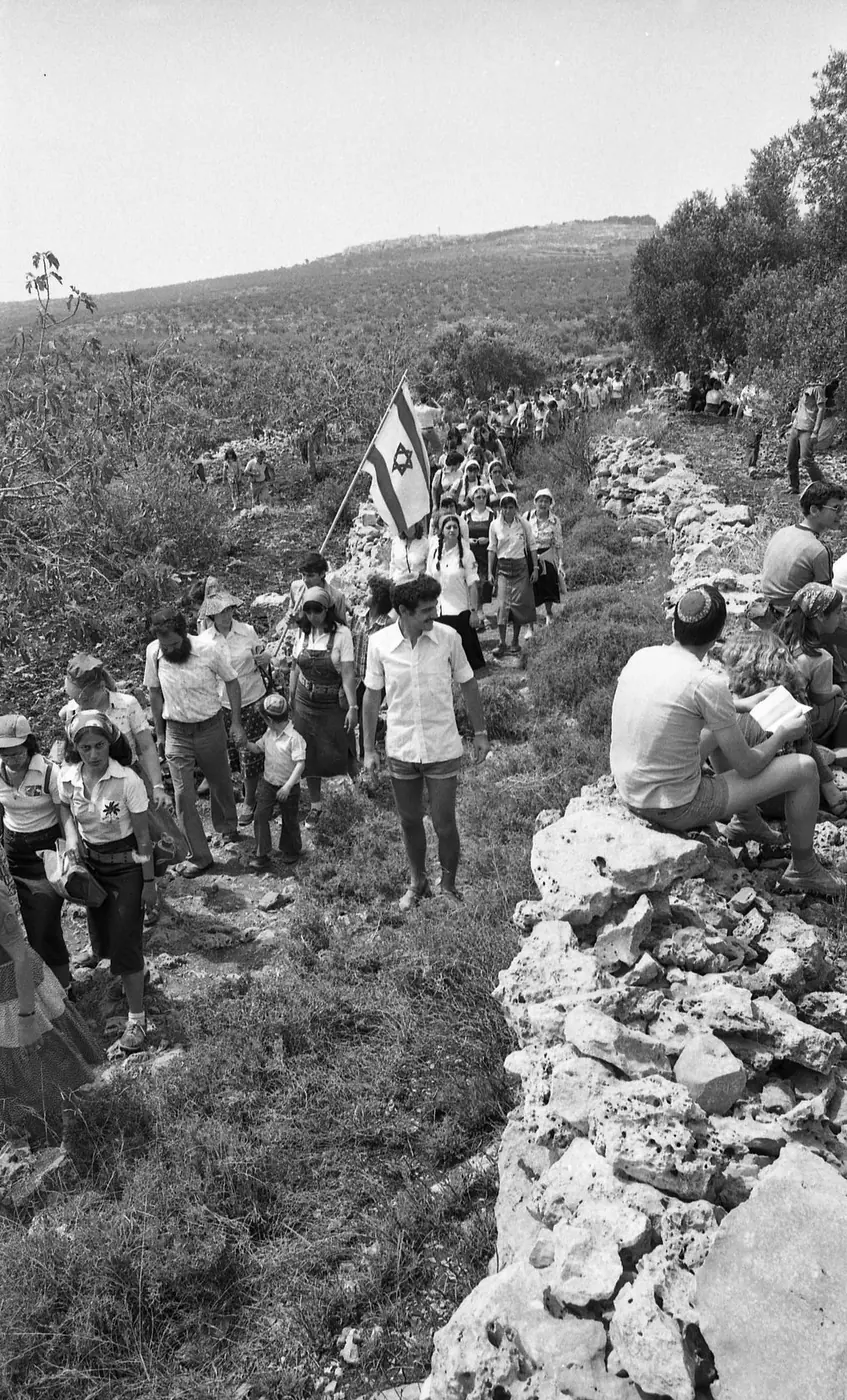
Israel wins the six-day war against neighbouring Arab countries and occupies the West Bank, East Jerusalem and Gaza, Syria’s Golan Heights and Egypt’s Sinai Peninsula. The Labour government assumes control of an additional million Palestinians in the West Bank and Gaza and begins to build the first West Bank settlements. The war engenders a sense of “divine victory”, euphoria and messianic redemption among the previously moderate national-religious camp. The new generation draws on the once fringe messianic teachings of Rav and Zvi Yehuda Kook. In 1974, this Kookist current establishes the Gush Emunim (Bloc of the Faithful) settler movement and begins expanding the newly occupied land to consolidate a Greater Israel, believing this will accelerate the coming of the Messiah.[9] In the 1980s-90s, the Kookist stream of hardline religious nationalists splinters, with a new breakaway stream fusing the messianic nationalism with ultra-Orthodox religious observance, becoming the Hardal. A march organised by the Gush Emunim movement to persuade the thousands on the march to buy a flat in the West Bank, 1979[Dan Hadani Collection, the Pritzker Family National Photography Collection, the National Library of Israel]
1977
In the mahapach, (upending) Labour suffers its first defeat in a general election to Menachem Begin from Likud. Labour’s credibility suffered following the 1973 Yom Kippur war when Israeli forces occupying the Egyptian Sinai and Syrian Golan Heights were surprised by a joint Egyptian-Syrian offensive. In contrast to the secular, socialist worldview of Labour Zionism, Begin channels a Jewish traditionalist form of nationalism, speaking in terms of Jewish history, tradition and peoplehood. He skilfully channels the grievances of the Mizrahim, who abandon their alliance with the Ashkenazi-led Labour Zionist movement and discover their electoral power. This creates the core of the modern-day Nationalist base. Begin also forges a new alliance with the ultra-Orthodox. At this time, Begin’s Likud is a liberal nationalist party in Jabotinsky’s Revisionist tradition, not the far-right ultra-nationalist party it is today.
1977–present
Under successive governments of both Likud and Labour, the settlement enterprise evolves into a state-backed project. The settler population rises from over 4,000 in 1977 to more than 100,000 by 1992 mainly under Likud governments. Today, there are more than 750,000 settlers in the West Bank including in East Jerusalem.
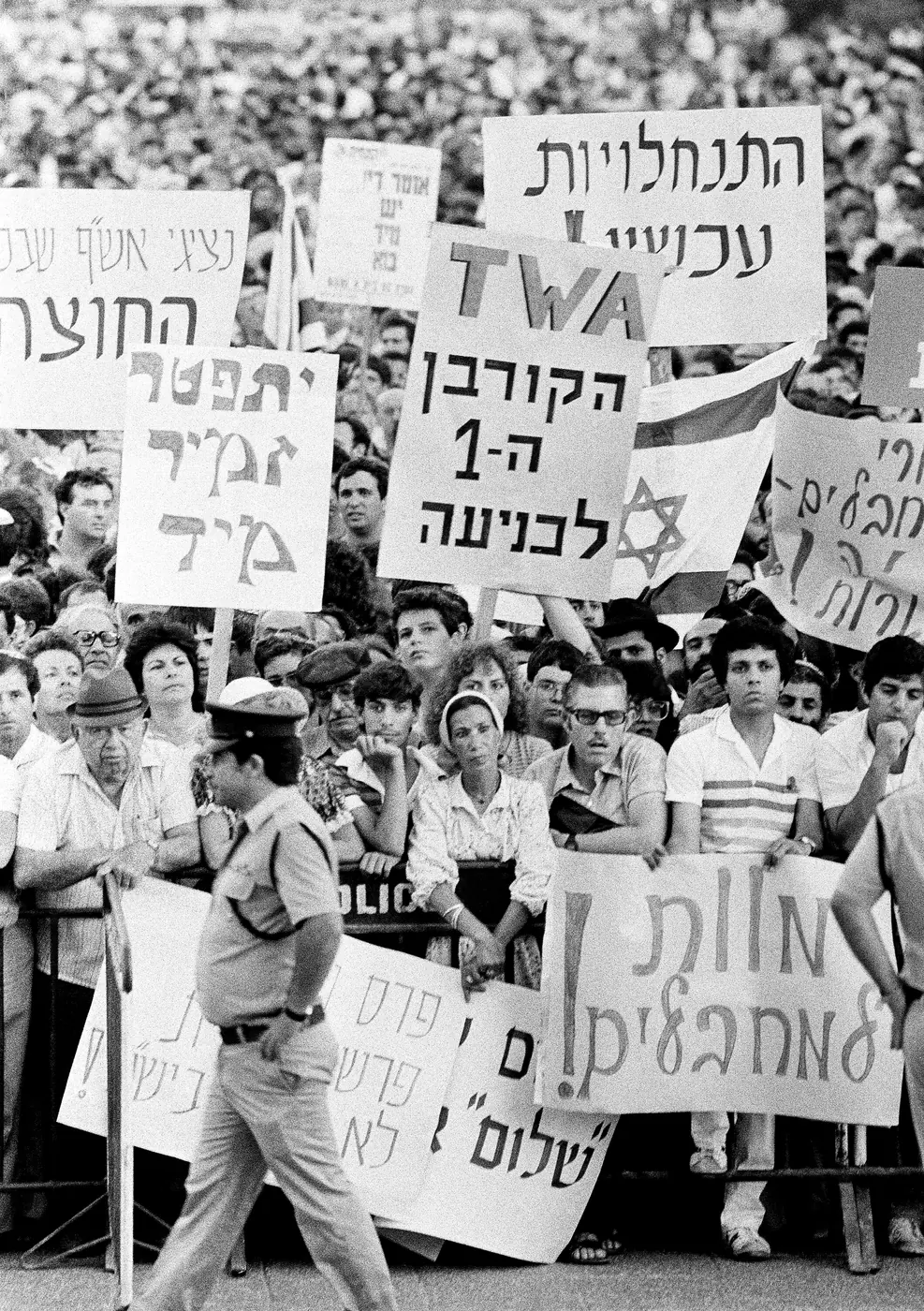
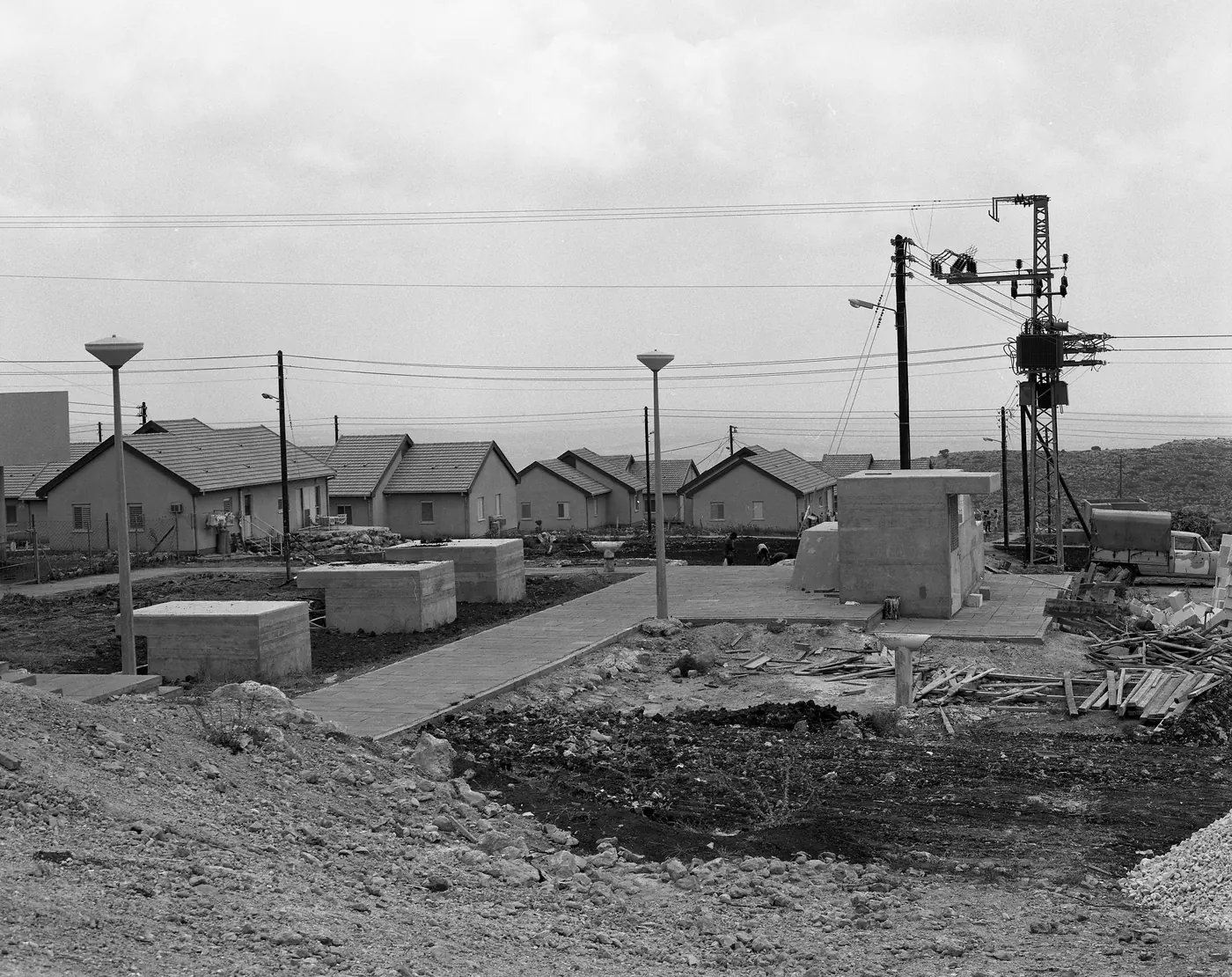
The Gush Emunim movement called a mass rally of about 30,000 people on June 16th 1985 in Tel Aviv to protest against freeing Israel’s Lebanese prisoners. [picture alliance / ASSOCIATED PRESS | Anat Givon]15: 1980 settlement west bankA newly established Israeli settlement in the West Bank, 1980[Gabi Laron Archive, the National Library of Israel]
1980s-1990s
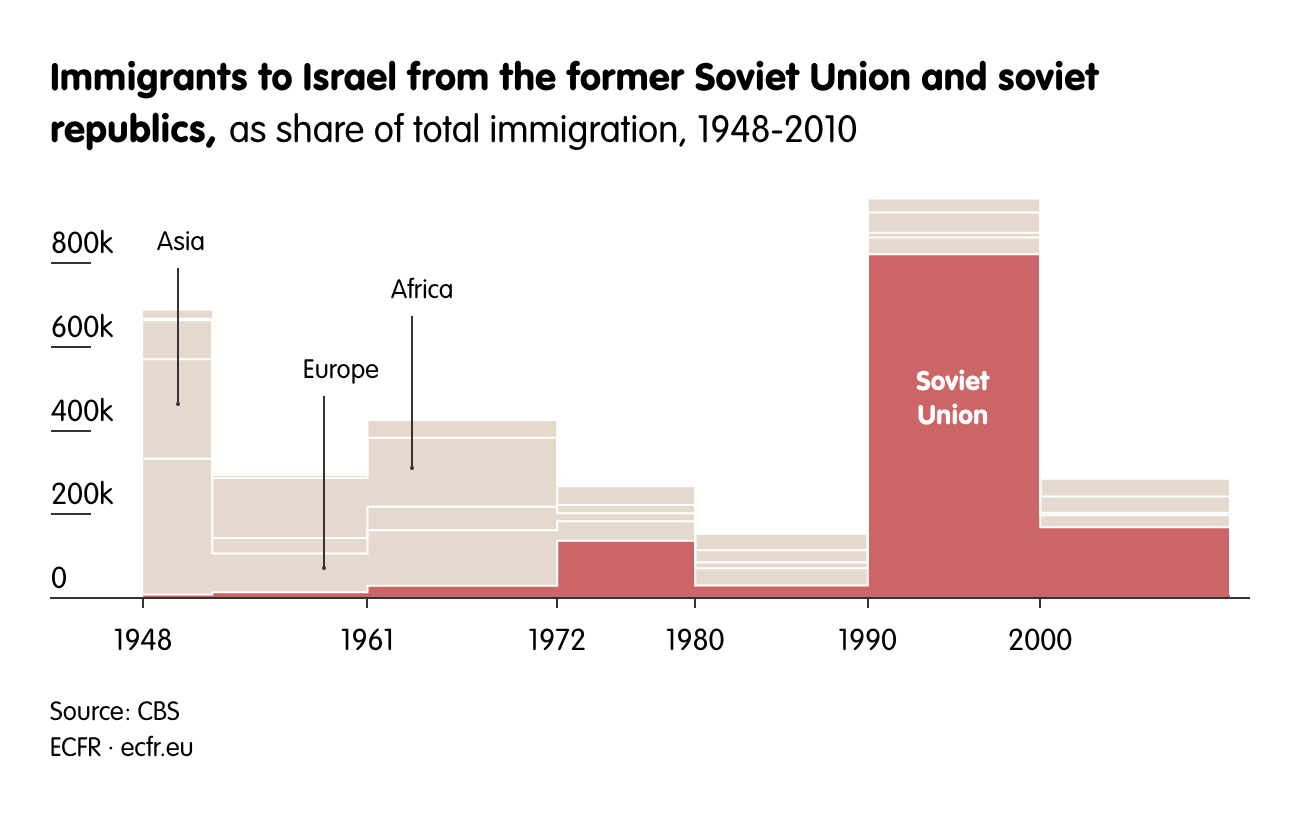
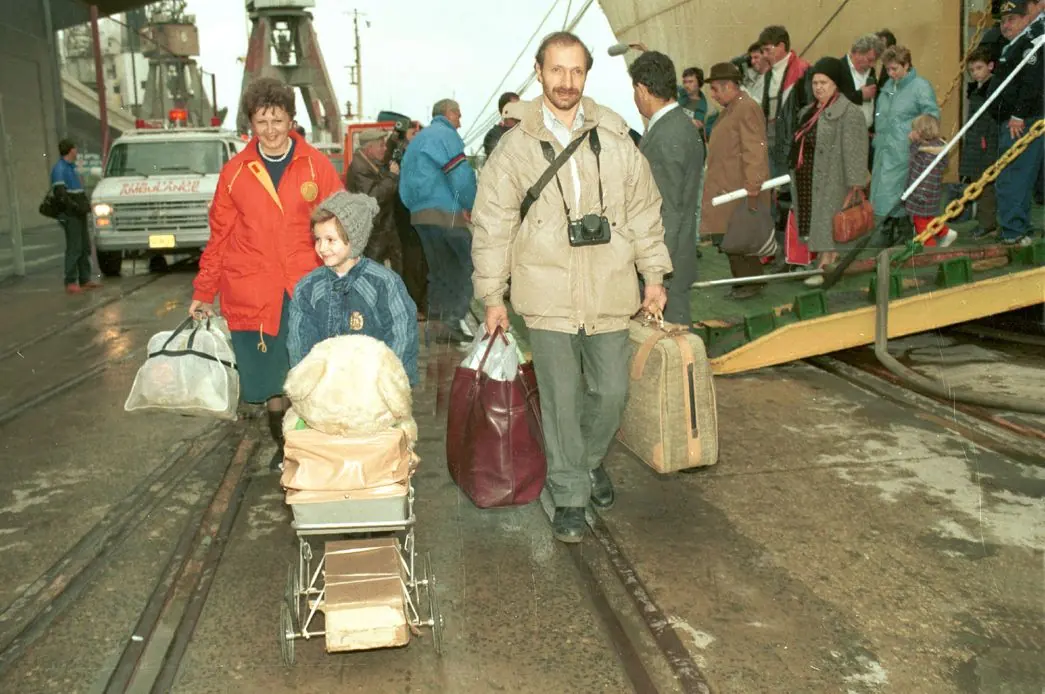
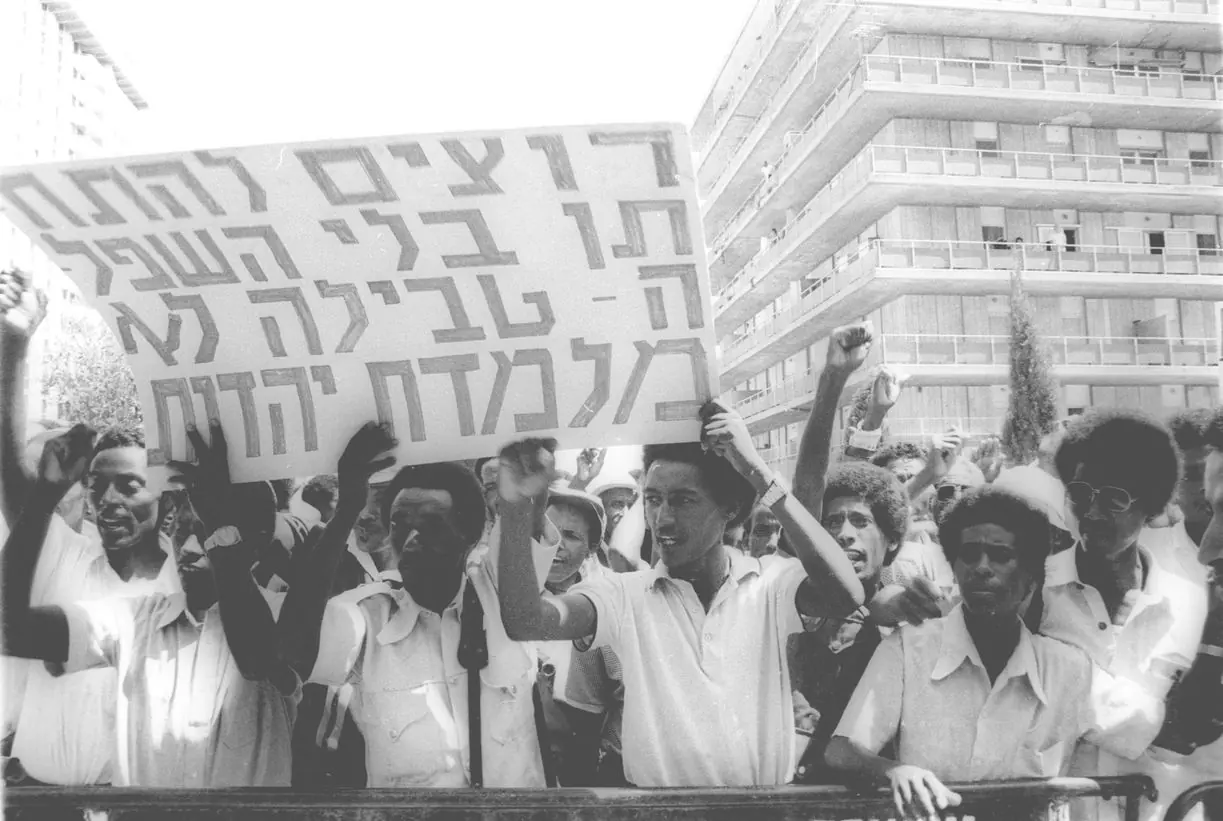
Almost a million immigrants arrive from the former Soviet Union. The new arrivals are broadly secular, conservative, nationalist and suspicious of socialism, and find their home in right-wing nationalist parties. Many of these new arrivals move beyond the Green Line for economic reasons. In the 1990s, approximately 80,000 Jewish immigrants arrive from Ethiopia and are exposed to ethnic discrimination by the state like their Mizrahi predecessors.
Several hundred new immigrants from the Soviet Union arriving in Haifa, 1990[Dan Hadani Collection, the Pritzker Family National Photography Collection, the National Library of Israel]Ethiopian immigrants demonstrating against the refusal of the Rabbinical Hight Court not to recognise them as Jews and their priests as Jewish Rabbis, 1985[Dan Hadani Collection, the Pritzker Family National Photography Collection, the National Library of Israel.]
1990s
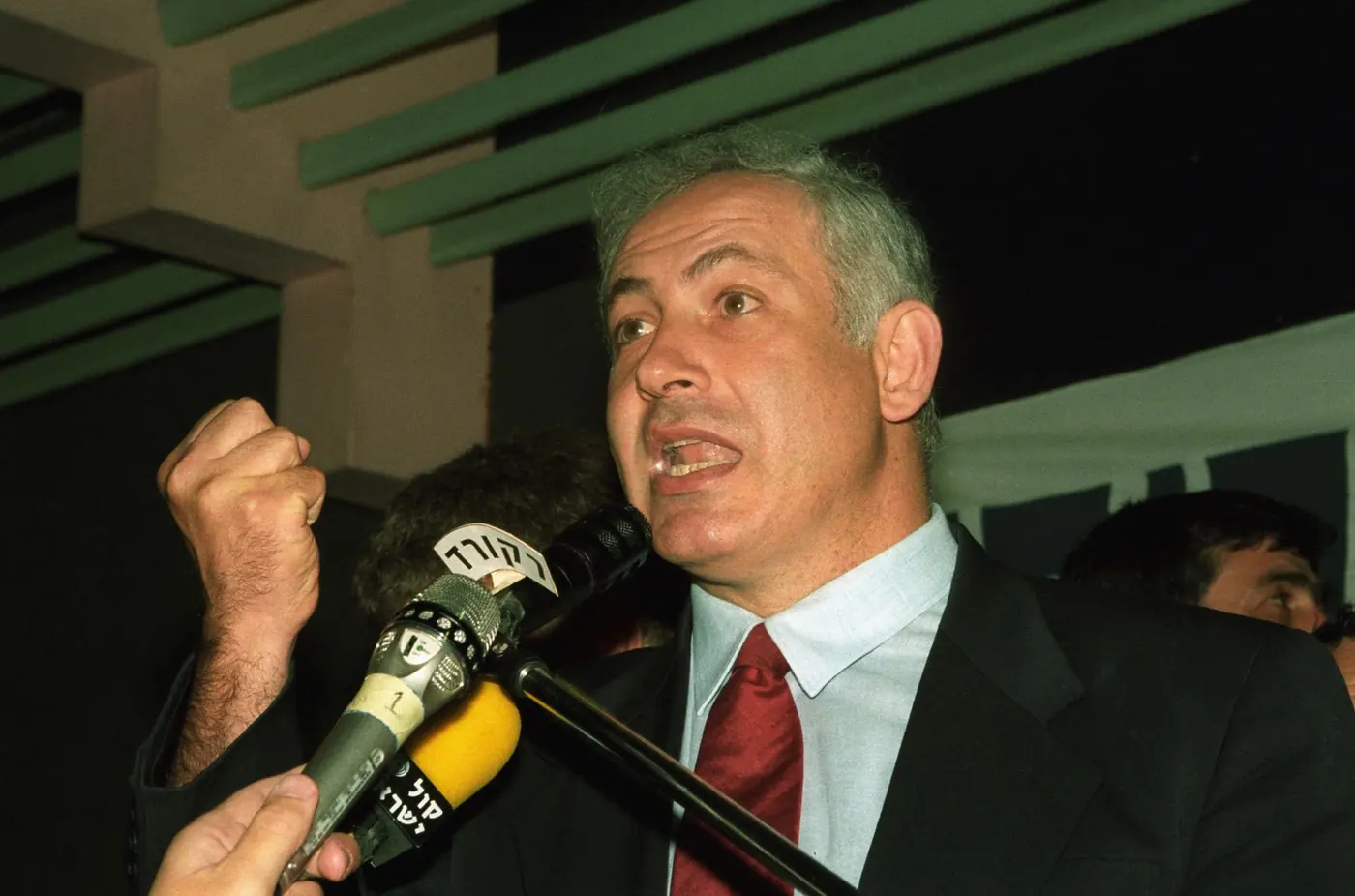
Continuing the work of Begin, Netanyahu’s Likud co-opts the ultra-Orthodox and begins to transform their transactional posture into an ideological alliance with the right-wing Nationalist camp. Begin and Netanyahu successfully characterise the right as the stewards of authentic Judaism, and the left as its betrayers. In 1990, the leader of the Lithuanian ultra-Orthodox, Rabbi Shach (1899-2001), made his famous “rabbits and pigs” speech, depicting Labour Zionism as having abandoned tradition and unfit to lead. “What makes them Jewish?” he asked. Binyamin Netanyahu after he won the Likud leadership election.[Dan Hadani Collection, the Pritzker Family National Photography Collection, the National Library of Israel]
1993-1995
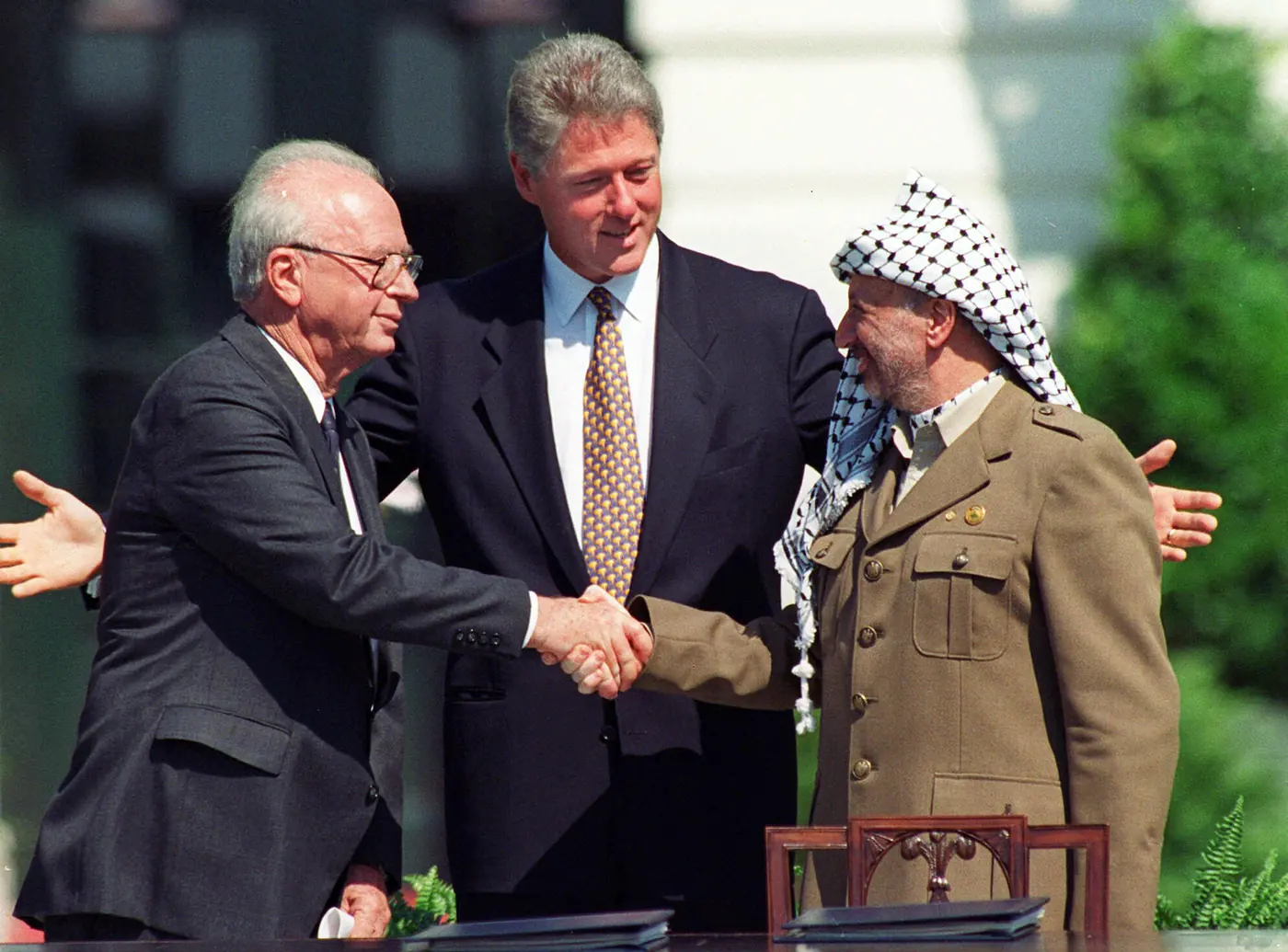
The signing of the Oslo accords by Labour prime minister Yitzhak Rabin and Palestinian Authority chairman Yasser Arafat is the greatest moment of hope for Labour’s land-for-peace doctrine. In 1995, Rabin is assassinated by Yigal Amir, a religious nationalist extremist from the Religious Nationalist camp, who hopes to derail the process. His death eventually suffocates the two-state project and the peace camp never recovers. Israeli prime minister Yitzhak Rabin, left, and Palestinian leader Yasser Arafat shake hands to mark the signing of the peace accord between Israel and Palestine, in Washington, September 13th 1993[picture alliance / ASSOCIATED PRESS | Ron Edmonds]
2000-2005
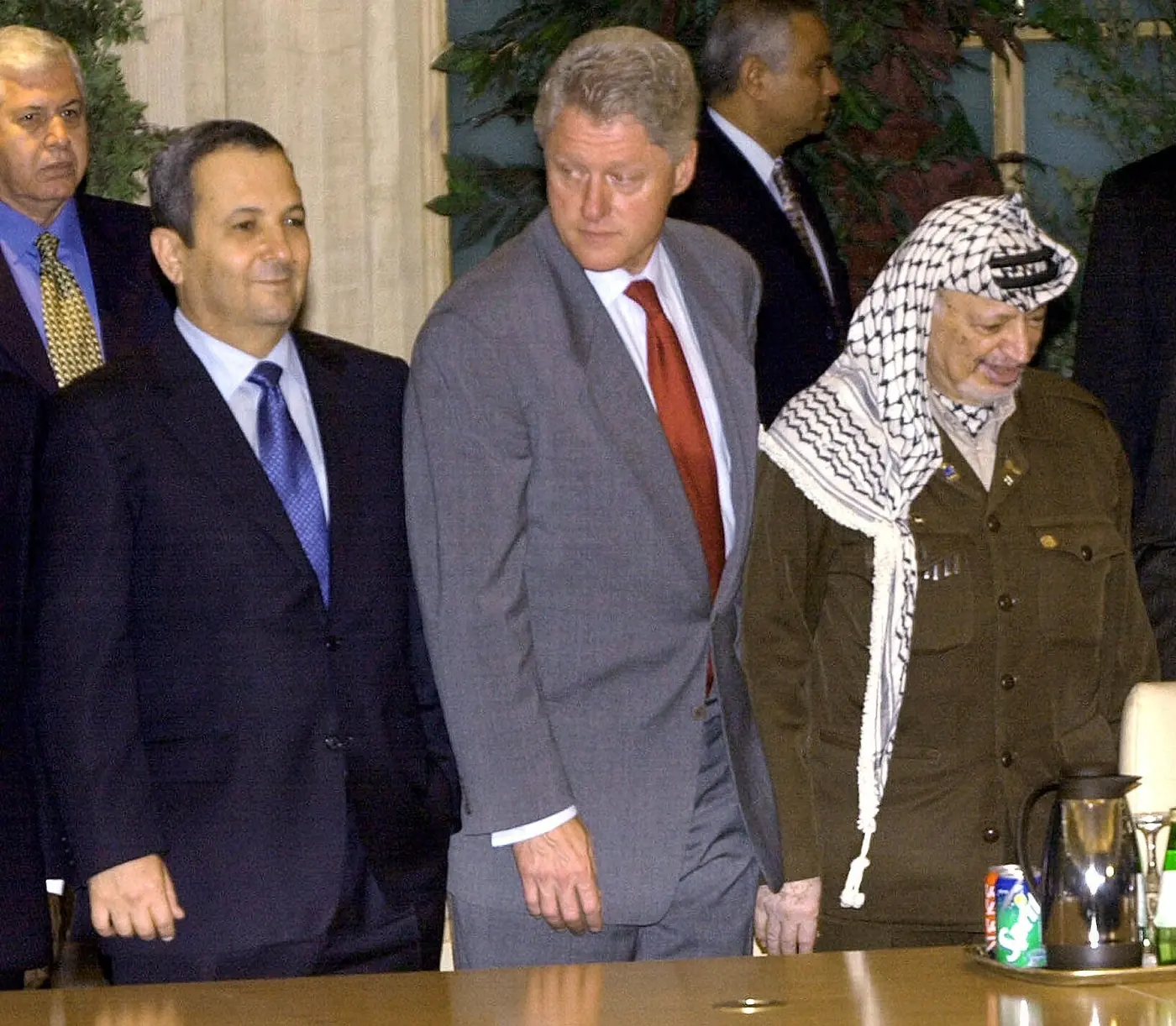
The failure of the Camp David peace talks under President Bill Clinton (2000) and the ensuing violence in the second intifada discredit territorial “concessions” among Israelis. Prime minister Ehud Barak returns with the message that there is “no partner” for peace, and that security can only be achieved through force and separation. This fatally weakens the peace camp under Labour and swept Likud to power under Ariel Sharon in 2001. President Bill Clinton, flanked by Israeli prime minister Ehud Barak, left, and Palestinian leader Yasser Arafat, stands before giving the final statement at the Middle East Summit in Egypt, October 17th, 2000[picture alliance / ASSOCIATED PRESS | PIER PAOLO CITO]
2000
Moshe Feiglinbegins to transform Likud. Feiglin is a hardline religious nationalist, though not himself Hardal. He promotes a state governed by traditional Jewish values as well as rebuilding the “Third Temple” destroyed by the Romans at the Haram al-Sharif/Temple Mount. To push his agenda, he registers 10,000 new members to Likud who are mostly religious nationalists with a worldview at odds with Likud’s liberal nationalist one. Though Feiglin’s leadership bid fizzles, he inspires the Hardal to capture Likud from within. Political scientist Ariel David calls this Likud’s “Trojan horse” moment.[10] Today, Feiglin’s Zehut (Identity) party can be found in a joint list with Smotrich’s Religious Zionism party. Moshe Feiglin, 1995[Dan Hadani Collection, the Pritzker Family National Photography Collection, the National Library of Israel]
2005
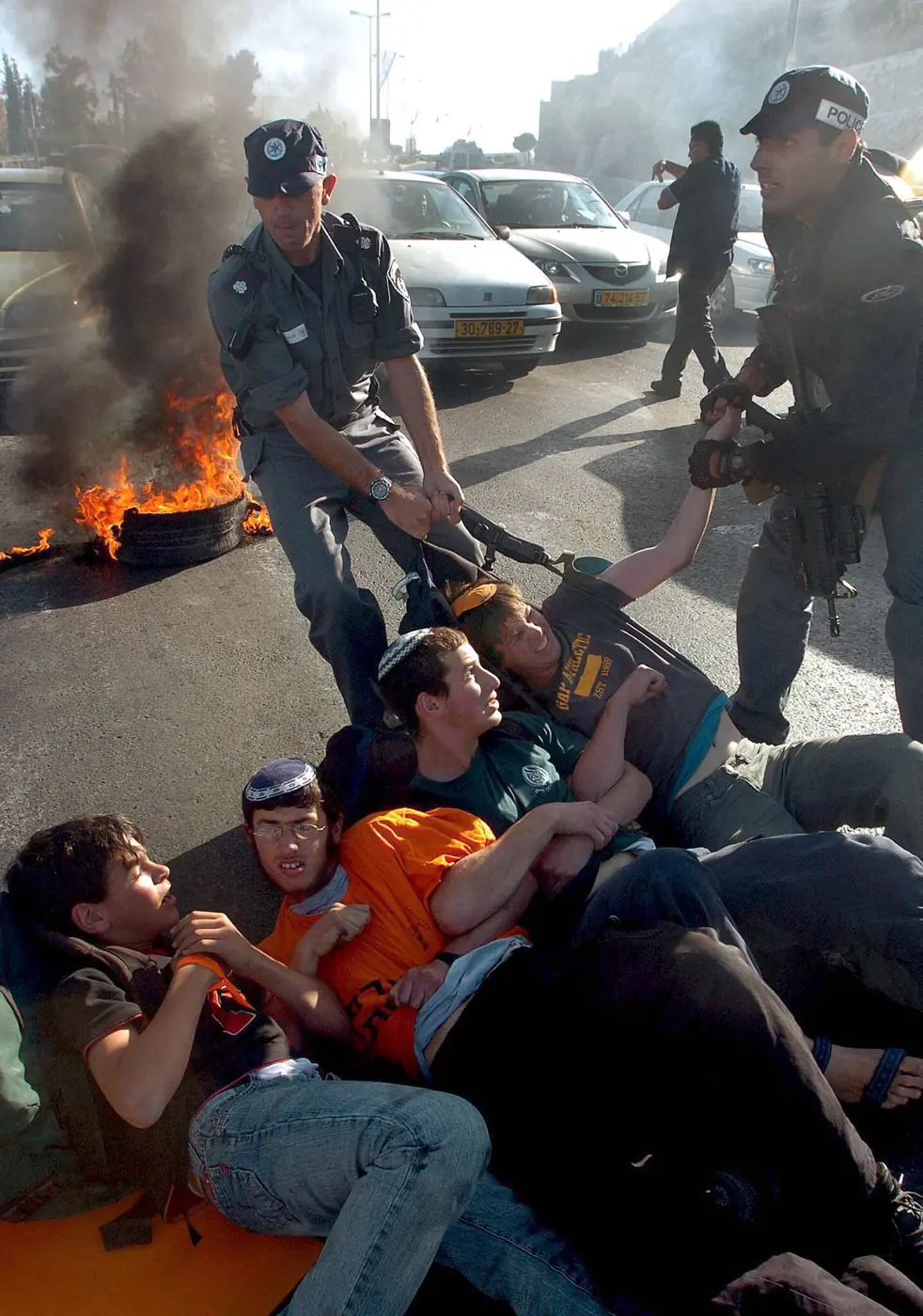
As a Likud prime minister, Ariel Sharon implements the unilateral withdrawal from Gaza and the northern West Bank against the wishes of most of his own party, removing over 8,000 Jewish settlers in the process. The Religious Nationalists see this as the ultimate betrayal and the Hardal conclude that to prevent it happening again they must control the Israeli judiciary, military, media and civil society. Sharon splits off to form the centrist Kadima party the same year, taking the “moderate” wing with him. In their place, senior hardline religious nationalist figures like Yossi Dagan ascend. Israeli protestors blocking a road in Jerusalem on May 16th 2005 during a demonstration by Israelis against a “disengagement plan” that went on to remove all settlements from Gaza and the northern West Bank.[picture-alliance / dpa/dpaweb | epa Nati Shohat-Flash 90]
2009-present
Under Netanyahu’s return to power, “Bibism” develops alongside authoritarian policies and aggressive campaigns against left-wing civil society. In 2016, Netanyahu is investigated; and in 2019, indicted for bribery, fraud and breach of trust. He ramps up his attack on the judiciary, casting himself as the victim of a leftist plot to topple the right.[11] In response to Netanyahu’s re-election in 2019, the Liberal Zionist camp emerges, later to be energised and consolidated by the judicial overhaul in 2022.
2018
The Nation-State Law defines Israel as “the nation state of the Jewish people” and declares Jewish settlement a “national value”, while downgrading Arabic as an official language. This pulls the country further from the promise of equal rights in the 1948 declaration, cementing the shift away from Israel’s democratic character and towards its Jewish one. A Palestinian man inspects the remains of a mosque after it was demolished by Israeli security forces in the West Bank town of Mount Johar, south of Hebron on September 2nd 2019[picture alliance / ZUMAPRESS.com | Mosab Shawer]
2019-2022
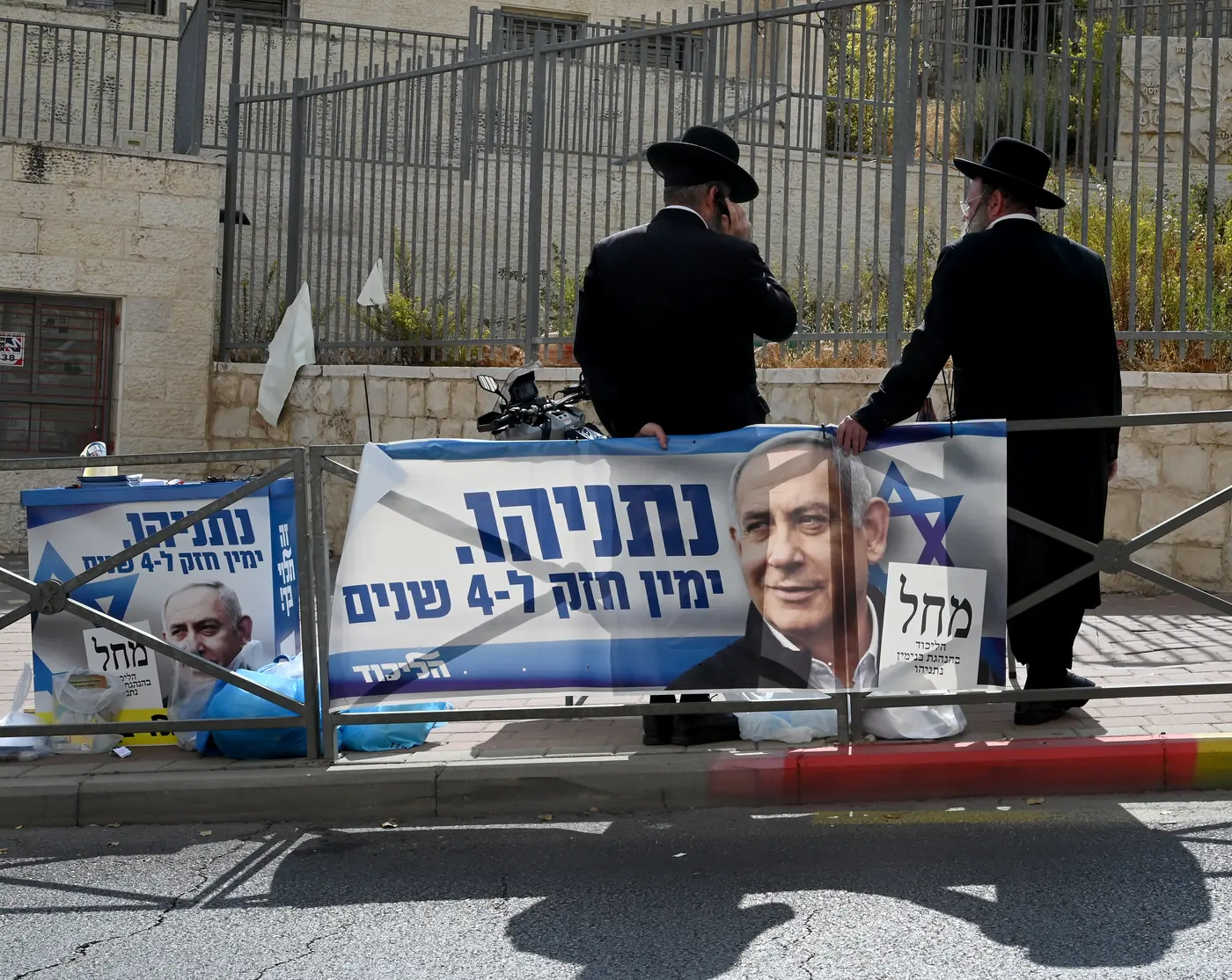
The pro/anti-Netanyahu polarisation that “Bibism” generates accelerates the collapse of the traditional political blocs. Parts of the Nationalist camp break away from the Netanyahu-led bloc and align with the Liberal Zionists, while Likud becomes increasingly indistinguishable from the Religious Nationalists, through its embrace of a religiously traditional, ultra-nationalist identity. This leads to five inconclusive elections and short-lived governments between 2019 and 2022, including the historic “Government of Change” (2021-22) which spanned the Nationalist (Naftali Bennett), Liberal Zionist (Yesh Atid under Yair Lapid) and a Palestinian citizen party (Ra’am under Mansour Abbas). A campaign banner for Binyamin Netanyahu hangs outside a polling station in the Har Homa settlement on November 1st 2022[picture alliance / newscom | DEBBIE HILL]
2022–present
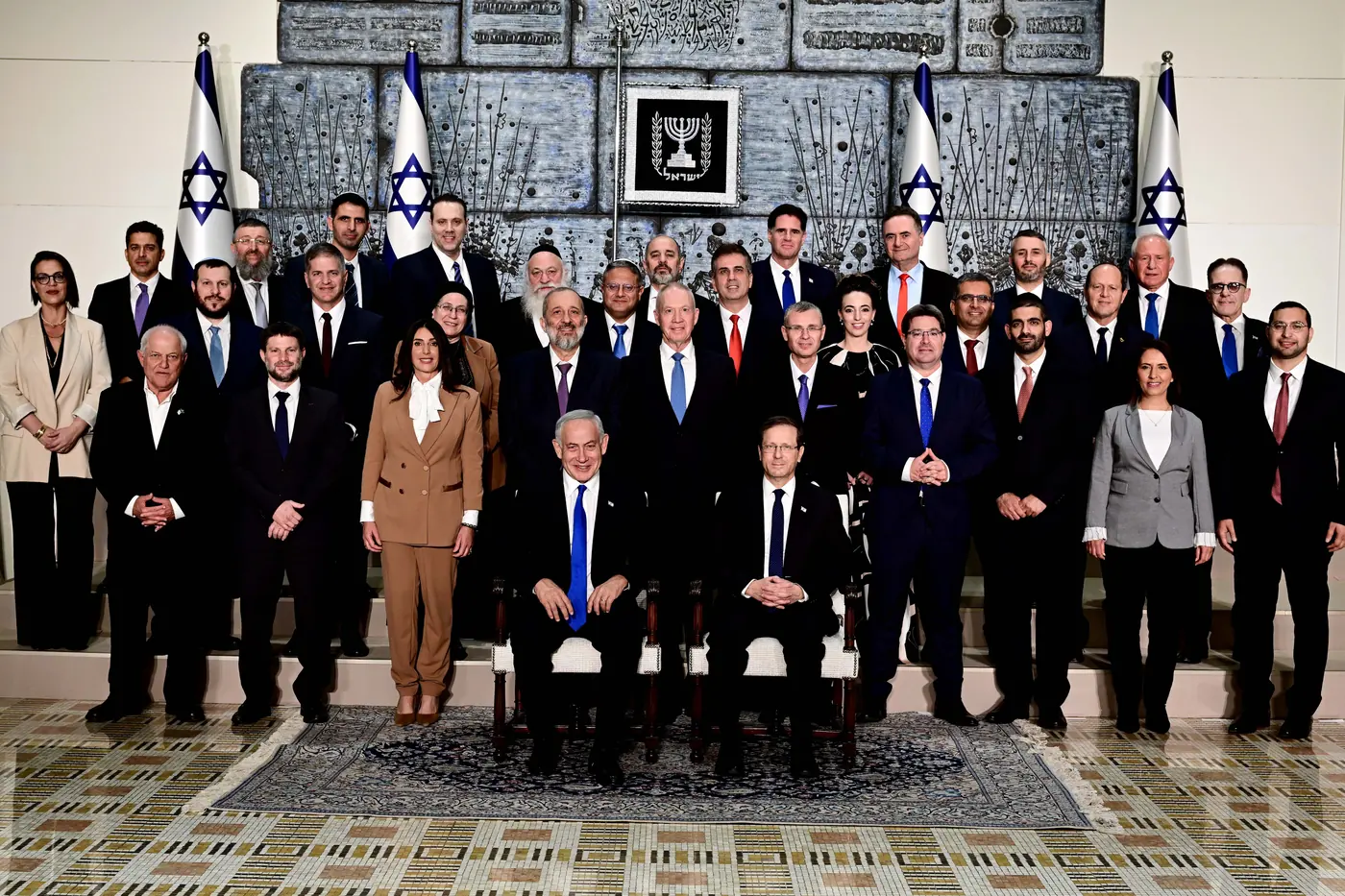
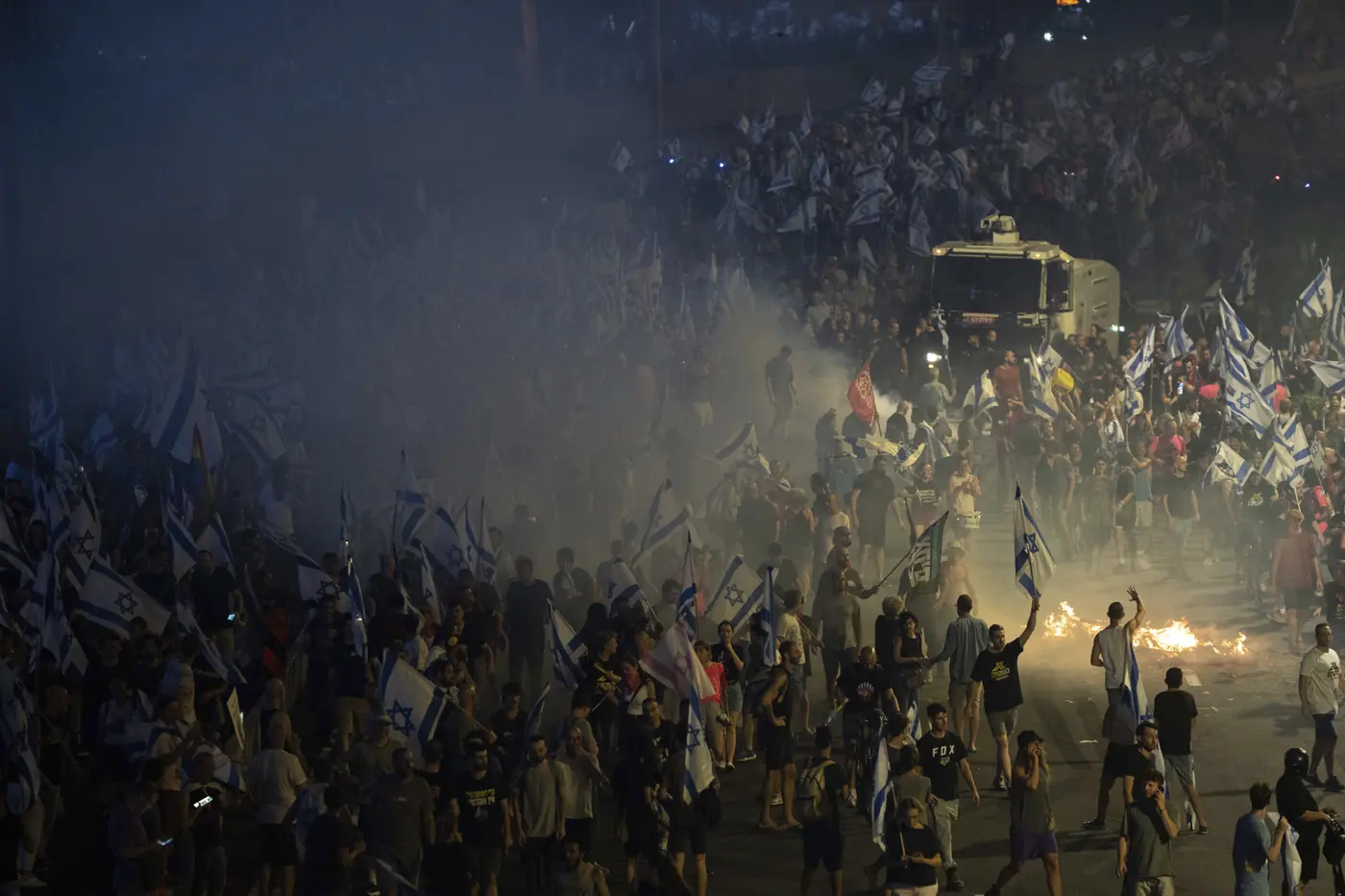
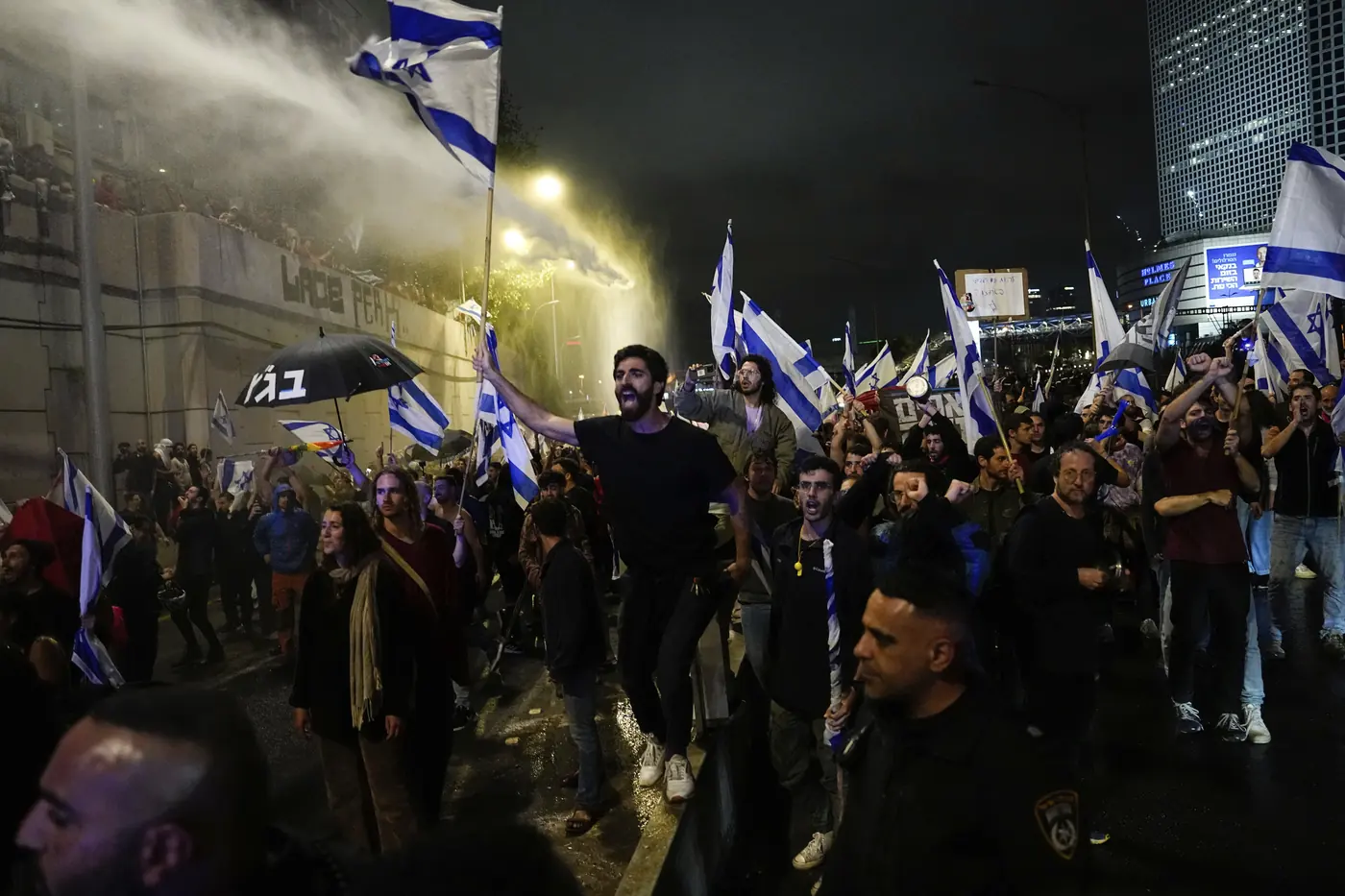
The most far-right government in Israel’s history is elected under Netanyahu, comprising parties from the hardline wings of the Nationalist and Religious Nationalist camps, alongside the ultra-Orthodox. The inclusion of the religious fundamentalist Kahanists for the first time marks a major shift to the extreme right. Netanyahu’s administration carries out a “judicial overhaul” against democratic checks and balances, igniting mass protests between January-October 2023 and crystallising a self-identified “liberal” Israeli camp, the Liberal Zionists.
Thirty-seventh government of Israel[Avi Ohayon by Government Press Office of Israel, via Wikimedia CC BY-SA 3.0 unported]Israelis protest against plans by prime minister Binyamin Netanyahu’s government to overhaul the judicial system, blocking a motorway in Tel Aviv, July 5th 2023[picture alliance / ASSOCIATED PRESS | Oded Balilty]
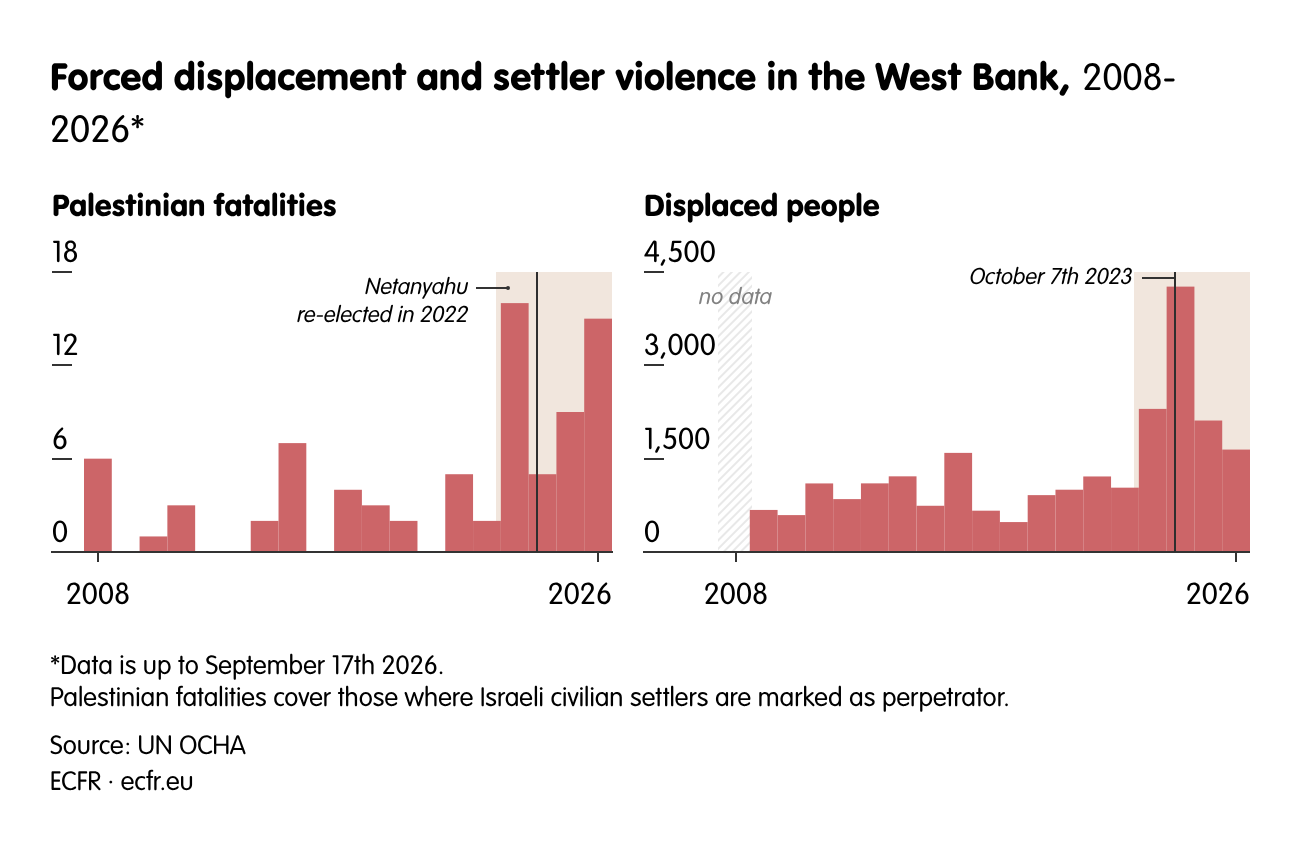
The government also advances the Religious Nationalist agenda, placing far-right settlers in key government and administrative positions to ramp up settlement and outpost expansion and increase impunity for settler violence. Ministers unleash a torrent of discriminatory and inflammatory rhetoric and actions against Palestinians. Far-right Religious Nationalist Itamar Ben-Gvir takes over the police, politicising it in line with his hardline agenda, including loosening gun licensing laws and cracking down on anti-government protesters. Netanyahu replaces the heads of the security agencies with loyalists.
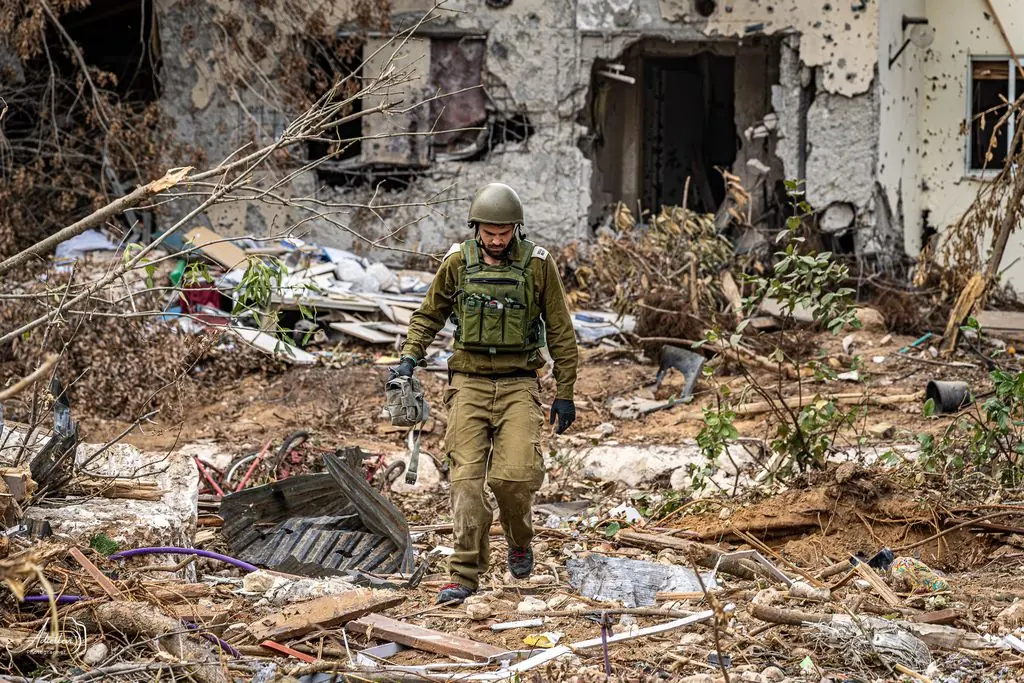
Photograph of the Kibbutz Be’eri shortly after October 7th 2023[picture alliance / ASSOCIATED PRESS | Oded Balilty]
October 7th 2023
Hamas attacks Israel,killing 1,200 people, mostly civilians, abducting 251 hostages into Gaza. Israel’s subsequent military assault on Gazakills more than 73,000 Palestinians, which a UN commission of enquiry later says constitutes a genocide. The war expands to include Lebanon, Yemen and Iran. Israelis’ sense of security is shattered. The massacre by Hamas radicalises Israeli positions across the political spectrum and mainstreams the Hardal maximalist vision for a Greater Israel. This in turn revives the idea of “transfer”—expulsion—of Palestinians within the Nationalist and part of the Liberal Zionist camps. It also boosts the Religious Nationalists’ agenda in the West Bank, with settler violence and forced displacement of Palestinians there rising dramatically.
2023-present
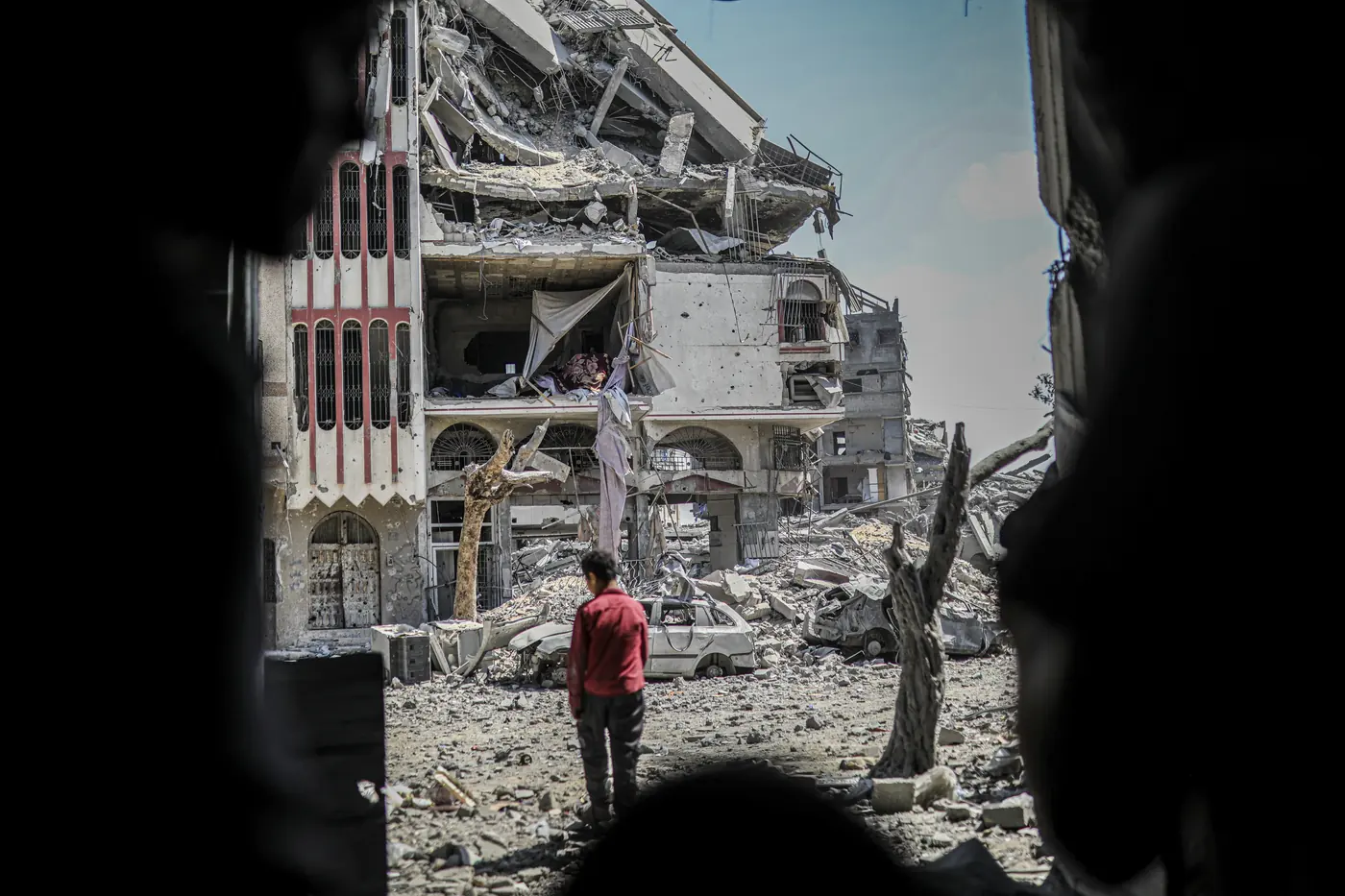
Following October 7th, Netanyahu scorns diplomacy and adopts a hyper-aggressive military doctrine of “peace through strength”. Israel expands its occupation of Gaza as well as Syrian and Lebanese territory. This new strategy culminates in rounds of direct fighting with Iran in October 2024, June 2025 and February 2026, the latter launched jointly with the US. Netanyahu calls for a new Middle East and a broad “hexagon alliance” of regional powers against Iran and “radical Sunnism” (that is, Turkey and Qatar) with Israel at the centre. This cements his radical reworking of Jabotinsky’s iron-wall thesis, with force not as a means to an eventual diplomatic settlement, but as an end in itself. A boy stands facing a heavily damaged residential building in the Tuffah neighbourhood of Gaza City on September 22nd 2026[picture alliance / Middle East Images | Faiz Qreqa]
Ideas
The camps are battling over fundamental questions about Israel’s future. The first is what kind of state Israel should be—how democratic and how religious. Likud and the Religious Nationalists are successfully pushing for an illiberal, majoritarian democracy that privileges Jews over non-Jews, while collapsing the gap between synagogue and state. In opposition, the Liberal Zionists are fighting to salvage Israel’s liberal-democratic credentials while overlooking its control over Palestinians. Meanwhile, the Ultra-Orthodox are struggling to preserve their social seclusion and religious autonomy.
The second question is what makes Israel secure. All the camps (except the Ultra-Orthodox, who do not articulate a formal position) have abandoned any prospect of a diplomatic settlement with the Palestinians. Rather, they accept open-ended control over them, while the Nationalists and Religious Nationalists push for a Greater Israel.
The third is what kind of power Israel should be in the world. All agree on the need for a hawkish military posture since October 7th, and all seek regional normalisation, but they differ on the price to be paid, if at all. All also acknowledge the continued importance of American support, even as the Nationalist and Religious Nationalist camps have thrown in their lot with Trump and illiberal forces worldwide.
As the battle over these questions shows, illiberal, ethno-nationalist forces have gradually pervaded Israeli politics, institutions and public opinion. Whatever the election result, their ideas will outlast Netanyahu and his coalition.
What kind of state?
Demokratia and mamlachtiut
Israel’s 1948 Declaration of Independence promised complete equality of social and political rights as well as freedom of religion to all inhabitants. Nearly 80 years on, complete equality has not been realised, and the fault line between the state’s Jewish and liberal-democratic character is widening. Today, many in the Nationalist and Religious National camps view citizenship as conditional on loyalty to the Jewish state. This applies primarily to Palestinian citizens of Israel—especially since October 7th, with just 16% of Jewish Israelis believing it is possible to combine Palestinian identity with loyalty to the state. But it also applies to Jewish dissidents.
Israel was founded by largely secular figures as a Jewish state in the sense of a homeland for the Jewish people, rather than a religious state governed by religious laws. Today, the Religious Nationalists and some in Likud are pushing for a more Jewish state in both senses of the word: towards greater ethno-nationalism by privileging Jews over non-Jews and towards religiosity by governing life by Jewish law.
Nearly all Zionists, Liberal Zionists included, are committed to a Jewish state with a Jewish majority, and very few support a binational or fully egalitarian state of all its citizens. Rather, the divide is over how far that national project is constrained by liberal-democratic norms. For the Liberal Zionists, Israel should be a Jewish state with independent institutions, civil liberties and equal civic and political rights for all citizens—though not national self-determination, which is reserved for the Jewish people. They talk in terms of mamlachtiut, privileging the state and national interest above party politics. The Religious Nationalists, on the other hand, do not try to balance liberal and religious tensions, holding that the state’s Jewish character gets primacy over liberal-democratic norms. The Nationalists are somewhere between the two.
At the far end, the Ultra-Orthodox (and the Hardal stream of the Religious Nationalists) are the most hostile to democracy, with 78% of ultra-Orthodox favouring a Jewish state over a democratic one. In the words of the influential Rabbi Elazar Shach (1899-2001): “We pray to the Almighty: Please free us from this new curse of democracy… which is truly like the disease of cancer that was sent into the world, for the holy Torah is the only true democracy.”[12] Despite their ideological objections, the Ultra-Orthodox rely heavily on the democratic state to protect their interests, all the more so given their kingmaker role in coalition politics which has given them disproportionate sway. As religiosity and ethno-nationalism rise and converge, they are straining Israel’s liberal democracy to breaking point.
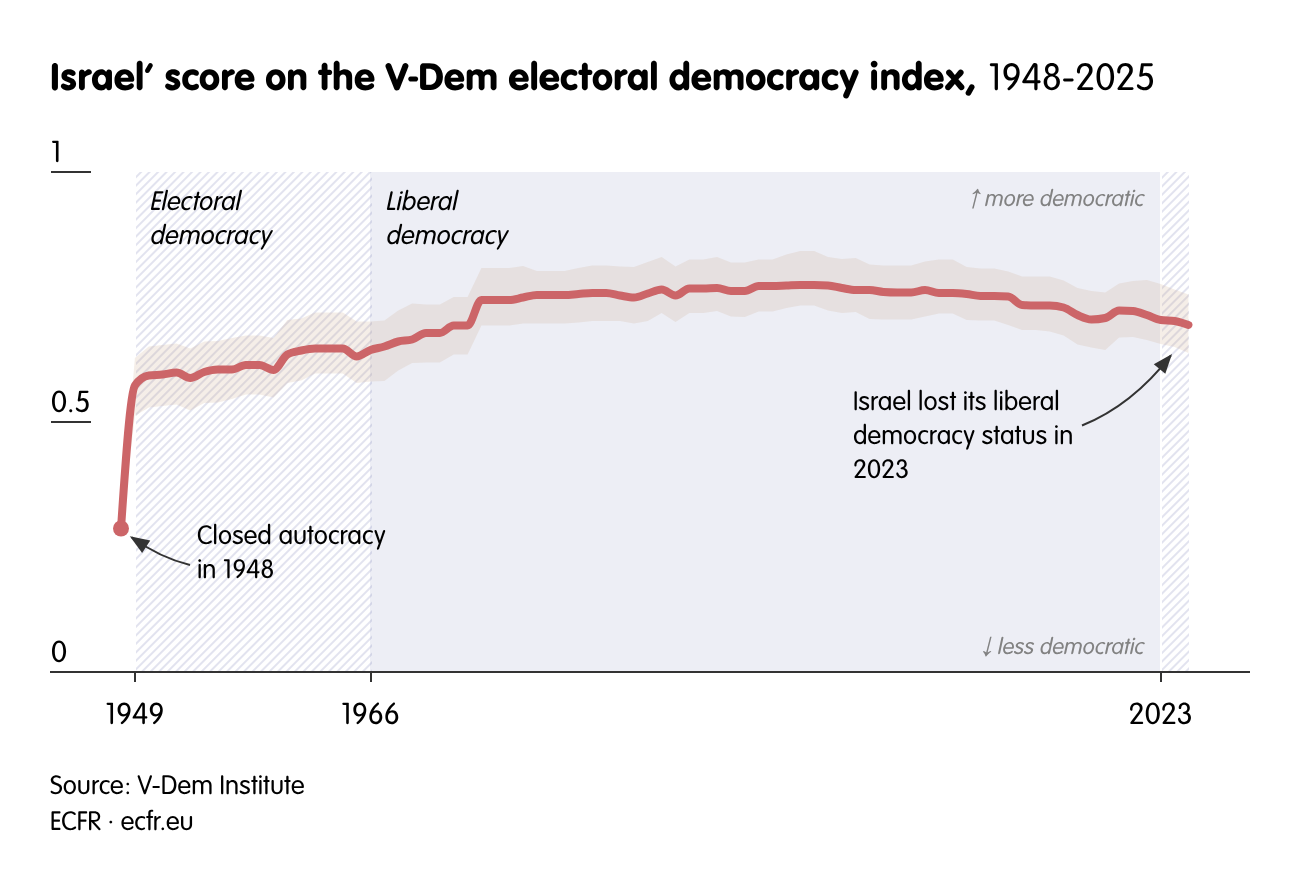
Israel’s democracy is particularly fragile, with no constitution, bill of rights, second parliamentary chamber or devolved power. The only real institutional check on a governing coalition—which controls Israel’s parliament, the Knesset—is the Supreme Court. In 2023, Netanyahu’s government attempted to push through a sweeping “judicial reform” package to increase government control over the appointment of judges. This also aimed to limit the Supreme Court’s ability to strike down legislation at odds with Israel’s basic laws (its quasi-constitution). Mass protests forced the government to pause the overhaul, although it nonetheless passed stand-alone legislation, including dividing the role of the attorney general. The damage was done: in 2023, the V-Dem democracy index demoted Israel from a liberal to an electoral democracy.
Netanyahu has borrowed from the playbook of his ally, Viktor Orban, Hungary’s former prime minister, who championed illiberal democracy. The Israeli prime minister has, for example, raged against the “deep state”, attacking the political opposition, judiciary, security establishment and media. He maligns the media as, in his words, “thought police” on a “hunt” against him and his family, working with “leftists” to mount a “coup d’etat”.[13] The philosopher Shai Agmon calls the result the “hollow centre”, arguing that “to cripple a democracy you don’t need to put the opposition in jail—just make their views illegitimate, so that they’ll never be ready to express them in public.”[14]
The overhaul was a Religious Nationalist project, rather than a Netanyahu or Nationalist one. Burned by the experience of the disengagement from Gaza—and under a right-wing government no less—the Religious Nationalists moved to capture state institutions, including the judiciary. For them, the court is a partial constraint on their agenda of settlement expansion, even though it has broadly enabled it. One Religious Zionist, Rabbi Eliezer Melamed, ruled that “the court is today the institution that most harms the Jewish identity of the State of Israel, its security and its ability to settle the land.” The policy blueprint was provided by the Kohelet Forum, which was funded by two conservative libertarian American Jewish billionaires.
Both the Ultra-Orthodox and the Religious Nationalist camps have their own ideological agendas for weakening the judiciary, given that the Supreme Court has constrained their legislative ambitions. For the Ultra-Orthodox, the court has frustrated their desired exemption from the military draft as well as their efforts to enforce religious observance in public, for instance, gender segregation. A 2024 survey found that 68% of ultra-Orthodox Israelis viewed such reforms as “very good”.
In response to the overhaul, Liberal Zionists took to the streets in the largest protest movement in Israeli history, eventually forcing a halt to the reforms. Most protesters were secular, middle-class Jews, angered by what they perceived as a threat to Israeli democracy and religious encroachment on their values and lifestyles. The movement was wrapped in civic nationalism: a sea of blue and white Israeli flags, led in part by former senior military officials or reservists, notably through Brothers and Sisters in Arms. Conspicuously absent was any mention of the occupation (except by the fringe anti-occupation bloc) and likewise few Palestinian citizens took part.
This fight over democracy is inextricably bound up with identity politics. The Nationalists and some Religious Nationalists frame their judicial agenda through an ethnically charged anti-establishment narrative. Key institutions, they argue, are run by a deep state of the old “leftist” Ashkenazi elites, or “first Israel”, who are thwarting the will of the Mizrahi masses. In so doing, they exploit Mizrahi grievances that stem from the discrimination the Mizrahim faced at the hands of the Ashkenazi founders of the state, which persists in practicetoday.
The term “second Israel”, popularised by pro-Netanyahu Mizrahi writer Avishay Ben Haim, refers to the “left behind” Mizrahi as patriotic, religiously traditional Masortim, pitted against the “Ashkenazi hegemony” of first Israel. Since Labour’s defeat in 1977, Mizrahiut (Mizrahiness) has become increasingly detached from ethnicity and synonymous with right-wing nationalism. Its leading figures, including Netanyahu, are often Ashkenazi, while today two-thirds of Mizrahi Israelis are middle class. But the bond between Likud and the Mizrahim goes beyond grievance. As scholar Guy Abutbul-Selinger points out, where liberalism promotes universal individual rights, the right privileges identity and communal obligation to the Jewish people, which resonates with the worldview of many Mizrahim.
Balancing synagogue and state
“Shall we end by having a theocracy?” Theodor Herzl, the father of political Zionism, asked in 1896. “No, indeed”, he concluded. “Faith unites us, science gives us freedom… We shall keep our priests within the confines of their temples… they must not interfere in the administration of the state.” Yet synagogue and state were entwined from the start with the 1947 status-quo arrangement with the ultra-Orthodox. More than a century later, Herzl’s proscription is in question as religious leaders stray further from their temples and into the state apparatus.
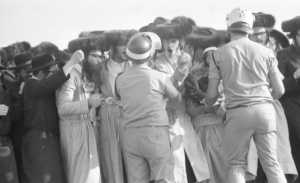
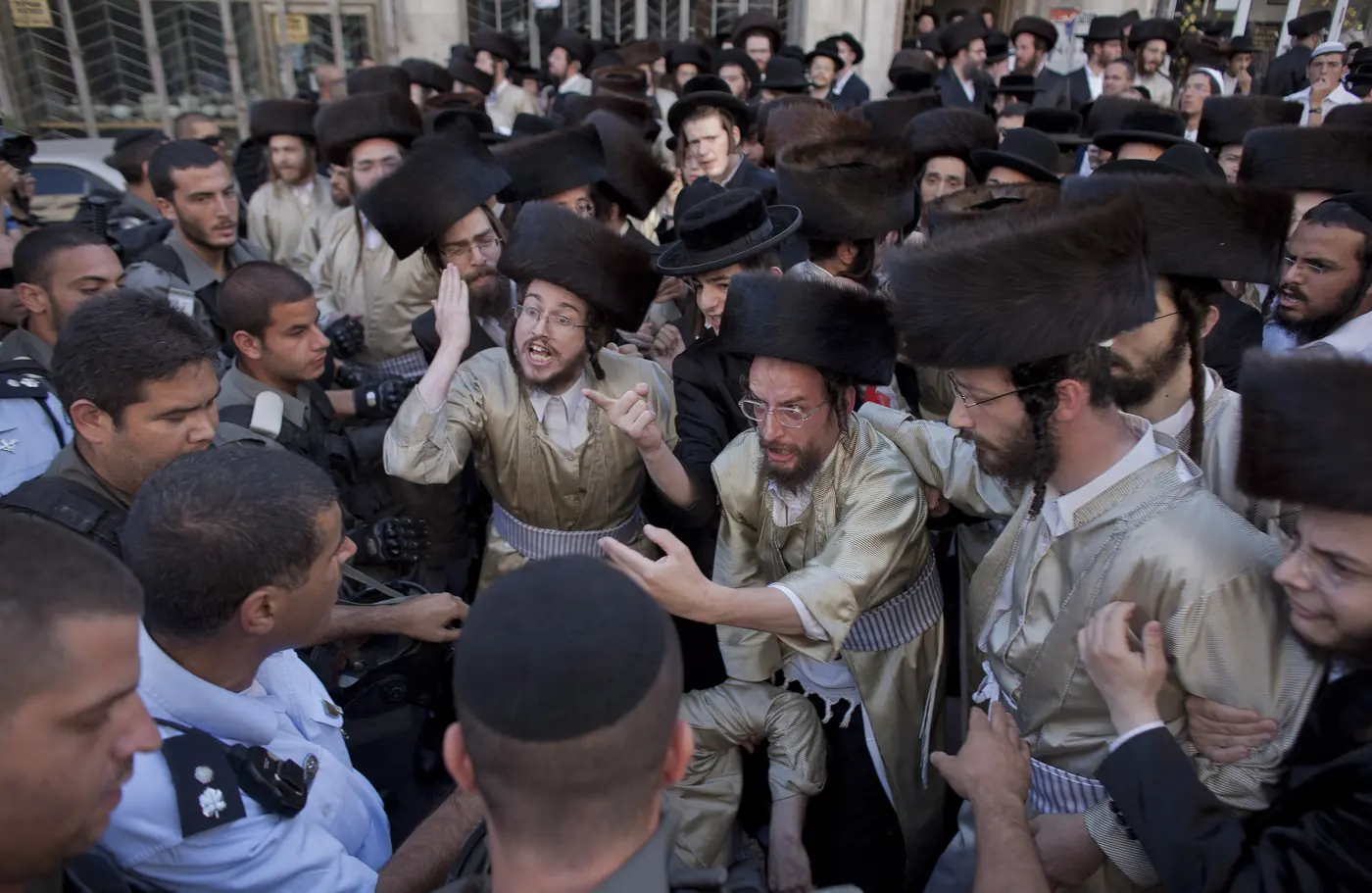
Ultra-Orthodox men clash with Israeli border police during a demonstration in Jerusalem against the opening of a parking lot on Shabbat, July 16th 2011[picture alliance / dpa | Oliver Weiken]
Today, Israeli Jews are sharply divided on the balance between synagogue and state. Almost all want the state to retain its Jewish national identity while resisting religious coercion in daily life: polls consistently show majority support for freedom of religion (83%) and separation of synagogue and state as well as for civil marriage, public transport on Shabbat and drafting the ultra-Orthodox. At the most secular edge, the Liberal Zionists seek to widen the separation. Some would go as far as closing the Chief Rabbinate and the rabbinical courts, ending their monopoly over marriage and divorce.
The Nationalists (except Likud’s Hardal members) do not want a medinat halacha, a state governed by Jewish law, but divide on the balance between synagogue and state. Likud’s base includes many religiously traditional but not strictly observant Jews, Masortim, who support the current balance, while Liberman takes a militantly secular position. Bennett is a religious reformist, seeking to preserve a strong Jewish identity while easing restrictions in secular areas. Much of the national-religious public echo Bennett: 71% support freedom of religion and 39% back civil marriage.
At the most religious end, the Ultra-Orthodox and the Religious Nationalists are agitating to expand religion’s role in the state. The Hardal publicly call for a medinat halacha. Smotrich has urged Israel to “go back to operating as it did in the days of King David and King Solomon. My long-term desire is that the State of Israel be governed according to the Torah,” though he acknowledges that such a theocracy is not yet possible because “there are other people who think differently, and we have to get along with them.” Still, as Brown puts it, “nobody practically dreams about a halachic state, even the messianic Religious Nationalists.”[15]
In the meantime, the Religious Nationalists are incrementally working to increase religious control over public life, through the Knesset, courts and institutes such as the Torah Medina Institute and the Mishpetei Eretz Institute. They are pushing to expand the jurisdiction of rabbinical courts, impose gender-segregated prayer in public, introduce halacha exams for judges, and replace the Israel Defence Forces’ code of ethics with the Torah. In so doing, they have fused nationalism with Orthodox Judaism, espousing an ethno-nationalist and theocratic agenda.
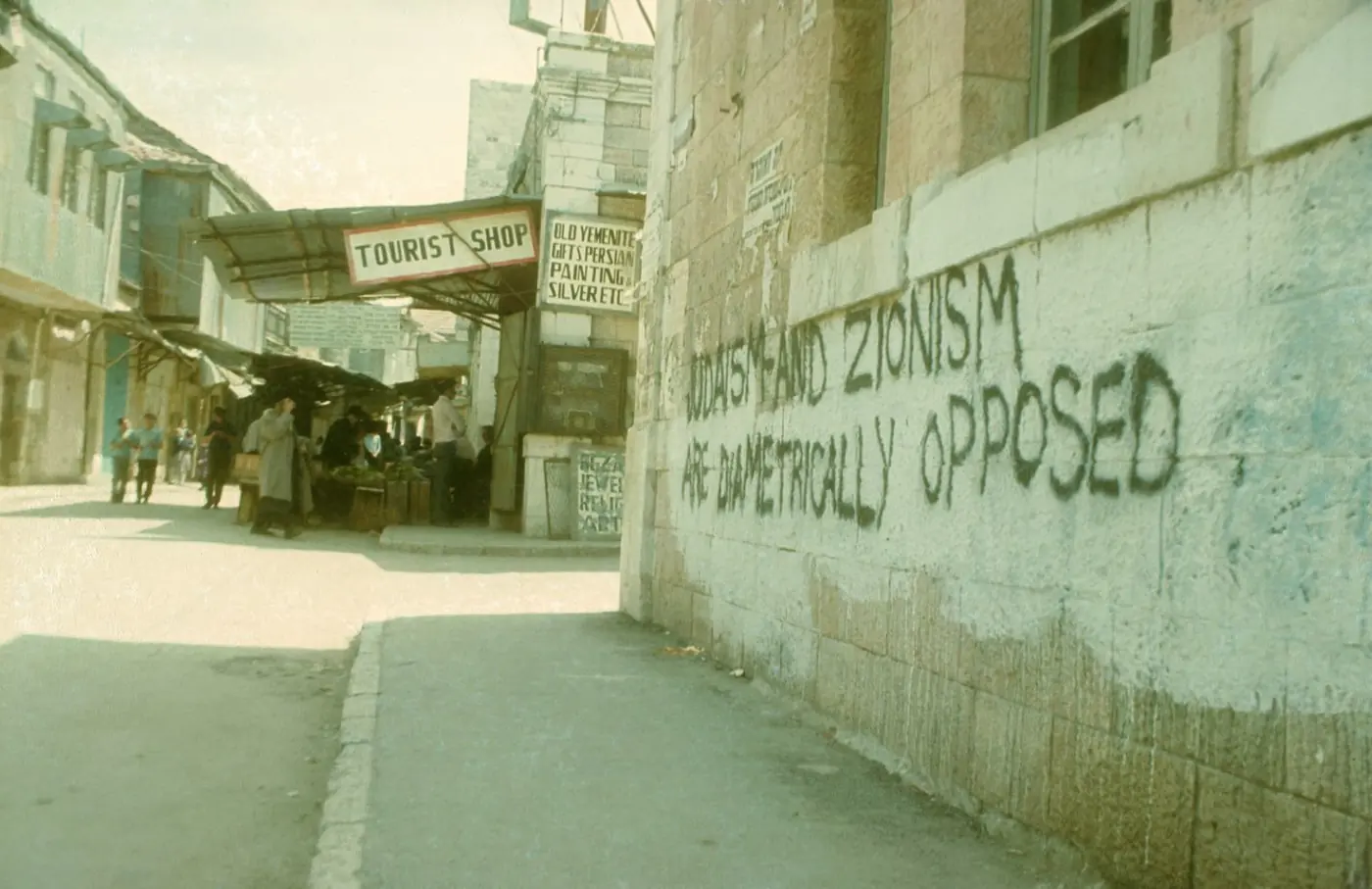
Graffiti in Jerusalem’s ultra-Orthodox neighbourhood of Mea Shearim, 1978[Dan Hadani Collection, the Pritzker Family National Photography Collection, the National Library of Israel]
The Ultra-Orthodox leadership, meanwhile, has never adopted a halachic state as a programme nor does it seek to rule the country. They reject the state in its current secular form and instead adopt anti- or non-Zionist positions alongside a transactional approach to the state. Their sole objective is to protect the sector’s religious autonomy, the “Torah world”, by preserving yeshiva study for men through state funding and exemption from military service and the labour force, as well as preserving the status-quo agreement. For this, they work vigorously within the state apparatus to advance their interests by forming coalitions or expanding their reach through ministries, the education system, the rabbinate or local councils.[16]
This has had recent success. In July 2026, Torah study was enshrined as a basic value in the heritage of the Jewish people, imbuing it with quasi-constitutional status. The Ultra-Orthodox likely hope this will make conscripting them more difficult in the future. Since October 7th, the draft exemption has become a particular flashpoint in Israeli society, given the vast burden on reservists. This is the case not only among secular Israelis but perhaps more so among the national religious, who disproportionately serve in combat and have a long history of tensions with the ultra-Orthodox. In 2025, three-quarters of Israeli Jews said they viewed the tension between the ultra-Orthodox and secular Jews as Israel’s “deepest social conflict”.
Over the long term, the two religious camps are converging. As the ultra-Orthodox gradually “Israelise”—entering work, the military and public life—many are drifting into the Religious Nationalist orbit. Under mounting social, economic and political pressures, the ultra-Orthodox world looks set to erode and become indistinguishable from the Hardal. That would strengthen the Hardal’s already disproportionate influence on Likud and the Religious Nationalist camp.
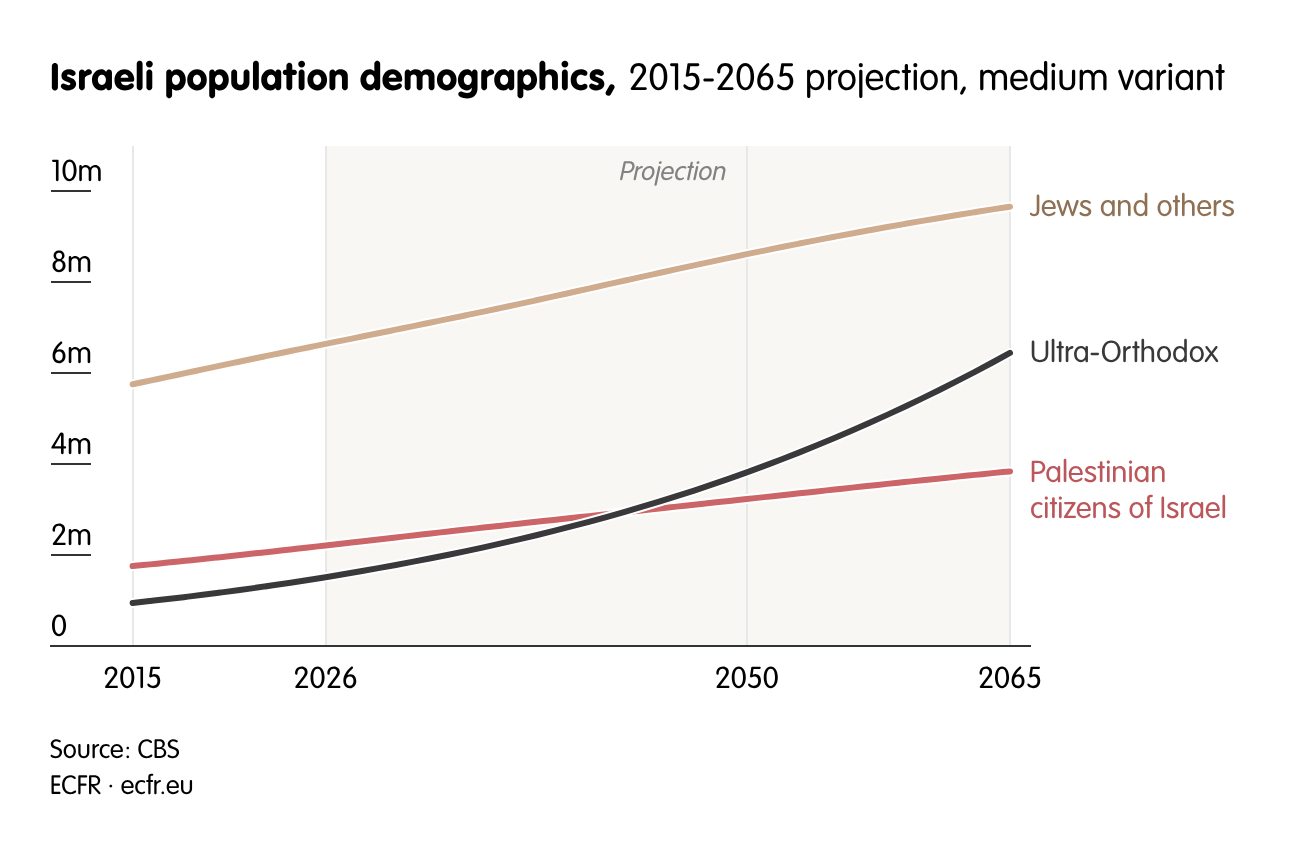
When it comes to the country’s religious future, Israel’s own experts are divided. Some, like the economist Dan Ben-David, argue that Israel’s demographic trends are proof the country is destined for a hardline religious future: the ultra-Orthodox have grown from 5-7% of Jewish Israelis in 1948 to about 19% today (15% of all Israelis) and are projected to reach 24% by 2040 and 40% by 2065. However, birth rates are falling among the ultra-Orthodox and faster still among the national religious, as rising numbers leave religious life and access to the workforce, military and technology increases. More important than pure demography are the illiberal, ethno-nationalist trends in the religious camps. It is not a matter of how many Israelis are religious, but of what kind of religious politics they will adopt.
What makes Israel secure?
The October 7th massacre shattered Israelis’ sense of security and revived their deepest fears. For a state born in the shadow of the Holocaust, vulnerability and existential threat remain fundamental to the Israeli self-identity. Despite Israel’s formidable military power and strong alliances, including with the US, that sense of vulnerability still runs deep in the Israeli psyche. It is heightened by the security threat posed by Iran’s military capabilities and support for groups like Hizbullah, while Iranian leaders have called for Israel to be extinguished. When it comes to Palestine, the moribund peace process and open-ended Israeli occupation have fuelled recurring episodes of violence: Palestinians living under Israeli occupation face routine violence from the Israeli military and settlers, while Palestinian armed groups have carried out attacks on Israelis.
Israel’s leaders have responded to these threats with overwhelming force, eschewing diplomacy. Here, on security, the illiberal vision is least contested. The Jewish camps are in hawkish consensus: no Palestinian state, open-ended control of the Palestinian territories, and a new and more aggressive security doctrine after October 7th. The Liberal Zionists do not offer any substantive challenge, only a critique that force must be accompanied by diplomacy.
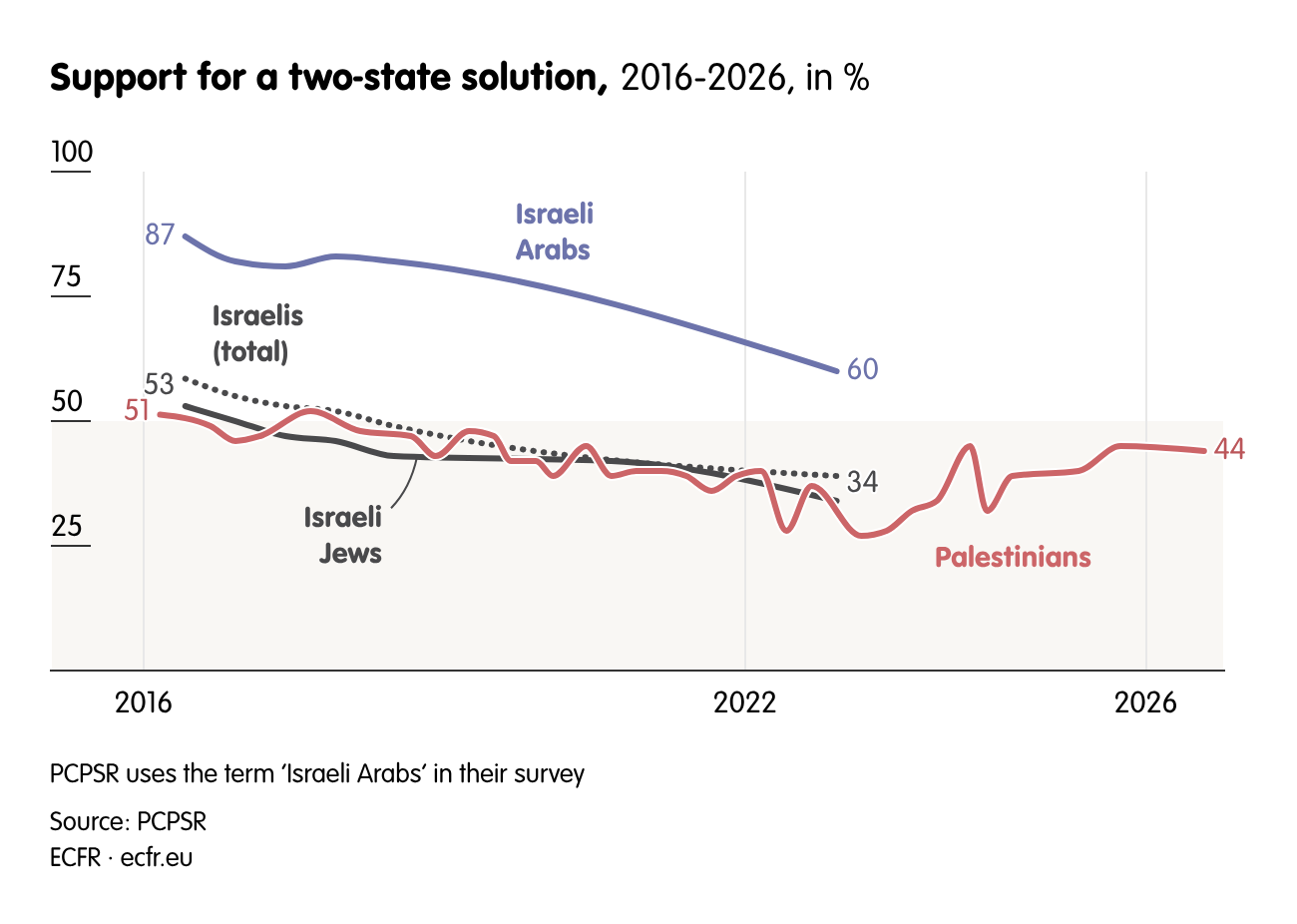
Israel and Palestine are creeping towards a one-state reality. All mainstream Jewish parties support, or at least acquiesce in, the settlement enterprise in some form and publicly oppose a Palestinian state on the 1967 lines—with the exception of the Democrats. Gone are the days when Nationalists would countenance a demilitarised and heavily conditioned Palestinian state, and when the left and centre-left loudly warned that open-ended occupation was an existential threat to Israel. The debate is no longer about the core of the settlement project itself but about its boundaries. The Nationalists and Religious Nationalists want a Greater Israel, while the Liberal Zionists accept continued occupation of the West Bank and Gaza on security rather than ideological or theological grounds. The two-state solution is, in effect, dead across the Jewish political spectrum.
The two right-wing camps seek a Greater Israel for different reasons. The Nationalists view settlement as the historical and national right of the Jewish people and as necessary for security to increase the territory’s strategic depth, whereas the Religious Nationalists see settling the land as a divine commandment that will hasten the coming of the Messiah. That messianism was stoked by Israel’s victory in the 1967 war, which radicalised a generation and produced the Gush Emunim settler movement. Since the 2005 disengagement, however, the Religious Nationalists have reframed their settlement agenda in the language of security and shifted from persuasion to institutional capture. Where the movement once tried to win over the secular public by “settling in people’s hearts”, it has since worked to embed its representatives in key institutions.
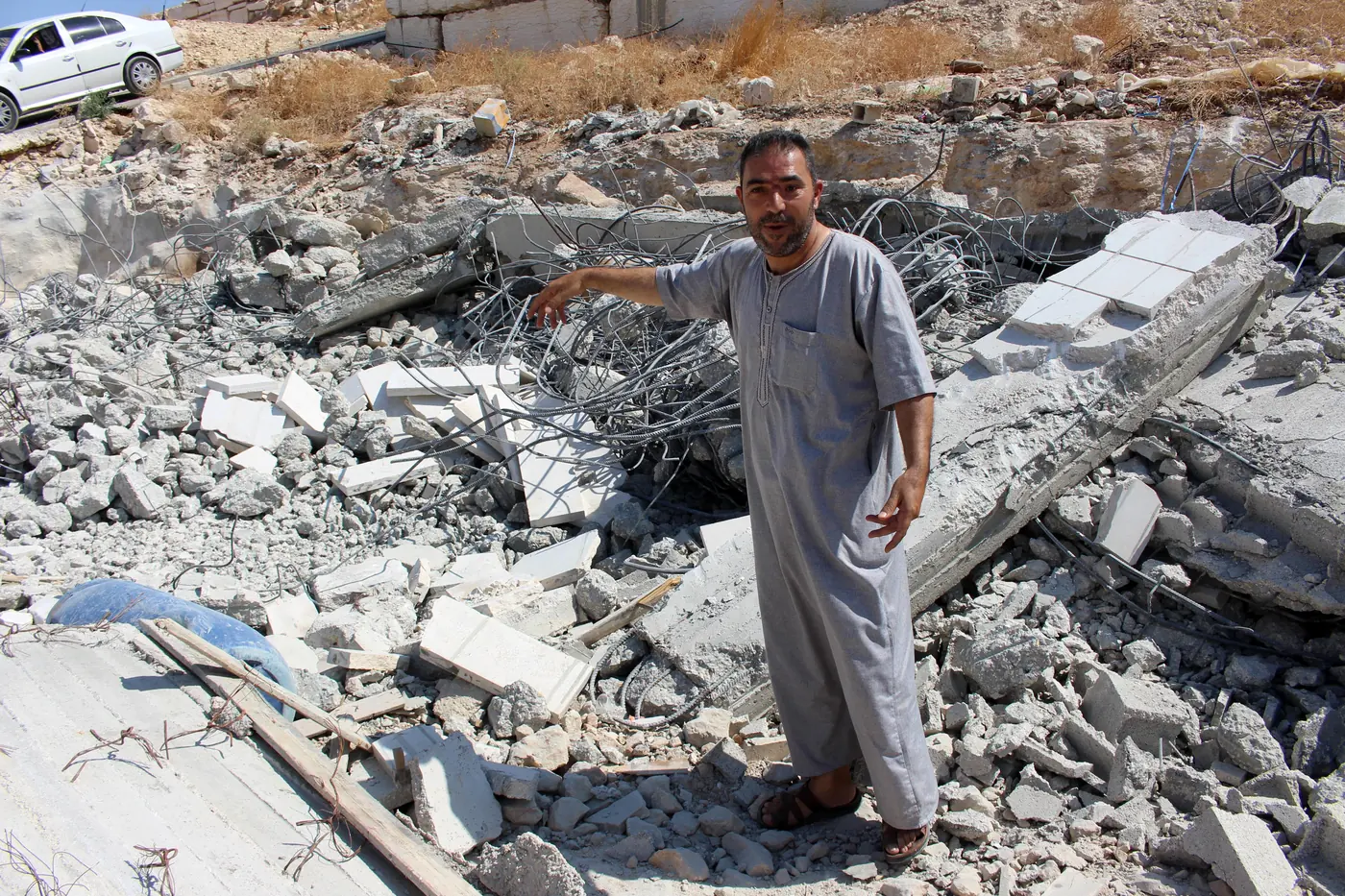
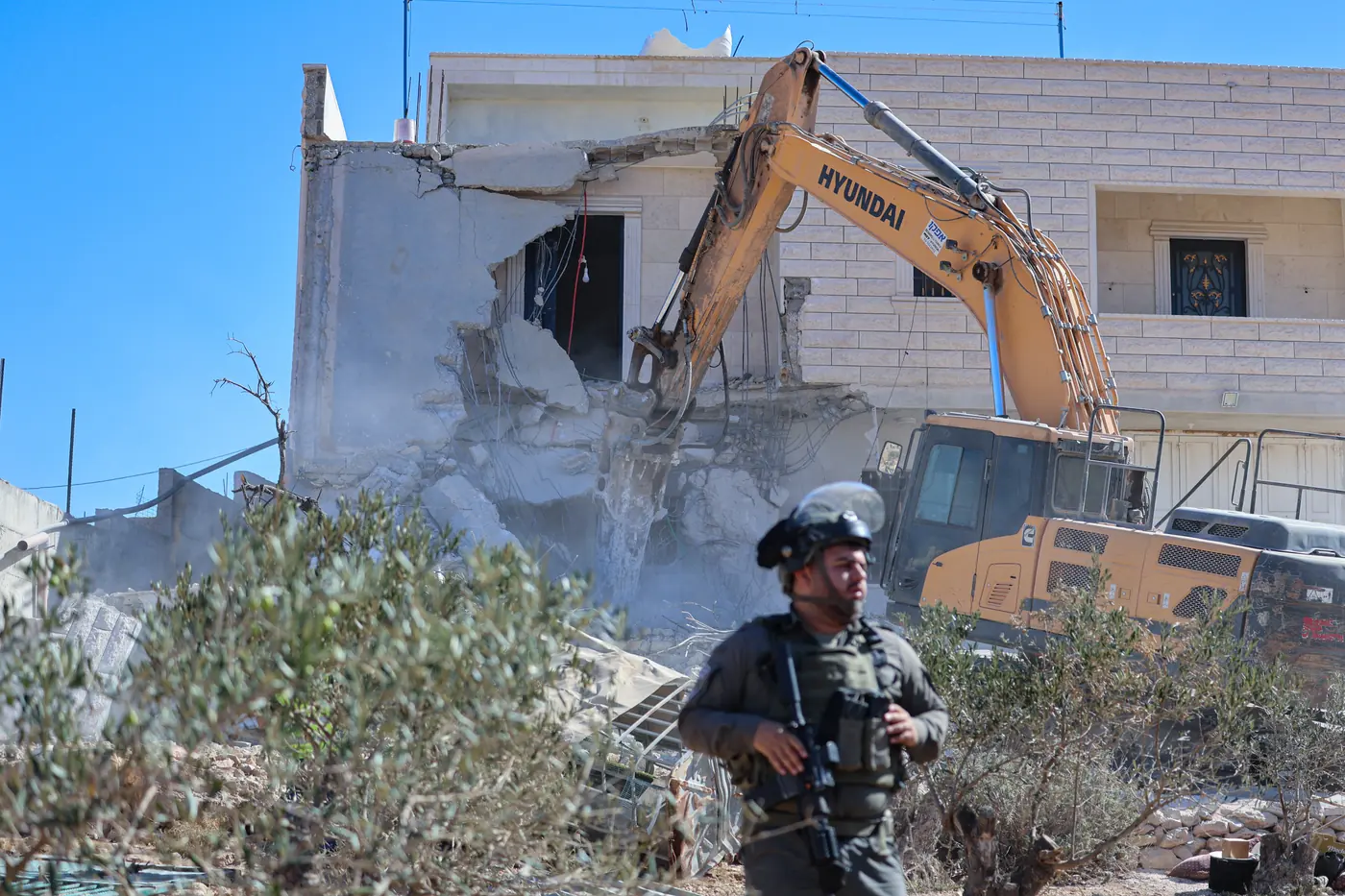
Israeli forces demolish a Palestinian home near Khallet al-Homs, in the occupied West Bank. Anti-settlement activist Osama Makhamreh told the WAFA news agency that the home belonged to Fadel al-Haddar and sheltered eight people, most of them children. September 16th 2026[picture alliance / SIPA | Mosab Shawer/MEI]
October 7th mainstreamed the notion of “transfer”—expulsion—of Palestinians. This idea dates back to early Zionist thinkers and was partly realised in the 1948 Nakba, but it was later rejected by the mainstream, including Likud, and became the preserve of the Kahanist fringe. Today, the Religious Nationalists and Nationalists brazenly call for it. One recent survey showed that 82% of Jewish Israelis supported expelling Palestinians from Gaza and 56% the expulsion of Palestinian citizens of Israel. Alert to international opprobrium, influential thinkers like Yoav Sorek have rebranded transfer as “voluntary emigration”, which they present as a moral and humanitarian imperative. This has since been taken up by the Nationalists and even some Liberal Zionists, and was endorsed by Trump in his 2025 “Gaza Riviera” plan.
In contrast, the Ultra-Orthodox are not committed to territorial expansion or settlement (though from the 1990s, the state has subsidised their housing across the Green Line).[17] Their leadership is traditionally doveish, a stance rooted in their theological opposition to Zionism.[18] In 1979, for example, when a peace treaty with Egypt was under consideration, the Sephardi sage Ovadia Yosef ruled that territory could be returned to save lives (pikuach nefesh). Today’s Ashkenazi ultra-Orthodox leadership hold that there is no moral justification for loss of Jewish life for land or the “state’s honour”, given that the pre-messianic state is not sacred.[19] But aware of their weakening grip on their publics, the rabbinical leadership rarely voice such views. The result is a mirror image of the Religious Nationalists, among whom the Hardal leadership is more hardline than the public. The co-option of the ultra-Orthodox public into the nationalist project removes the last exception to the hawkish Jewish consensus.
The death of “land for peace”
There was not always such a consensus. In the Oslo era, Labour Zionist leaders argued that Israel could not secure itself through force alone: its safety depended on peace agreements, economic interdependence and regional integration. Then prime minister Yitzhak Rabin’s view was that Israel should pursue peace “as if there is no terror” and in parallel fight terror “as if there is no peace”. Similarly, in his early 1990s book “The New Middle East”, former prime minister Shimon Peres reimagined the Middle East in the image of post-war Europe. He envisaged common markets, joint infrastructure, open borders and shared prosperity to incentivise peace. They both advocated for the “land for peace” principle, established after the 1967 war, in which Palestinians would get a state and Israel would relinquish the Palestinian territories for peace and acceptance in the region.
The failure of the peace process and the second intifada (2000-2005) shattered the public’s faith in this Labour Zionist thinking. Over the following decades, the Israeli Jewish camps (except for the left flank of the Liberal Zionists) lost faith in the possibility of diplomatic resolution and settled into a “conflict management” approach. By 2021, Israeli philosopher Micah Goodman’s “shrinking the conflict” thesis was being championed by Bennett and echoed by centrists within the Liberal Zionist camp, despite warnings that this could “blow up” in Israel’s face.
Then came October 7th. “A breach… opened in the Iron Wall,” in the words of Ron Dermer, Netanyahu’s closest confidant and former minister of strategic affairs, invoking Jabotinsky’s thesis. The dominant thinking after October 7th was that the wall had crumbled: Israel had lapsed into complacency by believing that the threat from Hamas could be neutralised by short, periodic operations and economic incentives.
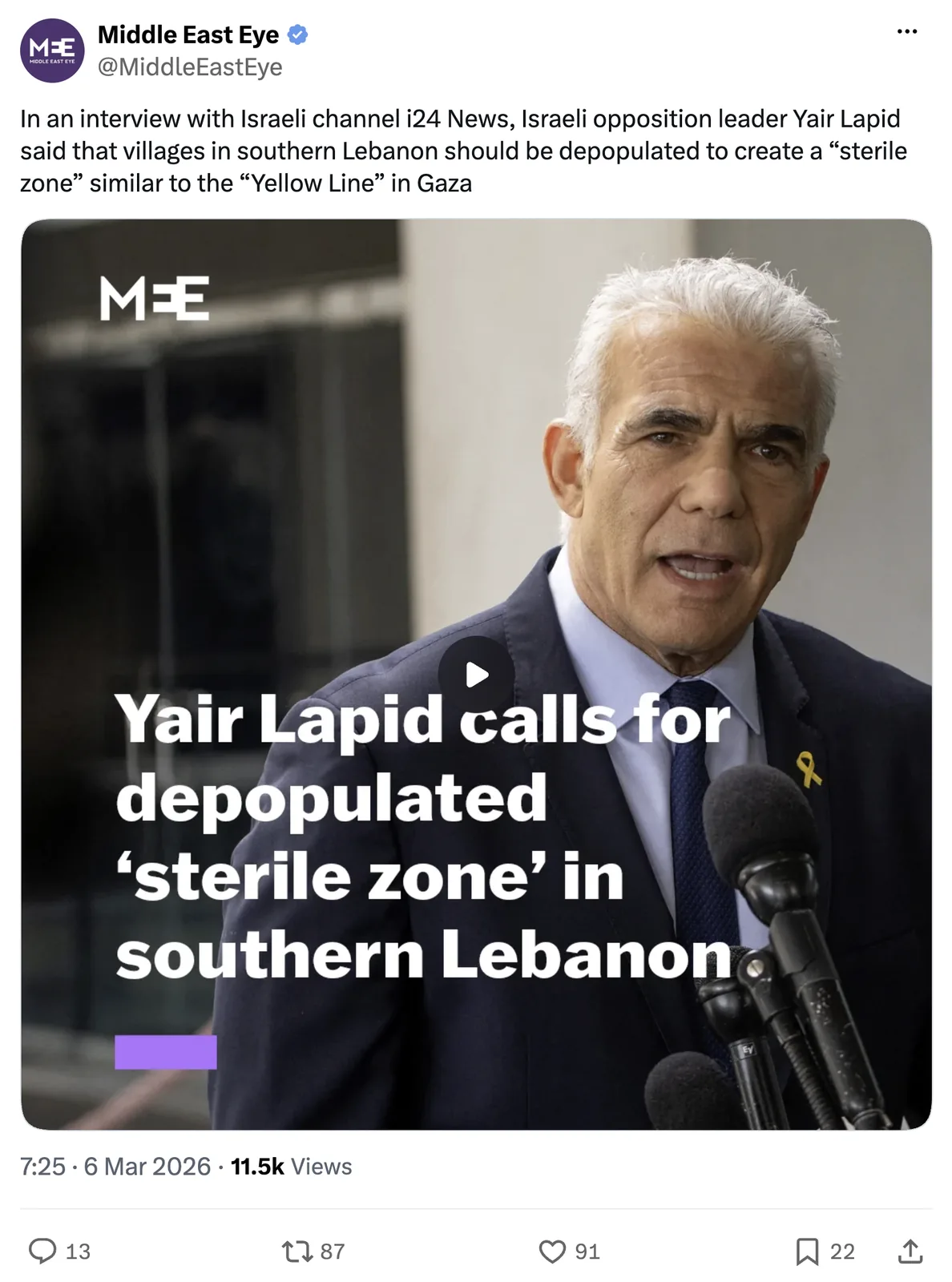
In its place, Netanyahu has proposed a new security doctrine. First, pre-emption: rather than containing or deterring threats, Netanyahu and the Nationalists seek to project military might far beyond the country’s borders to neutralise them pre-emptively. The recent attacks on Iran are an explicit manifestation of this. Second, freedom of operation: Israel will strike threats wherever it sees them, including in what it perceives to be failed neighbouring states such as Syria and Lebanon. Third, buffer zones: where deemed necessary for its security, Israel will occupy and hold territory, creating sterile “buffer zones” with no civilians. This is evidenced in the partition of Gaza along the “yellow line” and the expanded presence in Lebanon and Syria.
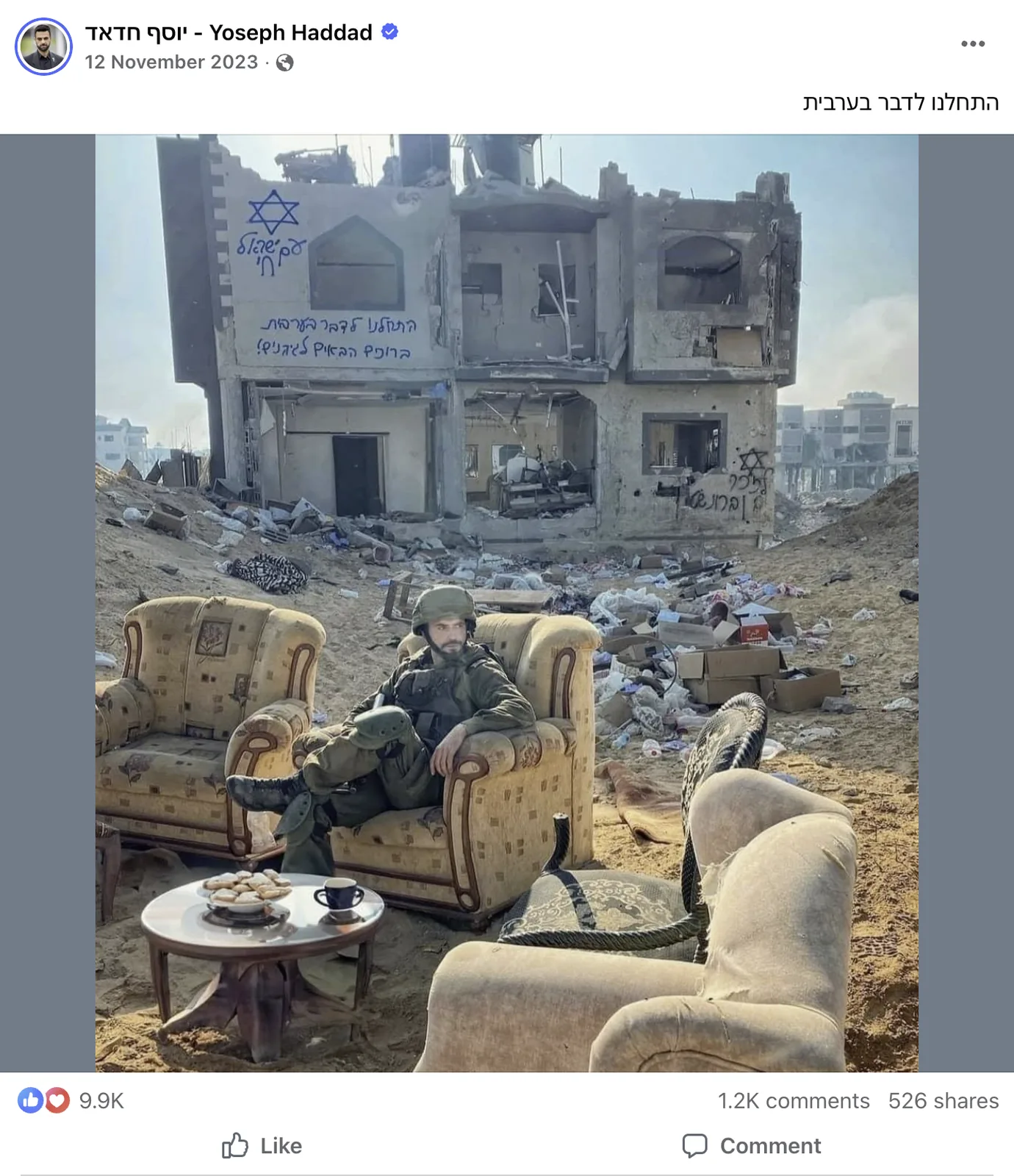
This is the iron wall in a cruder, more radical form, fuelled by trauma and vengeance after October 7th and seized on by the ascendant ethno-nationalist forces. The aim is not only to bend adversaries towards accepting Israel’s existence but to subjugate them. The slogan “we began speaking Arabic” which proliferated after October 7th scrawled on walls in Gaza or onto an artillery shell trades on the racist trope of an Arab “mentality of violence”. While Jabotinsky emphasised liberal-democratic values, the far right—both the Religious Nationalists and increasingly the Nationalists—view it as necessary and even desirable to cast off these trappings to transform Israel into an “authentic Middle Eastern state” that need not play by Western norms of diplomacy and international humanitarian law.[20]
A common refrain on the Israeli right and centre when it comes to European criticism is that outsiders cannot understand what it is to be existentially threatened, that such rules are all very well for Europeans, but do not apply in the Middle East. Amit Segal, a journalist close to Netanyahu, laid out the “new rules of the game” in the Wall Street Journal, including zero tolerance of “terror activity”, arguing that “murderous ambitions can’t be soothed with ‘gentlemen’s agreements’, international guarantees or economic incentives.” This logic applies most of all to Palestinians: Israel’s tactics are to increase the military force applied, whether through the destruction of Gaza and loosening the rules of engagement in the strip and the West Bank, or the imposition of the death penalty, which in practice applies only to Palestinians.
Netanyahu calls this “peace through strength” (also a core tenet of US Republican foreign policy), and in practice it means using force as deterrence and a means of gaining acceptance. In this view, Israel will become more attractive to other Middle Eastern powers by proving its strength against Iran and its proxies and by refusing to capitulate to international pressure. In the words of Smotrich, “We live in a neighbourhood where everyone runs away from the weak and joins the strong.” With this logic, cemented by the Abraham accords, there is no need to resolve the Palestinian issue.
No Jewish Israeli camp is offering an alternative. Instead, the opposition calls for similar or more hawkish policies. Liberman, for instance, espouses more aggressive military action against Hizbullah and Iran, arguing that there should be no withdrawal from Lebanon. The opposition’s strongest criticism is of Netanyahu’s aversion to diplomacy. Bennett has pushed for the Iranian regime to be deposed through “diplomatic, intelligence, economic, technological and military means together”, while Eisenkot has criticised Netanyahu for failing to translate Israel’s “military achievements” in Gaza “into a diplomatic outcome”. A change of government would therefore not fundamentally alter this new security doctrine.
What kind of geopolitical power?
Israel’s camps are more united than divided on the country’s foreign policy, except the Ultra-Orthodox, who largely abstain. Here too, the Nationalist vision dominates. Where the Oslo generation sought acceptance and legitimacy in the Middle East, the Nationalists seek to dominate it through force and technological prowess. The Liberal Zionists largely only differ in tone. There is total agreement that Iran and its proxies pose the greatest security threat while appetite for direct military confrontation with the Islamic republic has become a cross-camp consensus since the two countries first exchanged direct fire in 2024. Where the camps differ is on the degree of force and diplomacy needed to execute Israel’s regional vision, and on the country’s relationship with its traditional Western allies.
The relationship with the Middle East
The Nationalists’ regional vision marks a decisive shift from Oslo-era thinking. Rather than integration through a political agreement with the Palestinians, they see Israel dominating through force and technological capability. Netanyahu outlined this in 2026, proposing a “hexagon of alliances” against the Shiite and “radical Sunni” axes, with Israel as a link in a global chain connecting Africa, Asia and Europe. At its centre is the India-Middle East-Europe Economic Corridor (IMEC), connecting security, energy and infrastructure. The “start-up nation” would make itself “indispensable” to its allies, in the commentator Dan Senor’s words, and advertise its prowess through operations like the exploding pager attack against Hizbullah.
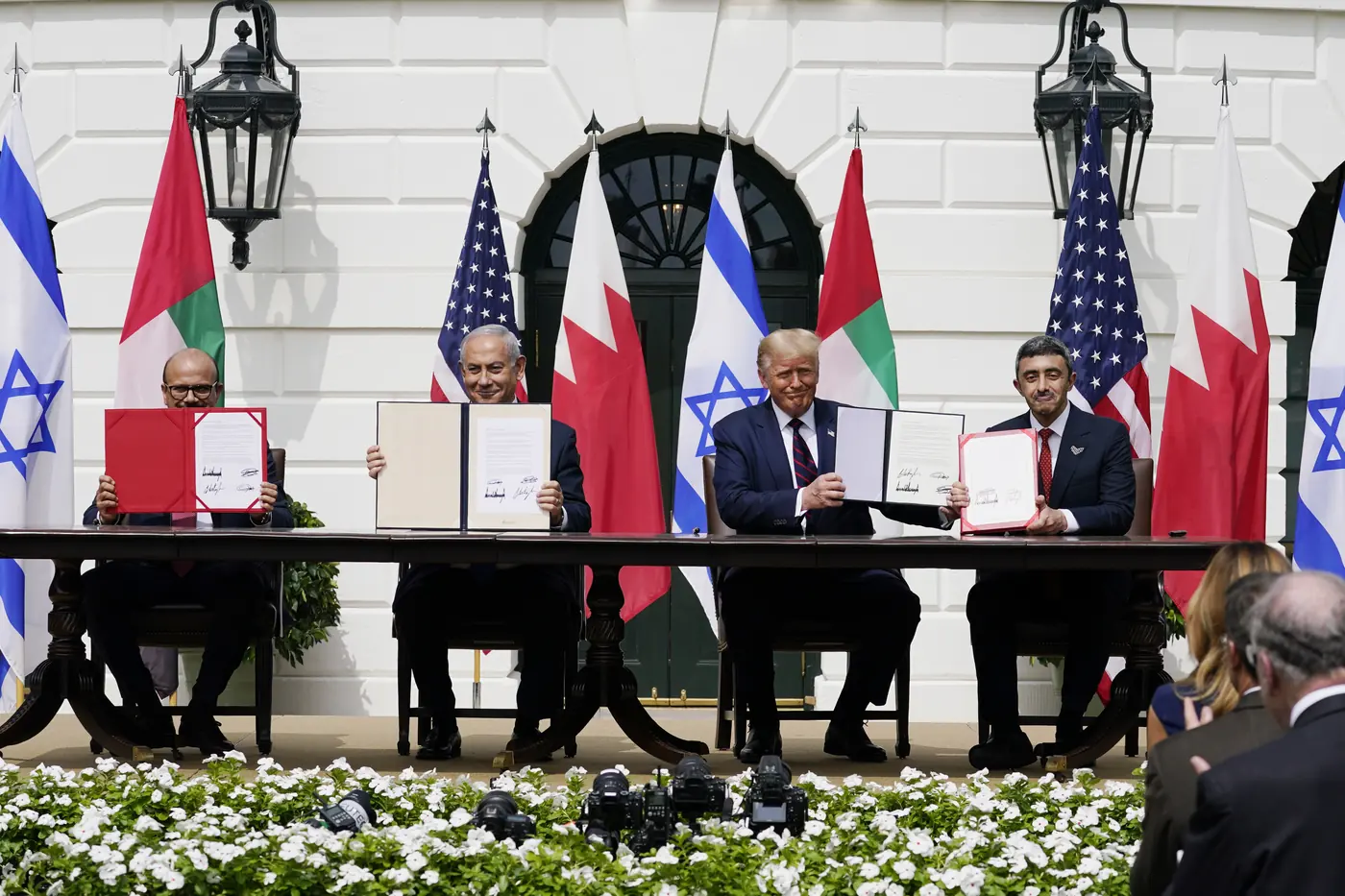
From left, Bahrain foreign minister Khalid bin Ahmed Al Khalifa, Israeli prime minister Binyamin Netanyahu, US president Donald Trump and UAE foreign minister Abdullah bin Zayed al-Nahyan, sit during the Abraham accords signing ceremony on the south lawn of the White House, in Washington, September 15th 2020[picture alliance / ASSOCIATED PRESS | Alex Brandon]
Normalisation with Saudi Arabia remains the prize for the Nationalists and the Liberal Zionists alike, as the door to Israel’s integration into the Arab world. But the Nationalist intend to get there by circumventing the Palestinians and projecting Israeli power. The Religious Nationalists are unwilling to pursue regional normalisation if it means sacrificing Jewish settlement in the West Bank. In the words of Smotrich, “If Saudi Arabia tells us, ‘Normalisation in exchange for a Palestinian state,’ friends—no thank you. Keep riding camels in the desert in Saudi Arabia.”
The Nationalist vision rests on asserting regional dominance through military and technological superiority. It draws on American neoconservative ideas of assertive nationalism, unilateralism and militarism, and the export of democracy and capitalism abroad, transmitted through the Tikvah Fund to Israeli institutes like the Shalem Center.[21] Netanyahu frequently borrows from George W. Bush’s “war on terror” lexicon by speaking in Manichean terms of good versus evil, framing Israeli strikes on Iran as defending Iranians from their tyrannical regime: “We are waging a historic war for liberty… for you to remove the Ayatollah regime and gain your freedom.” Indeed, Israel remains attached to its self-image as an outpost of liberal democracy and security, in a lawless, hostile region of Arab and Islamic states, the “villa in the jungle”, in Ehud Barak’s phrase.
This regional vision inevitably spurs rivalry. Israel increasingly views Turkey as its main competitor. Turkey’s president Recep Tayyip Erdogan is pursuing an alternative axis together with Pakistan and Saudi Arabia—excluding Israel. Israeli politicians and influencers have begun to refer to Turkey as the “new Iran”, citing competition over Syria, especially post-Assad, as well as Ankara’s hosting of Hamas members and alleged financial support for Hizbullah. United by a shared threat perception, Cyprus, Greece and Israel recently reached a trilateral defence and security framework deal and are exploring the installation of an undersea cable that would connect European and Israeli electricity grids, part of the same drive to make Israel indispensable to regional infrastructure and to exclude its rivals.
Israel and the West
When it comes to relations with the West, the camps diverge. The right has bet on an illiberal global axis led by Trump, rather than on Europe and the international liberal order. Where the Liberal Zionists fear isolation, Likud draws electoral strength from confronting Israel’s liberal allies in Europe.
For all camps, Israel’s special relationship with the US remains foundational, though dependency on Washington has long been a vexed matter for Israel. After 1967, Israel received large sums of US civil and military aid, culminating in the 1985 Emergency Economic Stabilisation Plan that rescued the Israeli economy. But this came at the high price of unprecedented American leverage over its foreign policy. Today, Israel’s vulnerability to the whims of Washington has never been more exposed. As the joint Israel-US war against Iran veered off track, Trump and J.D. Vance, his vice-president, turned on Netanyahu, casting Israel as isolated and as a vassal state. (“I call all the shots”, as Trump put it.)
In September 2025, Netanyahu responded by sketching out a radicalised and hyper-militarised version of his “economic independence” vision, which he dubbed “super–Sparta”. “Israel is in a sort of isolation,” he said. “We will increasingly need to adapt to an economy with autarkic characteristics” and develop the country’s arms industries “to produce what we need”. But this vision of self-sufficiency is ultimately not achievable, given that Israel receives $3.8bn a year in US military aid and is highly dependent on American munitions as well as diplomatic cover. Rather, super-Sparta is best understood as the prime minister getting ahead of shifting attitudes in Washington and repackaging the Israel-US defence relationship ahead of negotiations on a new defence memorandum of understanding for 2028.
On Europe, the Liberal Zionists retain an ideological affinity with European liberal democracy and take a more conciliatory line. While in government, Lapid met regularly with European representatives and cultivated ties with European liberal democracies. The EU remains Israel’s largest trading partner and Israelis prize their visa-free travel to the continent.
In contrast, the Religious Nationalists and many in the Nationalist camp have enlisted in the Trump administration’s culture war against Europe. The two Israeli camps speak the same language as the administration; Netanyahu used his 2026 Holocaust Remembrance Day speech to lambast Europe for its “deep moral weakness”. Likud has courted European far-right and illiberal parties for years (Spain’s Vox, Hungary’s Fidesz and Britain’s Reform for example) as part of a divide-and-rule approach to the continent. Israel’s illiberal allies, first Hungary under Orban and now Slovenia, have since blocked measures against Israel at the Foreign Affairs Council which require unanimity.
Both right-wing camps frequently brand the EU and many of its member states as hostile towards Israel and antisemitic, citing European policies that target the settlement enterprise as discriminatory. The Nationalists and Religious Nationalists have thus aligned themselves with illiberal forces, from Orban to Marine Le Pen, united by ethno-nationalism, authoritarianism and their battle to defend the West against “radical Islam”, Western “wokery” and “leftists”. Recent surveys show that Likud is now ideologically closer to European far-right parties than to the mainstream right, despite the antisemitic pasts of some of these parties.[22] The dispute is not merely rhetorical. Israel’s policies increasingly clash with European interests. Israel’s military conduct in the occupied Palestinian territories and now the wider region—as well as its rejection of diplomacy—fuels instability and radicalisation in Europe’s neighbourhood, while its alliances with illiberal forces in Europe undercut the rules-based order the continent depends on.
The future of Israel
Democracy
The tensions within Israel’s liberal democracy are near breaking point. If the Liberal Zionists return to power, their technocratic agenda may be enough to resurrect the country’s liberal-democratic credentials in the short term. But the Religious Nationalists and their allies on the Nationalist right are ideologically motivated, embedded in key institutions and will not give up. Persistent security threats and the deep polarisation between Israel’s ethnic and religious groups will continue to provide fertile ground for authoritarian and populist politics to blossom. Whether now or in a few years, Israel’s institutions will come under attack again from the inside. Besides Netanyahu, Liberman and Bennett also support the principle of judicial reform, even if not in the same confrontational style. The unresolved question is whether the Liberal Zionist camp will be visionary and skilful enough to counteract these illiberal forces. The signs are not promising.
A Jewish state
A medinat halacha will likely remain a utopia for the Hardal. More probable is an increasingly ethno-nationalist state, that privileges its Jewish character and entrenches Jewish supremacy over Palestinians. Israel’s ultra-Orthodox and national-religious populations are growing at a faster pace than the secular population, and integration is pulling the Ultra-Orthodox further into the Nationalist and Religious Nationalist orbit, rather than towards liberalism. As for the Ultra-Orthodox, their longstanding arrangement with the state seems increasingly untenable, increasing the risk of violence should a future government attempt to integrate them further against their wishes.
The Palestinians
This is where Israel’s right-wing shift is most fully realised. The vision for peace and a two-state solution has been abandoned by all the Jewish parties except a sliver of the left, and all camps have accepted open-ended control of the Palestinians. A non-Netanyahu government would pare back flagrant messianic excesses, tackle outposts and contain settler violence, but it would still gradually expand the settlements. A government free from the influence of Religious Nationalists such as Smotrich and Ben-Gvir would likely reprise the security establishment’s old thinking of economic stabilisation measures for the Palestinians and potentially end Israeli sanctions on the Palestinian Authority. It would nevertheless continue to block any pathway towards Palestinian self-determination.
On Gaza, the Religious Nationalist and Nationalist dream of full population “transfer”—that is, ethnic cleansing—has run into the logistical and diplomatic reality that no state is willing to take in large numbers of Palestinians. For these camps, keeping Gaza in a dystopian limbo is preferable to the “political horizon” promised in the Trump 20-point plan. The Liberal Zionists would be more flexible about Gaza’s future. Both they and the Nationalists broadly back Trump’s plan, but the Nationalists do so on maximalist terms: Hamas’s full disarmament first, a political track only much later, if at all. In time, normalisation with Saudi Arabia might provide adequate inducement for the Nationalists to move forward with the Trump plan. But this would depend on what was required of Israel. The Nationalists may hope that creative ambiguity on language could unlock normalisation while foreclosing Palestinian self-determination and maintaining open-ended Israeli security control.
Security
The Liberal Zionists have abandoned the security debate to the Nationalists and the Religious Nationalists. Whichever camp governs is likely to continue with Netanyahu’s hyper-aggressive “peace through strength” doctrine and hold territory under the pretext of security, rather than for messianic reasons. But coercing legitimacy through military force without diplomacy and incentives is likely to lead to overreach. This will exhaust the state and consume its financial and human resources. It is also sustainable only for as long as the US continues to supply arms and diplomatic cover. And it will continue to fuel anti-Israel sentiment regionally and globally. (See, for instance, recent polls that rank Israel as the most negatively viewed country in the world.)
Geopolitical power
Israel’s foreign policy vision has shifted from seeking regional acceptance via diplomacy and legitimacy to transactionalism. It is embedding itself in a security, energy and technology nexus that makes the country indispensable to partners. A change to a more liberal government could improve relations with Arab states, though it is unlikely that this alone could unlock normalisation with Saudi Arabia, absent a significant shift in Israeli support for Palestinian statehood. Nevertheless, narrow security arrangements may be possible: a security pact with the new government in Syria has been on the table since it took office, and talks with Lebanon continue.
Europe and the emergent Israel
This is not the“old Israel”—and Europeans need to reckon with that reality. Its liberal forces have weakened while its ultra-nationalist ones are ascendant. These shifts will endure far beyond Netanyahu. Through force of vision and a skilful weaponisation of the state’s democratic apparatus, the Religious Nationalists are driving forward their agenda with astounding speed. They have all but captured Likud and are beginning to pull the ultra-Orthodox into their orbit. The Religious Nationalists have embedded themselves in Israeli institutions and public life—the media, the security establishment, think-tanks and civil society—giving them powerful machinery to transmit their ideology and implement their policies. The attacks of October 7th only accelerated these trends by unleashing ethno-nationalist sentiment.
Israel’s Labour Zionist once offered a clear vision of secular liberal democracy and land for peace. Today, their Liberal Zionist heirs have been complicit in their own delegitimisation, offering a diluted version of the Nationalists’ foreign policy vision and a bland technocratic one at home. The answers to questions about the country’s future are instead being shaped by illiberal forces.
This is reshaping Israel’s global outlook and its relationship with Europe. For early Zionist thinkers, the continent was an aspirational model for the Jewish state and the source of the liberal-democratic tradition. For today’s ascendant camps, Europe is a civilisation in decline. They share the Trumpian view of the continent as woke and weak (militarily and morally), universalist, godless, unpatriotic, overwhelmed by uncontrolled Muslim immigration and shrinking through low birth rates. These camps have little ideological affinity with liberal Europe.
Europeans may want to believe that a new government can restore the “old Israel”, but the camps’ trajectories suggest otherwise. A government free of Netanyahu and the Religious Nationalists could slow these trends but would not fundamentally shift the country’s course. The opposition’s offer is not genuinely liberal, given that it excludes the Palestinians and embraces much of the same hawkish security policy. It could make a difference on domestic questions of state and religion, arrest democratic backsliding, and strip away the messianic excesses and the confrontational stance towards allies. But the broader trajectory is a deepening of illiberal trends: at home, towards a state that privileges its Jewish over its democratic character; and in the Middle East, towards an uncompromising and hyper-aggressive posture.
Europe, then, will need to contend with the reality of the emerging Israel: one that is increasingly illiberal at home, militant abroad and whose ascendant forces regard Europe as an adversary in a civilisational struggle. This is especially so given that genuine liberals look set to remain on the margins.
Irrespective of the outcome of the October election, Israel will continue to push policies that clash with European interests. This demands a different approach from Europe, in which Israel should be treated like any other partner. Europeans should therefore use their leverage where Israeli policies breach European red lines, for instance by expanding measures against the settlement project. As part of this, Europeans will also need to present the Israeli government and public with a clear choice by mapping out the paths ahead and spelling out the costs of Israel’s political choices for its ties with Europe. That means Israel either supports political progress with the Palestinians to implement a two-state solution and advance wider regional diplomacy, ultimately offering regional integration, security guarantees and renewed international support; or Israel continues fuelling conflict, leading to deeper international isolation and mounting political and economic costs.
None of this means giving up on Israel: no state is beyond change. Nor are history and demographics destiny. Israeli political life is fractured and fractious, and a mahapach has happened before. But Israel’s liberal camp is losing the battle of ideas. While it offers “rak lo Bibi”, its rivals offer redemption. Unless the liberal camp comes out of hiding with a vision of its own—of a genuinely liberal Israel, one that extends freedom and equality to the Palestinians—Israel’s future will be determined by those who have one.
Methodology
The four camps—Liberal Zionists, Nationalists, Religious Nationalists and Ultra-Orthodox—encompass the ten Jewish parties polling significantly above the electoral threshold ahead of Israel’s October 27th 2026 election. To categorise them, the author researched party platforms, lists, and leaders’ past and present statements and policies. The author also interviewed more than 30 Israeli scholars and analysts, former security officials, pollsters and political advisers across the spectrum, including field research in Israel, between January and September 2026, some of whom spoke off the record.
The author organised the camps by ideological tradition and their vision for what the country should be, and deliberately not by electoral bloc. This is because Israeli politics has lost much of its ideological coherence, reorganising over the past decade around a single question: for or against Netanyahu. The result is that the electoral blocs are less united around their ideas than their stance towards Netanyahu. Past ideological rivals now reside in the same bloc, and ideological allies in opposite blocs. These camps’ ideological boundaries are increasingly blurring. This project is therefore a snapshot of a system mid-shift rather than a fixed map. Some parties straddle multiple camps, Bennett’s for instance, in a sign of how the alignments are breaking down.
Defining each axis was more art than science, and the scoring reflects the author’s judgement informed by her research. Each party was scored from one (left pole) to five (right pole) on four axes: democracy (liberal to illiberal); religion and state (secular to religious); Palestine (two states to Greater Israel); and security (diplomacy to military force). The Ultra-Orthodox do not have articulated positions on the latter two, so they have not been scored on those areas. Camps are shown as the range inhabited by their parties rather than a single point and are noted as divided where the spread reaches two points or more.
About the author
Beth Oppenheim is a policy fellow in the Middle East and North Africa programme at the European Council on Foreign Relations, based in the London office.
Acknowledgments
I am very grateful for the work of my wonderful ECFR colleagues who have stewarded this from conception to reality. Portia Kentish for her patient, clarifying editing and her ability to tease out the big picture when I was lost in the details. Hugh Lovatt and Julien Barnes-Dacey for their robust challenge and intellectual rigour which have so strengthened the project. Nastassia Zenovich, Martin Tenev and Chris Eichberger for their technical wizardry, creativity and playfulness in bringing this to life. And Elisa Schmidt for her innovative sourcing of images. I cannot thank enough the many Israeli experts who generously gave me their time, insights and feedback, and were invaluable in shaping this project. In particular, Dr Shai Agmon, Ariel David, Dimi Reider, Dan Rothem, Professor Benjamin Brown and Dr Tomer Persico, alongside many others. Despite these many contributions, the project’s conclusions and any errors remain my own.
The ideas of Israel is realised with the support of Fondazione Compagnia di San Paolo. Scientific Advisor: Fondazione CSF.
With the contribution of:
Scientific Advisor:
Author’s interview with Shai Agmon, assistant professor (lecturer) in political philosophy at University College London, online, March 12th, 2026. ↑
Author’s interview with Benjamin Brown, full professor at the Department of Jewish Thought, online, August 11th 2026. ↑
Author’s interview with Israeli security analyst, online, June 2th, 2026. ↑
Tomer Persico, “The Crisis of Religious Zionism and the Rise of Fundamentalist Judaism in Israel” [forthcoming]. ↑
This is based on the number of non-ultra-Orthodox religious Jews. ↑
Tamar Hermann et al., Religious? National! The National-Religious Camp in Israel 2014 (Jerusalem: Israel Democracy Institute, 2014) [Hebrew]. ↑
Dahlia Scheindlin, The Crooked Timber of Democracy in Israel: Promise Unfulfilled (Berlin/Boston: De Gruyter, 2023). ↑
Author’s interview with Tomer Persico, senior fellow at the Shalom Hartman Institute, online, June 29th 2026. ↑
Author’s interview with Ariel David, researcher of contemporary Mizrahi identity and Mizrahi politics at the Hebrew University, online, May 29th 2026. ↑
Guy Ziv, “Populists versus the Security Establishment”, in Netanyahu vs the Generals: The Battle for Israel’s Future (Cambridge: Cambridge University Press, 2024), pp. 145–77. ↑
Elazar M. Shach, Letters and Articles, Vol. 5, 1995 [Hebrew], cited in Kimmy Caplan and Nissim Leon (eds), Contemporary Israeli Haredi Society: Profiles, Trends and Challenges (New York: Routledge, 2024). ↑
Yonatan Levi and Shai Agmon, “Beyond Culture and Economy: Israel’s Security-Driven Populism”, Contemporary Politics, Vol. 27, No. 3, 2021, pp. 292–315. ↑
Author’s interview with Shai Agmon, assistant professor (lecturer) in political philosophy at University College London, online, March 12th, 2026. ↑
Author’s interview with professor Benjamin Brown, full professor in the Department of Jewish Thought, online, August 11th 2026. ↑
Aviezer Ravitzky, Messianism, Zionism, and Jewish Religious Radicalism (Chicago: University of Chicago Press, 1996), pp. 368–87, and Neri Horowitz, “The Ultra-Orthodox and the Supreme Court: Breaking the Tools in Historical Perspective”, Kivunim Hadashim, No. 5, 2001, pp. 62–67 [Hebrew], both cited in Netanel Fisher, “The Fundamentalist Dilemma: Lessons from the Israeli Haredi Case”, International Journal of Middle East Studies, Vol. 48, No. 3, 2016, pp. 531–549. ↑
International Crisis Group, “The Religious Right and the Question of Settlements”, Middle East Report No. 89, July 20th 2009. ↑
Author’s interview with professor Benjamin Brown, full professor in the Department of Jewish Thought, online, August 11th 2026. ↑
Author’s interview with professor Benjamin Brown, full professor in the Department of Jewish Thought, online, August 11th 2026. ↑