
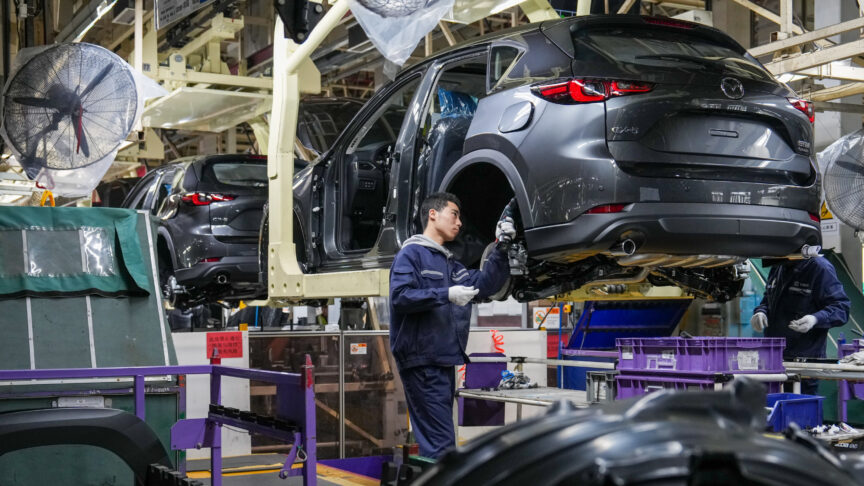
Trust the numbers: Germans are open to a more hawkish China policy
ECFR polling suggests significant public support not only for tougher German policy on China but also for investment in renewables—tackling twin problems together


Research Assistant, DARE* initiative
German climate (foreign) policy; Climate security and diplomacy
German, English, Spanish, Dutch
Nina Schmelzer is a research assistant for the DARE* initiative at the European Council on Foreign Relations, based in Berlin. She supports a wide range of activities related to Europe’s industrial competitiveness, clean technology leadership and security within the context of global geopolitical and economic shifts.
Before joining ECFR, Schmelzer worked as a project assistant at adelphi, Europe’s leading consultancy on climate, environment and development, where she contributed to projects related to climate change, security and diplomacy. Schmelzer has completed internships at the Institute for Climate Protection, Energy and Mobility, and the International Chamber of Commerce.
She has an MA in international affairs from the Hertie School in Berlin, where she specialised in international security, climate policy and defence. She also studied at the Munk School in Toronto, Canada, and has a BA in international relations from the University of Groningen, The Netherlands.
ECFR polling suggests significant public support not only for tougher German policy on China but also for investment in renewables—tackling twin problems together
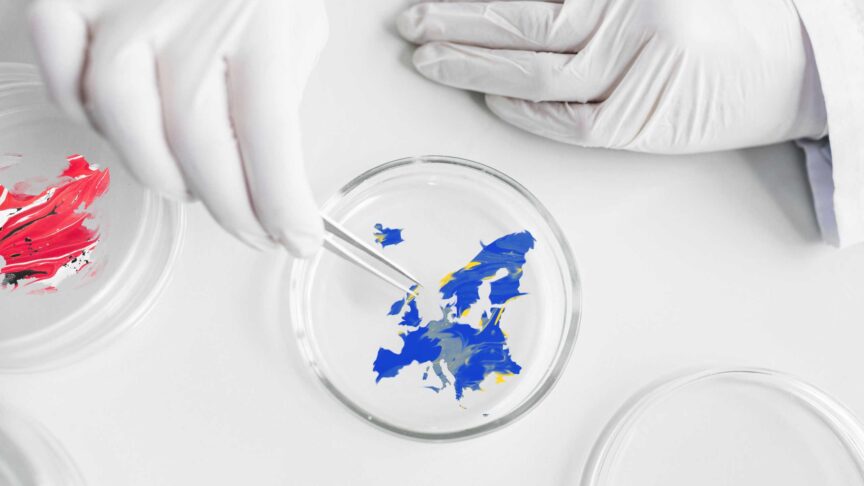
The next industrial revolution will be built with microbes as much as machines. China understands this. Europe still has the science to compete but must act quickly before industrial leadership slips away again

Europe has a China problem and pretending otherwise is making it worse. Chinese cheap exports and a monopoly on rare earths are not just economic irritants, but leverage wielded deliberately. Europeans can no longer just de-risk. They need a deterrence strategy with teeth
As 2026 begins with a bang, Europeans are well-advised to reframe de-risking as re-engagement, unleash the single energy market and focus on electrification
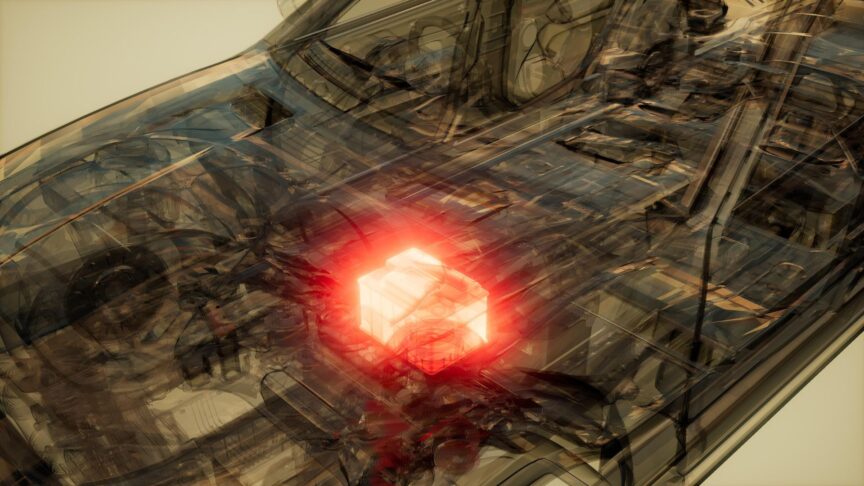
German opposition to the EU’s target to ban combustion engines by 2035 risks locking in emissions and ceding the EV market to China. The bloc needs to convince its member states that investment in electric is worthwhile
Nele Anders and Nina Schmelzer experts on Germany’s shifting stance towards China
The ECFR policy brief The future is fermented: How Europe can succeed in the next industrial race mentioned by Formiche
Tobias Gehrke e Nina Schmelzer’s policy brief, Beijing hold’em: European cards against Chinese coercion, mentioned by Formiche.
Tobias Gehrke’s and Nina Schmelzer’s policy brief, Beijing hold’em: European cards against Chinese coercion, mentioned by Adnkronos