

A view from Washington: The America First pandemic
There will be no transatlantic response to the coronavirus. It will drive us apart rather than bring us together – as pandemics always do


Research Director
Director, US Programme
Transatlantic relations; US foreign policy
English
Jeremy Shapiro is the research director of the European Council on Foreign Relations. His areas of focus include US foreign policy and transatlantic relations.
Shapiro was previously a fellow with the Project on International Order and Strategy and the Center on the United States and Europe at Brookings, where he edited the Foreign Policy program’s blog Order from Chaos. Prior to Brookings, he was a member of the U.S. State Department’s policy planning staff, where he advised the secretary of state on U.S. policy in North Africa and the Levant. He was also the senior advisor to Assistant Secretary of State for European and Eurasian Affairs Philip Gordon, providing strategic guidance on a wide variety of U.S.-European foreign policy issues.
There will be no transatlantic response to the coronavirus. It will drive us apart rather than bring us together – as pandemics always do
The annual Munich Security Conference was themed “Westlessness”, defining “a widespread feeling of uneasiness and restlessness in the face of increasing uncertainty about the enduring purpose…

With such a smorgasbord of offerings, most people eat the familiar food and leave the conference pleasantly full of the same ideas that they entered with

The irony of recent British neo-poodleism is that the UK needs an EU trade deal much more than it needs a US trade deal
With the US-killing of the Iranian military leader, Qassem Soleimani, the Middle East has been yet again sent in the heart to geopolitical uncertainty and…

Top ten trends that will occupy European foreign policymakers in 2020
‘Tis the season! …when Mark Leonard and Jeremy Shapiro review the year gone by and predict 10 foreign policy trends (plus two bonus ones) that…
‘Tis the season! …when Mark Leonard and Jeremy Shapiro review the year gone by and predict 10 foreign policy trends (plus two bonus ones) that…

To all appearances, Macron and Erdogan are NATO’s latest troublemakers. But it is US indifference that enables their antics

In the fourth episode on the events of 1989 and how they have shaped and may continue to shape our world in the years to…
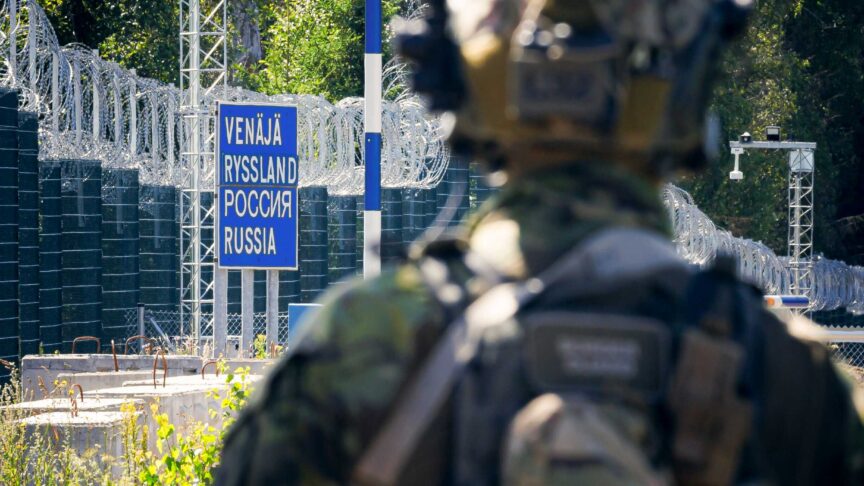
When the fighting in Ukraine stops, America and Europe will likely end up facing Russia in a low-grade rivalry for years to come. Here is how to prevent that disordered rivalry from sliding into another war

While Estonia’s geography makes it vulnerable to a Russian invasion, it is also protected due to weakened Russian capabilities, stronger European defence cooperation and its own preparedness. NATO’s European members should be reassured but not complacent
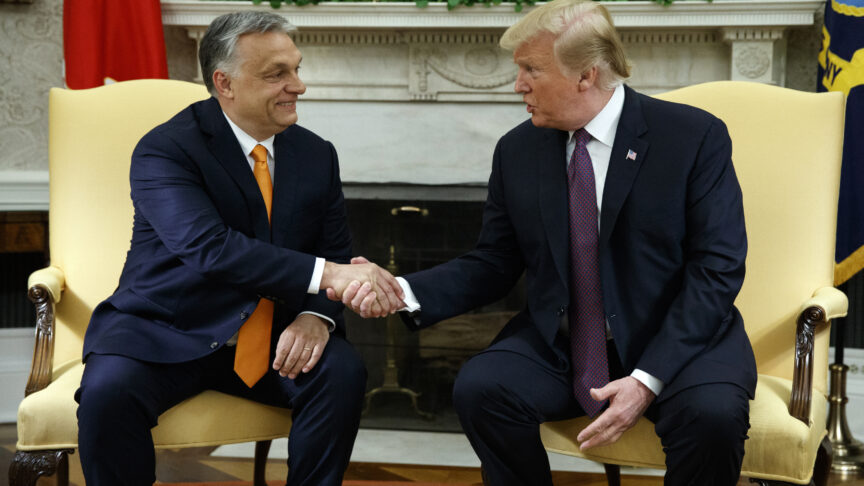
If Trump wins the US presidency, Republicans will likely adapt techniques refined in Viktor Orban’s Hungary as they return to power – with profound implications for both America and Europe

The potential return of Donald Trump to the White House is a matter of months away. Here are six scary policy scenarios to give Europeans sleepless nights and prepare them for what could be to come
Fierce debates are raging among both Republicans and Democrats about America’s future foreign policy orientation. Europeans should take note and prepare
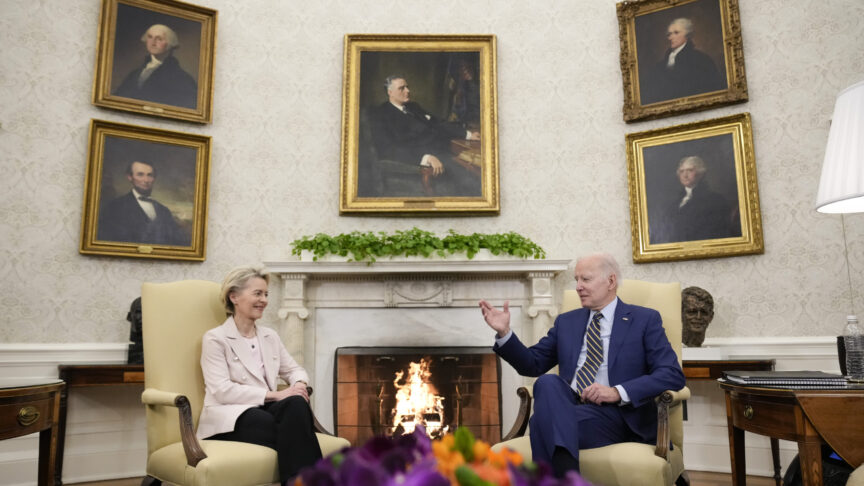
Europeans’ response to Russia’s war on Ukraine confirms their profound dependence on the US – an unwise position given the security challenge in Europe and coming geopolitical competition with China
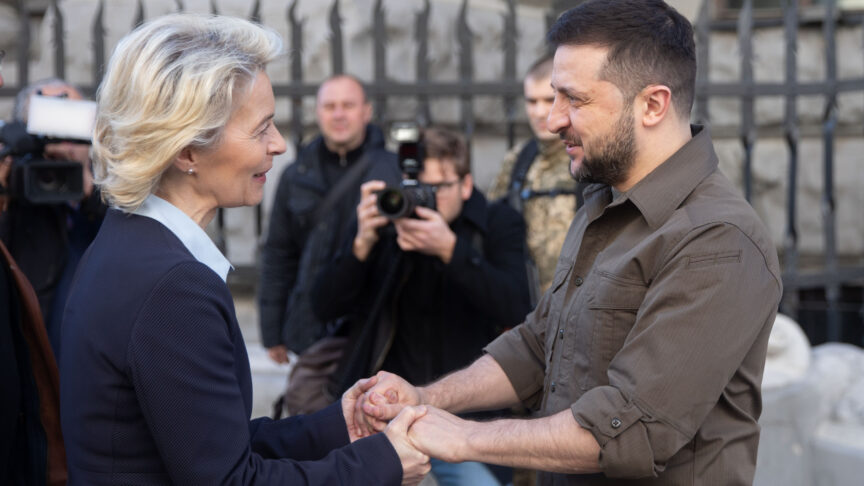
To signal their commitment to Ukraine, Europeans should agree a ‘long-war plan’ of assistance against Russian aggression. This would include a ‘security compact,’ security assurances, and economic and energy support
The UK government’s vision for Global Britain does not reflect today’s geostrategic realities. Yet the UK can forge an effective foreign policy if it focuses on British strengths, avoids military adventures in distant lands, and finds balanced, effective working relationships with the EU and the US
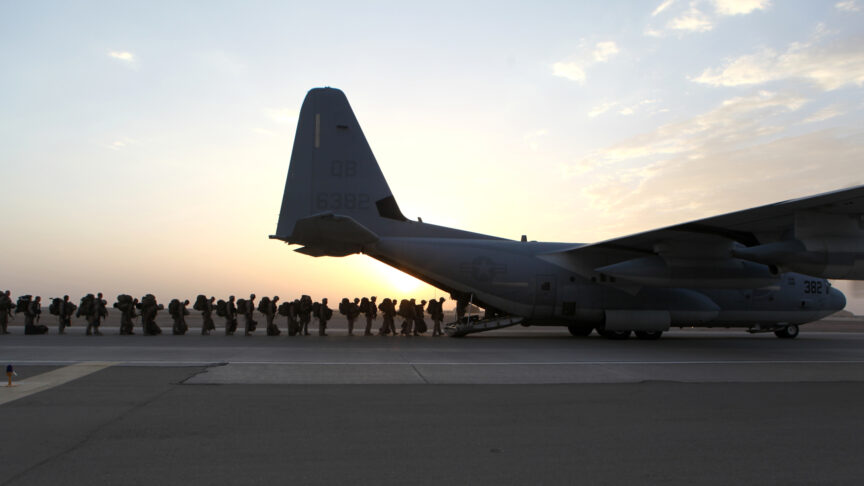
ECFR’s policy experts examine what the Taliban takeover means for countries and regions around the world: Europe, the US, the Middle East, Russia, China, Iran, Turkey, and the Sahel
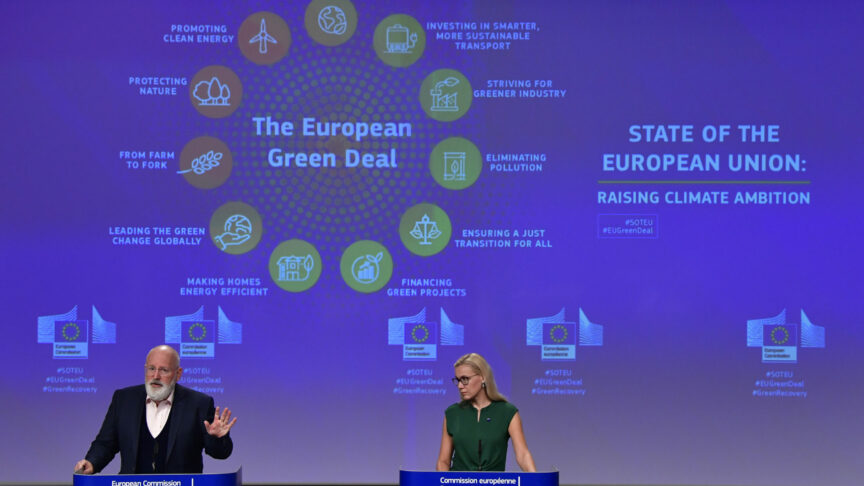
The EU should become a global standard-setter for the energy transition, and prepare to manage the profound geopolitical repercussions of the Green Deal in its relationships with its neighbourhood
The Democrats have swept the midterms, but Trump remains. Europeans should watch his approval ratings within the Republican Party, not the congressional seat count, to see where power truly lies

As Trump digs his heels into a war with Iran, he faces a growing list of domestic pressures. Europeans can press on these points to push Washington towards a ceasefire

If Trump follows through on his threat to bomb Iran’s energy infrastructure, the Strait of Hormuz is likely to shut down entirely and the catastrophic energy crisis will deepen. Europeans need to push for an urgent and sustainable ceasefire

James Talarico roots his foreign policy in a moral framework that could have wide appeal for Democrats—if they follow his lead

Europeans have real leverage in the face of Donald Trump’s threats towards Greenland—and time on their side. They must use it to raise the prospective costs of annexation

Ten key foreign policy trends for the year ahead

The West’s response to Trump’s Ukraine peace plan is caught between the 1938 Munich warning against appeasing aggression and the 1960s Vietnam lesson against overextension. The answer lies in tempering the two extremes

The wars in Ukraine and the Middle East are different in a multitude of important ways. But they nonetheless offer some common lessons for Europeans on the importance of air superiority to military victory

Over two presidential terms, Donald Trump has used threats to intimidate his adversaries and mostly only employed force against his weaker victims. This pattern of bullying provides an insight into his future decision-making

The Trump administration and far-right European politicians see an opportunity to transform the EU from within. In turn, liberal Europeans have an opportunity to undermine this transatlantic alliance—before it gathers real momentum

European leaders are underestimating the danger that Trump presents to the transatlantic alliance and assuming too much continuity in the event of a Clinton presidency

Mark Leonard, Ellie Geranmayeh and Jeremy Shapiro discuss the US midterms and what the results mean for the war in Iran
Mark Leonard is joined by Ellie Geranmayeh, Jeremy Shapiro, and Cinzia Bianco to discuss the escalation following a massive joint US–Israeli military operation against Iran’s leadership and military infrastructure
Mark Leonard welcomes Jeremy Shapiro and Nacho Torreblanca to discuss what Donald Trump’s capture of Venezuelan president Nicolás Maduro means for the world
Mark Leonard welcomes Jeremy Shapiro to look back at the year that was and ahead to what 2026 might bring
Mark Leonard welcomes Jeremy Shapiro to discuss the US millitary engagement in Venezuela and Trump’s broader defence strategy
Jeremy Shapiro welcomes Jana Kobzova and Jim O’Brien to discuss the latest twists in diplomacy between Ukraine, Russia and the West
Mark Leonard welcomes Jeremy Shapiro and Tom Wright to unpack the Aspen Security Forum and America’s shifting global priorities

Trump’s first 100 days in office have brought chaos to US foreign and domestic policy. From imperial gestures to institutional erosion, Mark Leonard welcomes Jeremy Shapiro to unpack what this means for American democracy—and for Europe
Mark Leonard welcomes Jeremy Shapiro to unpack recent scandals and strategic shifts in US foreign policy

Mark Leonard and Jeremy Shapiro look back over their 2024 predictions and forecast ten foreign policy projections for 2025
The special relationship has rarely felt so lacking in speciality. Donald Trump imposes tariffs at a whim, starts wars of choice without consultation, demands UK military participation in them, and then threatens abandonment if he doesn’t get it; some days all before lunch. All this upset has caused many in the UK and beyond to…
Most people in the broader world think President Trump will not just be good for America but that he will bring peace to Ukraine and the Middle East and reduce tensions in US-China relations. Are they right? What do his first few days in office tell us about his vision of the world and foreign…
The result of the US election is sending shock waves across the world and Europeans, including the UK, are trying to figure out how it will impact them and what are the best ways to protect their interests. Meanwhile, the campaign for the German elections is in full swing and the outcome will impact…
As the United States shifts its focus toward Southeast Asia and China, Europe faces a critical moment in evaluating its own approach to a potential conflict over Taiwan. Perhaps counterintuitively, the EU likely holds more economic leverage over China than the bloc typically assumes. This is because Beijing would probably factor in retaliatory sanctions…
As discussions intensify on both sides of the Atlantic about the implications of a Trump 2.0 presidency, European leaders are now having to confront a second big unknown in the form of Kamala Harris. How would Trump 2.0 differ from Trump 1.0? Would a President Harris continue Biden’s foreign policy or forge her…
Russia’s war against Ukraine has shown how much the Europeans are still dependent on the US to ensure their security, despite all the talk of “strategic autonomy”. Even though Europeans have significantly increased their defence spending over the past two years, there is still a massive transatlantic imbalance in NATO. The potential re-election of…
A discussion assessing Iranian foreign policy following Hamas’s attacks of 7 October, Israel’s war on Gaza and the death of Iranian President Ebrahim Raisi
Foreign policy seldom plays much of a role in American presidential elections, but the consequences of those contests can be profound for America’s allies in Europe and for the world. The 2024 election will have significant implications for American foreign policy, whatever the outcome. To discuss how the election results are likely to influence…
This event is part of the German Forum on Security Policy, organised by the Federal Academy for Security Policy (BAKS).
Rhodium Group are delighted to invite you to the virtual launch event of our new policy paper “Circuit Breakers: Securing the Green Energy Supply Chain”
Jeremy Shapiro on a ceasefire in Ukraine and the ongoing confrontation with Russia
Jeremy Shapiro on the war in Ukraine
Jeremy Shapiro on the U.S. decision to divert military funds earmarked for Ukraine to Latin America
Ellie Geranmayeh and Jeremy Shapiro on Iran’s resilience after the US confrontation
Jeremy Shapiro comments on Europe’s position vis-à-vis the US, NATO, and the war in Ukraine